The Gorilla Guardians Village, referred to as Iby’Iwacu Cultural Village, translates to ‘treasure of our home’. This residence demonstrates the genuine value of Rwanda’s tourism industry and the truly remarkable Rwanda gorilla trekking experience. Situated in Kinigi, within the Musanze district of Rwanda, Iby’Iwacu Cultural Village or the gorilla Guardians Village provides an engaging experience in a traditional Rwandan village that has thrived for centuries alongside the majestic mountain gorillas in Parc National des Volcans, commonly referred to as Volcanoes National Park.
History Of Iby’Iwachu Cultural Village
Iby’Iwacu Cultural Village was established by Edwin Sabuhoro as a proactive measure in response to the escalating gorilla poaching activities perpetrated by certain individuals within the community.
Mr. Edwin Sabuhoro was employed in the park, where he observed poaching activities directed at wildlife. He also took part in the rescue of an injured baby gorilla and expressed his fatigue regarding the ongoing human-wildlife conflicts in and around Volcanoes National Park.
Following his encounters with the tensions between humans and wildlife, particularly those involving the residents of Kinigi village and the mountain gorillas, he resolved to further his education in tourism and conservation at the University of Kent in Canterbury, UK, with the aim of addressing the escalating poaching issues in the Volcanoes National Park.
In the course of his master’s degree research, which was titled “Ecotourism as a Potential Conservation Incentive for Local Communities Around Rwanda’s Volcanoes National Park,” he discovered that the costs incurred by the communities surrounding the park were greater than the benefits they received from the park. Additionally, the local populace was unwilling to cease poaching, as they believed that killing wildlife was a means of compensating for their losses, and they did not experience direct benefits from tourism.
Prior to concluding his research, Mr. Edwin resolved to evaluate his hypothesis and committed his life savings to assist the community in developing an alternative source of income beyond hunting. He allocated US$2000 among 7 groups of poachers surrounding the park, with each group comprising 40 families. Within a span of 9 months, 5 of these groups demonstrated remarkable progress, ceasing their poaching activities. They successfully harvested an ample supply of food and secured sufficient seeds for the upcoming planting season, even sharing 200 kgs of potatoes with him as a gesture of gratitude.
This research demonstrated to him that the village possesses significant potential to address and combat poverty within the community through food production; all that is required is a modest initial support, along with guidance and oversight.
From this point, he undertook a supplementary survey to ascertain the preferences of tourists during and following their gorilla trekking experience. The findings revealed a strong desire among them to engage with the citizens of Rwanda, gain insights into Rwandan culture, stroll through the community, exchange experiences with residents, and savor the essence of their cultural heritage.
Considering that communities already possessed a platform for social interaction and the exchange of ideas among local residents, it was merely necessary to expand this existing social framework and transform it into an enriching experience for visitors to the community. Consequently, he resolved to further examine his hypothesis, subsequently allocating over $50,000 of his hard-earned savings into the project he now firmly believed would transform the entire village. This initiative aimed to incentivize the reduction of poaching while enhancing livelihood and economic opportunities for the underprivileged communities surrounding the Volcanoes National Park. Ultimately, his aspirations were realized, and his diligent endeavors culminated in the establishment of the renowned Gorilla Guardians Village, also referred to as Iby’Iwacu Cultural Village.
The expectations of a visitor to Iby’Iwacu Cultural Village.
Iby’Iwacu Cultural Village stands as a prominent cultural attraction in Rwanda. It provides an exceptional opportunity for visitors to Rwanda to engage with local individuals within their authentic surroundings. Visitors have the opportunity to explore various cultural sites and engage in a range of cultural activities, all seamlessly incorporated within the Gorilla Guardian’s village. The village offers a profound understanding of the regular experiences of the community members in former Rwanda.
Upon the arrival of the visitors at the main gate, they are greeted by the resonant sounds of drumming, accompanied by villagers engaging in song and dance, embodying their rich cultural heritage. This invites you to explore a realm rich in diverse cultural pursuits, as elaborated below.
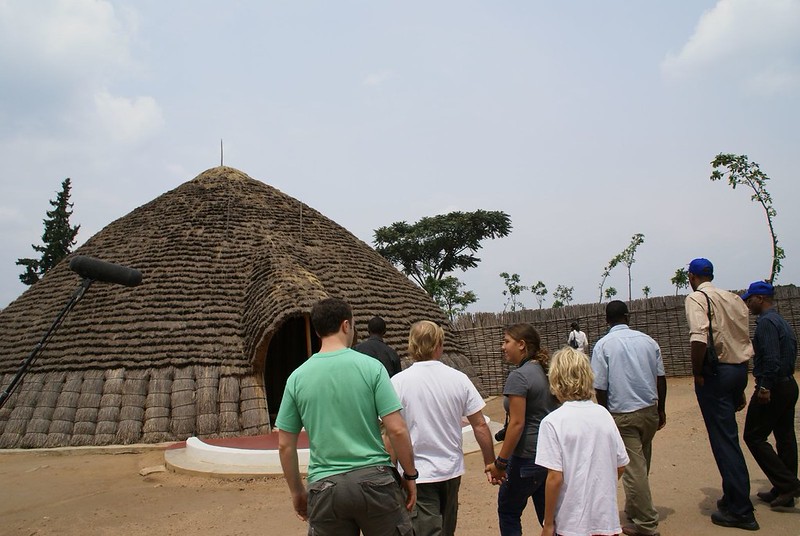
Explore the replica of the King’s Palace, where visitors are presented with the rich narratives of ancient Rwandan kings, the significance of various symbols within the palace, and the ceremonial processes of enthronement. Should you choose to partake, the village elder may bestow upon you the temporary title of king, allowing you to wield the powers associated with that esteemed position for only a short time.
Engage in or observe the customary dances and musical performances. The village presents a variety of traditional dance forms. In the realm of music, every individual in the village—men, women, youths, and children—engages in participation, as they find it profoundly captivating. Rwanda boasts a rich tapestry of traditional dances, among which are the renowned Intore dance, the Ibyivugo dance, the Umuduri dance, the Agakenke dance, the Inanga dance, the Amakondera dance, the Iningiri dance, and the Ikembe dance.
The Intore dance stands as the most renowned traditional dance of Rwanda, characterized by a meticulously choreographed routine that comprises three distinct components.
The ballet is executed by female dancers.
The performance of the heroic dance is executed by men.
Drums.
Iby’Iwacu Cultural Village or Gorilla guardians Village stands as a distinguished, community-driven initiative located in proximity to Rwanda’s Volcanoes National Park, dedicated to empowering former poachers via the principles of sustainable tourism. Tourists can have an unforgettable, immersive, and enlightening experience by participating in traditional Rwandan activities including Intore dancing, tours of the King’s castle, banana beer making, and local crafts.
The origins of the Intore Dance.
The term ‘Intore’ signifies a warrior. This unique traditional dance of Rwanda has its origins in a group of political asylum seekers from Burundi known as the Abayange, emerging during the early years of King Mutara II Rwogera’s reign from 1830 to 1853, a period marked by political rivalry in the southern kingdom of Burundi.
Muyange, a Busoni regal figure, and his dancers, Abayange, escaped Burundi and sought refuge in Rwanda. It was undoubtedly necessary to provide security for a royal figure at the king’s residence.
On a certain occasion, the Abayange were afforded the opportunity to captivate King Rwogera within the palace, where they presented a dance that garnered the admiration of both the king and his army. The Abayange dance predominantly captivated the attention of the Rwandan royal army. Consequently, Rwanda’s royal army integrated the combat strategies and melodies into the dance previously executed by the Abayange, resulting in an evolution of the army’s dance.
Subsequently, the military demonstrated their valor solely through the performance in a ritual referred to as “kuvuga amacumu,” which can be interpreted as a discourse on spears, enhanced by the accompaniment of music and dance.
Engage with the traditional healers: Visitors to the village are afforded the chance to observe the local traditional healer and partake in an enlightening session on the art of crafting medicine from indigenous plants and grasses. In ancient times, local healers held significant influence within their communities, a role that persists to this day. Upon visiting the gorilla guardian’s village, one may encounter traditional healers keen to showcase their medical expertise. You are encouraged to explore the local remedies, as they may offer relief for persistent health conditions, and there is a possibility that the traditional herbs present no side effects compared to medical treatments.
Engage with the sounds of the gorillas performed by the renowned Ngayabatema, often known as Kayuku.
Embark on a communal tour and revisit the Batwa community once more. A communal walk, led by your guide and accompanied by the host, offers an opportunity to traverse the village and immerse oneself in the richness of African culture within its communities. One of the most captivating aspects of the journey is the opportunity to engage with the Batwa community, who historically thrived as gatherers and hunters, yet are now embracing innovative avenues for income through their exceptional pottery craftsmanship. One may also partake in the enriching experience of Batwa pottery-making and its accompanying lessons.
In addition to the pottery, one may engage with the local residents as they tend to their agricultural fields, gaining insights into their practices of planting, weeding, and harvesting. One will also gain insights into culinary preparations and processes such as the grinding of millet with stones, transporting potatoes from the garden, and fetching water from nearby wells and ponds balanced on their heads. Engaging in lessons and actively participating in the creation of traditional dishes like Ubugari and Igikoma is encouraged, while also relishing the meals crafted alongside the local community.
Each day culminates in a closing session, referred to as Igitaramo, where the community congregates around the campfire. As the sun sets, the atmosphere is enriched by the rhythmic beats of drums and the vibrant expressions of local dances. Esteemed storytellers from the rich tapestry of old Rwanda share tales and riddles, captivating all who are gathered in this intimate circle around the fire. The Igitaramo represents the pinnacle of your experience at the Iby’Iwacu cultural village, brimming with enjoyment.