Mountain Gorillas in Uganda are found in Bwindi Impenetrable National Park & Mgahinga Gorilla National Park. Approximately half of the world’s mountain gorillas reside in Bwindi Impenetrable National Park. Mountain gorillas are classified as an endangered species, with a population of approximately 1,065 individuals remaining globally. The situation has seen significant improvement since Bwindi Impenetrable Forest was designated as a National Park, with the gorilla population rising from approximately 300 to about 480 since 1991.
To go gorilla trekking, obtaining a gorilla trekking permit is necessary and visitor numbers are meticulously regulated. Visitors are accompanied by guides and may need to walk for several hours to observe one of the habituated mountain gorilla groups. The region holds significant value for primate research, being the sole location where mountain gorillas and chimpanzees coexist.
The Historical Background of Uganda’s Mountain Gorillas
The critically endangered mountain gorillas are not known to exist in captivity, such as in zoos, but are recognized for thriving exclusively in the lush tropical forests of Africa. Africa, a continent rich in natural resources, is home to mountain gorillas that are safeguarded within national parks in Uganda, Rwanda, and the Democratic Republic of Congo. This protection has facilitated the growth of gorilla safaris in Uganda and Rwanda, where conditions are more stable for such activities.
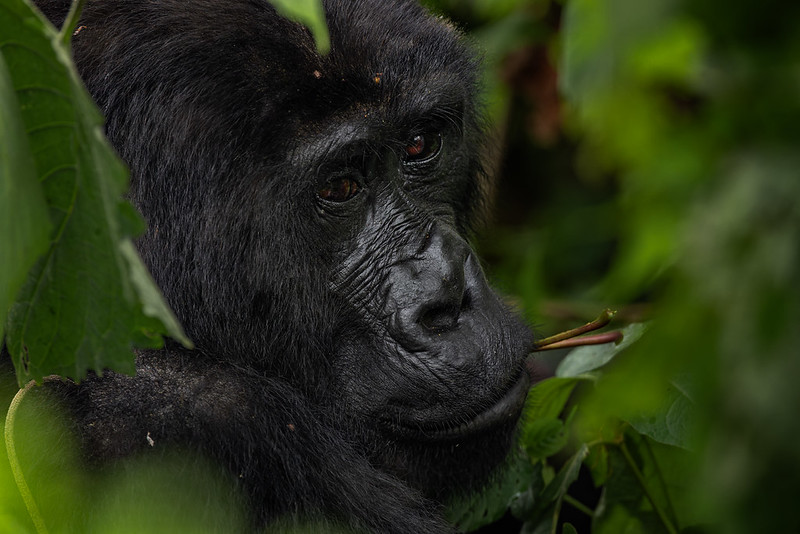
Globally, there are approximately 1,050 Mountain Gorillas, and notably, Uganda, a small landlocked country in East Africa, is home to nearly half of the world’s remaining population of this endangered species. Bwindi Impenetrable National Park is home to 400 mountain gorillas, not including the Nyakagyezi gorilla family that resides in the volcanic slopes of Mgahinga Gorilla National Park.
The mountain gorillas were not widely recognized in Western countries until 1902, when Captain Von Berenge and his companions, while hiking Mount Sabinyo, the oldest of the Virunga Volcanoes, encountered a group of these rare animals. During this encounter, they shot two gorillas but were able to retrieve only one. The individual that was captured was a young male mountain gorilla, estimated to be five years of age. Prior to the discovery of mountain gorillas, the public’s understanding was largely shaped by fictional portrayals in films such as Tarzan and King Kong. The global awareness of these remarkable primates increased significantly when the skin of a young mountain gorilla, captured in Rwanda, was sent to Berlin for analysis and research. The subsequent report confirmed the species as mountain gorillas. The number of tourists participating in gorilla safaris in Uganda and Rwanda has significantly risen, particularly among international scientists and researchers eager to study the mountain gorillas further.
The research report and news released by the researchers demonstrate that mountain gorillas are thriving in the high and colder environments of southwestern Uganda. Many were shocked by the dense forest of Bwindi Impenetrable National Park and the Volcanoes National Park in Rwanda since no one thought gorillas could survive in such cold, high-altitude regions of Africa. Numerous hunters were drawn to gorilla safaris in Uganda and Rwanda by the new information since these wild animals were in high demand and sought after by other nations. An expedition conducted by Prince Wilhelm, a citizen of Sweden, resulted in the shooting of a total of fourteen mountain gorillas in this region between the years 1920 and 1921.
In Uganda, often referred to as the Pearl of Africa, visitors were historically restricted from accessing the mountain gorillas. However, Walter Baumgartner eventually received the necessary permissions and authority to facilitate tourist visits to his esteemed property, Traveller’s Rest Inn, which was the sole accommodation option in the region at that time. Walter authored a compelling and insightful book titled “Up among the Mountain Gorillas,” which detailed his experiences with the mountain gorillas residing in the southwestern region of Uganda. The book effectively articulates the appealing characteristics of the country Uganda.
The mountain gorillas found in Uganda are classified as Gorillas beringei beringei, while those located in West Africa are recognized as lowland gorillas. The beringei beringei mountain gorillas are exclusively located in the wilderness of Mgahinga Gorilla National Park and Bwindi Impenetrable Forest in Uganda, as well as the Virunga Mountains of Rwanda, particularly in Volcanoes National Park, and finally in Virunga Park in the Democratic Republic of Congo. The proximity of these parks is noteworthy, as they are situated within an estimated distance of 48 km from one another, allowing for convenient access. Organizing gorilla trekking safaris in Uganda provides an opportunity for explorers to gain valuable insights into the fascinating background of the endangered mountain gorillas.
About Mountain Gorillas in Bwindi Impenetrable National Park , Uganda
Mountain gorillas are the evolved descendants of early monkeys and apes that inhabited Africa and Arabia at the onset of the Oligocene epoch, which spanned from 34 to 24 million years ago. In 2018, the International Union for Conservation of Nature (IUCN) classified Mountain Gorillas as an endangered species. Mountain Gorillas inhabit the Virunga Volcanic mountains of central Africa, specifically within Virunga National Park in the Democratic Republic of Congo, Mgahinga Gorilla National Park in Uganda, and Parc Nationale des Volcanoes in Rwanda. Additional species can be located in Bwindi Impenetrable National Park. According to the findings of the 2018 Census, the population of mountain gorillas exceeds 1,065 individuals.
Gorillas share more than 98% of their DNA with humans, exhibiting remarkable human-like traits. Gorilla families are led by a silverback, a mature male responsible for selecting locations for the group to eat and rest. The silverback enjoys numerous privileges, one of which is the priority to feed first. This advantage benefits the entire family, as the silverback, weighing up to 120 kg (260 lbs), will protect them to the utmost extent if the group is under threat.
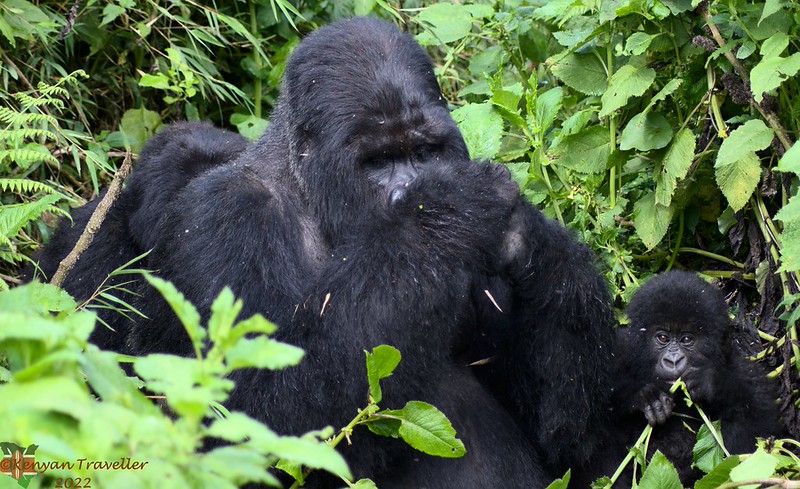
While many individuals perceive gorillas as intimidating, they are, in fact, gentle and peaceful creatures. These great apes exhibit significant intelligence and have been documented using tools and communicating through a range of vocalizations.
There is one silverback gorilla in charge of each family group of mountain gorillas. The Silverback serves as both the leader and protector, safeguarding the safety and unity of the group. His responsibilities encompass intricate decision-making, including the selection of nesting sites, mediation of disputes, and responses to potential threats. Observing the interactions within a group highlights the gorillas’ exceptional intelligence, emotional complexity, and robust social connections. Grooming sessions fulfill essential hygienic and social functions, strengthening trust and relationships among individuals.
In contrast to numerous other primate species, mountain gorillas predominantly inhabit terrestrial ecosystems, dedicating the majority of their time to the forest floor instead of the trees. Their diet primarily includes leaves, shoots, and stems, with occasional fruits enhancing their nutritional intake. While foraging, they function as ecological engineers, inadvertently pruning vegetation and dispersing seeds, thereby contributing to the maintenance of the forest’s structure and diversity. This position is essential in Bwindi, a forest that flourishes due to the interdependent cycles of plant and animal activities.
Nonetheless, the survival of mountain gorillas represents a delicate accomplishment. Many years ago, their populations significantly declined as a result of habitat destruction, poaching, and the transmission of diseases from humans. Despite ongoing challenges, their recovery stands as one of the most notable achievements in conservation. The initiatives in Bwindi have embraced a comprehensive strategy, incorporating research, monitoring, anti-poaching efforts, and partnerships with local communities. These initiatives highlight the significance of coexistence, ensuring that the welfare of the gorillas is in harmony with the economic and cultural interests of the surrounding communities.
The remarkable ability of mountain gorillas to establish a deep connection with humans is what makes them truly captivating. Their expressions, gestures, and behavior reflect characteristics we identify within ourselves, rendering interactions with them deeply impactful and memorable. However, this similarity highlights their susceptibility to human actions. Conservation extends beyond mere statistics; it involves comprehending and safeguarding the complex role these primates fulfill within Bwindi’s ecosystem and the larger context of life on Earth.
Overview of the Mountain Gorillas In Uganda
Male gorillas typically exhibit a physical size that is double that of females, reaching heights of 6 feet and weights ranging from 350 to 500 pounds. They possess strong and muscular long arms. The adult males are commonly known as ‘silverbacks‘ due to the transformation of their back hair to a silver hue as they reach maturity. The strength of the males is ten times greater than that of the strongest human boxer, even when using substances that improve performance. The arms of silverbacks can extend to a length of 7 feet.
The Mountain Gorillas possess longer and darker hair than their lowland counterparts, a characteristic adaptation to the colder weather conditions found at higher altitudes. The life span of a gorilla ranges from 40 to 50 years.
Mountain gorillas primarily inhabit terrestrial environments, although they occasionally climb trees when the framework is capable of supporting their weight. Their offspring can be observed engaging in play among the trees, reminiscent of children.
Habitat and Diet of Mountain Gorillas in Uganda
Bwindi Impenetrable Forest is home to the highest population of Mountain Gorillas. The ancient forest features a dense plant cover, with the tree canopy creating a somewhat dark environment, which is why it is referred to as the impenetrable forest. The forest exhibits altitudes that vary from 1,160 meters to 2,607 meters above sea level. Mgahinga Gorilla National Park and Bwindi Impenetrable National Park each possess unique characteristics, yet they also share several similarities. For example, the Mgahinga area is known for its extinct volcanic region, whereas Bwindi does not have this feature. The Mgahinga Gorilla Park, situated at a higher altitude, prompts the Mountain Gorillas to ascend in search of afro-montane vegetation for their food.
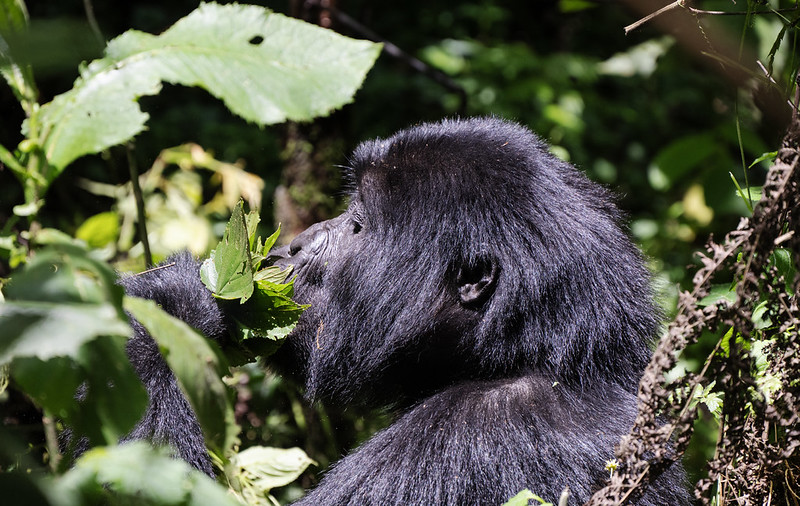
The Mountain Gorillas consume substantial amounts of roots, vibrant leaves, bamboo shoots, flowers, and fruits. Adults may consume as much as 75 pounds daily.
The daily routine of a Mountain Gorilla commences at 6 am and concludes at 6 pm, incorporating a period for rest during their lunch break. In Uganda, light diminishes shortly after six o’clock in the evening, with night settling in around seven o’clock.
These relocate to various locations each day, spending their nights in nests constructed from twigs and leaves.
Behavior of Mountain Gorillas in Uganda:
Numerous visitors to the Bwindi Forest often inquire about the potential dangers posed by the mountain gorillas. The response is negative. While they possess great power and strength, these giants are also gentle and quite reserved. Furthermore, the mountain gorillas observed in Uganda have been habituated to being around people. In other terms, they have adapted to the presence of humans. The habituation process requires approximately two years to complete. Mountain gorillas engage in aggressive behavior solely when they perceive a threat, as a means of protecting themselves. Typically, when gorilla groups encounter one another, the Silverbacks engage in warfare, which can occasionally lead to fatal outcomes.
They inhabit groups of varying sizes, typically consisting of eleven members, but can range from 4 to 30 or even 40 individuals. There is no defined mating season for them, with males commencing breeding at 15 years and females starting to reproduce between the ages of 10 and 12 years. Females are capable of giving birth every 2 to 3 years, producing a total of 4 to 6 offspring throughout their lifetime.
The males depart from their family unit at the age of 11, while over half of the females continue to stay with the group.
Communication primarily occurs through a variety of sounds, including shouts, grunts, and roars, with researchers identifying a total of 25 distinct sounds.
Threats to Mountain Gorilla:
The primary threat to Mountain Gorillas arises from human activities that intrude upon their natural habitat due to the expansion of villages and agricultural lands.
Furthermore, diseases transmitted by human visitors pose an additional threat. Consequently, the Uganda Wildlife Authority has implemented strict rules to mitigate the risk of disease transmission by humans.
Overview of Mountain Gorillas In Uganda
The mountain gorilla’s fur, typically thicker and longer than that of other gorilla species, allows them to thrive in colder climates. Gorillas can be distinguished by their unique nose prints, which are specific to each individual.
Males, with an average weight of 195 kg and an upright standing height of 150 cm, typically weigh twice as much as females, who have an average weight of 100 kg and a height of 130 cm.
Adult males exhibit more prominent bony crests on the top and back of their skulls, resulting in a more conical head shape. The crests serve as anchors for the robust temporalis muscles, which connect to the lower jaw (mandible). Adult females possess these crests as well, though they are less pronounced.
Often characterized as gentle giants, Mountain Gorillas exhibit high intelligence, have been observed utilizing tools similar to other great apes, and communicate through a range of vocalizations.
The mountain gorilla predominantly exhibits terrestrial and quadrupedal behavior. It will ascend fruiting trees if the branches can support its weight, and it is capable of running bipedally for distances of up to 6 meters.
Mountain gorillas exhibit daily behavior, with peak activity occurring around 6:00 a.m. and 6:00 PM. A significant portion of these hours is dedicated to consumption, as substantial amounts of food are required to support its considerable size. The subject engages in foraging activities during the early morning, takes a rest in the late morning and around midday, and resumes foraging in the afternoon before resting at night.
Mountain Gorillas create nests using available vegetation for their nightly rest, crafting a new one each evening. Only infants rest in close proximity to their mothers. They depart from their resting locations at approximately 6 am when the sun rises, unless the weather is cold and overcast; in such cases, they tend to remain in their nests for an extended period.

The mountain gorilla is predominantly herbivorous, with its diet consisting mainly of the leaves, shoots, and stems from 142 plant species, accounting for 85.8% of its intake. Additionally, it consumes bark (6.9%), roots (3.3%), flowers (2.3%), and fruit (1.7%), along with small invertebrates. 0.1% Adult males have the capacity to consume up to 34 kilograms of vegetation daily, whereas females can ingest as much as 18 kilograms.
What are the differences between Mountain Gorillas and Lowland Gorillas?
The mountain gorilla exhibits a larger physique, characterized by longer hair and comparatively shorter arms than its lowland gorilla counterparts, thriving exclusively in high-altitude environments ranging from approximately 2,200 to 4,300 meters. Lowland gorillas are more frequently observed in trees and favor a habitat that is flatter and more densely forested compared to mountain gorillas.
The mountain gorilla inhabits significantly higher altitudes and is located further inland, thriving within a secluded wilderness area in Rwanda, Uganda, and the Democratic Republic of Congo. Their primary habitats consist of the rocky slopes of former volcanoes, yet they are also observed in the high alpine regions of mountain ranges, where they may encounter freezing temperatures.
In times of stress or agitation, male mountain gorillas release a potent scent from glands located beneath their arms. Research on lowland gorillas has indicated that scent communication does not significantly influence their cultural practices.
Mountain Gorilla Trekking in Bwindi & Mgahinga National Parks
Gorilla trekking commences early in the morning with groups of eight individuals, who are permitted to spend one hour in the presence of these magnificent creatures.
The trekking experience is demanding, requiring extensive walking along muddy, wet paths, all while being supported by knowledgeable guides. The duration of these walks ranges from 2 to 8 hours, and while the gorillas are habituated, sightings are not guaranteed as they are still wild animals.