How to Get to Lake Mburo National Park
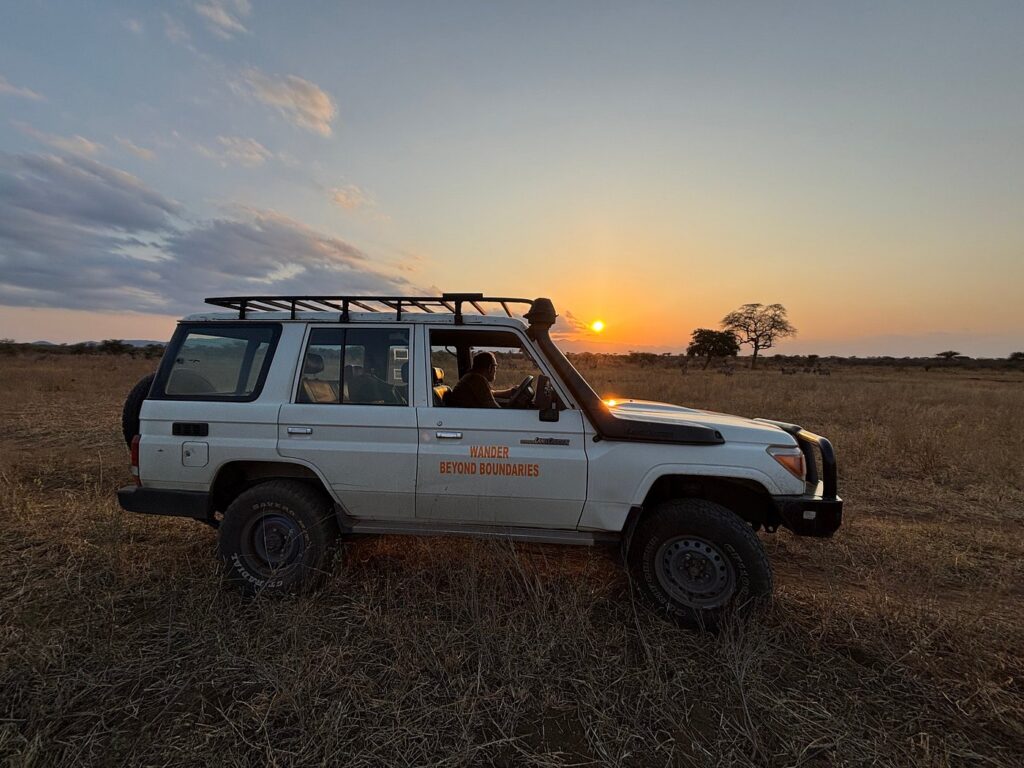
Lake Mburo National Park sits between Masaka and Mbarara on the western highway from Kampala — a road that forms the main artery of Uganda’s southwest and carries the majority of travellers heading to Bwindi Impenetrable National Park, Queen Elizabeth National Park, or the Rwenzori Mountains National Park. The park’s position on this highway, combined with its proximity to Kampala, makes it the most logistically accessible national park in Uganda. Gorilla Safaris arranges all transfers in private, fully equipped 4×4 vehicles with experienced driver-guides who know this road and its wildlife stops intimately.
By Road from Kampala or Entebbe — The Main Route
The drive from Kampala to Lake Mburo National Park covers approximately 240 kilometres via the Masaka highway, taking three to three and a half hours in a private vehicle. The road passes through the Equator crossing at Kayabwe — a natural and entertaining stop where your guide explains the Coriolis effect with a simple water demonstration — and through the market towns of Masaka before the landscape opens into the rolling, acacia-dotted hills of the Kiruhura and Isingiro districts that mark the park’s approach.
From Entebbe International Airport, the drive is approximately 290 kilometres and four hours. The park gate at Sanga or Nshara receives visitors directly from the highway, with a short gravel road connecting the gate to the main lodge and activity areas.
En Route Between Kampala and Uganda’s Western Parks
Lake Mburo is the natural en-route stop between Kampala and the western park circuit — Queen Elizabeth National Park, Bwindi Impenetrable National Park, and the Rwenzori Mountains National Park. Most travelers on a Uganda safari that combines Kampala with any western destination pass directly past the park on the highway, and Gorilla Safaris routinely builds a one or two night Lake Mburo stop into these itineraries, transforming what would otherwise be a transit day into an additional wildlife experience of genuine quality. The park’s western gate provides direct entry from the Mbarara highway, minimising the detour to minutes rather than hours.
From Mbarara Town
Mbarara, Uganda’s largest western town and a comfortable overnight base for those not staying inside the park, lies approximately 30 kilometres from the park’s eastern boundary. The transfer from Mbarara town to the park gate takes 30 to 40 minutes. Mbarara has good hotel options for travellers arriving late from Kampala who prefer to complete the final park approach fresh in the morning.
Best Time to Visit Lake Mburo National Park
Lake Mburo National Park is one of Uganda’s most rewarding year-round safari destinations. Its relatively flat, open terrain — a mosaic of acacia woodland, grassland, and lakeside vegetation — means that wildlife is visible in all seasons, and the activities that make the park distinctive — walking safaris, horseback riding, and boat cruises — operate comfortably regardless of rainfall. The seasonal differences at Mburo are less dramatic than at Uganda’s larger, more exposed parks, and a carefully chosen itinerary delivers excellent experiences in any month.
Dry Season: June to August
The long dry season is the most productive time for general wildlife viewing at Lake Mburo. The grass is at its lowest, wildlife concentrates around the lakes and permanent water sources, and the boat cruise on Lake Mburo reaches its annual peak of hippo and waterbird activity. The walking safari conditions are at their best — dusty trails rather than muddy ones, more predictable wildlife movements, and excellent photographic visibility. June to August is peak season; accommodation books early, particularly at the premium properties.
Dry Season: December to January
The short dry season mirrors the June–August conditions with consistently lighter visitor numbers. January is particularly recommended for those who want the park to themselves — excellent wildlife viewing, responsive accommodation pricing, and the particular pleasure of a park that feels genuinely private. The Christmas period itself books quickly at the top lodges; mid-January to early February can be among the most rewarding times to visit.
Wet Seasons: March to May and October to November
The wet seasons bring rains that green the acacia woodland dramatically, fill the seasonal water sources, and produce a peak of bird activity that makes the park genuinely exceptional for birding. The horseback riding and walking safaris are more atmospheric in the greener seasons, the boat cruise is beautiful against the lush lakeside vegetation, and accommodation rates drop noticeably. The tracks remain driveable in a 4×4, and the wildlife — particularly around the lakes — is no less visible for the rain. For photographers and birders, the wet season has a compelling argument as the finest time of year.
Night Game Drives: Year-Round
The night game drive — one of Lake Mburo’s distinctive offerings — is equally productive in all seasons. Leopard, the park’s most elusive resident, is most reliably encountered in the spotlight after dark when the cat’s nocturnal hunting pattern brings it onto the park’s tracks. Bush babies, civets, genets, and porcupines are regular night drive sightings. The absence of lions means that the night drive can cover the same terrain as the day drives without the navigational constraints that lion-country requires.
Lake Mburo National Park Entrance Fees
All fees are set by Uganda Wildlife Authority and paid at the park gate. Gorilla Safaris includes all applicable park and activity fees within your safari package.
| Category | Fee (USD) | Fee (UGX) |
| Non-resident Adult | USD 40 per day | — |
| Non-resident Child (5–15 yrs) | USD 20 per day | — |
| East African Resident Adult | — | UGX 10,000 per day |
| East African Resident Child | — | UGX 5,000 per day |
| Walking Safari (per person) | USD 30 | — |
| Boat Cruise (per person) | USD 20 | — |
| Horseback Riding Safari (per person / hr) | USD 40 per hour | — |
| Night Game Drive (per vehicle) | USD 30 per vehicle | — |
| Quad Biking (per person / hr) | USD 30 per hour | — |
| Vehicle Fee (Non-commercial) | USD 40 per day | — |
Fees are subject to change by Uganda Wildlife Authority. Gorilla Safaris confirms all current rates at time of booking and includes them within your safari package.
What to See in Lake Mburo National Park
The Plains Zebra — Mburo’s Signature Animal
Lake Mburo National Park is the only protected area in Uganda where the plains zebra (Equus quagga) can be reliably observed, and the park holds their southernmost population in the country. The zebra are everywhere at Mburo — crossing the roads in loose family groups, grazing beside the impala herds on the valley grasslands, drinking at the lake margins in the afternoon when the light catches their stripes in alternating bands of shadow and sun. No other image defines the Lake Mburo landscape quite as definitively, and no other park in Uganda delivers it. For families with children, the zebra encounter — sometimes at very close range — produces the particular wide-eyed recognition of an animal seen previously only in picture books.
Impala — The Park’s Most Abundant Antelope
Lake Mburo holds the largest concentration of impala in Uganda. The park’s acacia woodland is classic impala habitat — open enough for good sightlines, treed enough for cover — and the herds at Mburo have the relaxed confidence of animals that have lived without lions for long enough to understand that the threat calculation has changed. Male impalas performing territorial displays from atop termite mounds, bachelor groups moving through the woodland in loose formation, mothers with newborn fawns unsteady in the long grass — the impala at Lake Mburo provide an hours-long wildlife spectacle at the quieter end of the drama spectrum.
Eland — The Giant of the Acacia
The common eland at Lake Mburo is Uganda’s most important population of Africa’s largest antelope. Bulls of exceptional size — weighing up to 900 kilograms with spiral horns reaching a metre in length — are encountered throughout the acacia woodland, moving with the deliberate, dignified pace that their size demands. The sight of a large eland bull emerging from the woodland edge in the golden light of late afternoon is one of those safari moments that photographers and naturalists place alongside lion sightings and elephant encounters in the hierarchy of genuinely memorable wildlife encounters.
Topi and Waterbuck
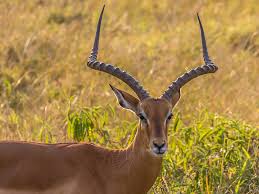 The topi — a distinctive, richly-coloured antelope with a saddle-like dark patch on its back and a slightly hunched profile — is another Lake Mburo speciality. Topi are grassland animals that tend to occupy slightly more open terrain than impala, and their habit of standing sentinel on elevated ground makes them particularly visible on the Mburo grasslands. The waterbuck — larger, shaggier, with the characteristic white ring on its rump — inhabits the wetter margins of the lakes and is encountered most reliably near the lakeside vegetation.
Hippos and Nile Crocodiles
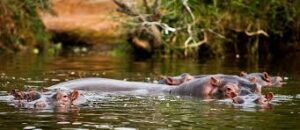 All five lakes within the park support hippopotamus populations, and the Lake Mburo boat cruise brings visitors to within metres of these extraordinary animals as they surface, yawn, and submerge in the warm afternoon water. The hippos at Mburo have the particular quality of animals observed at close range on a small lake — less overwhelming than the Kazinga Channel’s two-thousand-strong populations, more intimate, more individually observable. Nile crocodiles share the lake margins, basking on the sandy promontories where the papyrus recedes, and the Ssese canoe trip — in a traditional wooden craft rather than a motorised launch — provides the most intimate approach to both species.
Sitatunga — The Papyrus Antelope
The papyrus swamps fringing the park’s lakes shelter the sitatunga — a specialist swamp antelope with narrow, elongated hooves adapted for movement on marshy ground. The sitatunga is one of Uganda’s more difficult mammals to observe, spending most of its time deep in the papyrus where its dark, shaggy coat blends seamlessly with the vegetation. Early morning boat cruises along the lake margins, particularly at Kazuma and Kachera, offer the best viewing opportunities, and a patient guide who knows where the sitatunga have been feeding in recent days can position the boat with enough precision to make the sighting a probability rather than a possibility.
Leopard — The Night Visitor
Lake Mburo National Park has a resident leopard population that, while never guaranteed on any single day, is encountered with sufficient regularity to justify genuine optimism. The absence of lions — which would normally dominate and suppress leopard movements — means that Mburo’s leopards have the park’s entire territory available to them, and their movements are correspondingly more relaxed and less concealed than in lion-country parks. Night game drives, conducted in an open vehicle with a handheld spotlight, offer the best leopard encounters — the cat’s eyes reflected in the beam before the whole animal materialises in the acacia branches or on the track ahead.
Birds — 350 Species Including the Shoebill
Lake Mburo’s 350-plus bird species represent one of the most diverse avifaunas of any Uganda park relative to its size. The combination of acacia woodland, open grassland, papyrus swamp, and open water creates a mosaic of bird habitats that specialists describe as among the most productive in the region. The African finfoot, a secretive waterbird of papyrus-edged channels, is reliably encountered on the Kazuma lake circuit. The shoebill stork — Africa’s most sought-after bird — makes occasional appearances in the papyrus margins, though it is more reliably found at other Uganda sites. The crested crane, Uganda’s national bird, is a common and beautiful sight in the park’s grasslands. The Nubian woodpecker, bare-faced go-away bird, blue-naped coucal, and bronze-tailed starling are among the woodland specialities that make Lake Mburo a serious birding destination in its own right.
Long-Horned Ankole Cattle
One of Lake Mburo’s most unexpected and culturally resonant sights is the presence of the long-horned Ankole cattle on the land immediately surrounding the park — and occasionally, in shared grazing areas near the boundaries, mingling with the wild impala and zebra in scenes that are uniquely Lake Mburo. The Ankole cattle, with their enormous, curved horns that can reach two metres in span, are one of Africa’s most visually distinctive domestic breeds, and the cultural significance of these animals to the Banyankore, Bahima pastoralists who have inhabited this landscape for centuries is profound. A visit to a traditional Bahima homestead, arranged through Gorilla Safaris as part of the cultural programme, provides context for this human dimension of the Lake Mburo landscape.
Best Activities in Lake Mburo National Park
Walking Safari — The Most Intimate Wildlife Experience
The walking safari at Lake Mburo is the activity that most consistently produces the responses that game drives — for all their drama — cannot replicate. At ground level, in the acacia woodland with a ranger guide and the smell of dry grass and distant water, the scale of the wildlife changes completely. Impala that would barely register from the elevation of a vehicle suddenly have an entirely different presence when encountered on the same horizontal plane. Zebra, approached on foot to within thirty metres, communicate a combination of curiosity and alertness that is simply not visible from a vehicle. The tracks on the dusty path — the wide, splayed print of a hippo that left the lake before dawn, the small, punched marks of a dik-dik moving through the undergrowth — tell the morning’s story with a specificity that no guide can match. The armed ranger at the front of the walking group is not merely a formality. The presence of buffalo and hippo on the walking routes means that the guide’s training and attention are genuinely relevant, and the awareness this produces in the walking group — the heightened attention, the particular quality of silence that comes from moving carefully through a landscape that is not entirely safe — is part of what makes the experience irreplaceable.
Horseback Riding Safari
Lake Mburo is one of only a small number of places in East Africa where wildlife can be observed from horseback, and it is the finest such experience in Uganda. The horses available at the park’s dedicated stables — managed by Mihingo Lodge in partnership with Uganda Wildlife Authority — are well-trained and accustomed to wildlife, and the experience of approaching a herd of impala or a group of zebra at the pace and height of a prey animal, invisible to their predator-detection systems, produces encounters of a quality and proximity that no vehicle or walking safari can replicate.
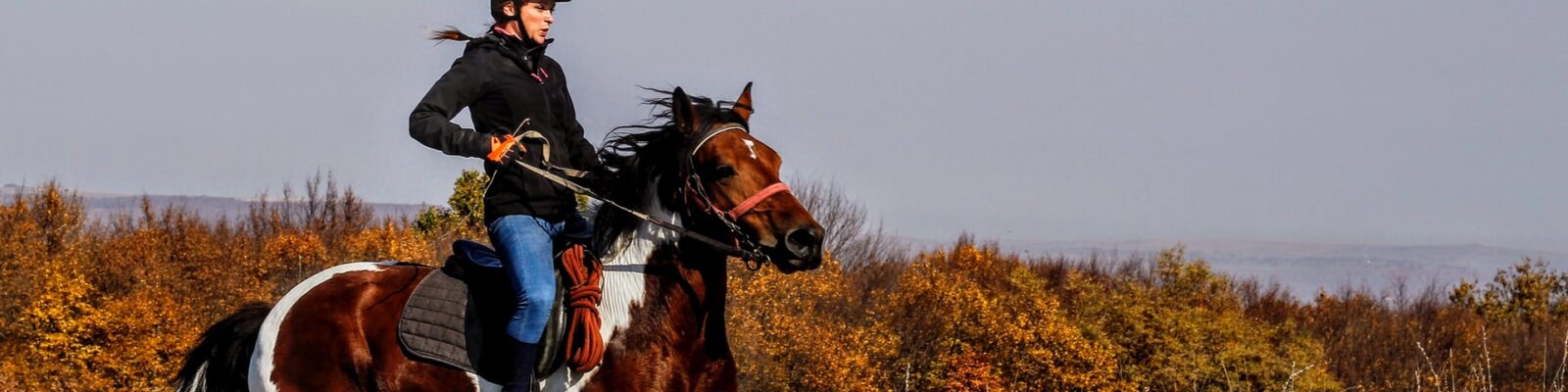
Rides range from one hour to half a day, covering the acacia woodland and grassland circuits that carry the highest wildlife density. Beginners are accommodated with slower, well-guided rides; experienced riders can request more active routes. This is the activity that families with older children and couples seeking the most distinctive possible safari experience request most consistently.
Boat Cruise on Lake Mburo
The afternoon boat cruise on Lake Mburo National Park is the park’s signature water activity — a two-hour journey around the lake’s papyrus-fringed shores that delivers hippos, crocodiles, waterbirds, and the occasional sitatunga emerging from the reed beds. The launch-based cruise is the standard option, departing from the jetty near Rwonyo Camp, but the most atmospheric version of the lake experience is the traditional Ssese wooden canoe — a smaller, slower, quieter craft that approaches the wildlife at water level and with almost no engine noise. The canoe trip is more intimate and more physically involved than the launch cruise, and guides who operate both consistently recommend it to guests who want the experience of genuine proximity rather than comfortable distance.
Night Game Drive
The night game drive at Lake Mburo national Park is one of Uganda’s most consistently productive nocturnal wildlife experiences, enabled entirely by the absence of lions from the park. Without the safety constraints that lion-country imposes, the night drive can cover the same full terrain as the day drives — all tracks, all lake margins, all woodland circuits — in the beam of a powerful handheld spotlight. Leopard is the headline species, and encounters are more frequent at Mburo than at most Uganda parks where lions limit the cat’s daytime territory. Bush babies materialise in the torch beam with their enormous reflective eyes. African civets and genets cross the tracks with the purposeful unhurriedness of animals that know the night is theirs. Porcupines shuffle through the undergrowth. Hippos graze in the open grassland, hundreds of metres from the water, their bulk rendered more improbable still by the spotlight that catches them in the open.
Game Drives
Game drives at Lake Mburo National Park cover the park’s network of tracks through acacia woodland, open grassland, and lakeside vegetation in a private 4×4 vehicle with your dedicated guide. The morning drive — departing at dawn when the buffalo herds are still moving and the leopard has not yet found a shaded tree — is the most productive for mammal sightings.
The late afternoon drive, when the light turns golden and the lake margins fill with waterbirds coming in to roost, is the most photogenic. Between the two, the park reveals its full wildlife complement with a consistency that larger, more spread-out parks cannot always match. Mburo’s compactness — that 370 square kilometre footprint — means that the distances between wildlife zones are short enough to cover several ecosystems in a single two-hour drive.
Quad Biking
A more recent addition to the Lake Mburo activity menu, quad biking covers the park’s western sector on designated tracks through acacia woodland and open savanna. The activity offers a different physical engagement with the landscape — the wind, the dust, the sound of the engine in the open air — and is particularly popular with younger travellers and families with teenagers who want something more kinetic than a conventional game drive. Wildlife encounters on quad bikes are less guaranteed than on guided walks or horseback rides, but the views from the elevated tracks, particularly at the park’s higher points, are excellent.
Cultural Visit — Bahima Community and Ankole Heritage
The Banyankore Bahima pastoralists have inhabited the landscape around Lake Mburo for centuries, and their culture — centred on the long-horned Ankole cattle that have defined the social and economic life of the region — is one of the most distinctive in Uganda. A curated cultural visit to a traditional Bahima homestead, arranged by Gorilla Safaris in partnership with the local community, includes a demonstration of the traditional milk churning process, an explanation of the cultural significance of the Ankole cattle, a traditional dance performance, and the opportunity to engage directly with the families whose ancestors named this landscape. The experience adds a human dimension to the safari that wildlife encounters alone cannot provide.
Birdwatching
Lake Mburo’s 350-plus bird species and its diversity of habitats make it one of Uganda’s finest half-day birding destinations. A specialist birding guide, arranged through Gorilla Safaris, focuses the morning on the species most likely to be encountered in current conditions: the African finfoot in the papyrus channels, the shoebill if recent sightings have been reliable, the woodland specialities of the acacia zone, and the waterbirds of the lake margins. The park’s compactness means that a serious birder can cover several distinct habitat zones in a single session, and the target species list at Mburo — particularly the papyrus specialists and the acacia-associated birds — is distinct enough from other Uganda parks to justify a dedicated morning even for travellers who have already visited Bwindi and Murchison.
Where to Stay in Lake Mburo National Park
Lake Mburo’s accommodation ranges from one of Uganda’s most distinctive luxury lodges to comfortable tented camps and budget bandas — all selected by Gorilla Safaris for the quality of their position, service, and the specific experience they deliver. The park’s size means that all accommodation is within twenty minutes of the primary activity areas.
Luxury Lodges
Mihingo Lodge — Perched on a rocky ridge above the acacia woodland with panoramic views across the park’s western sector, Mihingo Lodge is Lake Mburo’s most distinctive and celebrated address. The lodge’s fourteen tented rooms are built into the natural rock outcrops of the ridge, each with a private plunge pool and an outdoor deck that delivers an unobstructed view of the landscape below. The lodge operates the park’s horseback riding programme — the finest wildlife horseback experience in Uganda — and its guiding team is consistently rated among the best in the park. Sundowners on the ridge at Mihingo, watching the zebra and impala move through the acacia in the fading light, are one of those safari experiences that guests describe in terms usually reserved for Serengeti or Okavango.
Kigambira Safari Lodge — A luxury bush lodge positioned with direct lake views from its elevated terraces, Kigambira combines comfort with a sense of genuine wilderness immersion. The lodge’s design integrates with the surrounding acacia woodland, and the lake visible from every common area creates the particular quality of an accommodation that rewards time spent simply sitting and watching. The boat cruise departs from the lodge’s own jetty, and the bird life from the terrace is exceptional in both morning and evening hours.
Mid-Range Lodges
Rwakobo Rock Lodge — A beautifully positioned mid-range lodge set on rocky outcrops with views across the woodland and distant lake, Rwakobo Rock offers comfortable stone and thatch cottages with a warm sense of hospitality and excellent value. The lodge’s guiding and activity arrangements are reliable, and its location away from the main park traffic makes for a quieter, more private experience than some of the lodges closer to the main gate.
The Arcadia Cottages — Well-appointed self-contained cottages on the park boundary offering a reliable mid-range option for families and small groups. The cottages are comfortable and the staff’s park knowledge good; the location near the eastern gate provides easy access to the Sanga sector game drives and the lake circuit.
Eagles Nest Lodge — A friendly, well-run mid-range property on the western sector with comfortable rooms, good food, and an elevated position that delivers worthwhile sunset views. Eagles Nest is a popular choice for travellers on Uganda wildlife circuits who want a comfortable night at Mburo without the full premium-lodge experience.
Budget Accommodation
UWA Banda and Camping — Rwonyo Rest Camp — Uganda Wildlife Authority’s Rwonyo Rest Camp, positioned inside the park near the lake, offers basic bandas and camping pitches at the most affordable price point. The camp’s location directly on the lake shore gives it a genuinely excellent position — the hippos in the water below the tents are the feature that most guests mention first — and the simplicity of the facilities is offset by the quality of the setting. The boat cruise departs from Rwonyo’s jetty, making it the most convenient base for lake-based activities.
Mantana Tented Camp — A comfortable budget tented camp in the woodland near the main park tracks, offering simple but well-maintained accommodation with reliable guiding and activities. Mantana is a popular choice for independent travellers and those combining Lake Mburo with an overland Uganda circuit on a managed budget.
What to Pack for Lake Mburo National Park
Lake Mburo’s equatorial position and relatively low altitude (1,220 to 1,828 metres) produce a warm, moderate climate that is forgiving of most packing approaches. The park’s activities — particularly the walking safari and horseback riding — create some specific gear requirements beyond the standard game drive checklist.
Clothing: Neutral, earthy tones — khaki, olive, tan — for all game drives, walking safaris, and horseback rides. Long trousers and long sleeves offer protection from thorny acacia vegetation on walking safaris and from insects during morning and evening hours. A lightweight fleece or jacket is useful for night game drives and early morning boat cruises. Avoid white or bright colours which can disturb wildlife on foot and horseback approaches.
Footwear for horseback riding: Closed-toe shoes or boots with a small heel are required for the stirrup. Flip-flops, sandals, and open-toed footwear cannot be accommodated safely on horseback. Mihingo Lodge’s riding staff will confirm footwear compatibility at the start of the ride.
Footwear for walking safaris: Ankle-supporting hiking boots or trail shoes are the best choice. The acacia woodland has thorns and uneven ground; lightweight trainers are adequate but proper hiking shoes are significantly more comfortable over one to two hours of walking.
Sun protection: High-SPF sunscreen, wide-brimmed hat, and UV-protective sunglasses. The equatorial sun at Mburo is consistent and stronger than visitors from temperate climates typically anticipate.
Insect repellent: DEET-based repellent for morning, evening, and night drive hours. Lake Mburo is in a malaria-endemic zone; prophylactic medication should be confirmed with a travel health clinic before departure.
Binoculars: Essential for birdwatching and for observing the park’s more distant wildlife from the vehicle. An 8×42 pair covers both functions well.
Night drive essentials: A warm layer for the open vehicle at night, and a personal headtorch for moving around camp after dark.
Frequently Asked Questions — Lake Mburo National Park
What is Lake Mburo National Park famous for?
Lake Mburo National Park is famous primarily for being Uganda’s most accessible national park from Kampala — just three hours by road — and for the unique combination of wildlife activities it offers as a result of having no lions. Without lions, Lake Mburo National Park is one of the only parks in Uganda where walking safaris, horseback riding safaris, and night game drives can be conducted through open bush terrain, allowing wildlife encounters at ground level and at close range that no vehicle-based safari can replicate. The park is also the only protected area in Uganda where plains zebra can be reliably observed, and it holds Uganda’s largest eland population. Its 350-plus bird species, five internal lakes, and the papyrus specialists that inhabit the lake margins — including the African finfoot and occasional shoebill — make it a significant birding destination in its own right.
Are there lions in Lake Mburo National Park?
There are no lions in Lake Mburo National Park. Lions were historically present in the area but were eliminated during the period of instability in the 1970s and 1980s and have not been reintroduced. The absence of lions is the feature that most directly shapes the Lake Mburo safari experience — it enables walking safaris, horseback riding, and night game drives through open terrain that would not be safely offered in lion-country parks. For travellers specifically seeking lions, Queen Elizabeth National Park (with its tree-climbing Ishasha lions) and Murchison Falls National Park are the recommended Uganda destinations.
Can I go on a walking safari in Lake Mburo National Park?
Yes. Lake Mburo National Park offers guided walking safaris with Uganda Wildlife Authority ranger guides, and it is one of the finest parks in Uganda for this activity. The walking safari covers the park’s acacia woodland and grassland circuits on foot, allowing wildlife encounters at ground level — approaching impala, zebra, topi, and eland on foot to close range — that vehicle-based safaris cannot replicate. The walking safari costs approximately USD 30 per person and typically lasts one to two hours. An armed ranger accompanies all walking groups due to the presence of buffalo and hippo on the walking routes. Gorilla Safaris includes the walking safari in the recommended Lake Mburo itinerary for all guests.
Is horseback riding available in Lake Mburo National Park?
Yes. Lake Mburo National Park offers horseback riding safaris — one of the most distinctive wildlife experiences in Uganda — through the programme operated by Mihingo Lodge in partnership with Uganda Wildlife Authority. Horses are well-trained and accustomed to wildlife, and the rides cover the acacia woodland and grassland circuits where zebra, impala, topi, and eland are encountered at close range from horseback. The approach at the pace and height of a prey animal allows wildlife proximity that walking and vehicle safaris rarely match. Rides range from one hour to a half-day and are available to both beginner and experienced riders. Horseback riding costs approximately USD 40 per person per hour. Closed-toe shoes with a small heel are required for the stirrup; sandals and flip-flops cannot be accommodated.
What animals can I see in Lake Mburo National Park?
Lake Mburo National Park is home to 68 mammal species. The most commonly observed include plains zebra (Uganda’s only reliable population), impala (Uganda’s largest concentration), topi, common eland (Uganda’s largest population), waterbuck, buffalo, warthog, bushbuck, hippopotamus, Nile crocodile, and the secretive sitatunga antelope of the papyrus swamps. Leopard is present and is the most reliably encountered on night game drives. Hyena, jackal, and African civet are also recorded. The park does not have elephants or lions. Notable bird species include the African finfoot, shoebill stork (occasional), crested crane, African fish eagle, and over 350 additional species spanning acacia woodland, grassland, and wetland habitats.
How long does it take to get to Lake Mburo from Kampala?
The drive from Kampala to Lake Mburo National Park covers approximately 240 kilometres via the western highway through Masaka and takes three to three and a half hours in a private 4×4 safari vehicle. From Entebbe International Airport the distance is approximately 290 kilometres and four hours. Lake Mburo is the closest national park to Kampala and the most accessible in Uganda, making it the natural choice for a one or two-night wildlife stop on itineraries that begin or end in the capital. The equator crossing at Kayabwe on the Masaka highway is a standard and genuinely worthwhile stop on the drive. Gorilla Safaris arranges all transfers in private vehicles as part of your safari package.
How much does it cost to enter Lake Mburo National Park?
Park entrance fees at Lake Mburo National Park are set by Uganda Wildlife Authority. Non-resident adults pay USD 40 per person per day; non-resident children between 5 and 15 years pay USD 20 per day. East African Community residents pay UGX 10,000 per day. Activity fees are additional: the boat cruise costs approximately USD 20 per person, the walking safari USD 30 per person, horseback riding USD 40 per person per hour, the night game drive USD 30 per vehicle, and quad biking USD 30 per person per hour. Gorilla Safaris includes all applicable park and activity fees within the safari package pricing, so no unexpected payments arise at the gate.
What is the best time to visit Lake Mburo National Park?
Lake Mburo National Park is rewarding year-round, but the dry seasons of June to September and December to January offer the best general wildlife viewing conditions: lower grass for improved visibility, wildlife concentrated around the lakes and water sources, and drier track conditions for game drives. The boat cruise on Lake Mburo National Park reaches its annual peak of hippo and waterbird activity during the dry seasons. The wet seasons of March to May and October to November bring lush scenery, peak bird diversity, more dramatic lakeside vegetation, and significantly lower accommodation rates — making them a genuinely attractive option for birders and photographers. The horseback riding and walking safaris are comfortable in all seasons, with the wet-season routes being slightly greener and more atmospheric.
Is Lake Mburo National Park good for birding?
Lake Mburo National Park is one of Uganda’s most productive birding destinations relative to its size, with over 350 species recorded across its mosaic of acacia woodland, open grassland, papyrus swamp, and open water habitats. Signature species include the African finfoot — one of Uganda’s most sought-after waterbirds, reliably encountered in the papyrus channels — the shoebill stork (occasional sightings in the lake margins), the crested crane (Uganda’s national bird, common in the grasslands), the Nubian woodpecker and bare-faced go-away bird in the acacia zone, the African skimmer on the lake surface, and the papyrus gonalek in the reed beds. The park’s accessibility from Kampala makes it an excellent single-day or overnight birding destination for Kampala-based birders and for those combining it with western Uganda’s richer primate destinations.
Is Lake Mburo good for families with children?
Lake Mburo National Park is one of Uganda’s finest family safari destinations precisely because of the activities that the absence of lions enables. The walking safari, which allows children to encounter impala and zebra at ground level, is appropriate for older children (generally 12 and above for safety reasons, subject to assessment by the ranger guide). The horseback riding safari is available from approximately age 7 and consistently produces some of the most memorable family safari moments of any Uganda itinerary. The boat cruise and night game drive are suitable for all ages. The park’s compact size means that drives are shorter than at Uganda’s larger parks — an important consideration for younger children’s attention spans — and the density of wildlife per kilometre driven is excellent. Gorilla Safaris can tailor the pace and activity selection of any Lake Mburo family itinerary to suit the specific ages and interests of the children in the group.
Can I combine Lake Mburo with gorilla trekking at Bwindi?
Combining Lake Mburo National Park with mountain gorilla trekking at Bwindi Impenetrable Forest is one of the most popular and logistically natural Uganda safari combinations, and is a standard itinerary structure offered by Gorilla Safaris. Lake Mburo lies directly on the road between Kampala and Bwindi, making it a perfect first or last stop on a western Uganda gorilla trekking journey — adding plains game, walking safaris, and horseback riding to the primate encounter without requiring a significant detour. The drive from Lake Mburo to the Bwindi park boundary covers approximately 250 kilometres via Mbarara and Kabale, taking four to five hours. Gorilla Safaris includes the gorilla trekking permit, all Bwindi accommodation, and the seamless inter-park transfer within the combined itinerary.