Where Uganda’s Rhinos Returned from the Edge of Extinction
There is a moment that happens to almost every person who stands within twenty metres of a southern white rhino for the first time. The camera stops. The breath catches. And for a few seconds, nothing else in the world exists. This creature, weighing over two tonnes and moving with a weight and deliberateness that no photograph can prepare you for, simply regards you with a calm, ancient authority. It grazes. It breathes. It is entirely unimpressed. And you will remember this moment for the rest of your life.
Ziwa Rhino Sanctuary, set across 70 square kilometres of savannah, woodland, and papyrus swamp in the Nakasongola District of central Uganda, is the only place in the country where you can walk in the wild with southern white rhinos. Not observe them from a vehicle. Not peer at them through a fence. Walk with them, on foot, accompanied by highly trained rangers, close enough to hear them tear grass from the earth and feel the vibration of their footsteps through the ground beneath you.
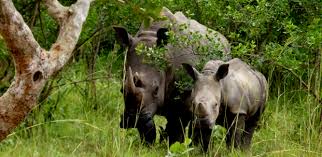 The story of how the rhino returned to Uganda is one of the great conservation narratives of modern Africa. By 1982, both the black and northern white rhinoceros had been entirely wiped out in Uganda, victims of armed conflict, poaching, and habitat destruction. For more than two decades, Uganda was a country without rhinos. Ziwa Rhino and Wildlife Ranch changed that. Established in 2005 through a partnership between the private land management company Ziwa Rhino and Wildlife Ranch Limited and the Uganda Wildlife Authority, the sanctuary began with just six animals: four purchased from Solio Ranch in Kenya and two donated by Disney’s Animal Kingdom in Florida. As of mid-2025, the population has grown to 48 animals, a testament to world-class husbandry, round-the-clock ranger protection, and a conservation vision of genuine ambition.
Ziwa is not a zoo. It is not a theme park. It is a functioning wildlife ranch and breeding sanctuary where rhinos range freely across 27 square miles within a secure electric perimeter, watched over by a team of 78 rangers working in shifts, 24 hours a day, seven days a week. For travellers on a Uganda safari, Ziwa Rhino Sanctuary is the essential stop between Kampala and Murchison Falls National Park, and increasingly, a destination worthy of its own overnight stay.
Ziwa Rhino Sanctuary: An Overview
The ranch sits approximately 164 kilometres north of Kampala, just off the Kampala to Gulu Highway near Mukerenge Village in Nakasongola District. Its position along the main northern highway makes it the natural midpoint stop for safaris heading to Murchison Falls, and its growing reputation as a multi-activity destination means that many travellers now plan their Ziwa visit as a full experience rather than a transit pause.
The 70 square kilometre property encompasses a varied landscape of open savannah grassland, mixed woodland, and the Lugogo Swamp, a papyrus wetland that provides critical habitat not only for the rhinos’ water requirements but for one of Uganda’s most sought-after bird encounters: the shoebill stork. This prehistoric-looking bird, towering and supremely patient in the reed beds, is reliably encountered at Ziwa in a way that few other sites in Uganda can guarantee. The combination of rhino trekking on foot and a dawn canoe through the swamp to find the shoebill makes Ziwa one of the most diverse single-site wildlife experiences in East Africa.
Beyond the rhinos and the shoebill, the ranch supports over 40 mammal and reptilian species including Uganda kob, oribi, bushbuck, waterbuck, hippopotamus, crocodile, and vervet monkey. Recent additions to the wildlife complement include Rothschild’s giraffe, Jackson’s hartebeest, and plains zebra, broadening the ranch’s ecological range considerably. The bird checklist exceeds 300 species, making Ziwa a serious birding destination in its own right.
How to Get to Ziwa Rhino Sanctuary
Ziwa Rhino Sanctuary is located along the Kampala to Gulu Highway, approximately two and a half to three hours by road from Kampala depending on traffic. The route is well maintained and entirely accessible by standard vehicle, though your Gorilla Safaris itinerary will always include a dedicated 4×4 for comfort and flexibility.
From Kampala
The drive north from Kampala follows the highway through Luwero and into Nakasongola District, passing through landscapes of rolling savannah and cultivation before the entrance to the sanctuary appears on the right side of the road. Most travelers stop at Ziwa en route to Murchison Falls National Park, making it a natural first-night or half-day inclusion in the northern Uganda circuit. Your private driver-guide will manage the departure time and pace of travel to ensure arrival at Ziwa in good time for the activity schedule.
From Murchison Falls
Travelers returning south from Murchison Falls National Park pass Ziwa on the same highway, making it an equally natural southbound inclusion. The drive from Murchison to Ziwa takes approximately three to four hours depending on the road surface and route taken through the park. A dawn departure from Murchison can deliver you to Ziwa in time for a late morning rhino trek and an overnight stay before returning to Kampala or Entebbe the following day.
From Entebbe International Airport
For travellers with international flights landing in Entebbe, the drive north to Ziwa takes approximately three hours from the airport, following the Entebbe-Kampala expressway and then the northern highway. Your Gorilla Safaris team will arrange seamless airport collection and transfer directly to the sanctuary on the day of arrival.
Best Time to Visit Ziwa Rhino Sanctuary
Ziwa Rhino Sanctuary is a year-round destination, and the rhinos are present and active in every season. However, understanding the seasonal rhythms of the sanctuary will help you plan the experience that best suits your expectations.
Dry Season: June to September and December to February
The dry months are the most popular for rhino trekking, and with good reason. As the vegetation thins and the savannah grass shortens, the rhinos are more visible across longer distances and encounters can be more extended and relaxed. The Lugogo Swamp contracts slightly, which can concentrate shoebill sightings. The heat builds during the day, but mornings and evenings are excellent, and the dust-gold quality of the dry-season light makes for exceptional photography. Roads within the ranch are at their best in the dry season, reducing the distance needed to drive before the on-foot trek begins.
Wet Season: March to May and October to November
The wet season transforms Ziwa into a lush, green landscape of striking beauty. The woodland canopy fills out, the savannah grasses grow tall and vivid, and the swamp expands into a papyrus wilderness of extraordinary richness. Birding is at its peak during the rains, with migratory species supplementing the resident checklist and the wetland birds reaching peak activity. Rhino sightings remain reliable throughout the wet season; the animals simply move differently through taller vegetation, and your ranger will adapt the trekking approach accordingly. The dawn canoe trek for the shoebill is arguably more atmospheric in the wet season, when mist rises from the swamp and the birdcalls layer over one another in the cool morning air.
For families travelling with younger children, the dry season months of June to August are generally recommended for ease and comfort. For dedicated birders or photographers seeking the green landscape, the wet season has a particular magic.
What to See at Ziwa Rhino Sanctuary
The Southern White Rhinos
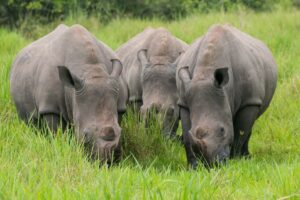
The rhinos are the centrepiece of every Ziwa visit, and rightly so. The southern white rhino, the world’s largest land mammal after the elephant, is not so much an animal as a living piece of prehistory. At Ziwa, the population of 48 individuals ranges freely across the 70 square kilometres of the sanctuary, and the trekking experience places you in genuine proximity to these animals in an entirely natural context. A mother and calf grazing in the early morning light is one of those wildlife encounters that reorders your sense of what Africa is capable of producing. The bull rhinos, solitary and territorial, move through the ranch with a deliberateness that commands respect. Your ranger will read their body language continuously, ensuring both your safety and the rhinos’ comfort at all times.
The Shoebill Stork
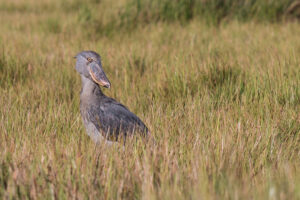
The shoebill, Balaeniceps rex, is one of the most extraordinary birds alive. Standing over a metre tall, with a bill the size and shape of a Dutch clog, and eyes of a pale, unearthly yellow, it watches the world from the papyrus margins of the Lugogo Swamp with an expression of absolute sovereign indifference. Ziwa is one of the most reliable sites in Uganda for shoebill sightings, with the sanctuary’s rangers recording up to 11 individuals on a single canoe expedition. The dawn departure at 6am, paddling through the mist-wrapped swamp as the first light turns the papyrus silver and the kingfishers begin their territorial declarations, is an experience of pure wildness that no vehicle-based safari can replicate.
Birds: Over 300 Species
Beyond the shoebill, Ziwa’s 300-plus bird checklist encompasses species from both the savannah and wetland ecosystems, making the ranch a rewarding destination for birders of every level of experience. The grey-headed kingfisher, the saddle-billed stork, the African fish eagle, the black-and-white casqued hornbill, the African grey flycatcher, and the yellow-billed oxpecker, which hitches a ride on the backs of the rhinos in one of wildlife photography’s most satisfying compositions, are among the regularly encountered species. A dedicated birding walk with a specialist guide can yield 60 to 80 species in a half-day session in the right season.
The New Wildlife: Giraffe, Hartebeest, and Zebra
Ziwa has recently welcomed Rothschild’s giraffe, Jackson’s hartebeest, and plains zebra to the ranch, expanding the mammal complement in ways that transform the open grassland game-viewing experience. The giraffe, browsing the acacia canopy with their characteristic elegance, add a layer of grandeur to what was already a remarkable wildlife landscape. The zebra and hartebeest bring the savannah to life in a way that reinforces Ziwa’s growing identity as a comprehensive wildlife destination rather than a single-species sanctuary.
Other Mammals and Wildlife
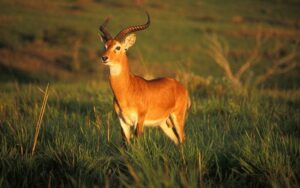 Uganda kob, oribi, bushbuck, and waterbuck move through the ranch’s grasslands and woodland margins throughout the day. Hippopotamuses occupy the deeper sections of the Lugogo Swamp and can be observed from a respectful distance during the canoe trek. Crocodiles bask on exposed banks. Vervet monkeys and olive baboons move through the woodland fringe. At night, the distinctive sounds of the African bush settle over the ranch and, for guests staying overnight in the chalets or tents, the awareness that rhinos are grazing just beyond the veranda lends the experience a profound and unusual intimacy.
Ziwa Rhino Sanctuary Entrance Fees and Costs
Rhino trekking fees at Ziwa cover park entry and include both the on-foot rhino trek from the ranch and the option to drive out into the sanctuary to locate the rhinos before trekking. Fees vary by visitor category and are quoted in US dollars or Ugandan shillings.
Foreign non-resident adult visitors currently pay USD 60 per person for park entry, which includes the rhino trek. Children aged 12 and under are charged USD 30. Foreigners residing in East Africa and holding valid work permits pay USD 50 per adult and USD 25 per child. East African residents pay 50,000 UGX for adults and 15,000 UGX for children. The shoebill canoe trek is priced separately and your Gorilla Safaris consultant will confirm current rates at the time of booking. All activity fees are included in your itinerary cost and settled on your behalf. Pets are not permitted at the sanctuary.
Best Activities at Ziwa Rhino Sanctuary
Rhino Trekking on Foot
The rhino trek is the defining activity at Ziwa and the reason most travellers make the journey. Available daily from 07:00 to 17:00, the trek takes between one and a half and two and a half hours depending on the rhinos’ location within the sanctuary. Your private guide and an armed ranger will accompany you throughout, driving first to the area of the ranch where the rhinos were last located and then continuing on foot through the bush to find them. The safety briefing before departure is thorough and should be taken seriously; a fully grown white rhino can run at 40 kilometres per hour, and the rangers’ 24-hour tracking knowledge means they understand each individual animal’s temperament intimately. The experience of approaching a rhino group on foot, moving quietly through the grass with the wind in your face and the ranger’s hand signals guiding your pace, has a tension and immediacy that vehicle-based wildlife viewing cannot approximate.
Shoebill Trek and Dawn Canoe
The shoebill trek departs at 06:00 and lasts approximately four hours, paddling through the Lugogo Swamp in traditional canoes accompanied by a ranger guide who knows the shoebill’s preferred territories within the wetland. Because the activity begins before the sanctuary gates open at 07:30, an overnight stay at Ziwa is essential to participate. The canoe moves silently through channels in the papyrus, and the shoebill, when encountered, rewards the early rising spectacularly. Up to 11 individuals have been sighted in a single trip. Water birds are exceptionally numerous in the swamp, and the hour or two before the sun has fully risen over the Lugogo marsh produces a birding experience of extraordinary density and beauty.
Birding Tours
A dedicated birding walk at Ziwa, conducted by an experienced ranger guide with deep knowledge of the ranch’s resident species, provides access to a checklist that few single-site birding destinations in Uganda can match. The combination of savannah, woodland, and wetland habitats within the 70 square kilometre property means that species from entirely different ecological communities can be encountered within a short walk of each other. A half-day birding programme typically yields 50 to 80 species, and a full-day session during peak season can exceed 100. The yellow-billed oxpecker on a rhino’s back, the malachite kingfisher in the swamp margin, and the martial eagle circling over the woodland are among the images that stay with birding visitors long after the visit.
Night Nature Walks
The night walk at Ziwa, conducted under torch and starlight with a ranger guide, transforms the familiar landscape of the ranch into something altogether different. Bushbabies call from the treetops. Nightjars materialise briefly in the torch beam. The sounds of the African bush at night, frogs and insects and the occasional distant thump of a large mammal moving through the grass, build an awareness of the sanctuary’s nocturnal life that the day’s activities do not reveal. For guests staying overnight, the night walk is a curated addition that deepens the sense of connection with the ranch enormously.
Nature Hikes and Guided Walks
Guided nature walks through the ranch’s varied habitats provide an introduction to the ecology of the Kafu River Basin ecosystem, the plant communities, insect life, reptiles, and smaller mammals that underpin the larger wildlife picture. For families travelling with children, the nature walk offers an accessible and educational engagement with the African environment at ground level.
Where to Stay at Ziwa Rhino Sanctuary
Ziwa Rhino and Wildlife Ranch offers accommodation options across all budget tiers, all located within the sanctuary itself. Staying overnight at Ziwa is strongly recommended for travelers who wish to participate in the dawn shoebill canoe trek, and the experience of sleeping within the rhino sanctuary, with the sounds of the African night and the awareness of rhinos grazing outside, is one that many guests describe as the most memorable night of their Uganda safari.
Luxury Accommodation: Chalets and Tents
Ziwa’s brand-new luxury chalets represent a significant upgrade to the accommodation offering and have transformed the sanctuary into a viable destination for discerning travelers who might previously have been deterred by the standard of facilities. The chalets are built in thatched-roof East African lodge style, with private verandas, king-size beds, polished stone bathrooms, and a freestanding bath in the superior suite. The swimming pool, set between the chalets with views over the sanctuary grounds, is a welcome addition for afternoon relaxation between morning and evening activities. The remarkable detail is that rhinos have been observed grazing outside the chalets at night, visible from the veranda and audible in the darkness, a proximity to wild animals that few lodge experiences anywhere in Africa can offer.
The luxury tented accommodation provides the classic East African canvas experience in a fully serviced format, with comfortable beds, en-suite bathroom facilities, and the immersive sound environment of the sanctuary at all hours. For travelers who appreciate the safari tent aesthetic, this is the Ziwa accommodation of choice.
Mid-Range: Guest Rooms
The guest rooms at Ziwa offer comfortable, clean accommodation in a simple lodge format appropriate for the mid-range traveller. Rooms are en-suite with hot water and mosquito netting, and the shared common areas, including the bar and restaurant serving cold drinks and home-cooked meals, provide a convivial social atmosphere for guests of all backgrounds. The guest rooms are particularly well suited to family groups and small tour parties for whom the luxury tier would not represent best value.
Budget: Camping
The campsite at Ziwa is one of the few camping options in Uganda that offers genuine wildlife immersion without sacrificing basic safety and sanitation standards. Camping within the sanctuary grounds, with access to the shared bar and restaurant, provides independent travelers and budget-conscious groups with the full Ziwa experience at an accessible price point. The campfire under the Nakasongola stars, with the distant sounds of the bush surrounding the camp, is an experience of uncommon simplicity and depth.
What to Wear and Pack for Ziwa Rhino Sanctuary
Dressing appropriately for Ziwa will significantly enhance your comfort and your wildlife encounters. The rhino trek requires on-foot movement through savannah grass and light bush in conditions that can range from cool and misty at 07:00 to very warm by mid-morning. Closed shoes or walking boots are essential and are specified by the sanctuary as a requirement for the rhino trek. Open sandals are not permitted on the trek.
Neutral-coloured clothing in khaki, olive, or tan is strongly recommended. The animals at Ziwa are habituated to human presence, but approaching them in bright or white clothing is discouraged and can affect the quality of the encounter. Long-sleeved shirts protect against both sun and the insects that inhabit the grassland margins. Long trousers are also specified for the rhino trek.
The dawn canoe trek requires an additional layer for the early morning chill on the swamp, particularly from June to August and November to January. A light fleece or long-sleeved jacket, easily removed as the sun rises, is advisable. Waterproof footwear or sandals that can get wet are useful for boarding and disembarking the canoes at the swamp edge.
Binoculars are indispensable for the birding and shoebill trek components of the visit. A 10×42 configuration is standard. A camera with a telephoto lens will capture rhino and shoebill encounters at a quality that phone cameras cannot match. Insect repellent containing DEET should be applied before both the morning and evening activities. Drinking water, sunscreen, and a wide-brimmed hat are essential during the heat of the day.
Frequently Asked Questions: Ziwa Rhino Sanctuary
What is Ziwa Rhino Sanctuary in Uganda?
Ziwa Rhino Sanctuary, officially named Ziwa Rhino and Wildlife Ranch, is a 70 square kilometre private wildlife sanctuary in Nakasongola District, central Uganda. Established in 2005, it is the only place in Uganda where southern white rhinos can be observed in the wild. The ranch is managed collaboratively by Ziwa Rhino and Wildlife Ranch Limited and the Uganda Wildlife Authority.
How many rhinos are at Ziwa Rhino Sanctuary?
As of mid-2025, the sanctuary is home to 48 southern white rhinos. The population began with just 6 animals in 2005 and has grown steadily through the ranch’s successful breeding programme. The long-term goal of the programme is to breed a sustainable population large enough to begin reintroducing rhinos into Uganda’s national parks.
How do I get to Ziwa Rhino Sanctuary?
Ziwa Rhino Sanctuary is located approximately 164 kilometres north of Kampala along the Kampala to Gulu Highway, approximately two and a half to three hours by road. The sanctuary is accessible by private vehicle and is most commonly visited en route to or from Murchison Falls National Park. There is no public transport to the sanctuary; all transfers are arranged privately.
What is the entrance fee at Ziwa Rhino Sanctuary?
Foreign non-resident adults currently pay USD 60 per person for park entry, which includes the rhino trek. Children aged 12 and under pay USD 30. Foreigners residing in East Africa with valid work permits pay USD 50 per adult. East African residents pay 50,000 UGX per adult. The shoebill canoe trek is priced separately. All fees are confirmed at the time of booking through Gorilla Safaris.
Do I need to stay overnight at Ziwa to see the shoebill?
Yes. The shoebill canoe trek departs at 06:00, before the sanctuary gates open at 07:30. An overnight stay is therefore required to participate. The experience of staying within the rhino sanctuary is itself exceptional, and the dawn canoe trek is one of the most rewarding wildlife activities available in Uganda.
Is Ziwa Rhino Sanctuary worth visiting?
Ziwa is widely regarded as one of the most unique wildlife experiences in East Africa. It is the only place in Uganda where you can walk with wild rhinos on foot, and one of the most reliable sites in Africa for close encounters with the shoebill stork. The combination of rhino trekking, birding, and overnight accommodation within a functioning conservation sanctuary makes it an exceptional destination in its own right, not merely a transit stop.
What is the best time to visit Ziwa Rhino Sanctuary?
Ziwa is a year-round destination. The dry seasons of June to September and December to February offer the best visibility for rhino trekking as vegetation is shorter. The wet seasons of March to May and October to November are excellent for birding and produce a lush, photogenic landscape. The shoebill canoe trek is rewarding in every season.
Can I combine Ziwa with gorilla trekking in Uganda?
Yes. A popular and highly recommended combination is to include Ziwa Rhino Sanctuary as part of a northern Uganda circuit before continuing south to Bwindi Impenetrable Forest for gorilla trekking. This creates a journey that encompasses Uganda’s most iconic wildlife species: the southern white rhino, the shoebill stork, and the mountain gorilla.
What should I wear for the Ziwa rhino trek?
Closed shoes or walking boots are required for the rhino trek; open sandals are not permitted. Neutral-coloured clothing in khaki, olive, or tan is recommended. Long trousers and a long-sleeved shirt provide both sun protection and coverage from insects in the grassland. Bring drinking water, insect repellent with DEET, a hat, and sunscreen.
Are children allowed on the rhino trek at Ziwa?
Children are welcome at Ziwa and are charged a reduced park entry fee. Children aged 12 and under pay USD 30 for park entry. Families are well catered for at the sanctuary, and the rhino trekking experience is appropriate for children who can follow the ranger’s instructions carefully. The nature walk and birding activities are particularly accessible for younger visitors.