Mountain gorillas are scientifically classified as ‘Gorilla beringei beringei’ and represent one of the two subgroup of eastern gorillas. There exist several unique and large species of apes on Earth that share 98 percent of their DNA with humans.
Mountain gorillas are recognized on both the IUCN Red List and the African Wildlife Foundation as one of the most endangered species, facing a significant risk of extinction in their natural habitat. At present, the population of these gorillas is just above 1,000 globally, with a significant portion residing in the verdant rainforest of Bwindi Impenetrable National Park, while others inhabit the Virunga mountain ranges. Notable locations comprise Virunga National Park situated in the eastern Democratic Republic of Congo (DRC), Volcanoes National Park located in northwestern Rwanda, and Mgahinga Gorilla National Park found in southwestern Uganda. Additionally, Bwindi is home to more than 460 mountain gorillas, representing nearly half of the global population.
Facts About Mountain Gorillas
Mountain Gorillas are widely regarded as having evolved from monkeys and other apes in Arabia and Africa around 9 million years ago. About 2 million years ago, Eastern gorillas separated from Western gorillas in West and Central Africa. The eastern gorillas separated into mountain gorillas and eastern lowland gorillas around 400,000 years ago.
The designation of the term gorilla occurred in 1852, following the initial classification of the genus as Troglodytes. In 1967, Colin Groves introduced specific nomenclature for different gorilla species, leading to the classifications of western lowland gorilla, eastern lowland gorilla, and mountain gorilla.
Locations for Viewing Mountain Gorillas in Africa
Mountain gorillas are found exclusively in three African nations: Uganda, Rwanda, and the Democratic Republic of Congo. Uganda is home to approximately fifty percent of the total population residing within Bwindi Impenetrable National Park and Mgahinga Gorilla National Park. Mountain gorillas are found in Virunga National Park in Congo, while in Rwanda, they reside in Volcanoes National Park.
The specified regions provide the suitable habitat, ecology, and elevation (7,200–14,100 feet) necessary for the thriving of mountain gorillas. The high altitude promotes abundant vegetation and is marked by chilly, cloudy weather. Lowland gorillas, both Eastern and Western varieties, are found in the Democratic Republic of Congo, Cameroon, and several countries across West and Central Africa. The total population of western lowland gorillas surpasses 250,000, whereas the population of eastern lowland gorillas is under 8,000. Mountain gorillas garner considerable attention due to their inability to thrive in captivity, in contrast to lowland gorillas. The latest gorilla census conducted in 2018 indicated that around 1,004 mountain gorillas remain on the planet. The mountain gorilla is designated as endangered by the IUCN due to this classification.
Features of Mountain Gorillas
Of all the gorilla species in Africa, mountain gorillas have the densest coats. This allows them to thrive in cold, high-altitude environments. Adult male mountain gorillas are known as silverbacks due to the distinctive silver hair that develops on their backs. An adult female gorilla typically weighs about 100 kilograms, while a silverback gorilla can reach a weight of approximately 195 kilograms. Silverbacks exhibit greater height and possess strength that is four times that of the largest human. Mountain gorillas typically exhibit a lower weight and smaller size compared to eastern lowland gorillas. The largest lowland gorilla ever recorded was found in Cameroon, with a weight of 267 kilograms. Like all other gorilla species, mountain gorillas can be identified by the unique nose prints of each individual. Their eyes are a deep shade of brown, and their hands are notably longer than their legs. Mountain gorillas have the ability to stand and move on two legs; however, they primarily use knuckle-walking, relying on their fingers for support. Mountain gorillas display diurnal behavior, remaining active exclusively from 6:00 am to 6:00 pm. A considerable amount of this time is dedicated to the eating of insects, shoots, branches, leaves, roots, blooms, and fruits to support their major development.

Consumption peaks in the morning, pauses about midday, and then picks back up in the afternoon as nightfall draws near. The midday rest period provides a valuable opportunity for social interaction, allowing individuals to engage in grooming activities that help eliminate parasites and maintain cleanliness. This is also the moment when one can observe young individuals participating in play, pursuit, somersaults, and wrestling. Adults may participate in the games if invited, though they may do so with some hesitation. Members of the group regularly use barks and grants to locate humans in thickets. Every adult builds a nest out of leaves and other plant materials as night falls. Infants stay alongside their mothers in the same nest.
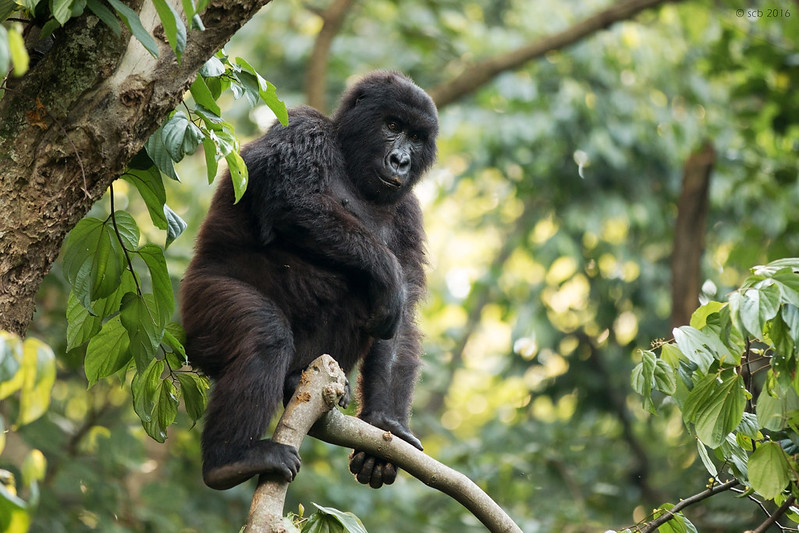
Mountain gorillas usually live on land. Nests are built on the ground. Adult gorillas climb trees exclusively in search of fruit, provided that the tree is capable of supporting their weight. Tree climbing is typically designated for the younger individuals. Injuries and fatalities among adult gorillas are frequently attributed to falls from unsecured tree branches. Mountain gorillas show fear of certain reptiles and insects. For whatever reason, they avoid chameleons and caterpillars whenever they can. Mountain gorillas demonstrate a notable phobia towards water and display a distinct resistance to rainfall. They will cross streams only if they can use logs or fallen trees to do so. Gorillas are distinguished from other primates by their exceptionally stable social groups.
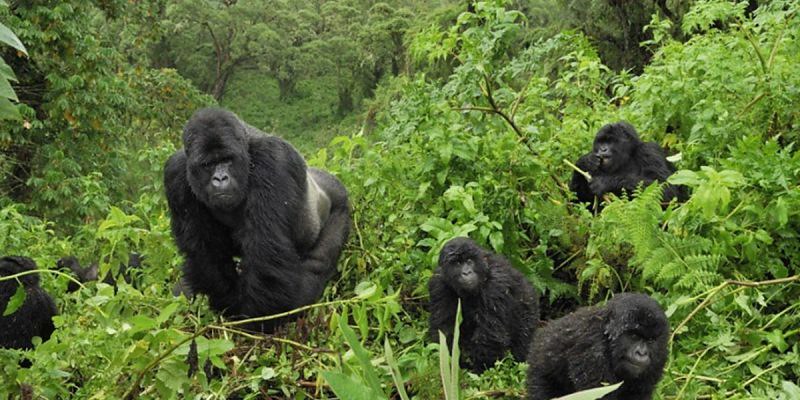
Mountain gorillas exhibit strong social behavior and live in a unified group under the leadership of a dominant male. The dominant silverback and females establish a stronger connection, leading to stronger bonds in comparison to other ape families. The connections among female gorillas are often fragile, leading them to leave and join other groups as they mature. Females that leave the group upon reaching adulthood will either join another dominant group or begin a new life with a solitary male. Some females will move between different groups several times before settling with a single silverback. A significant number of women within a group tend to demonstrate loyalty.
Mountain gorillas are led by a lifelong dominant silverback. Mating among mountain gorillas is often initiated by a receptive female. Mountain gorilla groups do not have a designated territory, which results in the male silverback being solely responsible for defending his group against intruders. Thirty-six percent of mountain gorilla groups consist of multiple silverbacks. Some groups consist exclusively of males, supervised by an older adult, while others feature individual males. Within a gorilla troop consisting of females, the dominant male silverback acts as the clear leader and central figure, while the other males hold subordinate positions. All members of the group strive to earn his approval by demonstrating commendable behavior and involving him in their activities when he shows interest. He oversees the group’s movement and identifies the most suitable feeding areas.
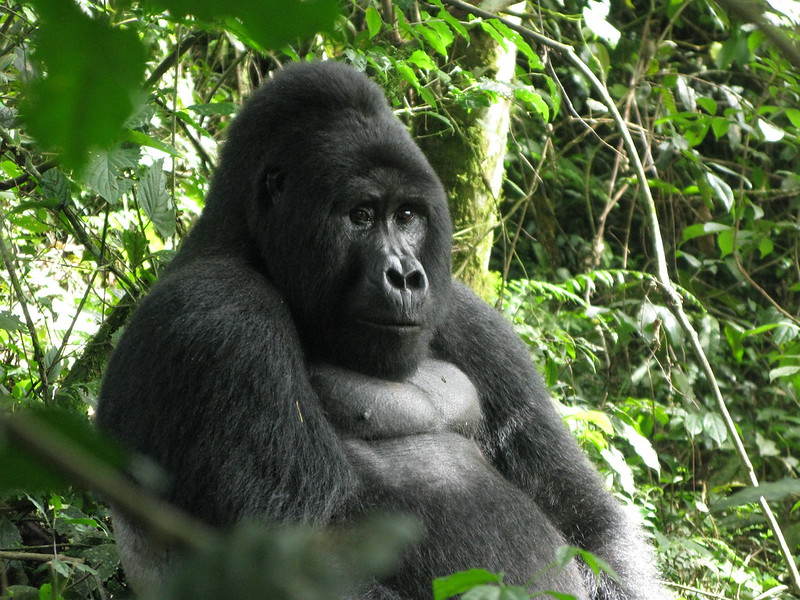
In addition to mediating conflicts amongst group members, a silverback will defend the group from humans, other gorillas, or leopards—even if it means sacrificing itself. In the event of a female’s death or departure, the silverback will take on the responsibility for her offspring. He is capable of employing his skills to remove snares from the feet or hands of the group members. The passing of a silverback could lead to disruption within a once-cohesive community. In the absence of a suitable leader to succeed the silverback, the group may face fragmentation or the necessity to appoint an external leader. If a silverback from another group is chosen, there is a possibility that he may choose to eliminate all offspring of the deceased male. Mountain gorillas, despite their strength and imposing presence, exhibit a gentle and reserved nature. The group members address hostility independently when provoked or confronted by another troop of gorillas. In these situations, individuals may first choose to threaten or intimidate an intruder. When the Silverbacks choose to engage in combat, the situation can escalate to violence, potentially leading to fatal outcomes. They will utilize their sharp teeth to deliver significant cuts and harm to their opponent.
Threats and Conservation Efforts for Mountain Gorillas
Although the population of mountain gorillas has surpassed 1,000, they continue to be vulnerable and are classified as an endangered species. The biggest danger to mountain gorillas comes from humans. In the Democratic Republic of Congo, Mountain gorillas remain vulnerable to poaching activities. A significant number of mountain gorillas have lost their lives or sustained injuries due to traps, ultimately leading to the tragic plight of orphaned children. The majority of these traps are designed for various species. The insecurity, social upheaval, and conflicts in the Democratic Republic of Congo have negatively impacted the population of Mountain gorillas, even with the existence of Africa’s oldest national park.
The ongoing increase in mountain gorilla populations can be primarily credited to gorilla tourism, strict governmental security measures, and the efforts of researchers backed by philanthropic support. The gorillas receive care from veterinary experts for any critical diseases or injuries caused by traps. The Senkwekwe gorilla orphanage in Congo was founded to rehabilitate juvenile mountain gorillas that have been orphaned as a result of hunting activities.
Authorities in Congo have enhanced armed patrols in Virunga National Park to eliminate poachers and armed militias. The expulsion of the Batwa pygmies from the jungles of Uganda and Rwanda represents a contentious decision. The actions taken have played a significant role in stabilizing mountain gorilla populations; however, there remains an opportunity for governments to further improve local community engagement in park activities to guarantee that they benefit from tourism. The story of gorilla conservation has achieved notable success. Their intriguing traits and vulnerable status have enabled the securing of funding from wildlife conservation organizations. The foremost global organization committed to the conservation of mountain gorillas is the International Gorilla Conservation Programme (IGCP). This program was initiated in 1991 as a collaborative effort involving the World Wide Fund for Nature, Fauna & Flora International, and the African Wildlife Foundation. These organizations have exhibited significant generosity by allocating resources for the conservation of mountain gorillas.
Mountain Gorilla Trekking Experience
The cost of a gorilla tour is significant; however, engaging with mountain gorillas represents the ultimate wildlife experience. While a safari to observe the Big Five is admirable, nothing compares to the experience of witnessing mountain gorillas in their natural habitat — gorillas are our relatives. Current estimates indicate that there are around 1,000 Mountain gorillas remaining in the wild, leading to a significant demand for mountain gorilla permits. Fifty percent of these are situated in Uganda, with the remaining half allocated between Rwanda and the Democratic Republic of the Congo. Mountain gorillas are classified as endangered by organizations like the International Union for Conservation of Nature, owing to their limited global population.
The discussion regarding the best country for a gorilla safari is subject to individual perspectives and remains inconclusive. Drawing from our extensive experience in conducting safaris, it is evident that each country offers unique benefits, and the final choice of a destination depends on personal preference. Some guests choose to observe gorillas in both Rwanda and Uganda to understand the differences in the management of mountain gorillas in these two countries.
Only 20 percent of mountain gorillas have undergone habituation. The habituation process for mountain gorillas spans two years, allowing a designated population of these mountain gorillas to become accustomed to human presence. Mountain gorillas that are not habituated display unpredictable behavior, and it is prohibited for visitors to approach them.
What is the best time to begin a gorilla tour?
Tracking mountain gorillas requires navigating muddy routes, thick forests, and steep slopes. Both regular gorilla tracking and the more daring gorilla habituation experience are offered all year long. The best time for a gorilla safari is right after the rainy season ends. In this time frame, the gorilla reserves and rural areas continue to be exceptionally beautiful and relatively less muddy. How long does it take to observe gorillas?
The length of the exercise ranges from thirty minutes to eight hours, depending on the chosen gorilla family. We recommend preparing yourself both physically and mentally for your gorilla trekking safari. A comprehensive packing list and suggested accommodation options are available for all guests planning to track mountain gorillas. The guides and wardens at different parks generally offer a briefing on the necessary requirements for gorilla tracking before your journey into the jungle begins.
What is the likelihood of observing the gorillas?
We cannot guarantee that you will see the Mountain Gorillas. However, we have never known anyone who came back without seeing them. The likelihood of encountering them is greater than 90%. In light of your gorilla observation experience, please note that there are several additional activities available for your engagement. One may begin by visiting the Dian Fossey Mesum to gain insights into her efforts in gorilla protection and conservation, along with her views on the ethical considerations surrounding gorilla trekking. The gorilla parks also host a variety of other primates, including chimpanzees, baboons, and monkeys. The countries of East Africa are rich in tourism resources. One may undertake a safari to observe a diverse array of wildlife in various national parks and reserves. East Africa is the perfect place for you if you enjoy mountain trekking, bird watching, cultural visits, white-water rafting, and environmental hikes. gorillasafaris.com provides tailored programs that combine gorilla safaris with supplementary activities.
Cost Of mountain gorilla trekking in Uganda (Mgahinga and Bwindi Gorilla National Park)?
The costs of gorilla trekking permit in Uganda follows: $800 per person per trek for foreign non-residents, $700 per person for residents, and $82 for East African citizens, which includes individuals from Uganda, Rwanda, Tanzania, Kenya, Burundi, and South Sudan. This offers a chance to spend an hour with mountain gorillas in either Mgahinga Gorilla National Park or Bwindi Impenetrable Forest National Park.
Uganda is home to 17 habituated gorilla family groups, with 16 situated in Bwindi Impenetrable National Park and one (1) in Mgahinga gorilla National Park, allowing for the issuance of 136 gorilla permits each day for trekking activities. Gorilla trekking in Uganda provides a unique opportunity to participate in the Gorilla habituation experience, which is exclusively offered in Bwindi Forest. A Gorilla habituation permit, available for $1500 per person, provides a four-hour opportunity for interaction with semi-habituated mountain gorillas, under the supervision of trackers and researchers, as opposed to the one-hour duration commonly associated with standard trekking. Gorilla permits in Uganda can be acquired directly through the Uganda Wildlife Authority or through a reputable tour operator such as Rwanda Gorilla Trek.
Cost for Mountain Gorilla Trekking Permit in Rwanda at Volcanoes National Park?
The cost of a Gorilla permit in Rwanda is structured as follows: $1,500 per person per trek for foreign non-residents, $500 per person for foreign residents, and $200 for East African citizens, which includes individuals from Uganda, Rwanda, Tanzania, Kenya, Burundi, and South Sudan.
This permit grants one hour of interaction with the mountain gorillas in Volcanoes National Park. Rwanda is home to over 12 gorilla families, offering 96 gorilla permits each day for trekking in Volcanoes National Park. Gorilla permits in Rwanda can be acquired directly through the Rwanda Development Board or through a reputable tour operator in the country, such as Gorilla Safaris.
What is the best time to See/Visit mountain gorillas in Uganda, Rwanda, Congo
Mountain gorillas can be reliably observed year-round, with regular sightings; however, rainfall tends to deter human activity in the area. The best time for gorilla trekking is entirely at your convenience. Permit availability is frequently a contributing factor, as they tend to be sold out more than a year in advance during peak months. The best dry seasons for Gorilla trekking in Africa are from mid-December to early February and from June to September. Do not let the rainfall in November and from March to May discourage you, as you will have the opportunity to explore the forests and mountains in solitude, accompanied by knowledgeable guides and the gorillas.