6-Day Rwenzori Trek to Weismann’s Peak
The 6-day Rwenzori trek to Weismann Peak takes you to trek Weismann’s Peak (4,620 m) via the Kilembe Trail in 6 days.
Weismann’s Peak, at 4,620 meters, the higher of the two summits of Mount Luigi di Savoia, is the target of this 6-day Rwenzori trek to Weismann Peak. It is a serious high-altitude objective, reaching well above 4,500 meters and requiring acclimatization, fitness, and respect for the mountain’s notoriously variable weather. But it does not require technical mountaineering skills or glacier equipment, making it accessible to fit, experienced trekkers who are willing to prepare properly and commit to the program. The Kilembe Trail approach, entering the mountain from the southwest via the former copper-mining town of Kilembe near Kasese, is the wildest and most scenically dramatic route in the Rwenzori system, traversing a point-to-point landscape of waterfalls, high tarns, and rock ridges that rewards every day of the ascent.
Trek Overview
The 6-Day Weismann’s Peak Trek via the Kilembe Trail is a point-to-point traverse of the southern Rwenzori massif, ascending from the Kilembe trailhead at approximately 1,586 meters and gaining over 3,000 meters of altitude before the summit push to 4,620 meters on Day 5. The route passes through 5 distinct vegetation zones, each with its own character, ecology, and visual language: the lowland montane forest, the bamboo and Mimulopsis belt, the Hagenia-Hypericum zone, the giant heather and Senecio moorland, and the high-altitude rock zone of the upper peaks. The daily stages are varied in character and challenge, ranging from the forest walking of the first two days to the demanding rocky ascent of the summit day.
The trekking day covers 5 to 8 kilometers on most stages, with trekking times of four to seven hours depending on altitude and terrain. All overnight accommodation is in Uganda Wildlife Authority mountain huts along the Kilembe corridor, which provide basic but functional shelter with sleeping platforms, cooking facilities, and latrine blocks. Your private guide for gorilla safaris is experienced in both the route and the altitude management strategies that maximize your probability of reaching Weismann’s summit. A personal porter carries your main load throughout the program, allowing you to trek with a light daypack and maintain the energy reserves that the higher altitudes demand.
The program includes pre-trek accommodation in Kasese, the gateway town to the Rwenzori from the south, and a post-trek return to Kasese or Kampala as needed. The six trekking days are designed to provide progressive altitude gain with sufficient rest and acclimatization to make the summit day safe and achievable for fit trekkers without prior high-altitude experience.
Itinerary at a Glance
- Kasese | Trailhead Registration | Kilembe to Sine Hut (2,596m)
- Sine Hut | Through Bamboo Zone | Kalalama Camp | Mutinda Camp (3,688m)
- Mutinda Camp | Mutinda Lookout (3,975m) Option | Hunwick’s Camp (3,927m)
- Hunwick’s Camp | Upper Kilembe Valley | Lake Kopello Camp (4,190m)
- Summit Day | Weismann’s Peak (4,620m) | Return to Hunwick’s or Lake Kopello
- Descent via Kilembe Trail | Return to Kasese | Departure
Day-by-Day Narrative
Day 1: Into the Mountain’s Forest — Kilembe to Sine Hut
Elevation: 1,586m → 2,596 m | Altitude Gain: ~1,010 m | Distance: ~7 km | Trekking Time: 4–5 hours
The program begins properly at dawn in Kasese, where the pre-departure briefing at your accommodation gathers the team for the first time: your private mountain guide, your personal porter, and the Uganda Wildlife Authority ranger who will accompany the group throughout. The drive from Kasese to the Kilembe trailhead takes thirty minutes along the road that follows the Nyamwamba River into the mountain’s lower approaches, and the trailhead’s modest infrastructure, a UWA gate and a cluster of trees at the edge of the National Park boundary, gives no indication of the scale of what lies above.
Registration and the safety briefing at the gate are completed by mid-morning, and the trail departs into the montane forest zone with the immediate sensory impact that every first-time Rwenzori trekker remembers: the canopy closing overhead, the temperature dropping, and the sound of the forest replacing the sounds of the valley below in a transition that feels almost instantaneous. The first section of trail climbs steadily through Afro-montane forest, where Colobus monkeys move through the canopy in leaping arcs, their black-and-white forms catching the filtered light. L’Hoest monkeys, rare and culturally significant to the Bakonzo people, whose ancestral relationship with this mountain is one of the most profound in Uganda, are occasionally glimpsed in the mid-level vegetation.
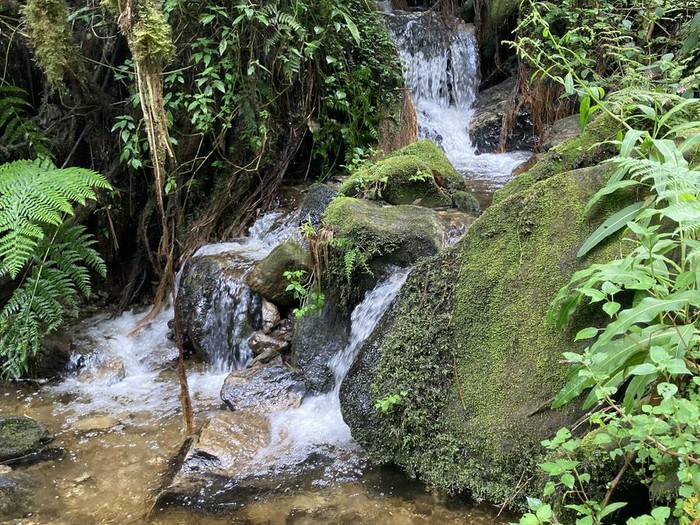
Enock’s Falls, visible from the trail approximately 200 meters before the hut, is the first of the Kilembe route’s many waterfall encounters, a cascade that drops through the forest rock in a white column and announces the presence of the mountain’s extraordinary water system. Sine Hut, at 2,596 meters, sits on a narrow ridge between tall forest trees, with a wooden veranda that overlooks the waterfall and the valley below. The hut sleeps ten in basic but functional comfort, and the evening meal, prepared by your guide team on the hut’s cooking facilities, is the first of the mountain’s simple, restorative dinners that the altitude will make taste better than they have any right to.
Day 2: The Bamboo Cathedral — Sine Hut to Mutinda Camp
Elevation: 2,596m → 3,688 m | Altitude Gain: ~1,092 m | Distance: ~6 km | Trekking Time: 5–6 hours
The morning at Sine Hut has a particular quality that experienced mountain travelers learn to savor: the damp cold of the forest at altitude, the sound of water running over rocks somewhere below, and the first bird calls of the Rwenzori beginning before the light has reached the canopy. Breakfast is unhurried. The trail begins at 08:30.
The bamboo zone, entered within the first thirty minutes of the morning’s trekking, is one of the Rwenzori’s most distinctive environments and the one that most surprises first-time visitors to the mountain. The bamboo grows in dense stands that reduce the light and transform the character of the trail entirely: the path here is steep, often muddy in any season, and flanked by culms that rise to eight or ten meters and filter the cloud light into something green and diffuse and beautiful. The physical effort is real; the gradient increases significantly on this section, and the altitude gain of over 1,000 meters across the day’s program makes patience and a steady pace the only sensible strategy.
Kalalama Camp, at 3,147 meters, a rest stop in the Heather-Rapanea Zone, offers the first panoramic views of the valley below and the first sight of the upper mountain ridges above the treeline. A cup of tea here, with the valley floor visible through a gap in the vegetation and the cloud building on the western flank of the range, marks the transition from forest trekking to mountain trekking in a way that the body registers before the mind does.
The trail from Kalalama to Mutinda Camp meanders along ridge tops and into valley crossings, passing moss-covered waterfalls and following a beautiful river that tumbles over the rocks beneath giant heather trees whose trunks are upholstered in green moss and festooned with old man’s beard lichen. Mutinda Camp at 3,688 meters, sits near a small river with its own waterfall, providing a campsite of real beauty at the edge of the upper heather zone. The optional ascent to Mutinda Lookout at 3,975 meters, one and a half hours above the camp, is strongly recommended for acclimatization and rewards with views across the Rwenzori ridge system, down to Kasese and Lake George, and, on clear evenings, to the distant plains of western Uganda stretching toward the horizon.
Day 3: The Upper Heather World — Mutinda Camp to Hunwick’s Camp
Elevation: 3,688m → 3,927m | Altitude Gain: ~239m net | Distance: ~8km | Trekking Time: 5–6 hours
The third day is the one that most trekkers cite as the most visually extraordinary of the program, and the relatively modest altitude gain disguises the full drama of what the trail crosses. The Kilembe corridor above Mutinda opens into the afro-alpine moorland, where the giant heather gives way progressively to the zone of giant lobelias and Senecio groundsels, the botanical spectacle unique to the Albertine Rift highlands that has been causing trekkers to stop, photograph, and simply stand in astonished silence for as long as expeditions have been coming to this mountain.
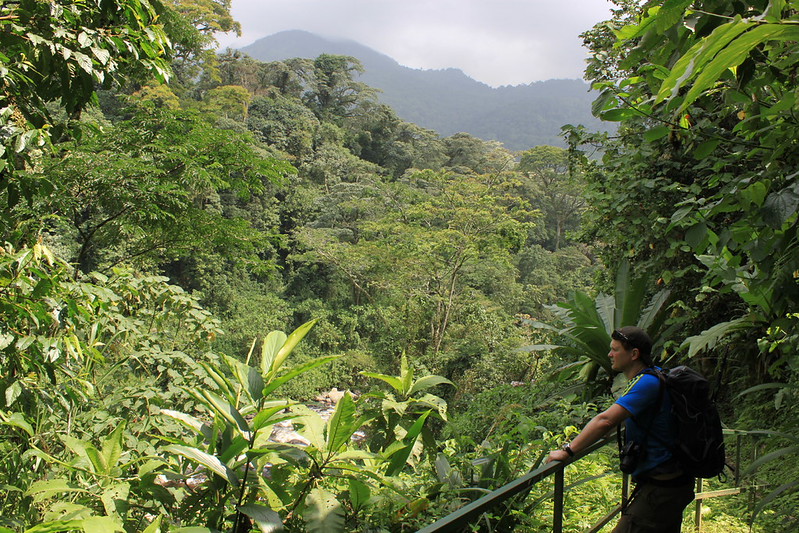
The giant groundsels of the Rwenzori, Dendrosenecio adnivalis, grow to five meters in height, their thick succulent trunks supporting a crown of leaves that trap water and provide microhabitats for a community of invertebrates and small vertebrates found nowhere else on earth. The giant lobelias, Lobelia wollastonii, erupt from the moorland in dense rosettes before sending up a single flowering spike of extraordinary architectural complexity. Walking through a field of these plants in the cloud, with the white mist moving through the stems and the Rwenzori turaco calling somewhere above, is the experience that the Rwenzori has been promising since the trailhead.
Hunwick’s Camp, at 3,927 meters, is named after a former park warden and sits in one of the most exposed and dramatic positions of the Kilembe route, with views on clear days toward the glaciated upper massif of Mount Stanley to the north and the rocky ridgeline of Mount Luigi di Savoia, on which Weismann’s Peak sits, directly above. The evening at this altitude is cold, the temperature dropping to near-freezing after dark, and the sleeping bag’s warmth becomes seriously appreciated for the first time. Your guide will have prepared a warm dinner and will brief the group on the summit day program after the meal.
Day 4: Into the High Country — Hunwick’s Camp to Lake Kopello Camp
Elevation: 3,927m → 4,190m | Altitude Gain: ~263m | Distance: ~5km | Trekking Time: 4–5 hours
Day 4 is a shorter stage by distance but a demanding one by character, crossing the upper Kilembe valley through terrain where the moorland has given way entirely to rock and the altitude begins to make itself felt with a new seriousness. This is acclimatization day in everything but name: the shorter distance allows the body time to adjust to the conditions above 4,000 meters, and the afternoon rest at the camp provides the recovery that the summit day will demand repayment of.
The trail from Hunwick’s crosses the broad upper valley in a traverse that provides a continuous mountain panorama. The glaciated summits of the Rwenzori’s main massif are visible to the north on clear mornings, their ice fields reduced from their historical extent by the glacier retreat that has been documented over the past century but still dramatic in their contrast with the rock and moorland below. The route negotiates a series of rocky sections where the trail markers require attention, and your private guide’s knowledge of this specific terrain and the route choices that avoid the worst mud sections and the safest lines across the exposed ridges is at its most valuable on this day.
Lake Kopello Camp, at 4,190 meters, sits beside one of the Rwenzori’s high tarns, a dark, cold lake set in a rocky bowl below the final approach ridges to Weismann’s Peak. The camp’s position at this altitude means a night of genuine cold and, for some trekkers, the mild effects of altitude that the acclimatization strategy of the preceding days has been designed to minimize. Hydration, a warm meal, and an early sleep at 19:00 are the preparation for the 03:30 wake-up that the summit day demands.
Day 5: The Summit — Weismann’s Peak at 4,620 Metres
Elevation: 4,190m → 4,620m summit → descent | Altitude Gain: ~430m gain | Distance: ~8km total | Trekking Time: 7–9 hours
The alarm at 03:30 in a cold mountain hut at 4,190 meters is one of those moments that tests the resolve that brought you to this mountain in the first place. The temperature inside the hut is just above freezing. The darkness outside is complete. Your guide has a hot drink waiting, and the headtorch beam picks out the condensation on the hut walls. And then, when you step outside, the sky above the Rwenzori reveals itself: a darkness so absolute and so full of stars that the Milky Way is a physical presence, arching over the summit ridgeline in a display that the equatorial altitude makes extraordinary.
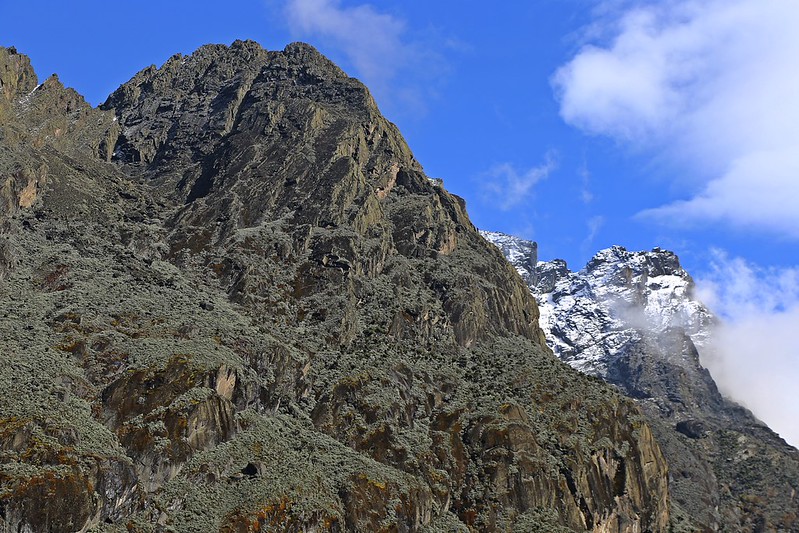
The ascent to Weismann’s Peak begins in this darkness, following the headlamp beams on a rocky trail above the lake camp. The pace is deliberately slow in the first hour, the body conserving heat and oxygen in the cold air as the altitude increases toward 4,400 meters. The ridge approaches above Lake Kopello require careful footing on rock surfaces that may carry frost in the pre-dawn hours, and your guide moves with the unhurried confidence of someone who knows each section of this route in all conditions.
The summit, when it comes, arrives with the dawn. Weismann’s Peak at 4,620 meters, the higher of Mount Luigi di Savoia’s twin summits, rewards the hours of darkness with a view that, on a clear morning, extends across the full length of the Rwenzori range and out to the plains of Uganda and the DRC on both sides of the mountain. The glaciated summits of Mount Stanley are visible to the north, their ice fields catching the first light in a manner that, despite the knowledge of their ongoing retreat, still showcases why this range was called the Mountains of the Moon. The moment at the summit, cold and clear and earned, is one that most trekkers describe as the single most powerful hour of their Uganda journey.
The descent returns to Hunwick’s Camp or Lake Kopello for the night, the legs discovering the particular satisfaction of downhill trekking after the effort of the ascent, the body reclaiming oxygen at lower altitude with a physical pleasure that manifests as warmth and clarity and the particular contentment of a summit achieved.
Day 6: The Long Way Down — Descent to Kilembe and Kasese
Elevation: ~3,927m → 1,586m | Altitude Gain: ~2,341m descent | Distance: ~14km | Trekking Time: 6–7 hours
The final day of the trek is the longest in distance and the most physically demanding on the legs and knees, descending the full Kilembe Trail from the upper mountain back to the trailhead in a single continuous stage. The descent passes back through all the vegetation zones in reverse, and the experience of moving through the giant heather, bamboo, and forest in the direction of the valley below has a quality of completion and recall that the ascent did not prepare you for. The plants look different on the way down. The trail looks different. The mountain is showing you a different face.
The final section through the montane forest, where the sounds of the valley below begin to filter through the trees and the air thickens noticeably with warmth and moisture after the cold of the high camps, is a transition that most trekkers walk in a particular silence. Not exhaustion, though there is plenty of that. Something closer to a reluctance to re-enter the world below too quickly, to hold the mountain for a few final minutes before the trailhead gate marks the end of the six days.
The UWA gate at Kilembe, where the formal exit registration is completed and where your driver and vehicle are waiting, marks the transition back to the human world. The drive to Kasese, through the Nyamwamba Valley with the mountain visible above in its entirety for the first time since the approach, delivers you to your accommodation for a hot shower, a substantial meal, and a sleep of the deep and earned variety that only a successful summit program produces.
What’s Included
This program has been designed so that every element of your Weismann’s Peak expedition is arranged, confirmed, and managed before your departure from Kampala or Entebbe. The comprehensive package means that once you arrive at the Kilembe trailhead, no decision, payment, or arrangement requires your attention. Everything from that moment forward is handled.
Included in your program: all accommodation throughout, including pre- and post-trek nights in Kasese; all mountain hut fees for six nights on the Kilembe Trail; a private professional mountain guide with certified Rwenzori route qualification; a personal porter carrying your main load throughout the trek (maximum 15 kg); an armed Uganda Wildlife Authority ranger escort for the full trekking program; all Uganda Wildlife Authority park entrance and trekking fees; all meals during the trek prepared by your guide team (breakfast, lunch, and dinner); hot drinks at each camp; all transfers between Kasese and the Kilembe trailhead by private 4×4 vehicle; and a comprehensive pre-departure equipment and fitness briefing document.
What’s Not Included
International flights to and from Uganda are not included and should be arranged independently. Personal trekking equipment, including waterproof boots, trekking poles, a sleeping bag rated to minus ten degrees Celsius, a headtorch with spare batteries, and appropriate layered clothing for temperatures ranging from 25 degrees at the trailhead to minus five degrees at the high camps, must be sourced before departure. A detailed equipment list is provided with your booking confirmation. Alcoholic beverages, gratuities for the guide and porter team, travel insurance (which is strongly recommended and should include emergency helicopter evacuation cover), and personal medical items including altitude sickness medication are not included. Tips for your guide and porter team are not mandatory but are deeply appreciated and represent a significant portion of the mountain team’s income; a tipping guide is provided with your pre-departure documentation.
Best Time to Trek the 6-Day Weismann’s Peak Route
The Rwenzori Mountains are renowned for their challenging and unpredictable weather, and the phrase most often repeated by experienced guides is that there is no truly dry season on this mountain. The range intercepts moisture from both Lake Albert and the Congo Basin throughout the year, and the summit zones are in cloud for a significant proportion of most days regardless of season. That said, two windows offer markedly better conditions for the summit program.
The primary trekking season runs from June through August, when the long rains have eased and the mountain experiences its driest and most stable weather. June to August provides the highest probability of clear summit conditions, the best underfoot trail conditions on the lower stages, and the most reliable visibility from the high camps and summit ridge. This is the recommended window for the Weismann’s Peak program, and it is also the period of highest demand. Booking at least four to six months in advance is strongly recommended for June to August departures.
The secondary window of December through February offers a shorter but similarly reliable dry spell, with good summit prospects and lower overall visitor numbers than the primary season. The trail conditions are somewhat more variable in this period, with more mud on the bamboo section than in June to August, but the high camps and summit approach are often excellent.
The long rainy seasons of March to May and September to November should not be dismissed entirely. The Rwenzori is trekked year-round by experienced mountaineers who accept the conditions, and the mountain in the mist, with its waterfalls in full roar and the vegetation at its most vivid and saturated, has an atmospheric quality that the dry-season program cannot replicate. For trekkers with specific wet-season dates and a philosophical acceptance of rain, mud, and cloud, the mountain delivers in every season. Your Gorilla Safaris guide team is experienced in all conditions and will manage the program appropriately regardless of the season of your visit.
Physical Preparation and Fitness Requirements
The 6-Day Weismann’s Peak Trek is classified as a strenuous high-altitude trekking program requiring a good base level of cardiovascular fitness and prior experience of multi-day trekking. The summit at 4,620 meters is well into the zone of mild to moderate altitude effects, and acclimatization is built into the program design, but individual response to altitude varies significantly and cannot be predicted in advance.
A minimum of six months of regular aerobic training before the trek, including running, cycling, or hiking at a minimum of three sessions per week, is the recommended preparation standard. Prior experience of trekking at altitudes above 3,000 meters, while not mandatory, is a significant advantage. Consultation with your physician before departure, including discussion of altitude sickness prevention medication such as acetazolamide (Diamox), is strongly recommended. Your Gorilla Safaris guide team will monitor all trekkers for altitude symptoms throughout the program and will make conservative descent decisions if any member of the group shows signs that warrant immediate response.
Frequently Asked Questions: 6-Day Weismann’s Peak Trek via Kilembe Trail
What is Weismann’s Peak, and how high is it?
Weismann’s Peak is the higher of the two summits of Mount Luigi di Savoia in the Rwenzori Mountains of Uganda, standing at 4,620 meters above sea level. It is the sixth highest peak in the Rwenzori range and the highest summit achievable without glacier crossing or technical mountaineering equipment. Mount Luigi di Savoia is the southernmost of the Rwenzori’s six major massifs, and Weismann’s Peak is the principal trekking objective on the Kilembe Trail.
What is the Kilembe Trail?
The Kilembe Trail is the southern approach route into the Rwenzori Mountains National Park, entering the mountain system from the town of Kilembe near Kasese. It is a point-to-point traverse route that passes through all five of the Rwenzori’s vegetation zones and provides access to Weismann’s Peak as its primary summit objective. The trail is less frequented than the Central Circuit route and offers a wilder, more remote character with exceptional scenery throughout.
How difficult is the 6-Day Weismann’s Peak Trek?
The trek is classified as strenuous. The summit altitude of 4,620 meters requires good physical fitness, prior trekking experience, and a careful acclimatization approach. No technical mountaineering skills or glacier equipment is required. The trail involves steep sections, muddy terrain, particularly in the bamboo zone, and cold conditions at the higher camps, with temperatures dropping below freezing at night above 4,000 meters. Trekkers with good cardiovascular fitness who have prepared with several months of regular aerobic training have a high summit success rate.
What are the accommodation options on the Kilembe Trail?
The Kilembe Trail uses Uganda Wildlife Authority mountain huts at each overnight stage: Sine Hut at 2,596 meters, Mutinda Camp at 3,688 meters, Hunwick’s Camp at 3,927 meters, and Lake Kopello Camp at 4,190 meters. The huts provide basic sleeping platforms, cooking facilities, and latrine blocks. They are functional, not luxurious, and represent the authentic mountain trekking experience that the Rwenzori provides. Pre- and post-trek accommodation in Kasese is at a comfortable town lodge and is included in the Rwenzori trekking program.
What is the best time to trek to Weismann’s Peak?
The primary trekking season is June through August, which offers the driest conditions, the best summit visibility, and the most stable trail conditions. December through February provides a secondary dry window with good summit prospects and lower visitor numbers. The mountain can be trekked year-round, and experienced guides manage the program effectively in all seasons, but the June to August window is recommended for the highest summit success probability.
Do I need a guide for the Kilembe Trail?
A registered Uganda Wildlife Authority guide is mandatory for all Rwenzori trekking expeditions and cannot be avoided. In addition to the mandatory requirement, a private mountain guide with specific Kilembe Trail experience, provided by Gorilla Safaris as part of the program, helps with acclimatization management, route navigation in poor visibility, wildlife and vegetation interpretation, and the safety knowledge needed in a remote high-altitude environment.
What should I pack for the 6-Day Weismann’s Peak Trek?
Essential equipment includes waterproof hiking boots with ankle support, trekking poles (strongly recommended), a sleeping bag rated to at least minus ten degrees Celsius, a layered clothing system from moisture-wicking base layer to waterproof outer shell, a fleece or down mid-layer, a headtorch with spare batteries, high-factor sunscreen, insect repellent, a personal first aid kit, altitude sickness medication as prescribed, and adequate hydration capacity. A full equipment list is provided with your booking confirmation. Personal porters carry your main pack of up to 15 kilograms, so a light and well-organized main bag is the ideal packing strategy.
Can I combine the Weismann’s Peak Trek with a gorilla trekking safari?
Yes, and this combination is one of the most complete Uganda adventure programs available. The Rwenzori Mountains and Bwindi Impenetrable Forest are both in western Uganda and accessible from the same regional base. Most travelers combine a 6-day Rwenzori trek to Weisman Peak with two to three days at Bwindi Impenetrable National Park, creating a ten to twelve-day western Uganda expedition that encompasses both high-altitude trekking and the most emotive wildlife encounter in Africa.
What is the altitude gain and distance on the Kilembe Trail six-day program?
The full six-day program gains approximately 3,034 meters from the Kilembe trailhead at 1,586 meters to the Weismann’s Peak summit at 4,620 metres. Daily distances range from approximately 5 kilometers on the shorter acclimatization stages to approximately 14 kilometers on the descent day. Total trekking distance for the program is approximately 48 kilometers across the six days.
How do I get to the Kilembe trailhead?
The Kilembe trailhead is located approximately 14 kilometers from Kasese town in western Uganda, along the road that follows the Nyamwamba River into the mountain’s lower approaches. Kasese is accessible from Kampala by road in approximately five to six hours via the Queen Elizabeth National Park corridor. All transfers between Kasese and the trailhead are provided by your private Gorilla Safaris vehicle as part of the program. Entebbe International Airport is the standard point of arrival for international travelers.