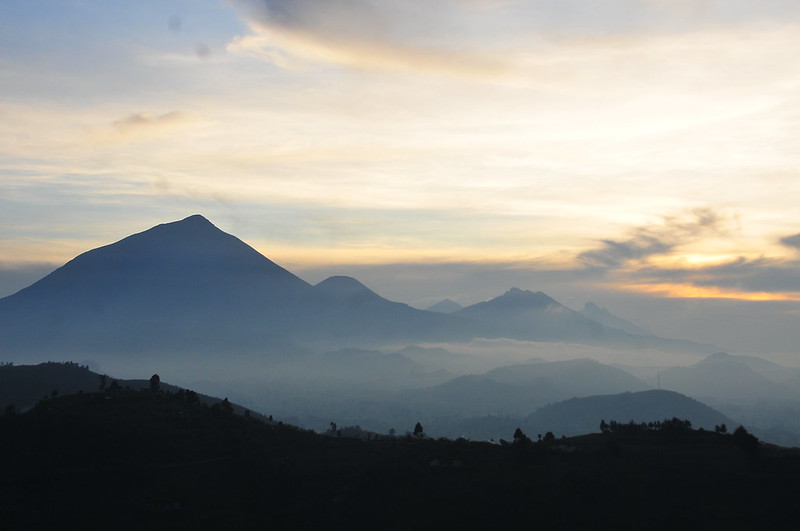
Mgahinga Gorilla National Park-The Volcano Kingdom
The Ultimate Guide to Gorilla Trekking, Golden Monkey Tracking & Volcano Hiking in Uganda’s Virunga Highlands.“Stand at the edge of the bamboo forest at dawn, the air so cold it burns, three volcanoes rising above the mist — and understand, in an instant, why this place has no equal on earth.”
Mgahinga Gorilla National Park Trekking Guide
The sun has not yet cleared the crater rim of Mount Gahinga when the bamboo begins to move. Not the wind — you learn, within minutes, to distinguish the wind from something else entirely. The movement is purposeful, rhythmic, close. Your guide raises a hand. Everyone stops. And then a silverback materialises from the green half-light, massive and unhurried, knuckle-walking across a path that existed long before any human being thought to build a road through these mountains.
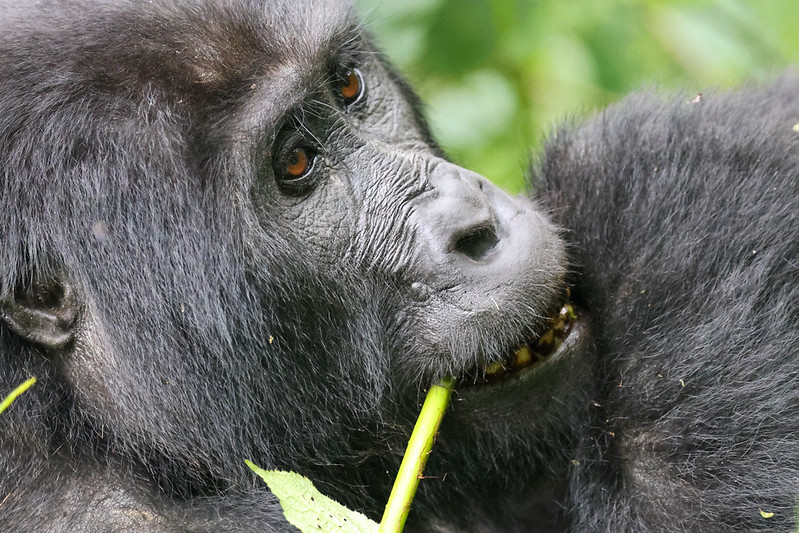
This is Mgahinga Gorilla National Park — Uganda’s smallest national park and, for the traveler who chooses it deliberately, one of Africa’s most extraordinary wildlife experiences. Perched in the Kisoro District of southwestern Uganda at elevations that climb from 2,227 to 4,127 metres above sea level, Mgahinga straddles the point where Uganda, Rwanda, and the Democratic Republic of the Congo meet in a landscape of dormant volcanoes, montane forest, bamboo zones, and alpine moorland that feels, unmistakably, like the roof of the world.
What distinguishes Mgahinga from its celebrated neighbour Bwindi Impenetrable National Park is not merely geography but atmosphere. Mgahinga Gorilla National Park is intimate in a way that few protected areas anywhere achieve — a single habituated gorilla family, a single habituated golden monkey troop, three likeable volcanoes, and a depth of Batwa cultural heritage that rewards travelers who arrive with genuine curiosity. The park covers only 33.9 square kilometres, meaning that everything here is close, everything is personal, and every encounter with wildlife or landscape unfolds against the visual drama of the Virunga range.
At Gorilla Safaris, we have guided guests through these bamboo forests in every season. We know the silverback by his posture from fifty metres. We know which slope of Mount Sabinyo offers the clearest view of all three countries simultaneously. And we know that the guests who leave Mgahinga Gorilla National Park most transformed are those who came prepared — not just physically, but imaginatively — for what this place is capable of offering. This guide is written to prepare you exactly that way.
What Is Mgahinga Gorilla National Park?
Established in 1991 as part of the same conservation moment that created Bwindi Impenetrable National Park and Rwenzori Mountains National Park, Mgahinga Gorilla National Park occupies the Ugandan sector of the Virunga Mountains — the volcanic chain that stretches across the tri-national border and serves as one of the last functioning habitats for the endangered mountain gorilla. The park is contiguous with Rwanda’s Volcanoes National Park to the south and the southern sector of Virunga National Park in the DRC to the west, forming part of a larger trans boundary conservation landscape that the gorillas themselves move through without regard for political boundaries.
Three dormant volcanoes define the park’s skyline and structure its ecology. Mount Muhabura, the highest at 4,127 metres, stands on the Ugandan-Rwandan border as a near-perfect cone. Mount Gahinga, at 3,474 metres, is the gentlest of the three and sits within a high-altitude swamp that supports a remarkable density of wildlife. Mount Sabinyo — whose name in the local Rufumbira language means ‘old man’s teeth,’ a reference to its jagged eroded summit — rises to 3,645 metres and marks the precise point where Uganda, Rwanda, and the DRC converge. Standing on that summit, you are literally in three countries at once.
The park’s vegetation zones layer from lower montane forest and bamboo at mid-elevation through Hagenia-Hypericum woodland and giant heath into the alpine moorland of the higher slopes. This stratified habitat supports 76 mammal species — including leopard, elephant, African buffalo, black-and-white colobus, and giant forest hog — alongside 180 recorded bird species, 13 of which are endemic to the Albertine Rift. Among them: the handsome spurfowl, the Rwenzori turaco, the dusky crimsonwing, and the regal sunbird, whose plumage in low forest light appears to be lit from within.
The bamboo zone — dense, fast-growing, seasonal — is where the park’s two most celebrated primate species spend the majority of their time. Mountain gorillas and golden monkeys both depend on bamboo shoots for significant portions of their diet, and understanding this relationship is part of understanding why Mgahinga Gorilla National Park feels as it does: like a place that has been carefully arranged around the daily lives of its non-human residents.
The Gorilla Family of Mgahinga: The Nyakagezi Group
Mgahinga Gorillas National Park has one habituated gorilla family available for trekking: the Nyakagezi group. Understanding this family is not a matter of reading a data sheet — it is understanding the soul of the park.
The Nyakagezi group currently numbers around fifteen to seventeen individuals, led by a dominant silverback named Mark, who has presided over the family with a commanding authority balanced by an apparent ease that experienced guides interpret as the mark of a secure, settled patriarch. Mark is accompanied by two younger silverbacks — Mafia and Bugingo — whose presence within the same group structure is relatively unusual and speaks to the particular dynamics that have evolved within this family over years of close observation.
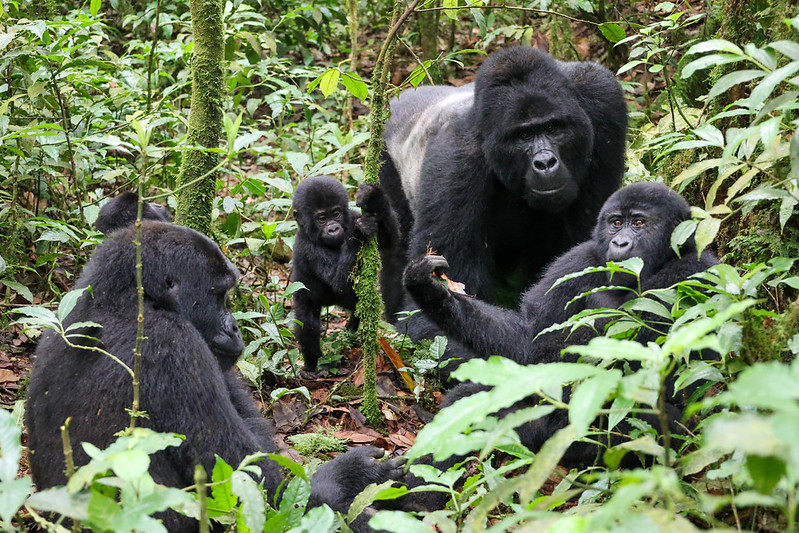
The group’s history explains one of the most important practicalities about trekking in Mgahinga: the Nyakagezi family is a transboundary group, meaning it moves freely across the Ugandan-Rwandan border and, historically, has spent extended periods in Rwanda’s Volcanoes National Park. For several years in the early 2000s and again in the late 2010s, the family ranged almost entirely in Rwanda, making gorilla trekking from Mgahinga Gorilla National Park intermittently impossible. For the past several years, however, the group has been consistently present on the Ugandan side, and trekking has operated reliably.
This transboundary reality is something we address directly with every guest who enquires about Mgahinga: we monitor the family’s location through our relationships with Uganda Wildlife Authority rangers and the inter-park tracking teams, and we confirm availability before any itinerary is finalised. When the Nyakagezi group is in Uganda — as it has been consistently in recent seasons — the trek to find them is one of the most beautiful and personally resonant gorilla encounters available anywhere in Africa. The smaller overall visitor numbers at Mgahinga, relative to Bwindi Impenetrable National Park, mean that the morning of your trek has a quieter quality, a greater sense of the forest belonging to you and your guide alone.
Gorilla Trekking in Mgahinga: The Full Experience
The morning of your gorilla trek begins at the park’s Ntebeko Gate, where Uganda Wildlife Authority rangers conduct the compulsory briefing at 7:00 AM. This thirty-minute orientation covers the behavioural rules that govern every gorilla encounter: maintain a seven-metre distance from the animals at all times; no flash photography; if you cough or sneeze, turn away and cover your mouth; if the silverback approaches, do not run — crouch, lower your eyes, and wait for your guide’s direction.
These are not bureaucratic formalities. Mountain gorillas share approximately 98% of their DNA with humans, which makes our respiratory viruses potentially lethal to them. The rules are an expression of the care that has made this encounter possible in the first place.
After the briefing, your group — a maximum of eight guests per gorilla family per day — sets out with two UWA rangers, a tracker, and your Gorilla Safaris guide. The trek departs through a landscape that transitions quickly from farmland at the park boundary into the cathedral stillness of the bamboo zone. Bamboo in Mgahinga grows to five metres and beyond; walking through it in the early morning, with the shafts backlit by slanted highland sun, is a complete sensory experience before the gorillas have even been found.
Your lead tracker maintains radio contact with a team that has been following the Nyakagezi group from their night nests since before dawn. The approach time varies: on some mornings, the family has ranged close to the park boundary and the trek takes under an hour. On others, they have moved deeper into the volcanic slopes, and the approach unfolds over two to three hours of sustained uphill walking. Neither scenario is better than the other. The longer treks reward with more forest and a more profound sense of arrival.
Gorilla Trekking Permit Costs in Mgahinga
Uganda Wildlife Authority sets gorilla trekking permit fees for Mgahinga at the same rates that apply across all Ugandan gorilla parks:
Foreign Non-Residents: USD 800 per person per trek.
Foreign Residents (holders of valid East African residency): USD 700 per person per trek.
East African Citizens: UGX 300,000 per person per trek.
Each permit is date-specific and family-specific. Given that Mgahinga has only one habituated gorilla family and issues only eight permits per day, availability can be tight, particularly in peak season. At Gorilla Safaris, we hold advance allocations and can confirm permit availability as part of the itinerary planning process. We never recommend building an Mgahinga itinerary without confirmed permits in hand.
The hour with the Nyakagezi group begins the moment your guide confirms visual contact with a family member and calls it in. Sixty minutes, precisely, as per UWA regulation — a number that initially seems arbitrary until you are inside it, at which point it becomes something you wish could be extended indefinitely. Mark the silverback may be resting in filtered light, his chest rising and falling with a slowness that signals complete indifference to your presence. A juvenile may approach within 3 metres, driven by a curiosity that the adults tolerate with the patient resignation of parents. A mother nurses while watching you with an expression that contains, unmistakably, both assessment and acceptance.
At the end of the hour, your guide gently signals the return. The forest closes over the family. The walk back to the gate is quiet in the best possible way — not the absence of conversation but its replacement by something that doesn’t need words.
How to Get to Mgahinga Gorilla National Park
By Road from Kampala or Entebbe
The overland journey from Kampala or Entebbe to Mgahinga is approximately nine to ten hours by road. The route passes through Mbarara and Kabale before reaching Kisoro town, which lies roughly 15 kilometres from the park gate. The highland road between Kabale and Kisoro is one of Uganda’s most beautiful drives — the landscape of the Kigezi Highlands is a rolling, terraced, deeply green world that feels entirely separate from the rest of East Africa.
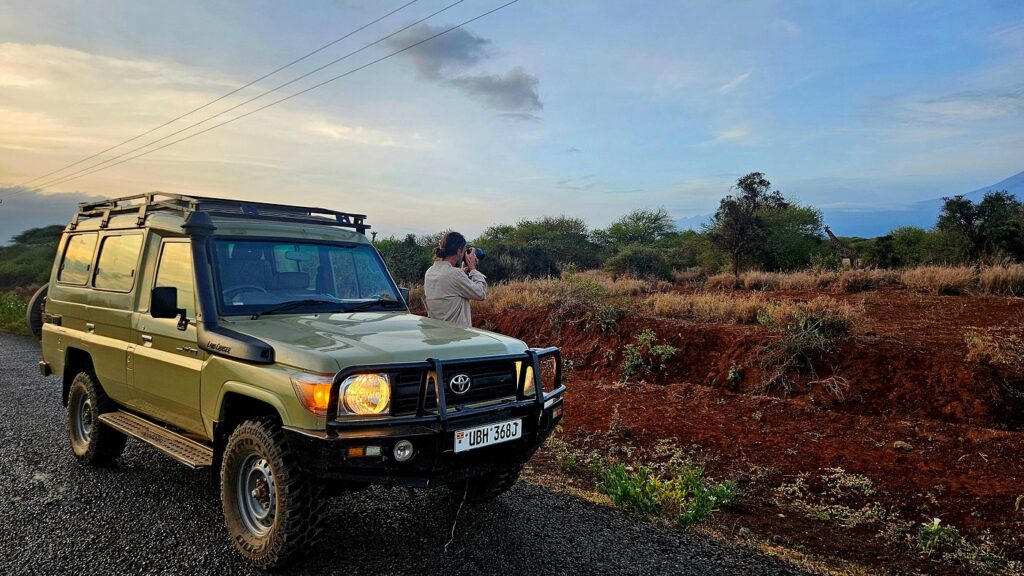
All Gorilla Safaris transfers are conducted in private, air-conditioned 4WD vehicles — Toyota Land Cruiser or equivalent — driven by experienced drivers who know this road in every season and can identify roadside wildlife without breaking pace. For guests combining Mgahinga with Bwindi’s Rushaga or Nkuringo sectors, the transfer between parks takes approximately one to two hours.
By Charter Flight to Kisoro Airstrip
The fastest route to Mgahinga from Entebbe is by scheduled charter flight to Kisoro Airstrip, operated by Aerolink Uganda. Flight time from Entebbe is approximately 45 minutes to one hour, and the airstrip sits in the shadow of the Virunga volcanoes, offering an arrival experience that is, in itself, a preview of what the park is about. From the airstrip, your dedicated Gorilla Safaris vehicle collects you for the 30-minute drive to the park gate or your lodge.
All flight bookings, airstrip connections, and lodge transfers are arranged by Gorilla Safaris as part of your itinerary. You land to find your guide waiting, cold water in hand, already briefed on the day’s programme.
Enquire about Uganda transfers and charter flights:
From Kigali, Rwanda
For guests combining Mgahinga with Rwanda’s Volcanoes National Park — a combination that speaks directly to the transboundary nature of gorilla conservation in this region — the drive from Kigali crosses the Cyanika border post and reaches the Mgahinga area within approximately three to four hours. This cross-border routing is one of Gorilla Safaris‘ most popular programme pairings, allowing guests to experience gorilla trekking on both sides of the Virunga ecosystem in a single journey.
Best Time to Visit Mgahinga & Go Gorilla Trekking
Mgahinga Gorilla National Park can be visited in any month of the year, and the gorilla trekking experience is remarkable regardless of season. That said, the park has two wet seasons — February to May, and September to December — and two drier periods, with June to August being the main dry season. Understanding the character of each period helps you match your travel dates to your priorities.
Dry Season: June to August and December to February
The main dry season months from June through August are Mgahinga’s peak visitor period. The trails on the volcano slopes are firmer, the forest floor is less muddy, and the mornings can be brilliantly clear — offering the kind of photography conditions where the light cooperates with your instincts. The gorillas and golden monkeys tend to range at higher elevations during this period as they follow the maturing bamboo up the slopes, which can mean longer treks but encounters in more open, dramatic forest settings.
July and August are the busiest months, with the highest demand for the eight daily gorilla permits. Booking six to twelve months ahead is essential for these dates. The shorter dry window of December and January is slightly less pressured but still popular, particularly with travellers combining a year-end safari with the Christmas period.
Green Season: March to May and September to November
The wet seasons in Mgahinga bring the forest to its most saturated, most extravagant version of itself. New bamboo shoots emerge in March and again in September, drawing both gorillas and golden monkeys to lower elevations where treks are frequently shorter and encounters more intimate. The forest floor after rain carries a scent that no perfumier has ever successfully replicated: wet earth, bruised bamboo, and the particular mineral quality of volcanic soil.
Trails can be muddy and steep sections slippery during the wet season, which is why the right footwear is non-negotiable. But guests who visit in March, April, October, or November often report the most vivid and emotionally affecting encounters of their lives. Permits are more available, the park is quieter, and the light — when the cloud breaks — is extraordinary. For flexible travelers, the green season represents both an exceptional experience and outstanding value.
Best Things to Do In Mgahinga Gorilla National Park
Golden Monkey Tracking in Mgahinga: A Different Kind of Encounter
If the gorilla trek is a meditation — slow, deliberate, weighty with significance — the golden monkey tracking experience is pure exhilaration. The golden monkey (Cercopithecus kandti) is an Albertine Rift endemic found only in the Virunga volcanic region and one other forest in Rwanda, making Mgahinga one of just two places on earth where this extraordinary primate can be observed in the wild. And observe is perhaps not the right word: the golden monkeys move through the bamboo at speed, leaping between culms with a gymnastic ease that makes following them an aerobic experience as much as a wildlife encounter.
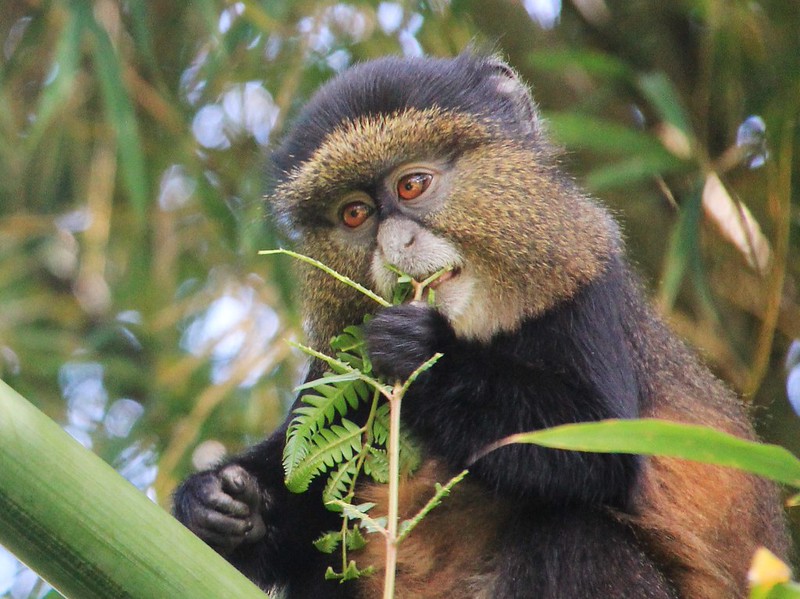
Their colouring is their first story: a deep chestnut-orange saddle across the back and flanks, contrasting with the black-and-white limbs and face in a combination that appears almost too vivid to be natural. In the morning light of Mgahinga’s bamboo zone, a group of golden monkeys feeding in the canopy above you is one of the most visually arresting wildlife sights in East Africa — the kind of thing that photographers speak about afterward with the particular reverence reserved for moments they know no photograph will adequately capture.
Mgahinga Gorilla National Park has one habituated golden monkey troop, typically numbering between sixty and eighty individuals, which ranges through the bamboo forest at lower elevations than the gorillas. The tracking experience is structured similarly to gorilla trekking: a morning briefing at the park gate, departure with a UWA ranger-guide, and one hour with the habituated troop once located. The troop’s large size and the density of the bamboo mean that encounters frequently involve monkeys surrounding your group on all sides — above, beside, occasionally very close below as an individual investigates your boots with unsettling directness.
Golden Monkey Tracking: Costs, Group Size & Best Season
The golden monkey tracking permit costs USD 60 per person per session, making it one of the most accessible premium wildlife experiences available in Uganda. A maximum of eight visitors per session is permitted, in line with gorilla trekking restrictions. The experience can be combined with a gorilla trek on the same day — your Gorilla Safaris consultant can arrange back-to-back permits for guests who want both encounters in a single extraordinary morning — though this is physically demanding and requires a good level of fitness.
Golden monkey tracking is available year-round, but the experience is most rewarding during the bamboo shooting seasons — March to May and September to November — when the shoots emerge and both the monkeys and the forest are at their most active. The monkeys descend to lower elevations and concentrate in smaller areas during these periods, which typically means shorter tracking times and more sustained encounters with the troop. In the dry season months of June to August and December to February, the monkeys range higher on the volcano slopes as the bamboo at lower elevations matures beyond its most palatable state.
Learn more about primate tracking in Uganda:
Volcano Hiking in Mgahinga: Three Mountains, Three Stories
The three volcanoes of Mgahinga Gorilla National Park are not incidental scenery. They are the park’s backbone — its geological identity and its most demanding invitation. Each has a distinct character, a distinct physical challenge, and a distinct reward at its summit. Taken together, they constitute some of the finest mountain hiking in East Africa, accessible to fit travelers without technical climbing equipment.
Mount Muhabura: The Highest Point
At 4,127 metres, Muhabura (which translates as ‘the guide’ in local languages — a reference to its visibility for miles in every direction) is the highest and most demanding of the three hikes.
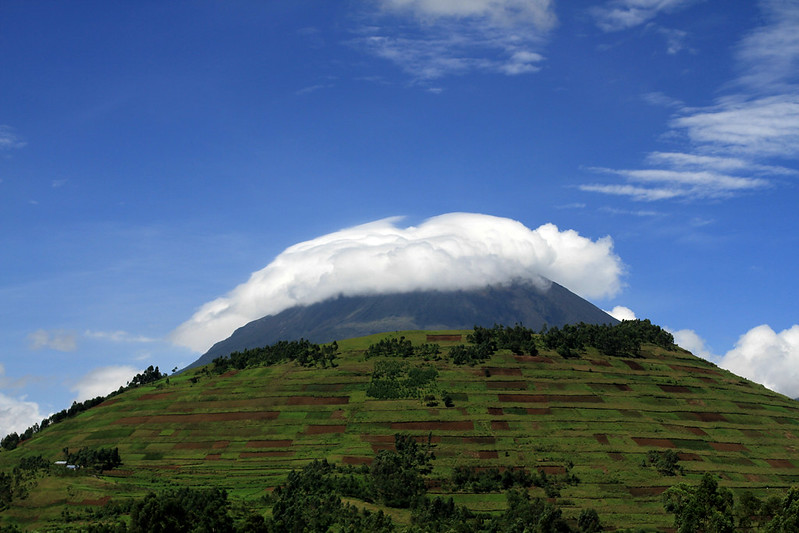
The ascent typically takes six to eight hours round trip and gains over 1,800 metres of elevation from the park gate. The trail passes through bamboo, Hagenia woodland, giant heath, and finally the alpine moorland and rock of the summit zone.
The crater at the summit contains a small lake, still and dark at nearly 4,000 metres above sea level, surrounded by the kind of silence that makes you aware of your own breathing. On clear mornings — most common in the dry season — the view from the summit extends across the DRC, Rwanda, and Uganda simultaneously, with Lake Edward glinting in the distance and the full arc of the Virunga chain laid out below you. Muhabura rewards experience and fitness; your Gorilla Safaris guide will assess the conditions and provide an honest pre-hike briefing.
Mount Gahinga: The Swamp and the Crater
Gahinga, at 3,474 metres, is the smallest of the three volcanoes and offers a gentler ascent — typically four to five hours round trip — that nonetheless delivers a memorable destination: a summit filled with a high-altitude swamp of giant Lobelia and Senecio plants that look, in low cloud, like a landscape from another planet. The vegetation at Gahinga’s summit zone is among the most botanically distinctive in the Virunga range, and the walk through it feels appropriately otherworldly.
Gahinga is particularly well suited for guests who want to combine a volcano hike with a second activity — a golden monkey session in the morning, a volcano in the afternoon — on the same day. Its more moderate elevation gain makes this combination feasible for travelers in reasonable physical condition.
Mount Sabinyo: Standing in Three Countries
Sabinyo is arguably the most dramatic hike of the three, not for its elevation — at 3,645 metres it is intermediate — but for its summit ridge. The hike involves three false peaks connected by steep ladders and exposed ridges, and the final summit marks the precise tri-border point of Uganda, Rwanda, and the DRC. To stand there — one foot in each of three countries, the landscape dropping away on all sides — is an experience with a particular quality that no amount of prior reading adequately captures. It is physical, exhilarating, and genuinely funny in the way that summit moments often are: the seriousness of the climb dissolves into levity the moment you arrive.
The Sabinyo hike takes approximately six to eight hours round trip and involves the most technical sections of any of the three Mgahinga volcanoes. Porters are available and strongly recommended for all volcano hikes; they carry your day pack, assist on difficult sections, and often provide a running botanical and cultural commentary that adds immeasurably to the experience. Hiking fees apply and are arranged through Uganda Wildlife Authority at the park gate.
The Batwa Cultural Experience: Listening to the Forest’s First Voices
The Batwa people of Mgahinga carry one of the oldest continuous relationships with any forest in Africa. For an estimated 60,000 years, the Twa — as they are also known — lived within the Virunga forest zone, moving through its layers with a knowledge of plants, animals, and forest systems that no outside researcher has ever fully mapped. When Mgahinga was gazetted as a national park in 1991, the Batwa were displaced — a process that happened quickly, with inadequate compensation, and whose consequences the communities surrounding the park continue to navigate.
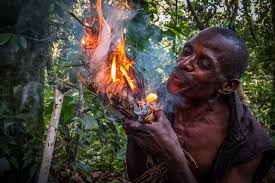
The Batwa Cultural Experience offered at Mgahinga is one of the most significant and sensitively handled community engagement programmes in Uganda’s national park system. Led by Batwa guides from the surrounding communities, the experience takes small groups into the forest on trails that the habituated gorilla family has no claim to, for an immersion in the knowledge systems, forest skills, and living history of these remarkable people.
Honey collection from wild hives; fire-making using techniques that predate any technology you will have encountered; the identification and medicinal application of forest plants; traditional songs whose melodies carry the particular melancholy of people who remember a home they can no longer freely enter — these are not performances staged for visitors. They are testimonies, offered with a generosity that demands a particular quality of attention. The experience concludes with traditional dance and an opportunity to speak, through your guide-translator, with community elders.
Every guest who visits Mgahinga should do this. The cost is approximately USD 30 to USD 80 per person depending on the duration of the programme, and revenue flows directly to the Batwa community. It is not an add-on. It is part of understanding what you are in when you are in this park.
The Garama Cave: Underground Batwa History
A short walk from the park headquarters, the Garama Cave was a refuge and meeting place used by the Batwa for generations. The cave descends into the volcanic rock to a depth of approximately 100 metres, and the guided tour — led by a Batwa community member — carries the historical weight of the people who used this space. The cave system is straightforward to navigate and does not require technical equipment; a torch and a willingness to crouch are sufficient. The experience is typically combined with the Batwa Cultural Trail and takes approximately one to two hours.
Birdwatching in Mgahinga
For guests with any interest in ornithology, Mgahinga Gorilla National Park rewards a dedicated dawn walk or an afternoon specifically devoted to birding. Thirteen of the Albertine Rift’s endemic bird species have been recorded in the park, including the handsome spurfowl, the Rwenzori turaco, the dusky crimsonwing, the Kivu ground thrush, the Rwenzori batis, the regal sunbird, and the Grauer’s swamp warbler. A specialist birding guide can be arranged through Gorilla Safaris for guests who want a more focused ornithological programme; we maintain relationships with several of the finest birding guides operating in the Kigezi highlands.
What to Wear and Pack for Mgahinga Gorilla National Park
Preparation for Mgahinga Gorilla National Park begins before the airport. The gear you carry determines not just your comfort but your freedom to be fully present in the experience — and the wrong boots on a wet volcanic slope can turn a sublime morning into a miserable one.
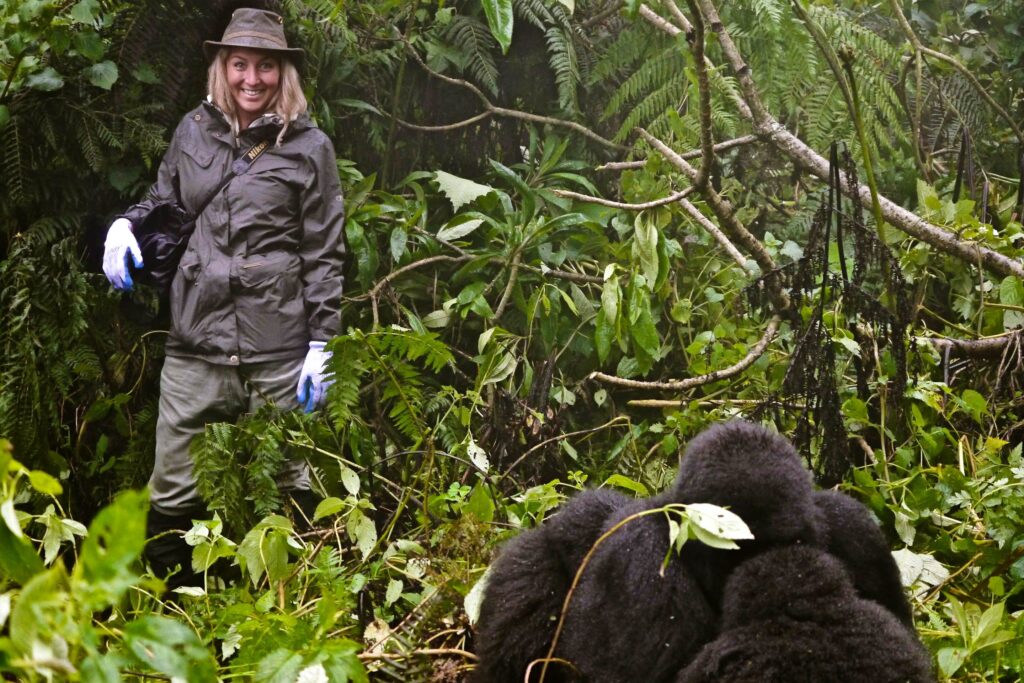
Long-sleeved shirts and long trousers in neutral or earthy tones — forest green, dark khaki, brown — are essential for all activities. Bright colours startle wildlife and are best left in the city. The bamboo forest is home to safari ants with a determination that finds any exposed skin, and the nettle-like undergrowth on steeper trails makes long sleeves a practical necessity rather than merely a comfort measure.
Waterproof hiking boots with ankle support are the single most important piece of kit for any activity in Mgahinga. The trails are not maintained paths — they are corridors through living forest and volcanic terrain, and they demand a boot that has been broken in before your arrival. Waterproof gaiters worn over the boot tops keep out the morning mud and ensure that any encounter with safari ants is a minor inconvenience rather than a minor emergency.
A rain jacket or waterproof poncho is non-negotiable. Rain at Mgahinga’s elevation can arrive with remarkable suddenness and intensity. A lightweight garden glove on each hand helps grip vegetation on steeper ascents without cutting your palms. Hiking poles — available at some lodges or brought from home — are strongly recommended for the volcano hikes, particularly on the descent from Sabinyo and Muhabura.
Your daypack should contain a minimum of 1.5 litres of water, high-energy snacks, a small first-aid kit, insect repellent, your camera (no flash near the primates), and a silenced mobile phone. The cold at higher elevations can be significant even in dry season — a light fleece or thermal layer in the pack costs nothing in weight and is deeply appreciated above 3,000 metres.
Your Gorilla Safaris representative will provide a comprehensive, season-specific kit list as part of your pre-departure documentation. Nothing is left to chance.
Mgahinga Gorilla National Park Itinerary Packages
Itinerary 1: The Mgahinga Classic
4 Days | Gorillas, Golden Monkeys & Batwa Culture
Best for: Couples, Solo Travellers, First-time Uganda Visitors
Quick Summary
Day | Destination & Activity | Highlight |
Day 1 | Arrival in Entebbe | Lakeside Welcome | Luxury lakeside lodge |
Day 2 | Fly Entebbe to Kisoro | Transfer to Mgahinga | First Virunga views |
Day 3 | Gorilla Trekking, Mgahinga | Nyakagezi Group | One hour with the silverback |
Day 4 | Golden Monkey Tracking | Batwa Cultural Trail | Depart | Two encounters in one morning |
The Detailed Journey
Day 1 — Entebbe: Where the Journey Settles Into Itself
The descent into Entebbe over Lake Victoria is already a kind of gift — the light on the water at late afternoon has a quality that photographers spend careers trying to replicate. Your Gorilla Safaris representative is waiting at arrivals, unhurried, with your name on a card and cold water already open. The transfer to your lakeside lodge takes twenty minutes, and the garden running to the water’s edge establishes the tone of everything that follows: beautiful, considered, without excess.
Dinner is the lodge’s own kitchen — fresh tilapia from the lake, roasted plantain, a thoughtful wine list. The programme for the next three days is already confirmed in every detail. Nothing requires your attention tonight except the garden, the hornbills in the frangipani, and the particular pleasure of knowing that a plan this carefully made will carry you safely from here.
Accommodation: Protea Hotel by Marriott Entebbe or Boma Guest House — both on the lake, both excellent.
Day 2 — Kisoro: The Mountains Arrive
The charter flight from Entebbe to Kisoro takes under an hour, and the Virunga volcanoes are visible for most of it — a south-trending row of cones rising above the cloud layer with a visual authority that confirms every decision that brought you here. Your dedicated Gorilla Safaris driver is at Kisoro Airstrip for the 30-minute transfer to your lodge on the park boundary.
Arriving in the early afternoon, there is time for an orientation walk on the forest edge with your resident naturalist guide — a chance to calibrate your eyes and ears to this new altitude and this new level of green. The briefing over afternoon tea covers tomorrow’s gorilla trek in detail: what to expect, what to carry, how to move in the forest, and what the Nyakagezi group has been doing over the past few days according to the overnight tracking report. A curated dinner, early to bed. The alarm will come before the birds.
Accommodation: Mount Gahinga Safari Lodge — twelve luxury stone cottages positioned on the park boundary, with the volcano slopes beginning immediately behind the property. The lodge’s hot water bottles and bundled-up beds are a specific kind of hospitality that you appreciate at 2,300 metres in a way you never would at sea level.
Day 3 — The Day That Carries Everything: Gorilla Trekking
By 6:30 AM your breakfast is set and the forest is already lit — not by sun, which has not yet cleared the crater rim, but by that particular pre-dawn luminosity that Mgahinga seems to generate from within. At 7:00 AM your group of eight assembles at the Ntebeko Gate for the UWA briefing, your Gorilla Safaris guide at your side.
The tracker team has been in communication since dawn. The Nyakagezi group nested last night in the middle bamboo zone, which means a forty-minute approach through stands of bamboo that dwarf you completely. The ground is wet with overnight moisture. The forest smells of growth.
The radio crackles. A bark from a subordinate silverback — distance unknown. Your guide quickens the pace slightly, and then slows, and then the bamboo parts and Mark is simply there: resting on his side in a clearing, watching your group arrive with the unimpressed equanimity of an animal who has decided, over years of habituation, that you are not worth the energy of concern. He weighs approximately 220 kilograms. His hands, when he reaches to strip a bamboo shoot, are larger than your face.
The hour does not feel like an hour. Afterward, back on the trail, your guide quietly produces a notebook he has carried all morning and shows you his sketch of the family’s composition — each individual noted, each behaviour observed. A keeper of records as much as a guide. This is what twenty years of field experience looks like.
A hot lunch at the lodge, a long afternoon at leisure. The volcano slopes across the valley catch the light in the way they do only at 4 PM in the highland dry season, and the terrace is the right place to simply be in that.
Day 4 — Golden Monkeys, Batwa Voices, and Departure
The last morning begins with the golden monkeys. The tracking session departs at 7:00 AM — the same gate, a different direction, and a completely different quality of encounter. The habituated troop is in the lower bamboo zone this morning, and contact is established within thirty minutes. What follows is sixty minutes of barely contained chaos and utter delight: fifty-odd golden monkeys in every direction, their chestnut-and-black colouring catching the morning light in ways that make your camera feel wholly inadequate.
After the tracking session returns to the gate, a two-hour Batwa Cultural Trail follows with a Batwa elder as guide. By midday you have experienced three of the most distinctive wildlife and cultural encounters available anywhere in East Africa, and you are sitting on the lodge terrace with a cold drink and an expression your friends will ask about for months.
Your dedicated vehicle departs for Kisoro Airstrip in the early afternoon for the charter flight back to Entebbe and your international connection. Your Gorilla Safaris representative is at Entebbe for the handover. The bags are managed. The journey is complete. What you carry home is something else entirely.
What Is Included
- Charter flights Entebbe-Kisoro-Entebbe in private seats.
- All airport and inter-destination transfers in dedicated 4WD vehicles with professional drivers.
- Gorilla trekking permit, Mgahinga (Day 3).
- Golden monkey tracking permit (Day 4).
- Batwa Cultural Trail programme. Accommodation as specified on full-board basis (3 nights).
- All Uganda Wildlife Authority park entrance fees.
- Dedicated Gorilla Safaris guide throughout.
- Emergency evacuation insurance coverage.
What Is Not Included
- International flights to and from Entebbe.
- Uganda tourist visa (USD 50 per person, available on arrival or e-visa portal).
- Tips for guides, drivers, porters, and lodge staff.
- Personal travel and medical insurance beyond the included emergency evacuation coverage.
- Items of a personal nature, personal bar expenditure, and optional souvenirs.
Itinerary 2: Volcanoes & Primates
6 Days | Gorillas, Volcano Hiking & Lake Bunyonyi
Best for: Adventure Travellers, Families with Older Children, Active Couples
Quick Summary
Day | Destination & Activity | Highlight |
Day 1 | Arrival Entebbe | Transfer to Lodge | Lakeside welcome |
Day 2 | Drive/Fly to Kisoro | Afternoon Forest Walk | First volcano views |
Day 3 | Mount Sabinyo Volcano Hike — Three Countries Summit | Stand in Uganda, Rwanda & DRC |
Day 4 | Gorilla Trekking, Mgahinga | Nyakagezi Group | One hour with Mark the silverback |
Day 5 | Golden Monkey Tracking | Transfer to Lake Bunyonyi | Crater lake afternoon |
Day 6 | Lake Bunyonyi | Drive to Entebbe | Departure | Island-dotted farewell |
The Detailed Journey
Days 1 & 2 — Entebbe and Kisoro
Day 1 unfolds at Entebbe as in Itinerary 1 — the lakeside lodge, the unhurried dinner, the briefing over a cold drink about what the next five days hold. The morning of Day 2 brings a private road transfer from Entebbe or the charter flight to Kisoro, depending on your preference and the overall itinerary structure your Gorilla Safaris consultant has arranged. Either route delivers you to Mount Gahinga Safari Lodge by early afternoon, with the three Virunga volcanoes arranged above the lodge in a tableau that justifies every kilometre of the journey.
An afternoon orientation walk along the park boundary introduces you to the birdlife and vegetation of Mgahinga’s lower slopes. Dinner is warm and early. Tomorrow involves an early start and a significant ascent.
Day 3 — Mount Sabinyo: The Triple Border
The Sabinyo hike departs the gate at 7:30 AM after a full breakfast. Your Gorilla Safaris guide leads; a hired porter carries your daypack and provides a running account of the plants encountered on the ascent — which plants treat fever, which tree provides the wood for bow-and-arrow construction, which fungus the Batwa once used for tinder. This botanical and cultural dimension of the volcano hike is one of the features that distinguishes a guided Gorilla Safaris ascent from an unaccompanied walk.
The first two hours move through bamboo and Hagenia woodland, the trail gaining elevation steadily. The third section involves the three false peaks — sharp ridges connected by steep ladders bolted to the rock, requiring arms and legs both. The fourth peak is the true summit: the tri-border point, where Uganda, Rwanda, and the DRC converge at 3,645 metres. The view from there is, by any reasonable measure, extraordinary.
The descent takes three to four hours, arriving back at the gate by late afternoon. A hot shower, dinner, and a rest that you have fully earned.
Day 4 — The Gorilla Trek
As described in Itinerary 1, Day 3 — the morning briefing, the approach through bamboo, the hour with the Nyakagezi group. Coming after the volcano hike of Day 3, the gorilla encounter has an added dimension: you have already learned the forest from above, walked through its highest zones, and understood its scale. Arriving at the gorilla family from below, through the bamboo forest, feels like completing a circuit.
An afternoon at leisure at the lodge. The terrace, the volcanoes, the late light.
Day 5 — Golden Monkeys and the Road to Bunyonyi
A final morning at Mgahinga: the golden monkey tracking session departs at 7:00 AM for sixty minutes with the habituated troop in the bamboo. The exuberant energy of the golden monkeys — so different in texture from the meditative gravity of the gorilla encounter — makes an ideal last morning in the park. By 9:30 AM you are back at the lodge for a final breakfast and a departure that you wish, in the particular way of all good departures from beautiful places, could be postponed.
The drive from Kisoro to Lake Bunyonyi takes approximately ninety minutes, and the arrival at the crater lake — a body of water at 1,962 metres above sea level, its surface the colour of a sky reflected upward, its shores dotted with twenty-nine small islands — is a perfect counterpoint to five days among volcanoes and forest. A curated afternoon on the lake by motorised canoe, a sunset from your lodge terrace, a dinner that tastes better for everything you have eaten before it.
Accommodation: Bunyonyi Overland Resort or Arcadia Cottages, both positioned with direct lake access and the kind of peaceful authority that crater lakes seem to confer on everything around them.
Day 6 — The Long Road Home
Lake Bunyonyi at dawn is one of Uganda’s quieter rewards: fishermen already on the water, mist sitting on the surface, the call of the African fish eagle carrying across the stillness. A last breakfast, a last look, and then your dedicated vehicle takes the highland road north through Kabale and Mbarara toward Kampala or Entebbe, arriving in time for your international connection.
Your Gorilla Safaris representative is at Entebbe for the final handover. The bags are weighed and checked. What you are carrying, in addition to whatever you bought at the craft market near Kisoro, is a collection of moments — the triple summit, the silverback’s gaze, the golden monkey three feet from your left elbow — that will be described at dinner tables for years.
What Is Included
- All private transfers throughout in dedicated 4WD vehicles.
- Charter flight or road transfer Entebbe-Kisoro.
- Mount Sabinyo volcano hike fees and guide.
- Gorilla trekking permit, Mgahinga (Day 4).
- Golden monkey tracking permit (Day 5).
- Lake Bunyonyi canoe excursion.
- Accommodation as specified on full-board basis (5 nights).
- All park entry fees.
- Dedicated Gorilla Safaris guide throughout.
- Emergency evacuation insurance.
What Is Not Included
- International flights to and from Entebbe.
- Uganda tourist visa.
- Tips and gratuities.
- Personal travel and medical insurance beyond emergency evacuation.
- Personal expenditure and optional purchases.
Itinerary 3: The Great Rift Arc
10 Days | Mgahinga + Bwindi + Queen Elizabeth + Kibale
Best for: Groups, Families, Comprehensive Uganda First-Timers
Quick Summary
Day | Destination & Activity | Highlight |
Day 1 | Arrival Entebbe | Lakeside Lodge | Welcome to Uganda |
Day 2 | Fly to Kisoro | Transfer to Mgahinga | Virunga arrival |
Day 3 | Gorilla Trekking, Mgahinga | Nyakagezi Group | The silverback |
Day 4 | Golden Monkey Tracking + Batwa Trail | Mgahinga | Two primates, one culture |
Day 5 | Transfer Mgahinga to Bwindi Rushaga | Gorilla country deepens |
Day 6 | Gorilla Trekking, Bwindi Rushaga Sector | A second gorilla family |
Day 7 | Transfer Bwindi to Queen Elizabeth National Park | Savannah reappears |
Day 8 | Game Drive + Kazinga Channel Boat Cruise, QENP | Elephants, hippos, buffalo |
Day 9 | Transfer to Kibale Forest | Chimpanzee Tracking | The third great ape |
Day 10 | Drive to Entebbe | Departure | The highlands farewell |
The Detailed Journey
Days 1 to 4 — Mgahinga
Days 1 through 4 of this itinerary follow the arc of Itinerary 1 in detail — the Entebbe arrival, the charter to Kisoro, gorilla trekking with the Nyakagezi group on Day 3, and the golden monkey tracking plus Batwa Cultural Trail on Day 4. Mount Gahinga Safari Lodge provides a consistent base, and the four days in and around the park build the kind of layered relationship with this specific landscape that a shorter visit cannot offer.
Day 5 — The Transfer to Bwindi: Two Parks, One Ecosystem
The drive from Mgahinga to Bwindi’s Rushaga Sector takes approximately two hours, tracking north through Kisoro and then east along the park boundary road. The landscape shifts gradually from the volcanic drama of the Virungas to the dense, dark canopy of Bwindi, and the transition has the quality of moving from one chapter to the next — the same story of gorilla conservation and mountain forest, told in a different dialect. Your dedicated vehicle handles the transfer seamlessly; your Gorilla Safaris guide rides with you throughout, providing commentary on the landscape, the communities, and the history of the road.
Arriving at Rushaga by early afternoon, a rest and acclimatisation walk on the forest edge prepares you for tomorrow’s trek. Rushaga is home to six habituated gorilla families — a density quite different from Mgahinga’s single family — and the evening briefing from your guide will cover which family you have been assigned and what is known about them.
Accommodation: Rushaga Gorilla Camp or Ichumbi Gorilla Lodge, both positioned with direct park-edge access.
Day 6 — A Second Gorilla Family: Bwindi
Having tracked the Nyakagezi group in Mgahinga, the experience of a different habituated family in Bwindi’s Rushaga sector offers an instructive and deeply moving comparison. The Nshongi, Bikingi, or Kahungye group — depending on your assignment — will have a completely different social structure, a different relationship with the terrain, and a different energy from the Mgahinga family. This is the remarkable truth about mountain gorilla trekking: no two encounters are the same, not because the procedure differs, but because each family is a distinct community of individuals.
The afternoon and evening at the Rushaga lodge provide a quieter counterpoint to the intensity of the morning.
Days 7 & 8 — Queen Elizabeth National Park: The Open Country
The transfer from Bwindi to Queen Elizabeth National Park (approximately three to four hours by private vehicle) is one of Uganda’s great scenic drives — descending from the highland forest into the Rift Valley floor, with the Kazinga Channel appearing below and the Western Rift escarpment marking the horizon in both directions. The shift from dense forest to open savannah is immediately legible to the senses: the temperature rises, the air dries slightly, the space opens. Elephants are frequently visible from the road before you have even reached the park gate.
An afternoon game drive on arrival covers the Kasenyi Plains, where Uganda kob antelope graze in concentrations that attract lions and leopard. Day 8 begins with a morning game drive through the Ishasha sector — famous for its tree-climbing lions, an unusual behaviour attributed to the specific fig tree terrain of this southern region — and an afternoon on the Kazinga Channel by boat, where hippos surface with cheerful regularity and the bird diversity along the banks is remarkable.
Accommodation: Mweya Safari Lodge — positioned on the peninsula above the Kazinga Channel, its terrace one of the great viewpoints of East African wildlife.
Day 9 — Kibale Forest: The Third Great Ape
The transfer from Queen Elizabeth to Kibale Forest National Park takes approximately two hours north, through the tea estates and crater lakes of the Fort Portal region. Kibale is home to the highest concentration of chimpanzees anywhere on earth, and the chimpanzee tracking experience — structured similarly to gorilla trekking but with a dramatically different character — completes what is, by this point, an extraordinary trilogy of primate encounters.
Chimpanzees are loud, fast, and entirely unconcerned with maintaining the meditative stillness that gorillas project. Following them through Kibale’s canopy as they call, chase, and negotiate their complex social hierarchies is an experience of pure kinetic energy that the gorilla and golden monkey encounters had not quite prepared you for. It is, in its own way, perfect.
Accommodation: Primate Lodge Kibale, positioned inside the national park with the forest beginning immediately outside your cottage door.
Day 10 — The Return
The drive from Kibale to Entebbe takes approximately five hours, and the road south through Fort Portal, Mubende, and Kampala passes through a Uganda that is already beginning to feel familiar. Your Gorilla Safaris representative is at Entebbe for the final transfer to departures. The international flight takes you north or east or wherever home is.
Ten days, three great apes, two gorilla families, one volcano summit, a crater lake, and the Kazinga Channel at sunset. Uganda, offered in full.
What Is Included
- Charter flights and all private road transfers throughout.
- Gorilla trekking permit, Mgahinga (Day 3).
- Golden monkey tracking permit (Day 4).
- Batwa Cultural Trail. Gorilla trekking permit, Bwindi Rushaga (Day 6). Chimpanzee tracking permit, Kibale (Day 9).
- Kazinga Channel boat cruise. All park entry fees throughout.
- Accommodation as specified on full-board basis (9 nights).
- Dedicated Gorilla Safaris guide throughout. Emergency evacuation insurance.
What Is Not Included
- International flights to and from Entebbe.
- Uganda tourist visa.
- Tips and gratuities for guides, drivers, porters, and lodge staff.
- Personal travel and medical insurance beyond emergency evacuation coverage.
- Optional activities not specified above. Items of a personal nature.
Frequently Asked Questions About Mgahinga Gorilla National Park
Q: Is Mgahinga or Bwindi better for gorilla trekking?
They are different experiences rather than one being better than the other. Mgahinga offers a more intimate, quieter encounter — a single habituated family, fewer daily permits, a more compact park where the volcanic landscape adds a visual drama that Bwindi Impenetrable National Park does not have. Bwindi Impenetrable National Park offers 19 more choice (2habituated families across four sectors), greater permit availability, and a more reliably consistent gorilla presence since the Bwindi families do not move across international borders. Many travelers who have done both describe Mgahinga Gorilla National Park as having a particular quality of stillness and personal scale. At Gorilla Safaris, we design itineraries that allow guests to experience both parks when their schedule permits.
Q: Is the Nyakagezi gorilla group always in Uganda, or can it disappear into Rwanda?
The Nyakagezi group is a transboundary family that has historically ranged across the Ugandan-Rwandan border. For several recent seasons it has been consistently present on the Ugandan side, and gorilla trekking from Mgahinga has operated reliably. However, this cannot be guaranteed indefinitely — the family moves according to its own logic, not our calendar. At Gorilla Safaris, we confirm the group’s current location through Uganda Wildlife Authority before finalising any Mgahinga itinerary, and we have contingency arrangements for guests whose planned trek is disrupted by an unexpected border crossing. We will always be transparent about current availability.
Q: How many people are allowed on a gorilla trek in Mgahinga?
Uganda Wildlife Authority permits a maximum of eight visitors per habituated gorilla family per day. Since Mgahinga Gorilla National Park has only one habituated family — the Nyakagezi group — only eight gorilla permits are issued per day at this park. This is one of the reasons the Mgahinga encounter has such a personal quality; the group size is the same as at Bwindi, but the overall visitor volume at the park is lower, giving the morning a quieter character.
Q: How much does the golden monkey tracking permit cost, and how many people are allowed?
The golden monkey tracking permit costs USD 60 per person per session, and a maximum of eight visitors are permitted per session. The experience lasts approximately one hour with the habituated troop once located. It can be combined with a gorilla trek on the same day for guests who want both encounters, though this makes for a physically demanding morning and requires reasonable fitness.
Q: Are the Mgahinga volcanoes safe to hike?
Yes. All three volcanoes — Muhabura, Gahinga, and Sabinyo — are dormant and pose no volcanic risk to hikers. The trails are managed by Uganda Wildlife Authority, and all hikes depart with a certified guide and, for Muhabura and Sabinyo, an armed ranger as standard practice. The primary risks are physical — altitude, steep terrain, and the possibility of inclement weather — all of which are managed through proper preparation, appropriate gear, and the guidance of experienced hill leaders. Your Gorilla Safaris pre-departure briefing will cover all relevant safety information.
Q: What is the minimum age for gorilla trekking in Mgahinga?
Uganda Wildlife Authority requires all gorilla trekking participants to be a minimum of 15 years of age. This applies to Mgahinga as to all gorilla parks in Uganda. Families with younger children can still visit the park and enjoy golden monkey tracking (no age minimum), the Batwa Cultural Trail, and nature walks, while older family members trek.
Q: How far in advance should I book my Mgahinga gorilla trek?
Given that Mgahinga issues only eight gorilla permits per day and has only one habituated family, availability is tighter than at Bwindi. For peak season dates (June through August, December through January), booking six to twelve months ahead is strongly recommended. For shoulder and green season dates, three to six months is generally sufficient. At Gorilla Safaris, we hold advance permit allocations and can confirm availability as part of the itinerary consultation process.
Q: Can I do a gorilla trek from Kigali on a day trip to Mgahinga?
Yes, this is possible. The drive from Kigali to Mgahinga Gorilla National Park across the Cyanika border takes approximately three to four hours, making a day trip feasible in terms of timing, though it is physically demanding and results in a very long day. A more rewarding approach is to overnight in Kisoro or at a lodge near the park, allowing you to attend the 7:00 AM briefing refreshed and with time to appreciate the landscape before and after the trek. Gorilla Safaris offers both day-trip and overnight arrangements for guests based in Kigali.
Q: Is Uganda safe for travel, and is Mgahinga specifically safe?
Uganda is a safe and welcoming travel destination with a well-established tourism infrastructure. Mgahinga Gorilla National Park is managed by Uganda Wildlife Authority, which maintains a permanent ranger presence and accompanies all visitor groups with armed escorts during treks. The park has an excellent safety record. As with any international travel, standard precautions apply, and we advise guests to review their government’s current travel advisory. Gorilla Safaris monitors conditions continuously and will advise guests of any relevant developments well in advance of travel.