The 6-day Hunwick’s Camp expedition is the Kilembe Trail route designed for those who want more than a summit. It crosses the Bamwanjara Pass at 4,450 meters, the highest point on this particular route; descends into Kacholpe Valley’s extraordinary world; and reaches the remote Hunwick’s Camp at the foot of Mount Stanley and Mount Baker and then, on the penultimate day, climbs to Weismann’s Peak at 4,620 meters before making the long, dramatic descent of the Nyamwamba Valley past cascading waterfalls back to Kilembe. It is a traverse in the truest sense: a route that begins and ends at the same trailhead but covers entirely different terrain in each direction, seeing two faces of the Rwenzori in a single expedition.
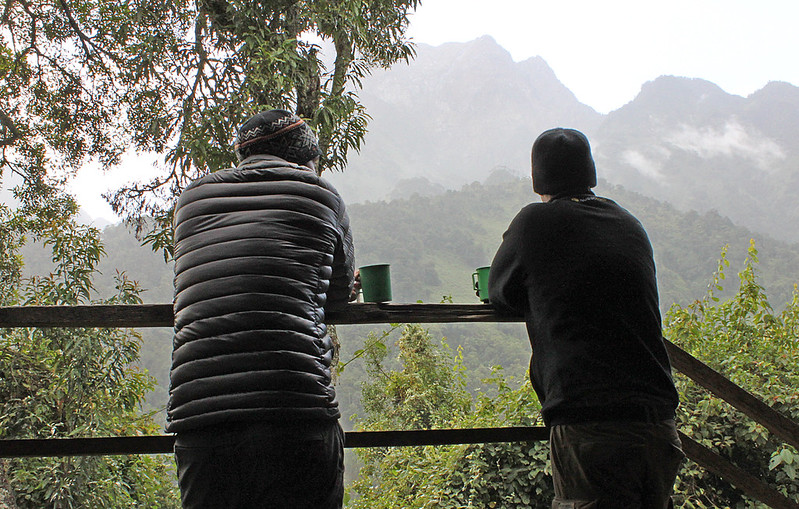
Gorilla Safaris designs and operates this route with a private guide assigned exclusively to your group, a full porter team, and a cook who ensures that the considerable physical demands of this 6-day Rwenzori trek to Hunwick’s camp are met with food of the quality and quantity that genuine mountain effort requires. Every camp, every transfer, and every permit is arranged before you arrive at the trailhead. The mountain does the rest.
This expedition pairs naturally with gorilla trekking at Bwindi Impenetrable Forest and wildlife safaris in Queen Elizabeth National Park within reach of Kasese making the Hunwick’s Camp trek an anchor experience in a comprehensive western Uganda journey.
Expedition Overview
Feature | Details |
Destination | Rwenzori Mountains National Park, Western Uganda |
Trail | Kilembe Trail — Nyamwamba Valley variation (traverse route) |
Key Destinations | Sine Hut, Kalalama Camp, Mutinda Camp, Bamwanjara Pass (4,450 m), Bugata Camp, Kacholpe Valley, Hunwick’s Camp, Weismann’s Peak (4,620 m) |
Duration | 6 Trekking Days / 5 Nights on the mountain (+ transfer days) |
Start / End Point | Kyanjuki Village, Kilembe (1,450 m) — 12 km from Kasese Town |
Highest Point | Weismann’s Peak, 4,620 m (Mount Gessi Massif) |
Highest Pass | Bamwanjara Pass, 4,450 m |
Fitness Level | High fitness required. Multi-day alpine trekking experience is essential. Day 5 is a very long, demanding day. |
Route Type | Lollipop traverse, same trailhead, different return valley (Nyamwamba descent) |
Best Season | June–August and December–February (drier windows) |
Itinerary at a Glance
- Day 1 — Kampala / Entebbe → Kasese / Kilembe | Arrival & Trailhead Briefing
- Day 2 — Kyanjuki (1,450 m) → Sine Hut (2,596 m) | The Forest Ascent
- Day 3 — Sine Hut (2,596 m) → Kalalama Camp (3,147 m) → Mutinda Camp (3,668 m) | Into the Heather
- Day 4 — Mutinda Camp (3,668 m) → Bamwanjara Pass (4,450 m) → Bugata Camp (4,062 m)
- Day 5 — Bugata Camp (4,062 m) → Kacholpe Valley → Hunwick’s Camp (3,974 m)
- Day 6 — Hunwick’s Camp (3,974 m) → Oliver’s Pass → Weismann’s Peak (4,620 m) → Kilembe
- Day 7 — Kilembe / Kasese → Kampala / Entebbe | Departure or Onward Transfer
Note: Day 1 and Day 7 are transfer days providing logistical context. The six trekking days are Days 2 through 7. Day 6 is the longest and most demanding — an early departure is essential.
Daily Elevation Profile
Day | From | To | Gain/Loss | Duration |
Day 1 | Kyanjuki / Kilembe (1,450 m) | Sine Hut (2,596 m) | ↑1,146 m | ~5–6 hrs |
Day 2 | Sine Hut (2,596 m) | Kalalama Camp (3,147 m) → Mutinda Camp (3,668 m) | ↑1,072 m | ~6–7 hrs |
Day 3 | Mutinda Camp (3,668 m) | Bugata Camp (4,062 m) via Bamwanjara Pass (4,450 m) | ↑782 m | ~5–6 hrs |
Day 4 | Bugata Camp (4,062 m) | Hunwick’s Camp (3,974 m) via Kacholpe Valley | ↓88 m | ~4–5 hrs |
Day 5 | Hunwick’s Camp (3,974 m) | Weismann’s Peak (4,620 m) → Nyamwamba Valley | ↑646 m ↓~2,600 m | ~8–9 hrs |
Day 6 | Lower Nyamwamba Valley | Kilembe (1,450 m) | ↓remainder | ~4–5 hrs |
Day-by-Day Expedition Narrative
Day 1: Kampala to Kilembe — The Western Approach
The journey west from Kampala or Entebbe in your private vehicle is a five to six hour passage through the changing textures of Uganda, from the dense green hills of the capital’s outskirts, through the crater lake country of the mid-west, and finally down into the wide floor of the Albertine Rift, where the Rwenzori range announces itself on the horizon with a quiet authority that no photograph has fully prepared you for. The mountains appear gradually: first as a darkening of the sky, then as a suggestion of peaks above the cloud, and finally, as the road descends toward Kasese, as the full, extraordinary wall of the range, its upper flanks permanently shrouded.
Kasese town, comfortable and functional, makes for a practical overnight base. The Trekkers’ Hostel at Kyanjuki, twelve kilometers further up the valley, places you at the trailhead itself and offers the particular quality of falling asleep with the mountain already close. Your guide meets you in the evening for a detailed briefing on route conditions, the day’s weather pattern, the porter team’s composition, what to eat for breakfast, and when to be ready. Early bed is not merely recommended. It is the first discipline the mountain teaches.
Day 2: Kyanjuki (1,450 m) to Sine Hut (2,596 m) — The Forest Welcomes You
The Kilembe Trail begins, as all great mountain journeys do, with the unglamorous business of putting one foot in front of the other through the pre-dawn quiet of a village waking up. Kyanjuki’s fields and homesteads recede behind you, the trail tips upward, and within thirty minutes the forest has closed around you completely. The Afro-montane forest of the Rwenzori’s lower flanks is one of the most biologically productive environments in East Africa, and the first day’s ascent passes through it at a pace that allows genuine engagement with what surrounds you.
Blue monkeys call from the canopy. Black-and-white colobus, sometimes in troops of fifteen or twenty animals, swinging through the upper branches with an acrobatic confidence that makes their bulk seem impossible. The L’Hoest monkey, sacred in Bakonzo culture and protected by the traditions of the Omusinga, appears occasionally at the forest margin with the dignified composure of an animal that knows its own significance. Bamboo thickets click in the breeze. Moss and lichen hang from every branch. Fungi in unlikely colors carpet the roots. The forest is, above all, loud with birds, with insects, and with the sound of water moving somewhere below the trail.
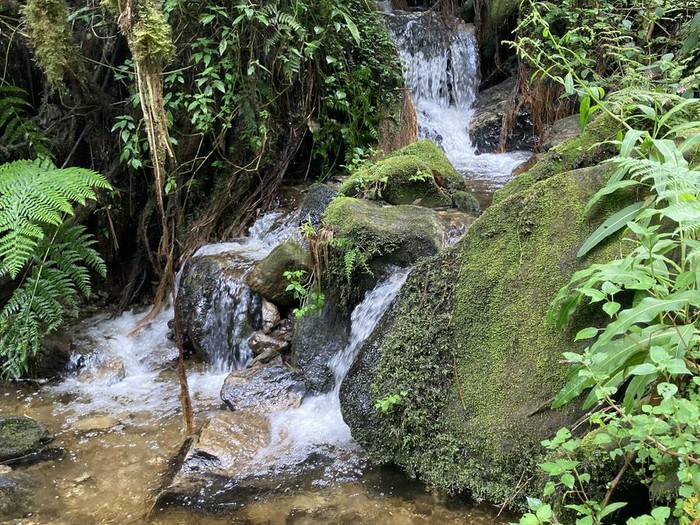
Enock’s Falls, two hundred meters from Sine Hut, announces the day’s end with the sound of clean water falling through the forest. Sine Hut, at 2,596 meters, sits on a narrow ridge between tall trees, a wooden shelter of mountain practicality that becomes, after five hours of uphill walking, a place of genuine comfort. Dinner is hot and generous. The night at Sine brings the particular quality of sleep that altitude and effort produce: deep, dreamless, and entirely earned.
Day 3: Sine Hut (2,596 m) to Mutinda Camp (3,668 m) via Kalalama — The Upper World Arrives
The day begins with a choice that the six-day itinerary resolves in favor of ambition: rather than resting at Kalalama (3,147 m) for the night, the stronger route pushes on to Mutinda Camp at 3,668 meters, gaining a full day’s position and placing the trekking party in the heart of the giant heather zone before the altitude has fully registered.
From Sine, the trail continues upward through the bamboo zone, the bamboo here growing in dense, clicking groves that create a green tunnel above the path before emerging into the giant heather that defines the Rwenzori’s mid-altitude character. Erica arborea, the tree heather, grows here to three meters and beyond, its branches bearded with pale lichen, and its form bent by decades of wind and cloud into shapes that seem to belong to a different planet. The bog arrives with the heather and persists with increasing conviction as the altitude rises. Waterproof gaiters earn their weight on this section.
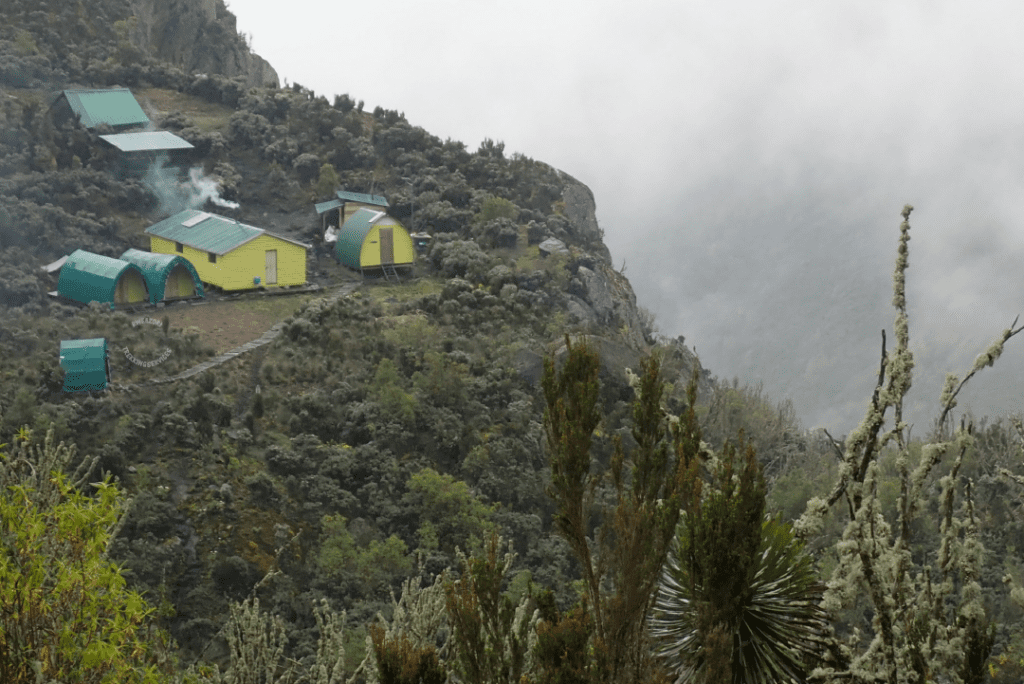
Kalalama Camp, at 3,147 meters, offers a pause and a view: the cliffs above catching the afternoon light and, on clear days, the plains below stretching east to Kasese town and the distant shimmer of Lake Edward in Queen Elizabeth National Park. The optional side climb from Mutinda Camp to Mutinda Lookout at 3,975 meters, achievable in two hours’ return from camp, is one of the Kilembe Trail’s finest panoramic experiences, with unobstructed views across the full sweep of the range’s southern massifs. Your guide will assess weather and energy levels before recommending the side trip.
Mutinda Camp, at 3,668 meters, sits in the heather zone proper, the huts solid against the evening wind that arrives with reliable punctuality after 4pm. The temperature drops sharply with dark. Sleeping bags earn their specifications tonight.
Day 4: Mutinda Camp (3,668 m) to Bugata Camp (4,062 m) via Bamwanjara Pass (4,450 m)
This is the day the expedition crosses into a different world. The ascent from Mutinda Camp through the upper heather and giant groundsel zone to Bamwanjara Pass at 4,450 meters is a sustained and demanding long climb through terrain of increasing strangeness, where the giant Senecio trees grow with a scale that feels geological rather than botanical, their cork-barked trunks rising four to five meters before opening into the cabbage rosettes that have made the Rwenzori famous in botanical literature.
Bamwanjara Pass, at 4,450 meters, is the highest point on this route and commands a view of extraordinary scope: the central Rwenzori spread to the north, the Kacholpe Valley dropping away below, and on clear mornings the glaciated upper flanks of Mount Stanley visible above the cloud. The wind at the pass has an authority that is not unfriendly but is not to be argued with, and the layering system in your pack earns its careful selection here.
The descent from Bamwanjara into Bugata Camp at 4,062 meters follows the ridge before dropping through the upper alpine zone tussock grass, cushion plants in the rock crevices, and the last of the giant groundsels to the camp itself. Bugata sits at a natural shoulder of the mountain with views toward the lower Kacholpe Valley and the approaching drama of tomorrow’s destination. It is a remote camp, wind-exposed, and magnificent.
Day 5: Bugata Camp (4,062 m) to Hunwick’s Camp (3,974 m) via Kacholpe Valley
The descent into Kacholpe Valley from Bugata is the Hunwick’s Camp trek’s defining experience the moment that separates this route from every other Kilembe Trail variation and justifies, without question, the additional two days of commitment.
Kacholpe Valley receives the trekking party in stages: first the upper section, where tussock and exposed rock give way to the first patches of dense vegetation; then the middle valley, where the giant lobelia and groundsel grow in such profusion that the trail moves through a forest of prehistoric plants at an altitude where almost nothing else on earth could survive; and finally the lower valley floor, where the biodiversity reaches its extraordinary peak. Hundreds of Scarlet-tufted Malachite Sunbirds feed from lobelia flowers along the valley sides, their metallic plumage catching the light in flashes of green and crimson that seem entirely too vivid for the cold, misty air of 4,000 meters. No other location on the entire Kilembe Trail concentrates as much avian and botanical spectacle in a single day’s walking.
Hunwick’s Camp, at 3,974 meters, sits at the base of the Kacholpe Valley, positioned directly below the southern faces of Mount Stanley and Mount Baker. On clear evenings — and the Rwenzori produces them occasionally, without warning — the upper walls of these massifs catch the last light in a display of rock and snow and shadow that has humbled observers since the Italian expedition of 1906 first camped here. The camp is named for one of the early British surveyors of the range, and it carries the particular atmosphere of a genuinely remote mountain camp: no other sound but wind and water and the occasional call of a bird that has no reason to be at 4,000 meters but is here anyway.
Day 6: Hunwick’s Camp (3,974 m) → Oliver’s Pass → Weismann’s Peak (4,620 m) → Nyamwamba Valley → Kilembe
This is the longest day of the expedition and the one that demands the earliest start. Pre-dawn departure from Hunwick’s Camp,, headtorches on, breath visible in the cold air, the mountain still dark around you, follow the route up from the camp toward Oliver’s Pass, the col that connects the Kacholpe Valley system to the upper slopes of Weismann’s Peak. The forty-minute climb from Oliver’s Pass to the summit of Weismann’s at 4,620 meters is steep and exposed but non-technical, and the summit arrives with the particular suddenness of peaks that have been obscured by their own approach ridges.
On clear mornings at Weismann’s Peak, the entire central Rwenzori is spread below: Mount Stanley’s Margherita glacier to the north; Mount Baker’s twin summits to the east; the Kitandara twin lakes far below in the valley; and Kacholpe Valley, the world you walked through yesterday, laid out in extraordinary relief to the south. The summit certificate is presented by your guide at the top. It is a document you will find, years later, and remember with the particular vividness that mountain summits produce.
The descent does not return via the route of ascent. Instead, the route drops into the Nyamwamba Valley, a long, dramatically beautiful descent through a series of waterfalls that the Kilembe Trail is rightfully famous for. The Nyamwamba River runs beside the trail for much of the lower descent, its sound a constant companion as the vegetation transitions from alpine rock to heather to bamboo to the familiar montane forest of the lower slopes. Several named waterfalls mark the stages of this descent: Cathy’s Falls, Nyamwamba Falls (at 52 meters, the most impressive single drop), Ajarova Falls, Plozza Falls, and Bridal Falls, among others. Each one offers a natural rest point, a moment of photographic opportunity, and the simple pleasure of cold water when the descent has warmed the body considerably.
Kilembe arrives in the late afternoon, the valley floor warm and welcoming after days at altitude. Hot showers at the Trekkers’ Hostel are not a luxury at this point; they are a ceremony of return. Your guide settles the porter accounts, returns the hired equipment, and ensures that every member of the team is properly and fairly compensated. The mountain has been crossed. The six days are complete.
Day 7: Kilembe to Kampala — The Return
The return transfer in your private vehicle follows the familiar western highway east, the Rwenzori range receding in the rearview mirror with the unhurried dignity of mountains that have always been here and will outlast everything that passes through them. Those continuing to Bwindi for gorilla trekking transfer south from Kasese. Those completing their Uganda journey reach Kampala or Entebbe by early evening.
Best Time to Trek — 6-Day Hunwick’s Camp Route
The six-day Hunwick’s Camp route crosses Bamwanjara Pass at 4,450 meters and spends more time above 4,000 meters than the five-day Weismann’s Peak program, making seasonal timing even more significant. The drier windows of June to August and December to February offer the most reliable conditions for the high passes and the descent of the Nyamwamba Valley, where wet-season waterfalls can make the trail sections adjacent to the river more challenging. The Kacholpe Valley birdwatching is exceptional year-round, but the scarlet-tufted malachite sunbird activity peaks during the drier months when the lobelias are in fuller flower. Gorilla Safaris provides current mountain condition assessments for all confirmed bookings.
What’s Included
Every logistical element of the six-day Hunwick’s Camp expedition is arranged by Gorilla Safaris before your boots touch the Kilembe trail:
- All Uganda Wildlife Authority park entrance fees for six trekking days
- Private, certified Rwenzori mountain guide with specific Kilembe Trail and Nyamwamba Valley experience
- Personal porter for your trekking pack (up to 15 kg)
- Dedicated mountain cook for all meals: breakfast, packed lunch, hot dinner
- All food and provisions for six days on the mountain
- Accommodation in mountain huts (Sine, Kalalama/Mutinda, Bugata, Hunwick’s Camp) and wilderness camping
- Private road transfer Kampala/Entebbe to Kasese/Kilembe (return)
- Pre-trek overnight at Trekkers’ Hostel or Kasese Safari Lodge
- Post-trek hot shower and refreshments at Kilembe trailhead
- All mandatory rescue fund contributions and mountain safety levies
- Gorilla Safaris 24/7 emergency support throughout
What’s Not Included
- International airfares and comprehensive travel and medical evacuation insurance (required)
- Uganda tourist visa (USD 50 per person)
- Hired trekking equipment: waterproof jacket, sleeping bag, poles, gaiters (available at Kilembe)
- Personal snacks and trail energy supplements
- Alcoholic beverages
- Gratuities for guides, porters, and cook
- Optional extensions: gorilla trekking, chimpanzee tracking, Queen Elizabeth safari
Related Kilembe Trail Itineraries
3-Day Samalira Falls Trek: An accessible forest and waterfall experience reaching Samalira Camp at 3,140 m. Ideal for first-time Rwenzori trekkers with limited time.
4-Day Waterfalls Circuit: A dedicated waterfall exploration covering Enock’s Falls, Samalira Falls, Cathy’s Falls, Nyamwamba Falls, and several others. No high-altitude camping.
4-Day Mutinda Lookout: Climbs to the Mutinda Lookout at 3,975 m for panoramic views across the southern Rwenzori, returning via Hunwick’s Pass and Kiharo Camp.
5-Day Weismann’s Peak (Kilembe): The direct Kitandara Lakes route to Weismann’s Peak, covering the alpine zone without the Kacholpe Valley traverse.
6-Day Hunwick’s Camp (This Itinerary): The traverse route combining Bamwanjara Pass, Kacholpe Valley, and the Nyamwamba descent with a Weismann’s Peak summit.
7-Day Mount Baker & Weismann’s Peak: Extends the Weismann’s program with an ascent of Mount Baker’s Edward Peak. For strong trekkers wanting two significant summit objectives.
Visit our Uganda trekking and mountain safaris page for the full range of Rwenzori expedition options and western Uganda combinations.
Frequently Asked Questions — 6-Day Rwenzori Hunwick’s Camp Trek
What is Hunwick’s Camp, and where is it located?
Hunwick’s Camp is a mountain camp at 3,974 meters on the Rwenzori’s Kilembe Trail, positioned in the lower Kacholpe Valley at the base of the southern faces of Mount Stanley and Mount Baker. It is one of the most dramatically sited overnight camps on any Rwenzori trekking route, offering direct views of two of the range’s highest massifs and access to the biodiversity-rich Kacholpe Valley ecosystem. The camp is named for an early British surveyor of the Rwenzori range.
What makes the 6-Day Hunwick’s Camp route different from the 5-Day Weismann’s Peak trek?
The 6-day Rwenzori Hunwick’s Camp route is a traverse rather than an out-and-back expedition. It crosses Bamwanjara Pass at 4,450 meters—the highest pass on the Kilembe trail into the remote Kacholpe Valley, reaches Hunwick’s Camp at the base of Mount Stanley and Mount Baker, summits Weismann’s Peak, and then descends via the Nyamwamba Valley past multiple waterfalls rather than returning the way it came. This gives trekkers two entirely different landscapes in a single expedition and includes the Kacholpe Valley, one of the most botanically and ornithologically significant environments in the Rwenzori, which the five-day Weismann’s route does not visit.
How difficult is the Bamwanjara Pass crossing?
Bamwanjara Pass, at 4,450 meters, is the most demanding section of the six-day route in terms of altitude and gradient. The ascent from Mutinda Camp is sustained over several hours through the upper heather and giant groundsel zones, and the wind at the pass can be considerable. No technical climbing is involved. It is a trekking route throughout, but the altitude, the terrain, and the exposure at the pass require a level of fitness and determination beyond what is sufficient for the lower Kilembe Trail programs. Trekkers with prior multi-day alpine experience will find the crossing demanding but entirely achievable with a good guide and a sensible pace.
What birds can I see in Kacholpe Valley?
Kacholpe Valley is one of the finest birdwatching locations on the entire Kilembe Trail and one of the most reliable sites on the Rwenzori for the Scarlet-tufted Malachite Sunbird, a striking species that feeds from giant lobelia flowers at altitudes above 4,000 meters. The valley’s dense, undisturbed vegetation also supports a range of Albertine Rift endemic species. The concentration of sunbirds in the valley during the main trekking season, sometimes numbering in the hundreds in a single morning’s observation, is described by ornithologists as among the most remarkable avian spectacles in East Africa.
What waterfalls will I see on the Nyamwamba Valley descent?
The Nyamwamba Valley descent on Day 6 passes a remarkable series of waterfalls, making it one of the most visually rewarding descent routes in the Rwenzori. Named falls on the route include Cathy’s Falls, Nyamwamba Falls (at 52 meters, the largest single drop), Ajarova Falls, Plozza Falls, and Bridal Falls, along with numerous unnamed cascades and rapids. The falls are particularly impressive during and immediately after the wet seasons when water volumes are at their highest, but they are dramatic in all seasons and represent a compelling alternative perspective on the mountain’s hydrological character.
Can I combine the Hunwick’s Camp trek with gorilla trekking at Bwindi?
Combining the 6-day Rwenzori Hunwick’s Camp trek with mountain gorilla trekking at Bwindi Impenetrable Forest is one of the most comprehensive Uganda adventure itineraries available. Kasese to Bwindi is approximately three hours by road, making a direct transfer from the end of the trek entirely practical. Gorilla Safaris specializes in exactly these combined itineraries, holding gorilla trekking permits for all Bwindi sectors and managing the seamless transfer and accommodation booking between the two experiences. Many guests also add a day at Queen Elizabeth National Park, which lies between Kasese and Bwindi on the southern approach.
What is the Mutinda Lookout, and is it worth the side trip?
Mutinda Lookout, at 3,975 meters, is an elevated viewpoint accessible as a two-hour return side trip from Mutinda Camp on Day 3 of the 6-day Rwenzori trek to Hunwick’s Camp. On clear days, the lookout commands an unobstructed panoramic view across the southern and eastern Rwenzori massifs, with the lower plains of western Uganda, Kasese town, the Rwenzori foothills, and, on exceptionally clear days, the distant shimmer of Lake Edward visible below. The side trip adds approximately two hours to an already full day but is consistently rated by trekkers as one of the most rewarding viewpoints on the entire Kilembe Trail. Your guide will assess conditions and energy levels before deciding whether to include it.