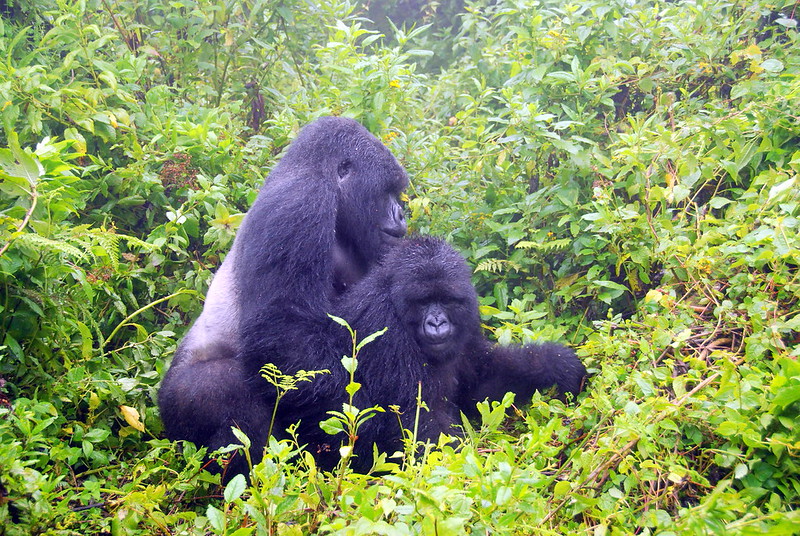
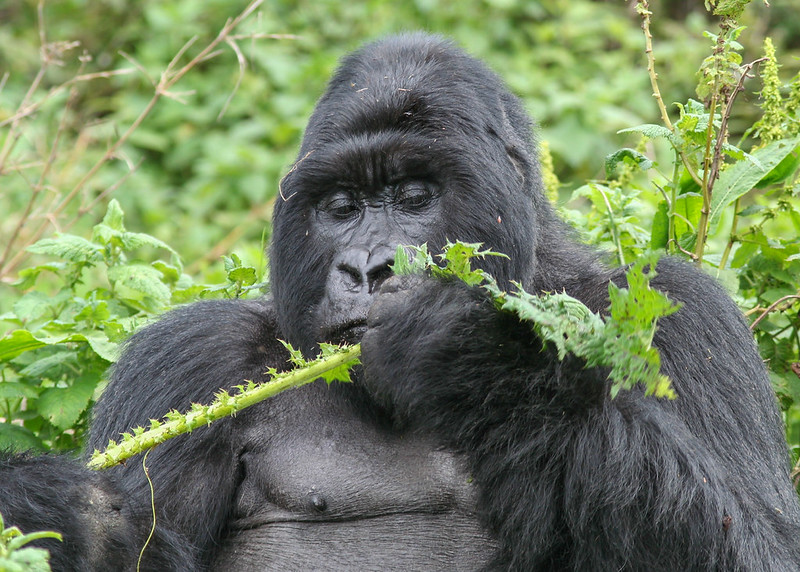
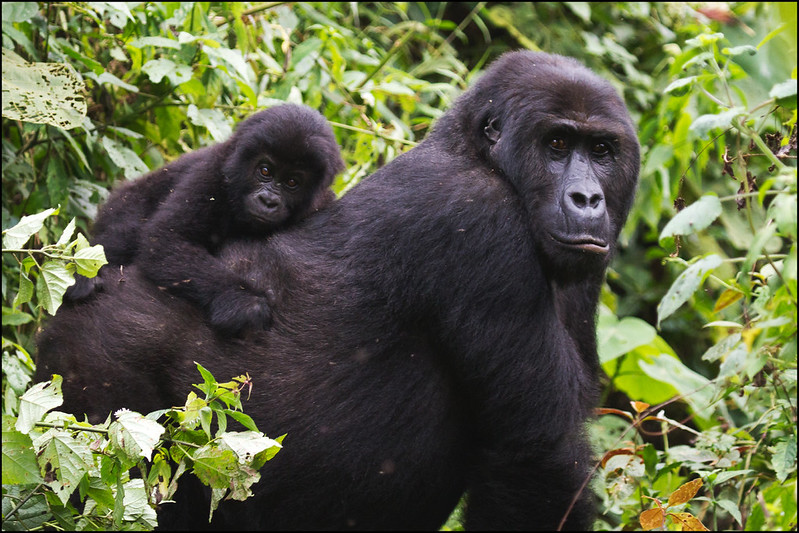
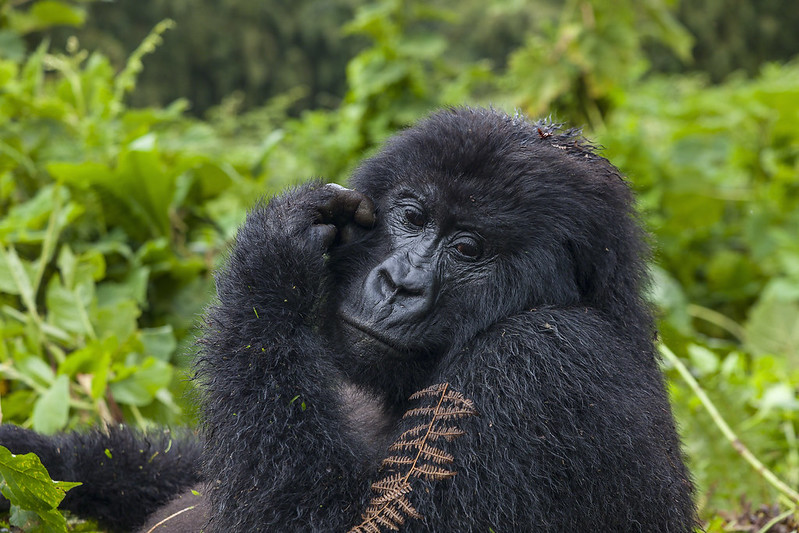
Rwanda currently has twelve habituated gorilla families available for visitor trekking, each with its own distinct personality, social structure, and relationship with the Virunga landscape. Understanding the families before you arrive is one of the things that separates a guided Gorilla Safaris experience from a generic tour booking — your consultant will have discussed your assignment with you, shared what is known about the specific family, and prepared you for the kind of encounter you are most likely to have.
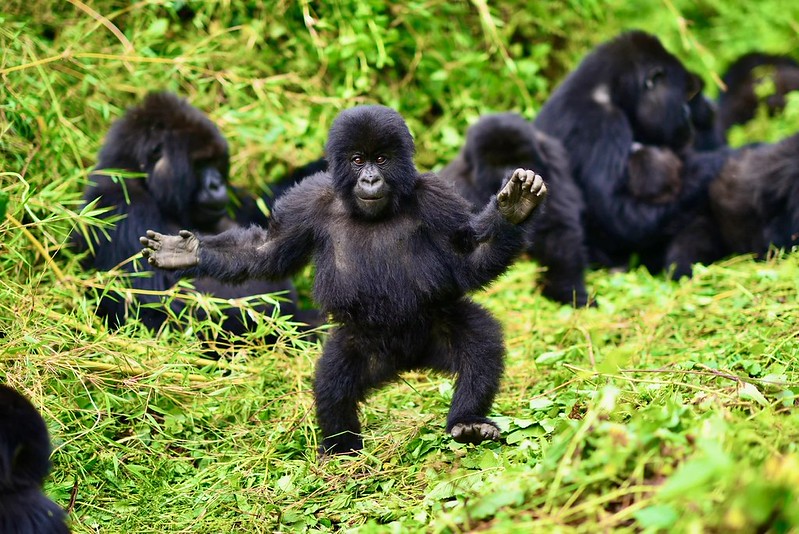 The Susa group, historically the largest habituated family in the Virungas and one studied by Dian Fossey herself, is among the most famous. It typically numbers over 25 individuals and ranges on the slopes of Mount Karisimbi at higher elevation than most other families — which means a longer, more physically demanding trek, but an encounter set in some of the most dramatic landscape the park offers. The Amahoro group, whose name means ‘peace’ in Kinyarwanda, is known for its relaxed temperament and is often recommended for first-time trekkers or guests with limited fitness. The Umubano group is notable for a history of inter-group interaction that researchers have studied in detail.
Among the most frequently assigned families are the Hirwa group (whose name means ‘lucky‘), the Kwitonda group (meaning ‘humble’), and the Agashya group, led by a silverback whose habit of dramatic displays has made him one of the most photographed gorillas in the Virungas. Each family occupies a home range on specific slopes of specific volcanoes, and the assignment of trekking groups to families is made by Rwanda Development Board rangers on the morning of each trek, based on the family’s location the previous evening.
A maximum of eight visitors per family per day is permitted under Rwanda Development Board regulations — a restriction that has remained firm despite pressure from the commercial tourism sector, because the limit is ecological rather than logistical. Eight is the number beyond which the stress on a gorilla family becomes measurable. That restriction is one of the reasons the encounter retains its quality: you are never in a crowd. You are in a small group of eight people, standing 50 metres from a silverback who is aware of you but unconcerned, and the forest is quiet enough that you can hear him breathe.
Learn more about gorilla families and permit booking:
Gorilla trekking in Volcanoes National Park is available every day of the year, and the gorillas are tractable in every month. The question of timing is therefore less about access and more about the specific character of the experience you want to have.
The Dry Seasons: June to September and December to February
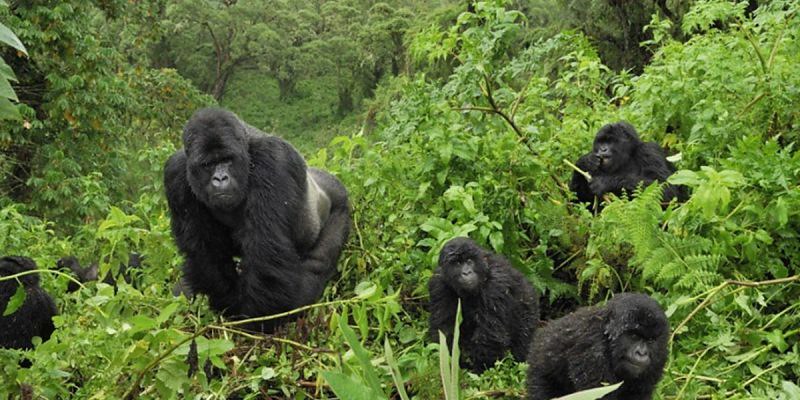 The main dry season from June through September and a shorter dry period through December and January offer the most stable trail conditions: firmer underfoot, lower undergrowth that allows clearer sightlines, and mornings that can be brilliantly clear with the full Virunga chain visible from the briefing ground before you even enter the forest. July and September are particularly busy — September coincides with Kwita Izina — and permits during these months sell out many months in advance. Photography in the dry season benefits from better light and reduced moisture in the canopy.
The Green Seasons: March to May and October to November
The two wet seasons transform the Virunga forest into its most saturated and extravagantly alive state. The canopy is a deeper green, the bamboo shoots are new and drawing gorilla families to lower, more accessible elevations, and the forest floor after rain carries a scent — volcanic soil, wet bamboo, ancient moss — that no description adequately captures. Trails can be muddy and steep sections slippery, which is why the right footwear is non-negotiable. But the encounters during the wet season are often more intimate, as the gorillas feed in concentrated areas close to the trail, and the park is significantly quieter, making the experience feel more personal. Permits are more available, and some lodges offer seasonal rates.
For birding visitors, the wet season months — particularly April and November — are the most productive, as migrants are present and nesting activity brings species to the lower forest zones that are harder to observe in the dry season.
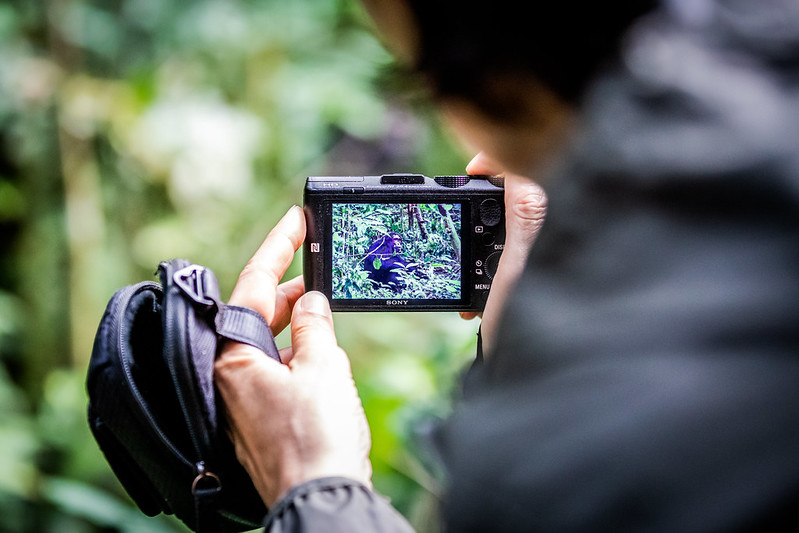 Rwanda Development Board enforces a strict code of conduct for all gorilla trekking participants. These rules are not bureaucratic impositions — they are the architecture of the encounter’s sustainability.
- The seven-metre minimum distance is maintained at all times and is non-negotiable even when the gorillas themselves approach closer (you step back; you do not hold your ground if a gorilla reduces the distance).
- Flash photography is prohibited. Visitors with active respiratory illnesses — colds, flu, any contagious condition — are turned away at the briefing ground and will not receive a permit refund; this rule protects animals who share our susceptibility to human viruses.
- Voices are kept low. Food is not consumed in the presence of the gorillas. Children under fifteen are not permitted on gorilla treks.
- The one-hour rule is absolute — when the guide signals the end of the encounter, the group departs immediately.
- The minimum age of fifteen is among the most important regulations for family travellers to note.
Gorilla Safaris designs family itineraries that account for this rule thoughtfully: younger children can be engaged in golden monkey tracking, volcano walks, and cultural experiences while older family members trek, ensuring that every age group has a compelling programme. We discuss this proactively with every family we work with.
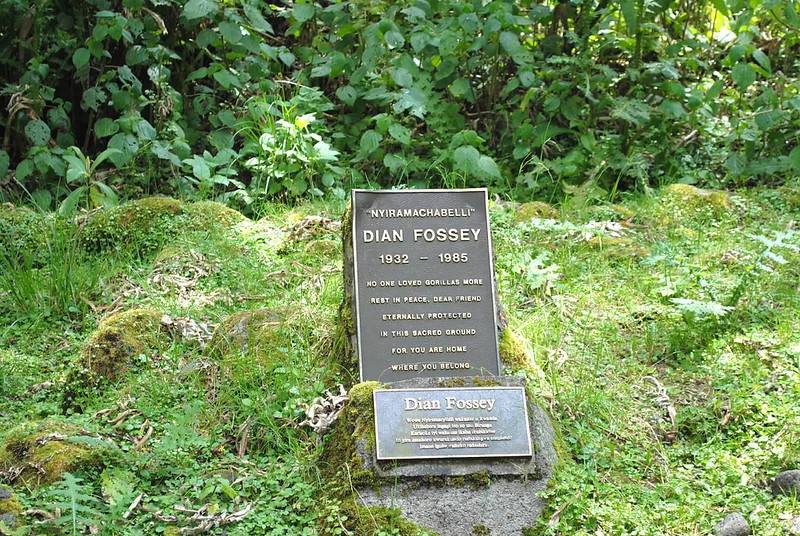
A visit to the Ellen DeGeneres Campus of the Dian Fossey Gorilla Fund, located at the park boundary, is an ideal complement — providing scientific context for the conservation work that Fossey began and that continues, with expanding scope, today.
Mount Bisoke Hike -Activities/Things To Do In Volcanoes national park
Mount Bisoke rises to 3,711 metres on the Rwanda-DRC border, its summit holding one of the most striking crater lakes in the Virunga range — a still, deep-blue circle of water at the caldera rim, surrounded by afroalpine vegetation and, on clear mornings, the full panorama of the Virunga chain extending in both directions.
 The hike from the park boundary takes approximately five to six hours return, ascending through bamboo and Hagenia-Hypericum forest before emerging into the moorland of the higher slope. It is a significant physical undertaking, requiring good fitness and appropriate clothing for temperature changes of up to 15 degrees Celsius between the trailhead and summit. The reward — that crater lake, those views — is proportionate.
Mount Karisimbi Hike-Volcanoes National Park
At 4,507 metres, Karisimbi is the highest of the Virunga volcanoes and the highest point in Rwanda. The summit hike is a two-day programme: ascent on Day 1 to a high camp at approximately 3,700 metres, overnight in basic camping, and the final push to the summit on Day 2 before descent. The experience is challenging, involving altitude, cold, and sustained physical effort — porters are essential and strongly recommended — but what it delivers at the summit is beyond the vocabulary of conventional superlatives. A 360-degree view across Rwanda, the DRC, Uganda, and Tanzania, from the highest point of the volcanic chain that contains them all. This is Karisimbi’s gift, and it is given only to those who climb for it.
Preparing for a gorilla trek in the Virunga begins weeks before departure. The gear you carry on the day determines not just your physical comfort but your freedom to be fully present in the encounter — and inadequate preparation in this particular forest, at this elevation, in this terrain, is immediately noticeable.
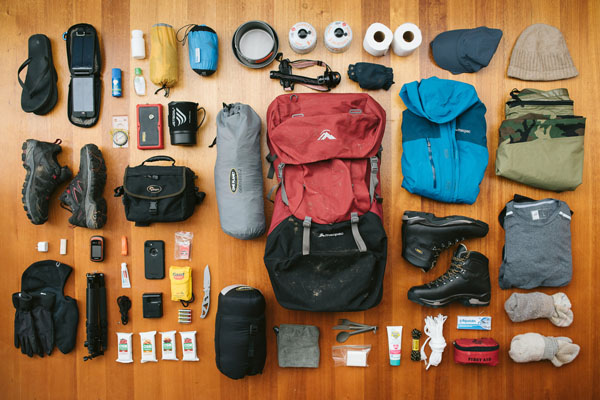 Long-sleeved shirts and long trousers in neutral or dark colours — forest green, khaki, dark brown, navy — are essential. The bamboo and Hagenia forest at trekking elevation contains nettles, rough-leaved climbers, and safari ants whose columns cross the trail with disarming confidence; exposed skin in any of these encounters becomes a distraction from the gorillas. Avoid camouflage (not permitted in Rwanda) and bright colours.
Waterproof hiking boots with ankle support are the single most critical piece of equipment for any Virunga activity. The slopes are steep, the volcanic soil is heavy and adhesive when wet, and a boot that has been broken in before your arrival will carry you through terrain that would destroy unprepared footwear in an hour. Waterproof gaiters worn over the boot top are strongly recommended for the lower sections of most treks, where the undergrowth at trail level is perpetually wet.
A lightweight rain jacket or packable poncho is non-negotiable regardless of the season. Rain in the Virunga can arrive suddenly and intensely; being caught without waterproof outer layers at 2,500 metres is both uncomfortable and potentially dangerous. A lightweight fleece or thermal mid-layer addresses the temperature differential between the forest interior and the open slopes that most gorilla treks cross at some point.
Garden gloves — thin leather or synthetic — protect your hands on steep sections where you reach for vegetation. A wide-brimmed hat or buff for the head offers protection from the canopy moisture that drips persistently in the morning. Your daypack should contain: a minimum of 1.5 litres of water, high-energy snacks (nothing with strong smell), your camera (charged, no flash, silenced), a small first-aid kit, and insect repellent. Your Gorilla Safaris pre-departure kit list will be tailored to the specific season of your visit and the specific volcano sector your assigned family ranges on.
Porters are available at the briefing ground for a fee of approximately USD 10 to USD 20. They carry your daypack, provide physical support on difficult terrain, and often contribute knowledge about the forest and the families that your Gorilla Safaris guide can translate. We recommend porters without reservation, both for the practical assistance they provide and for the community income they generate.
Itinerary 1: Rwanda Gorilla Classic
4 Days | Gorilla Trek, Golden Monkeys & Cultural Rwanda
Best for: Couples, Solo Travellers & First-Time Rwanda Visitors
At a Glance
Day | Where & What | Highlight |
Day 1 | Arrive Kigali | Transfer to Musanze | Gorilla Guardians Village | Cultural immersion on arrival |
Day 2 | Gorilla Trekking, Volcanoes National Park | Face to face with the silverback |
Day 3 | Golden Monkey Tracking | Twin Lakes of Bulera & Ruhondo | Primates and crater lakes |
Day 4 | Drive to Kigali | Kigali Genocide Memorial | Departure | Rwanda’s complete story |
The Full Story, Day by Day
Day 1 — Kigali to the Foot of the Volcanoes
The approach to Kigali International Airport — descending over a landscape of thousand hills, each one terraced to its crown with tea and sorghum and banana — is already a kind of announcement. Rwanda does not ease you in. It arrives all at once: vivid, concentrated, astonishingly orderly for a country that contains this much beauty and this much history in so small a space.
Your Gorilla Safaris representative meets you at arrivals with cold water, your name, and no urgency. The drive northwest to Musanze takes two and a half to three hours in your private vehicle, the road climbing from Kigali’s organised sprawl into the highlands that surround it, and then into the volcanic northwest where the cones of the Virunga — appearing first as suggestions behind cloud, then with increasing definition — begin to organise the entire landscape around themselves.
A mid-afternoon arrival at your lodge allows time to settle in, take the views from the terrace, and absorb the particular quality of the air at this altitude: clear, cool, with the smell of volcanic earth and the calls of birds you cannot yet identify. The afternoon visit to the Gorilla Guardians Village — two hours with community members who were once poachers, who tell their stories with a candour that is both disturbing and redemptive, who demonstrate traditional Rwandan skills with the ease of people for whom these are living practices rather than museum exhibits — sets the tone for everything that follows.
Dinner at the lodge, early to bed. The alarm is set for 5:30 AM.
Accommodation: Bisate Lodge — six crater-bowl villas with wood-burning fireplaces and forest views that begin the moment you draw back the curtain. Alternatively, Five Volcanoes Boutique Hotel for a mid-range option that manages the morning logistics with long-practiced efficiency.
Day 2 — The Encounter
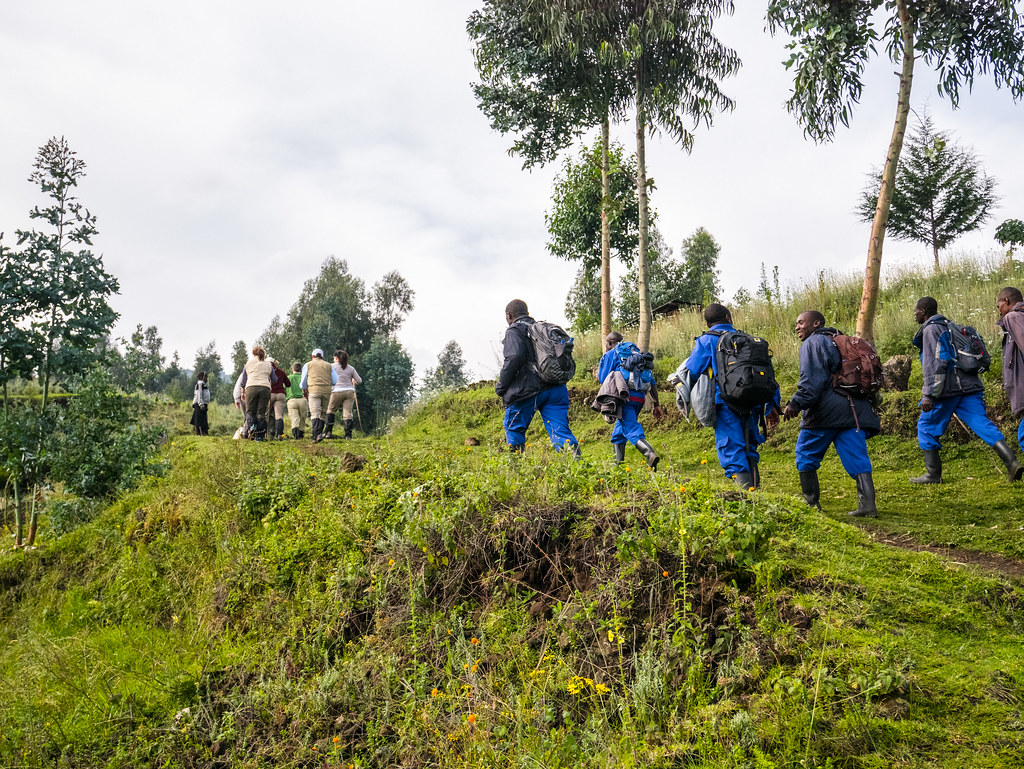
Breakfast arrives before the light. By 6:45 AM your dedicated driver delivers you to the Kinigi briefing ground, where the morning assembles itself around you: other trekkers from other lodges, rangers with their radio equipment, porters waiting at the forest boundary with walking poles and the unhurried air of people who have made this walk before and regard it with undiminished affection.
The briefing covers the family you have been assigned — your consultant discussed the assignment with Rwanda Development Board in advance, factoring in your fitness level and preferences. By 7:30 AM the trek is underway.
What happens over the next three to five hours — the approach, the moment of contact, the hour with the family — is narrated in full in the gorilla trekking section of this guide. What is worth adding here is the quality of the return. The walk back from the gorillas to the forest boundary, with the adrenaline beginning to recede and the full weight of what has just happened beginning to settle, is one of the quietest and most privately significant walks most guests will ever take.
A celebration lunch at the lodge follows — the kitchen is briefed in advance for this meal, and it is deliberately the best of the stay. The afternoon is entirely free: the terrace, the binoculars, the volcanoes.
Day 3 — Golden Monkeys and the Twin Lakes
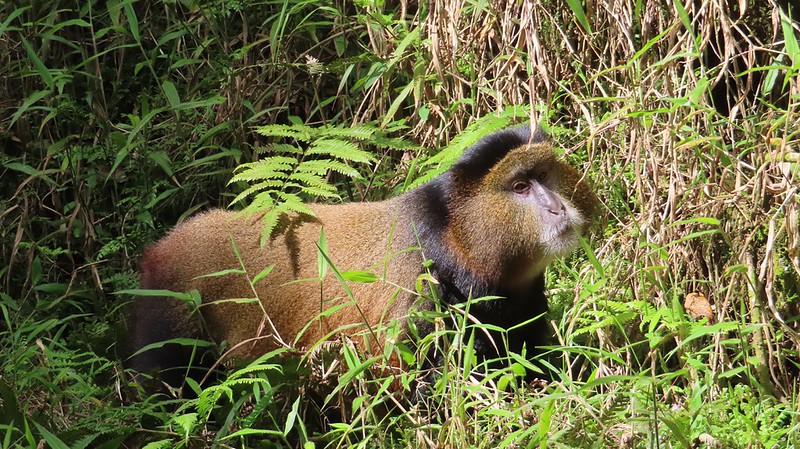
The briefing for golden monkey tracking begins at 7:00 AM, the approach through the lower bamboo zone taking thirty to forty-five minutes before the habituated troop is located. The contrast with yesterday’s gorilla encounter is immediate and total: where the gorillas were still and meditative, the golden monkeys are motion and noise, fifty to eighty individuals moving through the canopy in all directions simultaneously, their chestnut-and-black colouring catching the morning light in ways that make your camera feel inadequate.
An hour with the troop passes with entirely different speed from the gorilla encounter, and the delight is equally genuine.
The afternoon is given to the Twin Lakes of Bulera and Ruhondo — a thirty-minute drive from the lodge, a guided walk along the ridge between the two bodies of water, and a boat excursion on one of them that delivers the Virunga volcano chain reflected in still water at the particular light of 4 PM. A curated picnic is arranged on the lakeshore by the lodge team. The evening returns to Musanze for a final dinner.
Day 4 — Kigali and Departure
The road back to Kigali is the same road you came in on three days ago, and it looks different now. The landscape has not changed. Something else has. Your dedicated driver allows the journey to move at the pace of the scenery, stopping at a viewpoint above the volcanic landscape if you want it, arriving in Kigali with time for lunch in Kigali’s Kimihurura neighbourhood — one of the city’s finest restaurant districts — and a visit to the Kigali Genocide Memorial, which contextualises Rwanda’s recent history with the directness and care that only the Rwandans themselves could bring to it.
Your representative is at the airport for the final transfer to departures. Four days. Two great primate encounters. One country that will not leave you easily.
What Is Included
- Private airport transfers Kigali to Musanze and return.
- Gorilla trekking permit, Volcanoes National Park (Day 2).
- Golden monkey tracking permit (Day 3).
- Gorilla Guardians Village programme.
- Twin Lakes excursion and guided ridge walk.
- Accommodation as specified on full-board basis (3 nights).
- Rwanda Development Board park entry fees.
- Dedicated Gorilla Safaris guide throughout.
- Emergency evacuation insurance.
What Is Not Included
- International flights to and from Kigali.
- Rwanda tourist visa (available on arrival for most nationalities or e-visa at irembo.gov.rw).
- Tips and gratuities for guides, drivers, porters, and lodge staff (budgeted separately).
- Personal travel and medical insurance beyond the included emergency evacuation coverage.
- Optional porter hire at briefing ground.
- Personal expenditure.
Itinerary 2: The Dian Fossey Legacy
6 Days | Double Gorilla Trek, Dian Fossey Hike & Karisimbi
Best for: Conservation Enthusiasts, Adventurous Travellers & Return Rwanda Visitors
At a Glance
Day | Where & What | Highlight |
Day 1 | Arrive Kigali | Transfer to Musanze | Lodge orientation | Volcano panorama on arrival |
Day 2 | Gorilla Trekking — Family 1 | Ellen DeGeneres Campus visit | The science behind the encounter |
Day 3 | Dian Fossey Memorial Hike & Karisoke Research Site | Walking in Fossey’s footsteps |
Day 4 | Gorilla Trekking — Family 2 | Gorilla Guardians Village | A second family, a new story |
Day 5 | Mount Bisoke Crater Hike | Twin Lakes at sunset | Summit crater lake & volcano views |
Day 6 | Golden Monkey Tracking | Drive to Kigali | Departure | The final forest morning |
The Full Story, Day by Day
Day 1 — Arrival and Orientation
The journey from Kigali to Musanze on Day 1 is unhurried by design. Your private vehicle pauses at a high point above Kigali for a first view of the thousand hills, and the conversation with your Gorilla Safaris guide on the road north covers the week ahead — what to expect from the specific gorilla families assigned on Days 2 and 4, how the Fossey hike will feel different from the gorilla trek, what to pack for Bisoke on Day 5. By arrival at your lodge in the mid-afternoon, the week has already begun to take shape in your imagination.
A lodge orientation walk before dinner introduces you to the immediate landscape: the forest boundary visible from the garden, the volcano cones in the evening light, and the first birds of the Virunga endemics that your guide identifies with the practiced ease of someone who has walked this garden hundreds of times and still finds the regal sunbird remarkable.
Accommodation: Singita Kwitonda Lodge — twelve villas above Musanze with private pools and panoramic Virunga views. Alternatively, One&Only Gorilla’s Nest for forest-edge immersion at a comparable level of luxury.
Day 2 — First Gorilla Trek and the Ellen DeGeneres Campus
The morning follows the gorilla trekking protocol in full — briefing at Kinigi, the approach, the hour with the first assigned family. The specific family has been chosen in consultation with Rwanda Development Board to ensure its territory is accessible given your overall week’s programme: a family on the Bisoke slopes works well for this itinerary, as Day 5’s Bisoke hike can traverse some of the same terrain the gorillas moved through this morning, creating a connection between the two experiences.
The afternoon visit to the Ellen DeGeneres Campus of the Dian Fossey Gorilla Fund provides the scientific and historical context that transforms tomorrow’s Fossey hike from a walk to a pilgrimage. The campus’s permanent exhibition covers the entire arc of mountain gorilla conservation: from the species’ near-extinction in the 1980s to its current status as the only great ape whose numbers are growing, with Fossey’s role in that transformation given the credit it deserves. The researchers based at the campus are occasionally available for informal conversations — moments of unscripted access to the ongoing science that are among the most enriching encounters this itinerary offers.
Day 3 — The Fossey Hike
The ascent to Karisoke begins at the park boundary at 7:30 AM, with a ranger guide and a porter who carries your daypack and knows every plant on the trail by its medicinal use. The forest opens and closes around the path as it gains elevation, and the transition from bamboo through Hagenia woodland — moss-draped, ancient, filtering the light into something almost liquid — has a quality that no description fully captures. It needs to be walked.
The camp site at the saddle between Karisimbi and Bisoke, where Fossey pitched her original tents in 1967, is marked by ruins overgrown with the forest that she both studied and was consumed by. The grave is twenty metres beyond — simple, tended, set among the individual graves of gorillas she knew and named over eighteen years of proximity: Digit, Uncle Bert, Macho. To stand there in the quiet of the high forest, with the volcanoes on either side and the sound of the wind in the Hagenia canopy, is an experience that many guests describe as the most affecting of their entire Rwanda journey.
The descent takes two hours. Lunch is at the lodge. The afternoon is quiet by design.
Day 4 — Second Gorilla Trek and Community
The second gorilla trekking permit, assigned to a different family than Day 2, unfolds against the accumulated context of the week so far. You know more now — about the families, about habituation, about what the researchers observed on the slopes above the camp you visited yesterday. The encounter with the second family is not a repetition; every gorilla family has a distinct personality and social dynamic, and the silverback of this family is a different animal from the one you met two days ago. The contrast is instructive and deeply rewarding.
The afternoon visit to the Gorilla Guardians Village — its stories of former poachers who now protect the same animals they once hunted — carries a different weight after the Fossey hike. Conservation is not a simple story of heroes and villains. It is a story of changed incentives, of communities finding economic stakes in the survival of the species next to which they live. The village programme is one of the places where that change is most clearly visible.
Day 5 — Mount Bisoke
The Bisoke hike departs at 7:00 AM for a five to six hour round trip that ascends through bamboo and Hagenia forest before entering the moorland of the upper slope. The summit crater lake — still, deep blue, surrounded by afroalpine vegetation and, on clear mornings, visible from the moment you crest the final ridge — rewards every metre of the ascent. Your Gorilla Safaris guide carries the same knowledge of the botanical zones above the tree line that informed the forest walks below it, and the transition from Hagenia woodland to giant Lobelia and Senecio moorland is narrated with the ease of someone who finds this landscape perpetually interesting.
The return to the lodge by mid-afternoon allows for the Twin Lakes excursion at the time of day when the volcanic landscape is at its most photogenic. The dinner that evening, having climbed a volcano and tracked gorillas twice in four days, is the kind of meal that tastes better for everything that preceded it.
Day 6 — Golden Monkeys and Departure
The final morning brings golden monkey tracking — the briefing, the bamboo approach, the hour with the habituated troop in all its kinetic splendour. The experience, on this occasion, carries the weight of context: the gorillas, the forest, the graves on the Karisoke saddle, the research campus, the community guardians. The golden monkeys are not a footnote to these other encounters; they are part of the same story, the same ecosystem, the same conservation argument that this week has articulated across six days in the Virunga.
Your private vehicle departs for Kigali after lunch, arriving at the international airport in time for evening or overnight connections. Your Gorilla Safaris representative is at the airport. The journey home carries more than luggage.
What Is Included
- Private transfers throughout.
- Two gorilla trekking permits (Days 2 and 4).
- Golden monkey tracking permit (Day 6).
- Dian Fossey Memorial Hike fees and ranger guide.
- Mount Bisoke hike fees and ranger guide.
- Ellen DeGeneres Campus guided tour.
- Gorilla Guardians Village programme.
- Twin Lakes excursion.
- Accommodation on full-board basis (5 nights).
- All park entry fees.
- Dedicated Gorilla Safaris guide throughout.
- Emergency evacuation insurance.
What Is Not Included
- International flights.
- Rwanda visa.
- Tips and gratuities.
- Personal travel and medical insurance.
- Porter hire (recommended for all hikes; approximately USD 10–20 per activity).
- Personal expenditure.
Itinerary 3: The Virunga Grand Tour
9 Days | Rwanda + Uganda | Gorillas, Chimps, Volcanoes & Wildlife
Best for: First-Time East Africa Visitors, Groups, Families with Older Children & Comprehensive Safari Seekers
At a Glance
Day | Where & What | Highlight |
Day 1 | Arrive Kigali | Transfer to Musanze | The northwest road |
Day 2 | Gorilla Trekking, Volcanoes NP | Ellen DeGeneres Campus | Rwanda gorilla encounter |
Day 3 | Golden Monkey Tracking | Gorilla Guardians Village | Drive to Cyanika border | Cross into Uganda |
Day 4 | Mgahinga, Uganda | Gorilla Trekking, Nyakagezi Group | Two countries, two gorilla parks |
Day 5 | Transfer Mgahinga to Bwindi Rushaga | Acclimatisation walk | Deep into Bwindi |
Day 6 | Gorilla Trekking, Bwindi Rushaga Sector | Third gorilla encounter |
Day 7 | Batwa Cultural Trail, Bwindi | Transfer to Entebbe | History, forest, farewell |
Day 8 | Kibale Forest: Chimpanzee Tracking | Bigodi Swamp | The fourth great ape encounter |
Day 9 | Drive to Entebbe | Departure | Uganda’s final highway |
The Full Story, Day by Day
Days 1–3: Rwanda
The first three days follow the arc of Itinerary 1 — the Kigali arrival, the drive to Musanze, the gorilla trek in Volcanoes National Park, the golden monkey tracking, and the Gorilla Guardians Village. On the afternoon of Day 3, however, instead of returning to Kigali, your private vehicle continues south and then east to the Cyanika border post, crossing into Uganda’s Kisoro District in the late afternoon. The transition is smooth, managed by Gorilla Safaris representatives on both sides of the border, and the final hour’s drive to Kisoro or directly to the Mgahinga lodge delivers you to a different country in the same ecosystem — the Virunga range visible in the rearview mirror as the Ugandan hills open ahead.
Accommodation in Kisoro: Mount Gahinga Safari Lodge — twelve stone cottages on the Mgahinga park boundary, with the Uganda volcanoes beginning immediately behind the property.
Day 4: Mgahinga, Uganda
The Nyakagezi gorilla group — Mgahinga’s single habituated family — is tracked from the Ntebeko Gate at 7:00 AM. The experience, as described in our Mgahinga guide, has a different quality from the Rwanda encounter: a smaller park, a single family, the bamboo zone denser and the volcanic slopes steeper in this particular configuration. The silverback Mark, having been photographed by thousands of guests over years of habituation, has the particular composure of an animal that has decided human observers are simply a feature of his morning.
A second gorilla encounter, in a different country, from a different approach, with a different family dynamic, enriches rather than dilutes the first. The comparison between the two experiences — the similarities in the fundamentals of gorilla behaviour, the differences in setting and atmosphere — is something your Gorilla Safaris guide will discuss over dinner.
Day 5: The Transfer to Bwindi
The drive from Mgahinga to Bwindi’s Rushaga Sector takes approximately two hours through the Kigezi Highlands — terraced hillsides, tea estates, the occasional view of the Virunga cones across the Ugandan-Rwandan border. The lodge in Rushaga, positioned on the forest edge of one of Africa’s most ancient forests, is a different kind of wilderness presence from the volcanic drama of Mgahinga: older, denser, darker, more layered. The afternoon acclimatisation walk on the park boundary introduces you to the forest before tomorrow’s trek.
Day 6: Bwindi — The Third Encounter
Gorilla trekking in Bwindi’s Rushaga Sector, with one of the six habituated families that range through this part of the park, is the third gorilla encounter of the journey and the one that most guests describe as the most immersive. Bwindi’s forest is older and more complex than the Virunga bamboo zone; the gorillas range deeper into the canopy, and the approach is correspondingly longer and more involving. When contact is made, the hour with the family has a quality of earned arrival that the terrain itself creates.
Detailed coverage of Bwindi’s gorilla trekking experience, families, and logistics is provided in our comprehensive Bwindi guide.
Read the full Bwindi Impenetrable National Park guide:
Days 7–9: Batwa, Chimps and the Road to Entebbe
Day 7’s Batwa Cultural Trail in Bwindi — the most emotionally layered of all the cultural experiences in this itinerary, because the Batwa’s relationship with this specific forest is so ancient and their displacement from it so recent — is followed by a transfer to Entebbe via the highland road, with a possible stop at Lake Bunyonyi for a lakeside lunch. Day 8 brings chimpanzee tracking at Kibale Forest National Park, the final primate encounter of the journey, and the one that provides the most striking counterpoint to everything that preceded it: chimpanzees are fast, loud, and entirely unlike gorillas in the quality of attention they demand. The Bigodi Wetland Sanctuary walk in the afternoon completes the wildlife programme.
Day 9’s drive to Entebbe and the international departure closes a nine-day journey through two countries, four national parks, three gorilla encounters, one chimpanzee tracking, a golden monkey session, a volcano hike and a Batwa trail — Uganda and Rwanda offered in their combined depth.
Read our Uganda guides for Kibale and Bwindi
What Is Included
- Private transfers throughout (including cross-border Cyanika and all inter-park transfers).
- Rwanda Development Board gorilla permit (Day 2).
- Golden monkey permit, Rwanda (Day 3).
- Uganda Wildlife Authority gorilla permit, Mgahinga (Day 4).
- UWA gorilla permit, Bwindi Rushaga (Day 6).
- Batwa Cultural Trail, Bwindi (Day 7).
- Chimpanzee tracking permit, Kibale (Day 8).
- Bigodi Wetland Sanctuary walk (Day 8).
- Ellen DeGeneres Campus visit.
- Gorilla Guardians Village programme.
- All park entry fees in both countries.
- Accommodation on full-board basis (8 nights).
- Dedicated Gorilla Safaris guides in both countries.
- Emergency evacuation insurance throughout.
What Is Not Included
- International flights to Kigali and from Entebbe (or in reverse).
- Visas for Rwanda and Uganda (both available on arrival or e-visa portals).
- Tips and gratuities.
- Personal travel and medical insurance beyond emergency evacuation.
- Porter hire at any trekking site.
- Personal expenditure.