Bwindi Impenetrable National Park-Ultimate Gorilla Trekking Guide
There is a moment — and every guide who has walked this forest will tell you about it — when the trees close around you, the light turns green and amber, and the world you knew before the trailhead ceases to exist. The air thickens with the scent of wet earth and ancient bark. Your boots sink into soil that has not seen direct sunlight in centuries. And then, without warning, the undergrowth shifts. A branch bends. An eye meets yours — deep-set, amber-flecked, impossibly knowing — and you understand, on a level that has nothing to do with language, that you are in the presence of something utterly extraordinary.
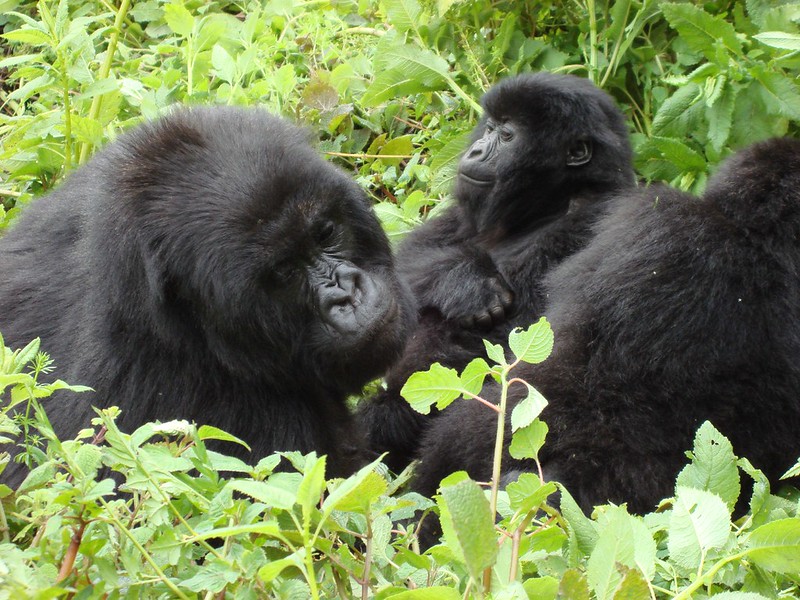
This is Bwindi. This is why people cross oceans to stand here.
Bwindi Impenetrable National Park sits in the southwestern highlands of Uganda, straddling the edge of the Albertine Rift Valley at elevations between 1,160 and 2,607 metres above sea level. It is not a park in the polished, camera-ready sense. There are no wide-open savannahs, no easy vistas. What Bwindi Impenetrable National Park offers instead is something rarer: genuine wildness. A UNESCO World Heritage Site since 1994, it protects approximately 321 square kilometres of montane and lowland rainforest that has stood, unbroken, for at least 25,000 years. It survived the last Ice Age as a glacial refuge. It is, in the truest sense of the word, ancient.
Within its canopy — dense, multi-layered, jealous with its secrets — lives half the world’s entire population of mountain gorillas. Roughly 460 individuals, organized into habituated families, move through this forest under the protection of Uganda Wildlife Authority rangers and the careful stewardship of researchers who have spent careers learning their names, their hierarchies, their personalities.19 gorilla families across four distinct sectors are available for trekking, each accessible by a maximum of eight guests per group per day. That limitation is not a bureaucratic inconvenience — it is the reason the experience retains its sanctity.
At Gorilla Safaris, we have guided travelers into this forest for years. We know which trails flood after November rains. We know which sector suits a guest who needs a shorter approach. We know the porters by name — men and women from the surrounding communities who carry not just your daypack but decades of knowledge about this place. When you travel with us, you are not booking a tour. You are being accompanied by people who love this forest and are invested in the moment when the undergrowth parts and the mountain gorillas come into view.
This guide exists to prepare you for that moment — and to help you plan the journey that surrounds it.
What Is Bwindi Impenetrable National Park?
The name itself gives the first clue. In the local Rukiga language, Mubwindi means “dark, impenetrable place.” It is an apt description, though one that undersells the forest’s complexity. Bwindi Impenetrable National Park is not merely dense — it is a living library of ecological history, harbouring more than 1,000 flowering plant species, 104 species of fern, 350 species of birds (including 23 endemics of the Albertine Rift), 120 mammal species, 310 species of butterfly, and 27 species of frogs. Brown mahogany trees rise from the valley floors. Colobus monkeys call from the canopy. L’Hoest’s monkeys, red-tailed monkeys, and chimpanzees share the forest with its most famous residents.
The park was gazetted in 1991, though the forests had been protected as Crown Forest Reserves since 1932. UNESCO designated it a World Heritage Site under criteria VII and X — the criteria reserved for exceptional natural beauty and for habitats containing threatened species of outstanding universal value. There is no ambiguity about what makes Bwindi Impenetrable National Park irreplaceable: it is one of the last places on earth where a human being can sit in the company of wild mountain gorillas and watch them go about the business of being alive.
The forest is divided into four Gorilla trekking sectors — Buhoma, Ruhija, Rushaga, and Nkuringo — each administered by Uganda Wildlife Authority, each with its own character, its own gorilla families, and its own approach route. Understanding the differences between them is one of the first things your Gorilla Safaris expert will discuss with you, because the sector you trek in shapes the entire texture of the day.
The Gorilla Trekking Sectors of Bwindi
Buhoma Sector Of Bwindi Impenentrable National Park
Buhoma Sector is where gorilla trekking in Bwindi began, in April 1993, and it remains the most established of the four sectors. Located in the northern part of the park in Kanungu District, it is the gateway most visitors arrive at first. The trails here wind through a landscape of bamboo groves and giant tree ferns, and the forest feels almost theatrical in its beauty. Buhoma is home to four habituated gorilla families: the Mubare, Habinyanja, Rushegura, and Katwe groups.
The Mubare group holds a particular distinction — it was the first gorilla family in Uganda to be habituated for tourism, making it the original connection between Bwindi’s wild inhabitants and the outside world. Trekking here carries a certain weight of history. Buhoma also has the advantage of proximity to Kibale Forest and Queen Elizabeth National Park, making it a natural anchor point for a broader Uganda itinerary. Explore our Uganda gorilla and wildlife safaris here →
Ruhija Sector-Bwindi Impenetrable National Park
Perched at the highest elevation of any sector — between 2,300 and 2,607 metres — Ruhija occupies the eastern part of the park in Kabale District. The air here is sharper, the mist more persistent, and the forest floor more open underfoot than at lower elevations. This is exceptional birding country: the Ruhija area records some of the highest densities of Albertine Rift endemic birds in East Africa, and dawn walks here, before trekking begins, are an experience in their own right.
Three gorilla families call Ruhija home: the Bitukura, Oruzogo, and Kyaguliro groups. The Kyaguliro group is particularly significant as it has been the subject of long-term scientific research, and encounters with them carry an added layer of context when your guide shares their individual stories. Ruhija Sector tends to suit travelers who appreciate a more remote, quieter setting — and who do not mind the altitude.
Rushaga Sector Bwindi Impenetrable National Park
In the southern part of the park in Kanungu District, Rushaga is the sector with the 10 gorilla family groups, out which 6 are habituated gorilla groups for standard trekking, plus two additional groups used for the gorilla habituation experience. The Rushaga families include the Nshongi, Mishaya, Kahungye, Busingye, Rwigi, and Bikingi groups. This diversity gives Rushaga a remarkable flexibility: on any given morning, six separate groups of guests can enter the forest simultaneously, each heading toward a different family in a different direction.
Rushaga is where we most often place guests who want the gorilla habituation experience (more on that below), and it also suits larger groups or families traveling together who want to maximise the likelihood of a morning in the forest. The landscape rolls dramatically here, with the Virunga volcanoes visible on clear days across the DRC border — a reminder of just how wild and borderless this ecosystem truly is.
Nkuringo Sector Of Bwindi Impenetrable National Park
Nkuringo Sector (Southwest): Home to 3 families (Nkuringo, Bushaho, and Christmas). It is highly regarded for its rewarding, albeit steep, highland hikes. Nkuringo occupies the southwestern tip of the park, in Kisoro District, and it is arguably the most visually dramatic setting of all four sectors. The landscape drops away from the forest edge into a sweeping valley, with the Virunga volcanoes rising on the horizon. The single habituated family here — the Nkuringo group — is named after this terrain, and trekking to find them often involves a challenging descent into the valley followed by a steep ascent back out.
This is not the sector for guests who want an easy morning. But for those who are physically prepared, the Nkuringo experience has a quality that is difficult to articulate: it feels more earned, somehow. More remote. The views from the forest edge, with Mgahinga Gorilla National Park’s volcanoes in the distance and the communities of the Kigezi Highlands spread below, are among the most beautiful in Uganda. Learn more about gorilla trekking in Nkuringo →
The Gorilla Families of Bwindi Impenetrable National Park
Bwindi Impenetrable National Park currently has 20 habituated gorilla families available for visitor encounters — a number that reflects decades of patient, careful work by researchers and Uganda Wildlife Authority rangers. Each family has its own silverback, its own social dynamics, and its own relationship with the forest.
The Mubare group (Buhoma) is the oldest habituated family in Bwindi, led today by a silverback named Kato, who took over leadership after a period of internal transition that the tracking teams monitored with characteristic patience. The Habinyanja group (Buhoma) is one of the larger families, frequently encountered in the valley bottoms near the park headquarters.
In Rushaga, the Nshongi group is remarkable for its size — at times exceeding twenty individuals — and for the complex hierarchy among its sub-adults and blackbacks. The Kahungye group has a reputation for feeding low in the undergrowth, making photography particularly rewarding. In Ruhija, the Bitukura group is known for its relaxed temperament and the silverback’s habit of resting in open clearings, a gift for photographers and first-time trekkers alike.
Your Gorilla Safaris guide will brief you on the specific family you have been assigned before your trek begins — covering the silverback’s name, the family’s approximate size, known behavioural traits, and the general direction your tracking team will head. By the time you enter the forest, you will already feel acquainted with the individuals you are about to meet.
Gorilla Trekking: The Experience in Full
What Actually Happens on a Gorilla Trek
The morning begins early. A 7:00 AM briefing at the Uganda Wildlife Authority sector headquarters — Buhoma, Ruhija, Rushaga, or Nkuringo, depending on your assigned sector — gathers all trekking groups for a ranger-led orientation. This thirty-minute session covers the rules: maintain a seven-metre distance from the gorillas at all times; no flash photography; cough or sneeze into your elbow and turn away; if a silverback charges or bluff-charges, do not run — crouch, avert your eyes, and follow your guide’s lead exactly.
The rules exist because mountain gorillas share approximately 98% of their DNA with humans, which means our diseases can pass to them with potentially catastrophic consequences. The seven-metre rule is as much about their survival as it is about your safety.
After the briefing, your group — a maximum of eight guests — sets off with two armed rangers, a lead tracker, and your Gorilla Safaris guide. The armed ranger is a precaution; the presence of weapons is not a signal of danger but a practical measure that has been standard practice since 1999, and their role is primarily to clear trail and manage distance from the gorillas. Your tracker, meanwhile, was likely in the forest before dawn, following the family’s night nests to establish their morning position. Communication between the tracker team and your group happens via radio, and the coordination is seamless — your guide will receive updates throughout the approach.
The trek itself can last anywhere from thirty minutes to six hours, depending on the family’s location that morning. This is the central truth about gorilla trekking that no itinerary can fully prepare you for: the forest sets the schedule, not the clockwork of human planning. A family that fed close to the trail on Monday may have moved two valleys away by Thursday. What remains constant is the hour you spend with them once found — one hour, exactly, as per UWA regulations, which begins from the moment your guide confirms visual contact.
That hour is unlike anything else.
The silverback may be feeding on wild celery, tearing it with a methodical ease that reveals extraordinary hand strength. A juvenile may be attempting to climb a branch that is clearly not quite strong enough, tumbling into the undergrowth with cheerful resilience. A mother will watch you from a distance with an evaluating calm that feels, unmistakably, like assessment. The group’s noise — low belches of contentment, the occasional bark of a sub-adult told to behave, the papery rustle of leaves being stripped — fills the air around you.
At the end of the hour, your guide will give you a gentle signal. The group begins to move back toward the trail. The gorillas, largely unconcerned with your departure, continue their morning.
What to Wear and Carry for Gorilla Trekking
The forest does not care about fashion. What it does require is practicality.
- Long-sleeved shirts and long trousers in neutral or dark colours — forest green, khaki, dark brown — are essential. Bwindi’s undergrowth is home to safari ants (siafu) that can find any exposed skin with disconcerting efficiency, and long sleeves protect against both ants and the nettle-like plants along many trails. Cotton and light polyester both work; avoid bright colours and camouflage (which is restricted in Uganda).
- Waterproof hiking boots with ankle support are non-negotiable. The trails in Bwindi are not maintained footpaths — they are corridors cut through living forest, and they can be steep, slippery, and uneven. A boot that has been broken in before your trek will serve you immeasurably better than a new pair purchased at the airport. Waterproof gaiters, worn over boot tops, keep out the morning mud and any intrusive insects.
- A rain jacket or waterproof poncho lives permanently in your daypack. Rain in Bwindi can arrive without theatrical warning — a ten-minute downpour that soaks everything and then retreats as suddenly as it came. Lightweight garden gloves are surprisingly useful for grabbing vegetation on steep sections without cutting your hands. Hiking poles, available at most lodges or brought from home, are strongly recommended for Nkuringo and the steeper sections of Rushaga.
- Your pack should contain: at least 1.5 litres of water, energy snacks for the trail, your camera (no flash, as noted), insect repellent, and a small first-aid kit. Mobile phones should be silenced. Your Gorilla Safaris representative will provide a pre-departure kit list tailored to your specific sector and season.
The Gorilla Habituation Experience
For travellers who find a standard one-hour gorilla trek impossibly brief — who want to sit longer in the forest, watch feeding patterns evolve through the mid-morning, observe the social interactions that unfold over hours rather than minutes — the Gorilla Habituation Experience (GHE) offers something categorically different.
Habituation is the multi-year process by which a wild gorilla family gradually becomes accustomed to the presence of human observers. It is painstaking, methodical, and occasionally halted by the animals’ own pace of acceptance. During the Gorilla Habituation Experience, guests join researchers and habituators in the field for a full four hours with a semi-habituated gorilla family — significantly longer than the standard one-hour encounter, and far more raw in its texture.
Currently, the habituation experience is available exclusively in Rushaga Sector, where two semi-habituated gorilla families accept a maximum of four guests per session — half the number permitted for standard trekking. The intimate group size is by design: with fewer observers, the experience is quieter, more collaborative, and more deeply immersive. Guests work alongside the research team, and the guides encourage thoughtful engagement with what is being observed.
The cost of the Gorilla Habituation Experience is USD 1,500 per person. This is higher than the standard trekking permit, reflecting both the extended duration and the exclusive group size. It is, without question, one of the most exceptional four hours available anywhere in Africa, and we at Gorilla Safaris regard it as among the highest-value experiences we arrange for our guests. Enquire about the Gorilla Habituation Experience →
The Cost of Gorilla Trekking Permits in Bwindi
Uganda Wildlife Authority sets gorilla trekking permit fees in USD, and they are tiered by nationality:
Foreign Non-Residents: USD 800 per person per trek
Foreign Residents (holders of valid East African residency): USD 700 per person per trek
East African Citizens (Uganda, Kenya, Tanzania, Rwanda, Burundi, South Sudan, DR Congo): UGX 300,000 per person per trek
Each permit grants access to one specific gorilla family on one specific date, in one specific sector. Permits are allocated by Uganda Wildlife Authority and are genuinely limited — only eight permits are issued per family per day, and during peak season (July–August and December–January), demand reliably exceeds supply.
This is one of the most important reasons to work with an established operator. At Gorilla Safaris, we hold allocations across all four sectors and all habituated families. We secure permits months in advance for our guests, as part of a curated itinerary that ensures your travel dates, your logistics, and your chosen experience are all in alignment. Check permit availability and enquire about a custom itinerary →
Note: Permit fees are subject to annual review by Uganda Wildlife Authority. Our team maintains current pricing and will confirm exact costs at the time of enquiry.
Activities Beyond Gorilla Trekking
Bwindi is the headline, but it is not the entire story. The park and its surrounding communities offer a constellation of experiences that reward guests who linger.
The Batwa Cultural Trail
Among the most moving experiences available anywhere in southwestern Uganda, the Batwa Trail invites you into the story of the forest’s original human inhabitants. The Batwa — also known as the Twa — are a Pygmy people who lived within Bwindi’s canopy for an estimated 60,000 years before the park’s gazettement in 1991 displaced them from the forest they called home. Their displacement was, by any honest accounting, a profound injustice — one that conservation authorities and community organisations have been working, imperfectly, to address ever since.
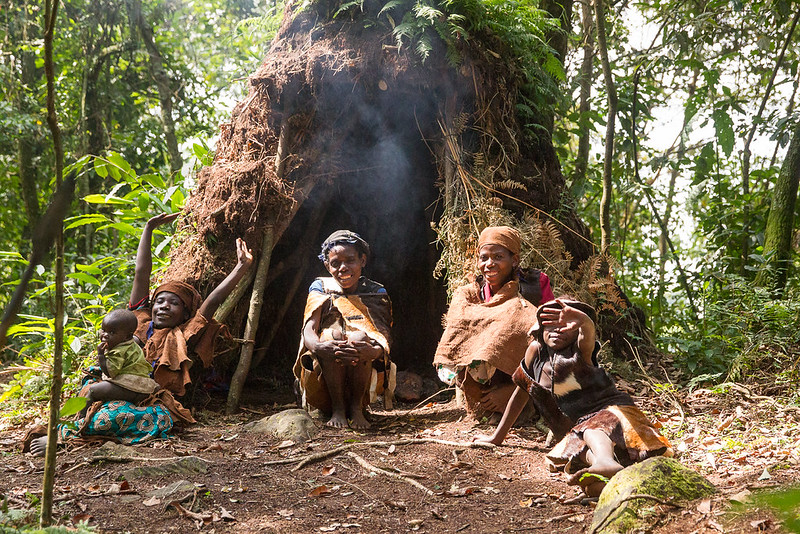
The Batwa Trail, run by the Bwindi community through partnerships with organisations including the Mgahinga and Bwindi Impenetrable Forest Conservation Trust, takes guests along ancient Batwa pathways inside the national park. Your Batwa guides demonstrate traditional honey collection from wild hives, fire-making techniques that predate any technology you will have encountered before, and the medicinal uses of specific plants that Western pharmacology is only beginning to study.
The trail ends with a performance of traditional song and dance, and then — quietly, without fanfare — your guide may tell you what it was like to leave. There is no adequate response to that. You simply listen.
This is not a cultural performance for tourists. It is an encounter with living history and ongoing loss, offered with a generosity that is humbling. We recommend it without reservation. Cost: approximately USD 80 per person.
Forest Nature Walks and Birding
For guests whose permit is on a different day, or who simply want to spend more time in the forest, UWA-guided nature walks are available from all four sector headquarters. These walks do not approach gorilla families but move through the same forest ecosystem, allowing guests to observe other primate species (colobus, L’Hoest’s, red-tailed, and chimpanzees are all present in Bwindi), identify medicinal plants with a ranger-naturalist, and listen to the forest as it wakes.
The birding in Bwindi is, for anyone with even a passing interest in ornithology, extraordinary. Twenty-three species of bird are endemic to the Albertine Rift, and Bwindi holds almost all of them. The African green broadbill, Grauer’s rush warbler, and the strange weaver are among the most sought-after. Dawn walks from Ruhija Sector, in particular, are considered among the finest birding mornings in East Africa.
Community Village Visits
The communities surrounding Bwindi — the Bakiga, Bafumbira, and Batwa peoples — have complex relationships with the park, shaped by generations of living alongside it. Visiting a local homestead, joining a community-organised craft cooperative, or sharing a meal at a local kitchen is not an add-on. It is part of understanding what Bwindi actually is: not just a park, but the centre of a living human geography.
Your Gorilla Safaris guide can arrange community visits in coordination with local leaders, ensuring that the experience is mutually respectful and that revenue flows directly to the families and cooperatives involved.
How to Get to Bwindi Impenetrable National Park
By Road from Kampala
The overland journey from Kampala to Bwindi Impenetrable National Park takes approximately nine to ten hours by road — a long day, but one that passes through some of Uganda’s most beautiful highland scenery. The route takes you through Masaka, Mbarara, and the tea plantations of Kabale’s rolling hills before the road begins its dramatic descent into the Bwindi landscape. All Gorilla Safaris transfers are handled in private, air-conditioned 4WD vehicles — a Toyota Land Cruiser or equivalent — driven by experienced drivers who know the roads and can identify roadside wildlife without breaking pace.
For guests combining Bwindi with Queen Elizabeth National Park or Kibale Forest, a private road transfer between parks (approximately three to five hours, depending on the route) is the standard arrangement and often yields excellent savannah and woodland wildlife sightings en route.
By Scheduled Charter Flight
The fastest and most comfortable route to Bwindi from Kampala or Entebbe is by scheduled charter flight to Kihihi Airstrip (for Buhoma) or Kisoro Airstrip (for Rushaga and Nkuringo). Flight time from Entebbe International Airport is approximately 45 minutes to one hour. Aerolink Uganda and Fly Uganda operate scheduled services; seats are limited and should be booked well in advance as part of your overall itinerary.
From Kihihi Airstrip, it is approximately one hour’s drive to Buhoma in a private vehicle. From Kisoro, the drive to Rushaga or Nkuringo takes approximately one to two hours, passing through Kisoro town and into increasingly spectacular volcanic highland scenery.
At Gorilla Safaris, all flight arrangements, airstrip transfers, and connections to your lodge are seamlessly coordinated. You step off the aircraft to find your guide waiting, already briefed on your itinerary and carrying cold water. Enquire about charter flights and transfers →
From Rwanda (Kigali)
For guests combining Bwindi with Rwanda’s Volcanoes National Park — a pairing we strongly recommend — the journey from Kigali crosses the border at Cyanika or Katuna and reaches the Rushaga or Nkuringo sectors within approximately three to four hours. This cross-border routing allows guests to experience both Uganda’s and Rwanda’s gorilla populations in a single journey — a combination that speaks directly to the shared ecosystem these primates inhabit and the broader conservation story of the Albertine Rift.
Best Time to Visit Bwindi Impenetrable National Park
The forest is open for gorilla trekking throughout the year, and the honest answer to “when should I go?” is: whenever you can. The gorillas do not take a season off. That said, conditions vary meaningfully, and understanding the rhythm of Bwindi’s year will help you choose a time that matches your priorities.
The Dry Seasons: June–August and December–February
These are Bwindi’s peak visitor periods for good reason. The trails are drier and firmer underfoot. Cloud cover is less persistent, and the light, when the canopy parts, is cleaner for photography. The gorillas tend to be feeding at higher elevations where the vegetation is more open, which can make encounters longer and more visually rewarding. July and August, in particular, are the months when most of Africa’s gorilla trekking capacity fills up months in advance.
Permits during these windows require booking six to twelve months ahead. If your heart is set on a specific date or a specific family, earlier is always better. Our team holds advance allocations for precisely this purpose.
The Green Seasons: March–May and September–November
The longer rains arrive in March and hold through May; a shorter wet season runs from October into November. During these months, the forest reveals its most saturated, most viscerally beautiful self. The canopy deepens to an impossible green. Waterfalls appear on hillsides that were dry the month before. The gorillas descend to lower elevations to feed on fresh vegetation, which often makes treks shorter and encounters more intimate.
The trails are muddier, and there will almost certainly be rain on your trek — sometimes sustained, sometimes brief. But experienced trekkers who have visited in both seasons frequently report that the wet season has an atmosphere that the dry season cannot replicate. The air smells different. The sounds carry further. The forest feels more alive.
And permits are more available. If your travel dates are flexible, the green seasons offer exceptional value and a less crowded experience at the sector headquarters.
Frequently Asked Questions
Q: How fit do I need to be for gorilla trekking in Bwindi?
Gorilla trekking requires a reasonable level of physical fitness — particularly cardiovascular fitness. Treks can involve sustained uphill walking on uneven terrain for anywhere between thirty minutes and six hours, depending on where the gorilla family has ranged. There is no standard difficulty level that can be guaranteed in advance. Guests in their 60s and 70s trek Bwindi regularly and find it entirely manageable; guests who are recovering from injury, have serious mobility restrictions, or have severe respiratory conditions should consult a physician before booking. The availability of porters — strong, experienced, and reasonably priced at approximately USD 10–15 per person — significantly reduces the physical demand by carrying your pack.
Q: What is the minimum age for gorilla trekking in Bwindi?
Uganda Wildlife Authority’s minimum age for gorilla trekking is 15 years. Children under 15 are not permitted to join gorilla treks. For families travelling with younger children, Bwindi offers Batwa Trails, forest nature walks, and community visits that are suitable for all ages, while older family members trek. Gorilla Safaris can design family itineraries that ensure every age group has a memorable and appropriate programme.
Q: How far in advance should I book my gorilla trek?
For peak season dates (June–August and December–January), we recommend booking a minimum of six to twelve months in advance. Permits are genuinely limited and routinely sell out for popular families and dates. Even for shoulder and green season dates, three to six months’ advance booking ensures the best selection of sectors, families, and associated accommodation. Contact our team at Gorilla Safaris as early as your travel plans allow. Start planning your gorilla trek →
Q: Can I choose which gorilla family I trek with?
Sector selection (Buhoma, Ruhija, Rushaga, or Nkuringo) is something we discuss with you as part of your itinerary planning, and we factor in your fitness, the length of trek you prefer, and the specific families available on your dates. Final assignment of guests to specific families within a sector is made by Uganda Wildlife Authority on the morning of the trek. While we cannot guarantee a specific family, our experience across all sectors means we can advise on which is most likely to match your expectations.
Q: Is Bwindi safe?
Yes, unequivocally. The events of March 1999 — when an armed militia from the DRC crossed into the park — are a matter of historical record, but they took place in a very different security landscape. Uganda Wildlife Authority has maintained armed escort with every trekking group since that time, and Bwindi has had an unblemished safety record across more than two decades of subsequent operations. The security situation in this region of Uganda is stable, and both the UWA and the Ugandan government maintain robust protocols for visitor safety. Gorilla Safaris monitors security conditions continuously and will advise guests of any changes that may affect itineraries.
Q: What vaccinations do I need for Uganda?
Yellow fever vaccination is mandatory for entry into Uganda and is required upon arrival at Entebbe. A valid Yellow Fever Certificate must be carried in your travel documents. Recommended vaccinations for Uganda include hepatitis A and B, typhoid, meningococcal meningitis, rabies (for extended stays or wilderness activities), and routine vaccinations including tetanus, diphtheria, measles, and polio. Malaria prophylaxis is strongly recommended; consult your travel medicine physician at least six to eight weeks before departure. Bwindi itself, at its higher elevations, has lower malaria transmission than many of Uganda’s other regions, but the route to Bwindi passes through malaria-endemic zones.
Q: What currency should I carry, and can I use cards in Bwindi?
The Ugandan Shilling (UGX) is the local currency, and USD is widely accepted across the tourism economy. ATMs are available in Kampala, Entebbe, Mbarara, and Kabale; they are not reliably available near Bwindi. We strongly advise guests to carry sufficient USD cash before leaving Kabale or Kampala for the park. Most lodges accept credit cards, but connection can be intermittent, and cash remains the most reliable medium for tips, market purchases, and community activity fees. Your Gorilla Safaris’ pre-departure briefing will include specific guidance on recommended cash amounts.
Q: Can I trek with gorillas if I have a cold or respiratory illness?
No. Uganda Wildlife Authority prohibits guests with active respiratory illnesses — including colds, flu, or any infectious condition — from trekking. This rule is enforced without exception at the morning briefing. Mountain gorillas are highly susceptible to human respiratory viruses, and a single transmission could devastate a family. If you develop symptoms on the day of your scheduled trek, you will not be permitted to enter the forest. Travel and gorilla trekking insurance that includes permit refund provisions is strongly recommended; Gorilla Safaris will advise on appropriate coverage at the time of booking.
Why Book Your Safari with Gorilla Safaris
There is no shortage of operators who will sell you a gorilla trekking permit. What we offer is different in kind rather than degree.
We know this forest. Our guides have walked the Buhoma and Rushaga trails in every season and every mood. We hold relationships with the UWA rangers, the Batwa community leaders, the lodge managers, and the charter flight operators that only come with years of consistent presence. When a trail floods on the morning of your trek, we already know the alternate route. When the habituation family has ranged unusually far, we have spoken to the tracker team before you arrive at the briefing point.
Every detail of your journey — every transfer, every permit, every dinner reservation — is arranged in advance and confirmed in writing. Our guests do not navigate logistics. They arrive, they are guided, and they experience what you came to experience.
Your once-in-a-lifetime journey deserves the operator who has made this journey a thousand times and still treats every single one as irreplaceable.
Begin planning your Bwindi gorilla safari →
Explore all Uganda itineraries →
Gorilla trekking permits: availability and booking →
All itinerary details, permit costs, and operational logistics are subject to change by Uganda Wildlife Authority. Gorilla Safaris provides current, confirmed information at the time of enquiry. This guide is updated regularly and reflects conditions as known at time of publication.
Featured Itineraries from Gorilla Safaris
ITINERARY 1: BWINDI GORILLA ENCOUNTER — THE CLASSIC 5-DAY JOURNEY
Best for: First-time visitors, solo travellers, couples, and small groups seeking a focused gorilla experience combined with Uganda’s finest savannah wildlife.
Quick Summary:
Day 1: Arrival Entebbe | Welcome dinner, lakeside lodge
Day 2: Fly Entebbe → Kihihi | Transfer to Buhoma, Bwindi
Day 3: Gorilla Trekking, Buhoma Sector
Day 4: Batwa Trail & Community Walk | Afternoon at leisure
Day 5: Transfer to Kihihi | Fly Entebbe | Departure
Detailed Itinerary
Day 1: Entebbe — Where the Journey Finds Its Footing
The flight into Entebbe descends over Lake Victoria as the light turns gold, and already Uganda announces itself in the only language it knows: beauty without pretence. Your Gorilla Safaris representative meets you at Entebbe International Airport, takes your bags, and shepherds you to a lakeside property — the kind of place where the garden runs to the water’s edge and the trees are full of hornbills. Dinner is unhurried. Tomorrow the serious adventure begins; tonight is for settling in, for a cold Nile Special or a glass of South African Chenin Blanc, and for the particular quiet pleasure of knowing that the plan is in trusted hands.
Accommodation: Protea Hotel by Marriott Entebbe or Boma Guest House, Entebbe — both offering lakefront position, excellent kitchens, and the kind of genuinely warm Ugandan hospitality that sets the tone for everything that follows.
Day 2: Into the Forest — The Transfer That Becomes an Adventure
The charter flight from Entebbe to Kihihi Airstrip traces the Rift Valley escarpment in under an hour, the landscape below shifting from urban patchwork to tea estates to the dark, folded topography of the western highlands. From Kihihi, a private Land Cruiser waits to carry you the final hour to Buhoma — a drive through villages, eucalyptus groves, and then the abrupt, dramatic wall of the park boundary. The forest announces itself before you see it; the temperature drops, the air changes, and the sounds of the road are replaced by birdsong.
Arrival at your lodge in the mid-afternoon leaves time for an orientation walk on the forest edge with your resident guide, a briefing over tea about tomorrow’s trek, and a candlelit dinner as the forest exhales into the evening.
Accommodation: Gorilla Forest Camp (Buhoma) — eight luxury tents positioned literally on the boundary of the national park, where the sounds of the forest are your overnight companion, and the fireflies come without being invited. Alternatively, Mahogany Springs Lodge or Buhoma Lodge, each positioned within walking distance of the sector headquarters.
Day 3: The Day That Changes Everything — Gorilla Trekking, Buhoma
The alarm comes early and is not resented. Breakfast is waiting in the pre-dawn quiet — porridge, eggs, tropical fruit, strong Ugandan coffee — and by 7:00 AM your group has assembled at the UWA briefing point. Your tracker was in the forest before first light. The family’s night nests have been located.
The trail descends into the valley almost immediately, crossing a narrow bridge over a stream that runs red-brown with the forest’s minerals, then rising into the kind of undergrowth that makes the word “impenetrable” feel like understatement. Your guide moves with the unhurried confidence of someone who has walked this way a thousand times and still looks at the forest as if discovering it.
The radio crackles. The tracker team has visual contact. Forty minutes from now — though you don’t know it yet — you are going to come face to face with a silverback who is lying on his back in a clearing, scratching his chest with an expression of profound contentment, entirely unbothered by the eight humans who have materialised at the edge of his morning.
The hour passes in a state that is not quite time. Juveniles play. A mother nurses. The silverback stands, knuckle-walks to a different patch of vegetation, tears it apart with a matter-of-factness that reveals how strong he is. And then your guide speaks softly, and the group turns back toward the trail, and the forest closes over the family again as if you were never there.
The ascent back to the trailhead is celebratory. Porters produce cold drinks at the forest edge. Nobody speaks much for a while, and nobody needs to.
Lunch: Back at the lodge, on the terrace with the valley spread below.
Day 4: The Batwa Trail — Listening to What the Forest Remembers
The second full day in Bwindi belongs to the Batwa. Under the guidance of a Batwa elder and translator, your small group enters the forest on a trail that the habituated gorilla families have no claim to — this is a different territory, walked by a different kind of guide, carrying a different kind of knowledge. The demonstration of honey harvesting is extraordinary: your guide locates a wild hive in a hollow fig tree by sound alone, calms the bees with smoke produced from materials gathered on the walk, and extracts a comb with bare hands. The honey is passed around on a leaf.
The afternoon is unscheduled, and deliberately so. The lodge terrace, a book, a cold drink, and the sounds of the forest are sufficient. Dinner gathers the group together for a last evening in the forest.
Day 5: Departure — Carrying It With You
The flight from Kihihi returns you to Entebbe, and the airport returns you to the world of time zones and connecting flights. But something has shifted, and the best way to describe it is this: you will have difficulty, in the months ahead, explaining what happened in the forest to people who weren’t there. Not because it resists language, but because it exceeds it.
Your Gorilla Safaris representative is at Entebbe to see you to your international connection, the bags are checked, and the only thing left is to start thinking about when you will come back.
What’s Included in This Itinerary:
- All airport and inter-destination transfers in private 4WD vehicles with professional drivers.
- Charter flights Entebbe–Kihihi–Entebbe.
- Gorilla trekking permit (Buhoma Sector, one trek per person).
- Batwa Trail fees.
- Accommodation as specified (4 nights on full-board basis).
- All park entrance fees.
- Services of a dedicated Gorilla Safaris guide throughout. Emergency evacuation insurance.
What’s Not Included:
- International flights to/from Entebbe.
- Uganda tourist visa (currently USD 50 per person, available on arrival or via e-visa).
- Tips for guides, drivers, porters, and lodge staff (budgeted separately and handled through your guide).
- Travel and medical insurance beyond the included emergency evacuation coverage. Personal purchases and items of a personal nature.
ITINERARY 2: THE DEEP FOREST — 7-DAY GORILLA HABITUATION & BWINDI IMMERSION
Best for: Adventurous travellers, naturalists, conservation enthusiasts, and anyone for whom one hour with the gorillas was never going to be enough.
Quick Summary:
Day 1: Arrival Entebbe | Lakeside lodge
Day 2: Fly Entebbe → Kisoro | Transfer to Rushaga, Bwindi
Day 3: Gorilla Habituation Experience, Rushaga (4 hours with semi-habituated family)
Day 4: Standard Gorilla Trekking, Rushaga — second family
Day 5: Community & Batwa Immersion | Village visit | Forest walk at dusk
Day 6: Transfer Rushaga → Nkuringo | Afternoon trek or forest walk
Day 7: Fly Kisoro → Entebbe | Departure
Detailed Itinerary
Day 1: Entebbe
As Itinerary 1, Day 1. The lakeside lodge, the unhurried dinner, the fireflies.
Day 2: The South Opens Up
The Kisoro airstrip receives you just below the Virunga volcanoes, and on a clear morning the drive to Rushaga passes through one of the most visually overwhelming landscapes in Africa: the terraced hillsides of Uganda’s Kigezi Highlands, green beyond reasonable description, with the volcanic cones of Mgahinga rising above the southern horizon. Your lodge sits on the forest edge, and after check-in and lunch your afternoon is free — an opportunity to walk the forest boundary with a naturalist, spot red-tailed monkeys in the garden trees, and adjust to the altitude before tomorrow’s extraordinary morning.
Accommodation: Rushaga Gorilla Camp — positioned directly above the sector headquarters, with views into the Virunga landscape and the forest canopy beginning twenty metres from your tent. Alternatively, Nshongi Gorilla Camp or Ichumbi Gorilla Lodge, both within close proximity to the Rushaga trailhead.
Day 3: The Habituation Experience — Four Hours Inside the Science
This is a different kind of day, and it asks for a different kind of attention. The briefing begins at 7:00 AM; your group of four is the smallest possible unit that enters this forest. The habituators — researchers who have spent months, possibly years, with this particular semi-habituated family — are your companions, not just your guides. They carry data sheets and notebooks alongside their radios. When the gorillas are located, there are questions being answered as well as moments being witnessed.
Four hours passes differently than one. In the first hour, the silverback is wary and keeps his family closer than usual. In the second, a subadult blackback has forgotten you entirely and is wrestling with a juvenile three metres from where you crouch. By the third hour, the silverback has settled into feeding with the heavy concentration of an animal who has decided you are not worth worrying about. The fourth hour belongs to you completely — a state of presence that no schedule has ever adequately prepared anyone for.
The return to the lodge is quiet. Lunch is taken on the terrace. Nothing much is said because everything much has already been felt.
Day 4: Standard Trekking — A Different Family, a Different Story
A second gorilla permit, assigned to a different Rushaga family, means a second morning in the forest with an entirely new set of characters. The Nshongi group is larger; the Bikingi group is known for ranging at lower elevations where the vegetation is younger and the gorillas more visible. Your guide will have discussed which family makes most sense given the previous day’s experience, ensuring that
Day 4 feels genuinely distinct rather than a repetition.
The afternoon is free, and those who want to walk the tea farms on the park boundary with a community guide can arrange it through the lodge.
Day 5: The Human Story — Community, Culture, and Craft
The Bakiga and Batwa peoples who live alongside Bwindi have been shaping and being shaped by this landscape for generations. A morning with the Batwa — the Trail, as described earlier — and an afternoon visit to a Bakiga homestead, where a family demonstrates traditional sorghum brewing, basket weaving, and the preparation of a matoke and groundnut stew, brings the human dimension of this extraordinary place into full relief. A conservation safari that does not engage with the communities around the park is, in a fundamental way, incomplete.
Dinner that evening, at the lodge’s open-air terrace, has the quality of a last night in a place you are not ready to leave.
Day 6: Nkuringo — The View That Earns Its Name
The transfer from Rushaga to Nkuringo is a short drive but a significant shift in atmosphere. The valley that opens below Nkuringo is one of the great views in East Africa — a vertiginous drop into the forest, with the blue suggestion of the DRC mountains on the far horizon. The lodge here overlooks both the park and the patchwork agriculture of the communities below it, and the sense of being at the edge of something — geographically, experientially — is very real.
An afternoon nature walk from Nkuringo, guided by a sector ranger, follows the park boundary and offers forest bird encounters and, frequently, glimpses of colobus monkeys in the canopy above. The long evening light over the valley is exceptional.
Accommodation: Nkuringo Gorilla Camp — the original lodge at this sector, built into the hillside with uninterrupted views. Alternatively, Clouds Mountain Gorilla Lodge, which occupies a superbly positioned ridgeline above the park.
Day 7: The Return
The flight from Kisoro Airstrip takes you back to Entebbe, and your Gorilla Safaris representative is there for the transfer to your international connection. Seven days in Bwindi’s orbit leaves a particular residue: an expanded sense of what is possible on this earth, and a very specific desire to return.
What’s Included: As Itinerary 1, plus gorilla habituation permit (Rushaga Sector, Day 3), second standard gorilla trekking permit (Rushaga, Day 4), community and Batwa cultural programme fees, nature walk fees in Nkuringo, and accommodation as specified throughout (6 nights full-board).
What’s Not Included: As Itinerary 1.
ITINERARY 3: UGANDA IN FULL — 10-DAY SAFARI WITH GORILLAS, CHIMPS & WILDLIFE
Best for: Families, groups, or first-time Uganda visitors who want the complete canvas — gorillas, chimpanzees, and the wildlife of Queen Elizabeth or Murchison Falls.
Quick Summary:
Day 1: Arrival Entebbe | Lake Victoria lodge
Day 2: Drive/fly to Kibale National Park | Afternoon forest walk
Day 3: Chimpanzee Tracking, Kibale Forest
Day 4: Transfer to Queen Elizabeth National Park | Afternoon game drive
Day 5: Morning game drive | Kazinga Channel boat cruise | Transfer to Bwindi
Day 6: Arrive Bwindi, Buhoma | Acclimatisation walk
Day 7: Gorilla Trekking, Buhoma Sector
Day 8: Batwa Cultural Trail | Community visit
Day 9: Transfer to Kampala via Kabale | Optional Kabale lakeside lunch stop
Day 10: Entebbe | Departure flight
Detailed Itinerary
Days 1 – 5: The Northern and Central Arc
The journey begins in Entebbe and moves southwest through Kibale Forest National Park — home to thirteen primate species and the highest density of chimpanzees on earth. A dawn chimpanzee tracking experience in Kibale is the first lesson in what close primate encounters feel like, and it serves, deliberately, as a prelude to what awaits in Bwindi. The chimpanzee’s energy is frenetic, acrobatic, loud — utterly different from the measured gravity of gorilla behaviour.
Queen Elizabeth National Park, two to three hours from Kibale, brings the open savannah back into the frame: the tree-climbing lions of Ishasha, elephants feeding in the floodplains along the Kazinga Channel, hippos surfacing with a snort as the boat passes. An afternoon on the Channel is one of Uganda’s great wildlife experiences, and the evening light over the Western Rift escarpment, visible from the lodges along the park’s northern boundary, is among the finest anywhere in East Africa.
The transfer from Queen Elizabeth to Bwindi, through the Ishasha Gate of the national park and then south along the Kigezi Highlands road, is itself a highlight — a scenic private drive that crosses into the world of terraced hillsides and distant forest that announces the final destination.
Days 6 – 8: Bwindi
As described in Itinerary 1, Days 2–4 — the acclimatisation walk, the gorilla trek, the Batwa Trail. With three days allocated to Bwindi, there is also time on Day 8’s afternoon for a forest birding walk if guests have any interest in the Albertine Rift’s extraordinary avian diversity.
Accommodation across this itinerary: Primate Lodge Kibale (Days 2–3), Mweya Safari Lodge or Kyambura Gorge Lodge (Days 4–5), Gorilla Forest Camp or Mahogany Springs (Days 6–8), with the final Entebbe night at the lakeside property from Day 1.
Days 9–10: The Road Home Through Highland Uganda
The return to Entebbe via Kabale and Mbarara gives guests one final afternoon in the highlands — a lunch stop at Lake Bunyonyi, the stunning crater lake near Kabale, is something your driver can arrange without any disruption to the schedule. The lake sits 1,962 metres above sea level, its waters a colour that has no adequate name, its surface dotted with small islands. Half an hour there, over a cold drink and a simple lunch of fried tilapia, extends the journey in the best possible way.
What’s Included: All private transfers and charter flights as applicable. Gorilla trekking permit (Buhoma). Chimpanzee tracking permit (Kibale). All park entry fees. Boat cruise on Kazinga Channel. Batwa Trail fees. Accommodation as specified on full-board basis. Gorilla Safaris guide throughout. Emergency evacuation insurance.
What’s Not Included: As Itineraries 1 and 2.