There is a moment — and every traveller who has stood at the gorge remembers it — when the sound arrives before the sight. A low, ceaseless thunder that you feel in your chest before you see anything at all. Then the mist drifts into view, catching the afternoon light in a shifting arc of colour, and suddenly the whole spectacle tears itself into being before you: the entire Nile, every drop of that ancient river, forced through a gap barely seven metres wide before plunging forty-three metres into the abyss below. This is Murchison Falls, and there is nothing else on earth quite like it.
Murchison Falls National Park is Uganda’s largest and most visited protected area, covering approximately 3,893 square kilometres of untamed savanna, dense riverine forest, and wide, palm-dotted wetlands along the northern reaches of the Albertine Rift Valley. Together with the adjacent Bugungu and Karuma Wildlife Reserves, it forms the Murchison Falls Conservation Area — a mosaic of habitats so diverse it shelters more than 76 mammal species and over 450 species of bird, from the lumbering Rothschild’s giraffe to the prehistoric shoebill stork lurking motionless in the papyrus marshes of the Nile delta.
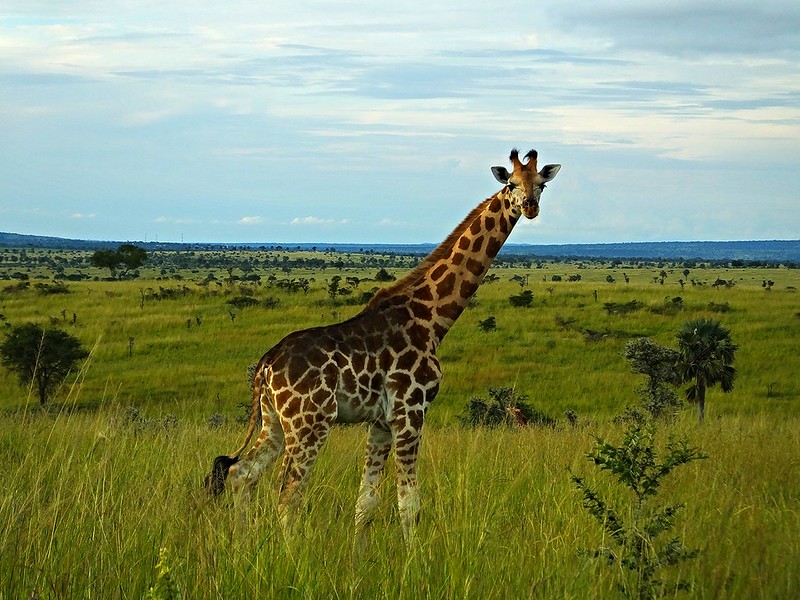 The park’s history is as dramatic as its landscapes. In the 1960s, Murchison Falls was not merely Uganda’s most popular park — it ranked among the finest wildlife destinations on the entire African continent, home to an estimated 15,000 elephants, 14,000 hippos, and 26,500 buffalo. Civil war brought near ruin; by 1995, fewer than 200 elephants survived. Today, through determined conservation and the steady work of Uganda Wildlife Authority rangers, wildlife has surged back with remarkable force. The elephants number over 1,500 once more, three-quarters of the world’s remaining Rothschild’s giraffes roam the northern bank, and the Victoria Nile teems with hippos — one of the densest concentrations anywhere in Africa.
Whether you arrive as a solo adventurer drawn by the roar of the falls, a couple seeking the romance of sundowners over the Albert Nile, a family watching children’s eyes go wide at a herd of elephants crossing the road, or a group of friends chasing the thrill of a lion sighting on the open savanna — Murchison Falls National Park delivers an African safari experience of rare, genuine depth. And when the wildlife here leaves you wanting more, know that beyond the park’s southern boundary lies the path toward the gorillas of Bwindi Impenetrable National Park, the chimpanzees of Kibale Forest national Park, and the birds of Queen Elizabeth National Park. Uganda is, in every sense, the ultimate Africa for those who want it all.
This is your complete guide to Murchison Falls National Park — everything you need to plan, book, and experience one of Africa’s most remarkable wilderness journeys, curated by the team at Gorilla Safaris.
Park at a Glance
Feature | Details |
Location | Northwestern Uganda, Nwoya and Buliisa Districts |
Size | 3,893 km² (Park) | 5,000+ km² including Conservation Area) |
Established | 1952 (gazetted as National Park) |
Altitude | 619–1,046 metres above sea level |
Key Feature | Murchison Falls — the world’s most powerful waterfall |
Wildlife | 76+ mammals, 450+ birds, 1,500+ elephants, 5,000+ hippos, 800 Rothschild’s giraffes |
Distance from Kampala | ~305 km (4.5–5 hours by road; 1.5 hours by light aircraft) |
Best Time to Visit | December–February and June–September (dry seasons) |
Park Entrance Fee | USD 45/day (Non-resident adults) | USD 20 (Non-resident children) | UGX 20,000 (East African residents) |
How to Get to Murchison Falls National Park
Reaching Murchison Falls is itself part of the experience — a journey through the heartland of Uganda that shifts gradually from the fertile green hills around Kampala to the wide, sun-bleached savannas of the north. Your private guide and dedicated vehicle ensure every kilometer of that transition is seamless and comfortable.
By Road from Kampala (Masindi Route — Most Common)
 The most traveled route from Kampala covers approximately 305 kilometres and takes between four and a half to five hours in a well-maintained 4×4 safari vehicle. The road runs north through Masindi town — a pleasant stop for fuel and a cup of Ugandan tea — before descending through the Budongo Forest escarpment and entering the park through Kichumbanyobo (Bugungu) Gate. This route is particularly rewarding for those who want to stop at Ziwa Rhino Sanctuary en route, one of the only places in Uganda where you can track white rhino on foot.
By Road via Gulu (Northern Route)
An alternative approach from the north passes through Gulu town and enters the park from the Tangi Gate, connecting to the north bank of the Victoria Nile. This route is preferred for travellers coming from Kidepo Valley National Park, and adds a compelling perspective on Uganda’s recovery since the post-conflict era in the north.
By Scheduled or Charter Flight
For travellers who value their time above all else, Uganda’s domestic flight operators connect Entebbe International Airport to Pakuba Airstrip, Chobe Airstrip, or Bugungu Airstrip within and around the park. Flight times run approximately 75 to 90 minutes, and your dedicated transfer vehicle will be waiting on arrival. Fly-in safaris remove the road entirely, delivering you straight to the heart of the wilderness.
From Entebbe or Kampala
Guests arriving internationally at Entebbe International Airport will typically spend their first night in Kampala or Entebbe before transferring north the following morning. Gorilla Safaris arranges all airport transfers, overnight accommodation, and onward logistics as part of a seamlessly designed itinerary. For those combining Murchison with gorilla trekking at Bwindi Impenetrable Forest National Park or chimpanzee tracking at Kibale Forest National Park, the routing is planned to minimise drive times and maximise wildlife days.
Best Time to Visit Murchison Falls National Park
Murchison Falls National Park rewards visitors year-round, but understanding the rhythm of its seasons will allow you to align your journey with the precise experience you are seeking — whether that is the sharp clarity of dry-season game drives, the fecundity of the wet season when calves fill the savanna and birds erupt into breeding plumage, or the simple joy of having the park almost entirely to yourself.
Dry Season: June to September
The long dry season from June through September is widely regarded as the finest time for wildlife viewing in Murchison Falls. With the grasses cropped short by grazing animals and water sources consolidated to the river and permanent waterholes, wildlife concentrations are at their highest and most predictable. Lions emerge from the shade more readily, elephant herds converge on the Nile’s banks, and the absence of mud makes the park’s tracks accessible to even the most ambitious game drive routes. This is also peak season — advance booking of permits, lodges, and activities is essential, particularly for July and August when international visitors are at their most numerous.
Dry Season: December to February
The shorter dry season between December and February offers similar game viewing conditions to the June–September period, with the added advantage of lighter tourist pressure. The landscape takes on a golden, burnished quality, and the light — particularly in the early mornings and late afternoons — is extraordinary for photography. Birdwatchers will note that this period coincides with the arrival of migratory species from Europe and the Middle East, adding hundreds of additional species to the already extraordinary 450-plus resident bird list.
Wet Season: March to May
The long rains from March through May transform the park into a lush, verdant world of remarkable beauty. Flowering trees, newborn animals, and the frantic energy of breeding season make this a genuinely compelling time to visit, even if some tracks become challenging. Accommodation rates drop significantly, and the park often feels like a private wilderness. The Nile boat cruise is, if anything, more spectacular during this period, as the surge of floodwaters drives extraordinary activity along the banks.
Short Rains: October to November
October and November bring intermittent rains that rarely persist for more than a few hours each day. The landscape greens up rapidly, migratory birds begin arriving, and the park sits in a pleasant interlude between the drama of the dry season and the full commitment of the long rains. For travelers with flexibility, this shoulder season offers genuine value.
Murchison Falls National Park Entrance Fees
All entrance fees are collected by Uganda Wildlife Authority (UWA) and are payable in US dollars or Uganda Shillings at the official gate. Gorilla Safaris includes all park fees within your safari package, so there is no need to carry cash or manage payments independently.
| Category | Fee (USD) | Fee (UGX) |
| Non-resident Adult | USD 45 per day | — |
| Non-resident Child (5–15 yrs) | USD 20 per day | — |
| East African Resident Adult | — | UGX 20,000 per day |
| East African Resident Child | — | UGX 5,000 per day |
| Vehicle (Non-commercial) | USD 40 per day | — |
| Ranger Guide (per day) | USD 30 | — |
Note: Launch (boat) cruise fees are charged separately. The Paraa boat cruise to the base of the falls is approximately USD 30 per adult. Fees are subject to change; Gorilla Safaris will confirm current rates at time of booking.
What to See in Murchison Falls National Park
Few parks on the African continent can match the sheer visual drama of Murchison Falls. The wildlife alone would justify the journey — but it is the combination of landscapes, the waterfall, the wide sky, and the ancient river that elevates it into the realm of the truly unforgettable.
The Murchison Falls
Every second, the equivalent of two hundred bathtubs full of water forces itself through a gorge less than seven paces wide before plummeting forty-three metres to the thundering pool below. The pressure is so extraordinary that the ground trembles. The Nile arrives here in a chaos of white fury, then exits — as if exhausted by the effort — as a broad, calm river sliding toward Lake Albert. Sir Samuel Baker, the first European to witness the falls in March 1864, wrote simply that it was “the greatest waterfall of the Nile.” Standing at the gorge edge, you will understand exactly what he meant.
The Big Four and Rothschild’s Giraffe
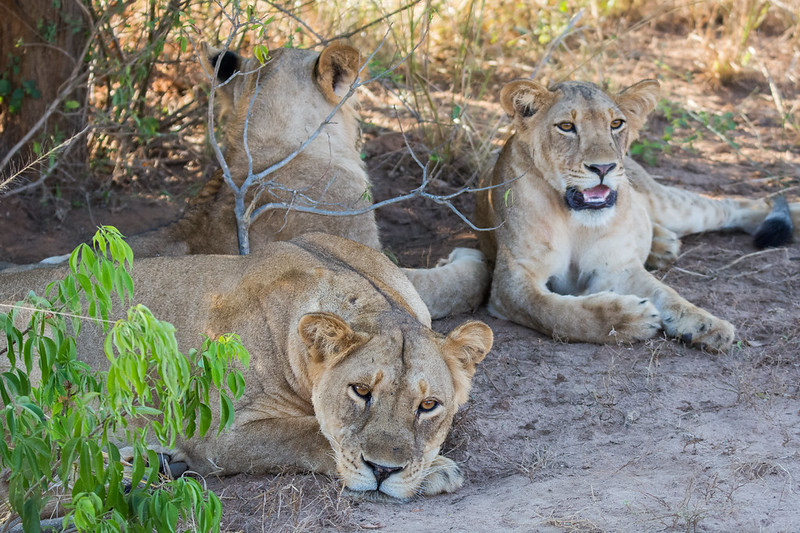
Four of the Big Four roam Murchison Falls National Park — lion, leopard, elephant, and buffalo — with rhinos accessible nearby at Ziwa Rhino Sanctuary.
But the park’s most visually arresting resident is arguably the Rothschild’s giraffe, one of the most critically endangered giraffe subspecies on earth. Murchison is a global stronghold, sheltering three-quarters of the world’s remaining population. Encountering a herd of these impossibly tall, white-stocking animals moving in elegant slow motion through the acacia woodland is one of those images that stays with you for a lifetime.
Elephants of the North Bank
Murchison’s elephant population, now numbering over 1,500, represents one of conservation’s most significant comeback stories. During the morning game drive, it is commonplace to round a bend in the track and find yourself face-to-face with a breeding herd — matriarch at the head, calves pressing close to their mothers’ flanks.
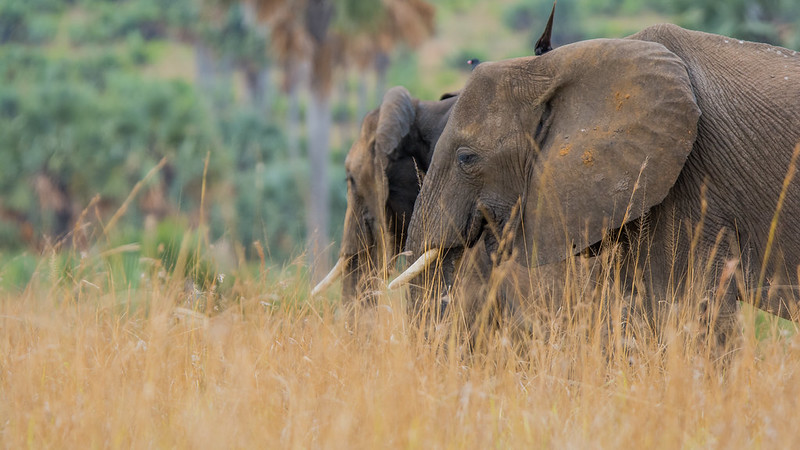
The scale of Uganda’s largest elephant population, moving across the open savanna with the timeless confidence of animals that have always belonged here, is genuinely moving.
Hippos and Nile Crocodiles
The Victoria Nile below the falls holds one of the densest concentrations of hippopotamus anywhere in Africa — some estimates place the number at over 5,000 animals. The boat cruise brings you to within metres of these extraordinary creatures as they surface, spray, grunt, and wallow in the shallows. Alongside them, Nile crocodiles of formidable size bask on the sandy banks, some exceeding five metres in length. The ancient quality of the scene — these same species observed on this same river by explorers more than 150 years ago — is part of what makes the Murchison boat cruise so profoundly satisfying.
Shoebill Stork — Africa’s Most Wanted Bird
The Nile delta, where the Victoria Nile fragments into papyrus channels before reaching Lake Albert, is one of the most reliable locations on earth to observe the shoebill stork. This prehistoric-looking bird — upright, grey, and perfectly still — can stand motionless in the shallows for extraordinary lengths of time before striking with sudden, violent precision. For serious birders, a morning dedicated to the delta in a small boat is among the most rewarding wildlife experiences in East Africa.
Birds — Over 450 Species
Murchison Falls National Park is a birding destination of international significance. The park’s variety of habitats — open savanna, riverine forest, papyrus swamp, and woodland — supports an extraordinary diversity: African fish eagles calling over the water, lilac-breasted rollers blazing across the grass, grey crowned cranes dancing in the meadows, and the curious, waddling ground hornbill moving through the undergrowth. The Budongo Forest on the park’s southern edge adds forest specialists including chocolate-backed kingfisher and Puvel’s illadopsis.
Chimpanzees of Budongo Forest
Immediately adjacent to the park’s southern boundary, the Budongo Forest Reserve holds the largest concentration of chimpanzees in East Africa — an estimated 600 or more individuals. Chimp tracking here operates through dedicated forest trails and offers a different but equally compelling primate encounter to gorilla trekking at Bwindi. The Budongo forest is a mahogany canopy of ancient grandeur, where the sounds of the forest — the distant call of a chimp, the rustle of colobus in the canopy — create an atmosphere of profound remoteness.
Best Activities in Murchison Falls National Park
The Nile Boat Cruise — Murchison’s Signature Experience
If you experience only one thing in Murchison Falls National Park, make it the boat cruise upstream from Paraa to the base of the falls. This three to four hour journey along the Victoria Nile is Africa’s finest river safari — a slow procession past hippo pools of astonishing density, banks lined with Nile crocodiles of formidable scale, and a continuous theater of waterbirds hunting, diving, and resting in the reeds. The finale, as the launch turns a bend and the roar of the falls rises above the sound of the engine, the spray catching the light in shifting arcs of colour — is one of the most viscerally memorable moments in African travel.
Game Drives on the North Bank
The north bank of the Victoria Nile offers the most spectacular game driving in Uganda. Wide, rolling savannas stretching to the horizon, punctuated by umbrella acacias and seasonal waterholes, provide excellent visibility and the space for genuine predator encounters.
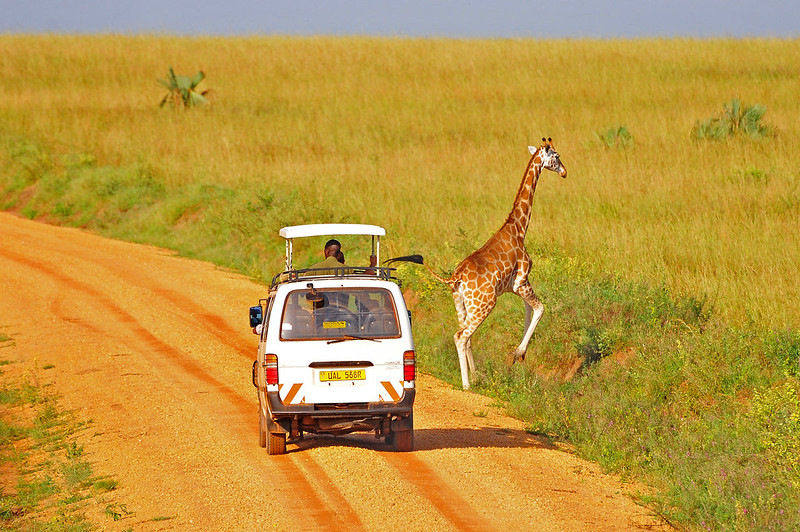
Dawn drives — departing lodge in the grey half-light before sunrise — carry the best chance of finding lion prides still active on the plains, leopard resting in the branches of a fig tree, or buffalo herds moving in their unhurried thousands. Afternoon drives, conducted in the golden hour before sunset, illuminate the landscape in a quality of light that no photography course can truly prepare you for.
Hike to the Top of the Falls
The hike from the base of the falls — or from the boat landing — to the top of the gorge is a two to three hour walk of moderate effort that delivers the ultimate reward: standing at the very point where the Nile squeezes through that extraordinary seven-metre gap. The ground shakes. The spray rises. The sound is so complete that conversation is impossible. Many guides recommend combining the boat cruise upstream with a guided walk back down to the launch — an approach that reveals the falls from multiple angles and rewards the effort with one of Africa’s great natural spectacles as your culminating memory.
Hot Air Balloon Safari
Sunrise from a hot air balloon drifting above the savanna of Murchison Falls is an experience with almost no equivalent in Africa. As the balloon lifts silently into the dawn light, the north bank unfolds beneath you: the silver ribbon of the Nile, the distant white plume of the falls, the shadows of giraffe stretching impossibly long across the grass.
Balloon safaris operate at first light and last approximately one hour, followed by a champagne bush breakfast. This is the experience for couples celebrating a milestone, families creating a memory no hotel can manufacture, and solo travellers who want to understand, in a single morning, why Uganda earns the title Pearl of Africa.
Chimpanzee Tracking in Budongo Forest
The Budongo Forest, accessible from the park’s southern sector, offers one of Uganda’s most rewarding chimpanzee tracking experiences outside of Kibale Forest National Park. With over 600 habituated chimpanzees and well-maintained forest trails, tracking here is accompanied by the sounds of an ancient mahogany canopy and the crashing movement of colobus monkeys overhead. A morning in the Budongo is a vivid reminder that Murchison’s wilderness extends far beyond the savanna.
Sport Fishing on the Nile
The stretch of the Nile above the falls is one of Uganda’s premier sport fishing destinations, known for Nile perch of exceptional size — fish exceeding 100 kilograms have been landed here. Fishing expeditions are conducted from boats with experienced guides who know the best pools and channels. The drama of fighting a large Nile perch against the backdrop of the falls themselves is a combination that draws anglers from across the world.
Rhino Tracking at Ziwa Sanctuary (En Route)
Ziwa Rhino Sanctuary, located approximately halfway between Kampala and Murchison Falls on the main Masindi road, is the only place in Uganda where wild white rhinos can be encountered. Tracking on foot with armed rangers brings you within close range of these magnificent, critically endangered animals in their natural bush setting. Ziwa makes a natural and deeply satisfying half-day stop when travelling between Kampala and the park, and is particularly memorable for families travelling with younger children.
Cultural Visits and Community Experiences
The communities surrounding Murchison Falls National Park — principally the Acholi and Banyoro peoples — maintain rich cultural traditions that make for a genuinely enriching addition to any wildlife safari. Gorilla Safaris arranges curated cultural visits to local villages where dance, craft, and the preparation of traditional food offer a window into daily life in northwestern Uganda. These experiences are conducted with respect for community privacy and benefit directly from visitor revenue, reinforcing the connection between conservation and human wellbeing.
Birdwatching in the Nile Delta
The Nile delta, where the river fans into papyrus channels before reaching Lake Albert, demands its own dedicated morning for serious birders. A small boat guided through the channels offers proximity to shoebill stork, African jacana, malachite kingfisher, and the extraordinary concentration of waterbirds that rely on this wetland during both resident and migratory seasons. For birdwatchers combining Murchison with Queen Elizabeth National Park and the Bwindi forest edge, Uganda as a whole offers a birding itinerary of continental significance.
Where to Stay: Hotels and Lodges in Murchison Falls National Park
Murchison Falls’s accommodation spectrum runs from breathtaking luxury lodges elevated above the Nile to comfortable tented camps and welcoming budget guesthouses. Every property is selected by Gorilla Safaris for its quality, positioning, and the quality of the experience it delivers — not merely the thread count of its linen.
Luxury Lodges
Chobe Safari Lodge — Positioned on the north bank of the Victoria Nile with sweeping views across the water, Chobe Safari Lodge is Murchison’s most recognised luxury address. Hippos wallow below the terrace. Fish eagles call from the trees. The lodge’s river-view rooms and suites combine the aesthetic of a classic East African safari with the comfort of a genuinely world-class property. The Nile-side swimming pool, open-air dining terrace, and curated evening sundowners over the water make Chobe the natural choice for couples and honeymoon travellers.
Paraa Safari Lodge — A landmark address inside the park itself, Paraa Safari Lodge sits at the crossing point of the Victoria Nile, placing guests within immediate reach of both the boat cruise launch and the north bank game drive tracks. The lodge has been welcoming safari travellers to Murchison for decades and combines the reliability of an established property with ongoing investment in comfort and service.
Baker’s Lodge — Set in private riverine forest above the Nile’s north bank, Baker’s Lodge is the most intimate of Murchison’s luxury options, with just a handful of cottages designed to feel like private retreats. Named in honour of Sir Samuel Baker, the explorer who first described the falls, the lodge’s attention to detail — from the outdoor bathtubs overlooking the river to the quality of the curated bush dinners — makes it the natural choice for those who want genuine exclusivity.
Nile Safari Lodge — Perched above the Albert Nile with panoramic views across the broad river and the rift valley beyond, Nile Safari Lodge is celebrated for some of the most dramatic lodge settings in Uganda. The elevated position means the sunrise over the water is unforgettable, and the lodge’s proximity to the Nile delta makes it particularly well-placed for birding guests pursuing the shoebill.
Mid-Range Lodges
Murchison River Lodge — A welcoming, well-run lodge on the southern bank of the Nile offering comfortable en-suite banda accommodation with a genuinely warm sense of hospitality. The riverside setting is particularly pleasant at dusk, and the lodge’s guided activities — including Nile fishing and village visits — are offered at good value.
Heritage Safari Lodge — Set in forested grounds with easy access to the park’s southern gate, Heritage Safari Lodge strikes a reliable balance between comfort and price, making it a dependable mid-range choice for families and groups.
Fort Murchison Lodge — A characterful lodge whose thatched bandas are arranged around manicured gardens close to the river. Fort Murchison appeals to travellers who want comfort without the full-service luxury price point, and the staff’s local knowledge of the park is consistently praised by guests.
Budget Accommodation
Red Chili Rest Camp — The preferred choice for independent travellers, overlanders, and budget-conscious safari-goers, Red Chili offers a range of camping pitches, basic dormitory beds, and simple private rooms. The camp’s social atmosphere — a shared fire, an honest meal, fellow travellers comparing notes from the day’s game drive — has its own distinct appeal. The camp arranges park activities and provides basic equipment for those without their own safari vehicle.
Paraa UWA Bandas — Uganda Wildlife Authority maintains a small number of basic bandas inside the park near Paraa, offering the most affordable inside-park accommodation. Facilities are simple and authentic, and the proximity to the Nile makes them particularly popular with birding groups willing to sacrifice comfort for position.
What to Pack for Murchison Falls National Park
Packing well for Murchison Falls is less complicated than many travellers anticipate. The savanna climate is warm and relatively predictable, the activities are outdoors but not technically demanding, and the lodges provide most practical necessities. The following guidance will ensure you are comfortable across every environment the park presents.
Clothing: Neutral, earthy tones — khaki, olive, tan, and brown — are the standard for game drives, both for practical camouflage purposes and for avoiding attracting insects. Lightweight, breathable fabrics are ideal for the savanna heat of midday, but a warm fleece or light jacket is essential for early morning boat cruises and game drives, when the Nile breeze can be genuinely cold. For the hike to the top of the falls, long trousers and closed shoes are recommended over shorts and sandals.
Footwear: Comfortable walking shoes or light hiking boots cover all activities in the park. Flip-flops or sandals are suitable for lodge time and river cruises. Waterproof footwear is worthwhile if visiting during the wet season.
Sun protection: The equatorial sun at Murchison is uncompromising. High-SPF sunscreen, a wide-brimmed hat, UV-protective sunglasses, and a lightweight long-sleeved shirt for midday activities are all strongly recommended. The open-topped game drive vehicle provides no shade.
Insect repellent: A DEET-based repellent applied to exposed skin during morning and evening hours provides effective protection against mosquitoes. Murchison Falls sits in a malaria-endemic zone; prophylactic medication should be discussed with a travel health clinic before departure.
Optics and Photography: A pair of quality binoculars (8×42 or 10×42 are ideal) transforms game viewing and birdwatching beyond recognition. A camera with a telephoto zoom lens of at least 300mm captures satisfying wildlife images from a safe and respectful distance. A dustproof bag or case is valuable during dry-season game drives on dusty tracks.
Other Essentials: Personal medications, a small first aid kit, lightweight rain jacket, power bank for devices, and a reusable water bottle. Most lodges provide filtered drinking water; single-use plastic bottles are discouraged throughout the park.
Frequently Asked Questions — Murchison Falls National Park
What is Murchison Falls National Park famous for?
Murchison Falls National Park is famous primarily for the Murchison Falls themselves — widely regarded as the world’s most powerful waterfall, where the entire flow of the Victoria Nile is forced through a seven-metre-wide gorge before plunging forty-three metres below. The park is also celebrated for its extraordinary wildlife, including Uganda’s largest elephant population, Rothschild’s giraffes (with three-quarters of the world’s remaining population within the park), over 5,000 hippopotamuses along the Nile, Nile crocodiles, lion prides, and more than 450 bird species. The Nile boat cruise, which carries visitors from Paraa upstream to the base of the falls, is considered one of the finest river safaris in Africa.
How big is Murchison Falls National Park?
Murchison Falls National Park covers approximately 3,893 square kilometres, making it Uganda’s largest national park. When combined with the adjacent Bugungu Wildlife Reserve (748 km²) and Karuma Wildlife Reserve (720 km²), the total Murchison Falls Conservation Area extends to over 5,300 square kilometres — a wilderness of genuine continental scale. The Victoria Nile bisects the park from east to west across approximately 115 kilometres, creating the river corridor that is the heart of the park’s ecosystem.
How do I get to Murchison Falls National Park from Kampala?
From Kampala, the most common route to Murchison Falls National Park travels approximately 305 kilometres north through Masindi town, entering the park through Kichumbanyobo (Bugungu) Gate. The drive takes between four and five hours in a well-maintained 4×4 safari vehicle and is best broken with a stop at Ziwa Rhino Sanctuary en route. For travellers preferring to fly, domestic flights from Entebbe International Airport to Pakuba or Chobe airstrips take approximately 75 to 90 minutes. Gorilla Safaris arranges all ground and air transfers as part of your seamlessly designed itinerary.
What is the best time to visit Murchison Falls National Park?
The best times to visit Murchison Falls National Park for best wildlife viewing are the dry seasons: June to September (the long dry season) and December to February (the short dry season). During these periods, vegetation is low, wildlife concentrates around water sources, and tracks are in their best condition. The June–September window is peak season and requires advance booking, particularly for July and August. The December–February period offers similarly excellent game viewing with lighter visitor numbers. The wet seasons (March–May and October–November) offer lush scenery, newborn wildlife, superb birdwatching with migratory arrivals, and significantly lower accommodation rates — making them a genuine option for flexible travellers.
What animals can I see in Murchison Falls National Park?
Murchison Falls National Park is home to over 76 mammal species. The most commonly seen large mammals include African elephant (1,500+), hippopotamus (5,000+ along the Nile), Nile crocodile, Rothschild’s giraffe, African buffalo, Uganda kob, waterbuck, Nile lechwe, and oribi. Lion and leopard are present and regularly sighted, particularly on north bank game drives. Chimpanzees inhabit the adjacent Budongo Forest. The rare shoebill stork is reliably observed in the Nile delta area. White rhinos, while absent from the park itself, can be tracked on foot at Ziwa Rhino Sanctuary en route from Kampala, completing Uganda’s effective Big Five experience.
How much does it cost to enter Murchison Falls National Park?
Park entrance fees at Murchison Falls National Park are set by Uganda Wildlife Authority. Non-resident adult visitors pay USD 45 per person per day, and non-resident children between 5 and 15 years pay USD 20 per day. East African Community residents pay UGX 20,000 per day for adults. Vehicle fees apply separately at approximately USD 40 per vehicle per day for non-commercial vehicles. The Nile boat cruise carries an additional charge of approximately USD 30 per adult. Gorilla Safaris includes all applicable park fees within your safari package pricing, so there are no unexpected gate-side payments to manage.
What is the Nile boat cruise at Murchison Falls like?
The Nile boat cruise at Murchison Falls is widely considered one of the finest river safari experiences in Africa. Departing from Paraa ferry landing, the cruise travels upstream along the Victoria Nile for approximately three to four hours, covering the stretch of river between Paraa and the base of the falls. Along the way, passengers encounter extraordinary densities of hippopotamus on both banks of the river, Nile crocodiles of formidable size basking on sandy beaches, a rich variety of waterbirds including the coveted shoebill stork in the delta region, and the increasingly audible approach of the falls themselves. The boat turns near the base of the falls where the spray creates a permanent rainbow in the afternoon light. The experience is suitable for all ages and fitness levels and is the single most requested activity in the park.
Can I see gorillas in Murchison Falls National Park?
Mountain gorillas do not live in Murchison Falls National Park. They are found in Bwindi Impenetrable Forest National Park and Mgahinga Gorilla National Park, both in southwestern Uganda. However, many visitors combine a Murchison Falls safari with gorilla trekking in Bwindi within a single Uganda itinerary — typically spending two to three days at Murchison before transferring south for the gorilla experience. Gorilla Safaris specialises in precisely these combined itineraries and holds gorilla trekking permits for all sectors of Bwindi. Visit our gorilla trekking Uganda page to learn more.
Is Murchison Falls National Park safe to visit?
Murchison Falls National Park is considered safe for tourists. Uganda Wildlife Authority maintains a consistent ranger presence throughout the park, and the security situation in the region has been stable for well over two decades. Travelers should follow standard safari safety guidelines — remaining inside vehicles during game drives except at designated stops, following guide instructions at all times, and maintaining appropriate distances from wildlife. The park sits in a malaria-endemic zone, and prophylactic medication is strongly recommended. Gorilla Safaris provides comprehensive pre-departure health and safety information for every guest.
What is a hot air balloon safari like in Murchison Falls?
The hot air balloon safari in Murchison Falls National Park operates at sunrise from a launch site on the north bank of the Victoria Nile. Guests are collected from their lodges in the pre-dawn dark, approximately 30 minutes before launch. The balloon inflates dramatically in the first light, and the flight itself lasts approximately one hour — drifting silently above the savanna at altitudes ranging from treetop level to several hundred metres, providing a perspective on the wildlife and landscape that is impossible to achieve from the ground. The flight concludes with a champagne bush breakfast in the grass, wherever the balloon lands. The cost is approximately USD 495 per person and must be booked in advance through Gorilla Safaris due to limited capacity.
Can families with children visit Murchison Falls National Park?
Murchison Falls National Park is an excellent destination for families traveling with children. The wide, open savanna landscape of the north bank makes game viewing accessible and visually dramatic even for younger children, and the Nile boat cruise is particularly engaging — the sight of hundreds of hippos and enormous crocodiles at close range tends to leave a lasting impression on guests of any age. The hot air balloon safari is suitable for children in good health from approximately 7 years of age, though the pre-dawn start requires willing early risers. Children under 5 are not charged park entrance fees. Gorilla Safaris can tailor the pace and activity selection of any itinerary to suit families with children, ensuring the balance between wildlife intensity and genuine comfort is right for your group.
What should I pack for a Murchison Falls safari?
For a Murchison Falls safari, pack lightweight neutral-coloured clothing in khaki, olive, or tan for game drives and walks. A warm fleece or jacket is essential for early morning activities when the Nile breeze can be genuinely cold. Closed walking shoes or light hiking boots are recommended for the falls hike, while sandals serve well for lodge time. High-SPF sunscreen, a wide-brimmed hat, and UV-protective sunglasses are indispensable for midday exposure. A DEET-based insect repellent protects against mosquitoes during morning and evening hours. Bring binoculars — 8×42 is the preferred specification for game drives and bird watching — and a camera with a telephoto zoom of at least 300mm for satisfying wildlife photographs from a respectful distance. Gorilla Safaris provides a detailed packing guide to all confirmed guests.
How does Murchison Falls compare to other Uganda national parks?
Murchison Falls National Park is Uganda’s largest and most diverse single-park safari destination, offering the combination of big savanna game viewing, a world-class river experience, and the spectacle of the falls in a single package that no other Uganda parks can match in scope. Kibale Forest National Park, by contrast, offers the finest chimpanzee tracking experience in Africa and exceptional forest birding but no big savanna game. Queen Elizabeth National Park offers tree-climbing lions, hippo channels, and the spectacular Kazinga Channel boat cruise alongside good big game viewing. Bwindi Impenetrable Forest national Park is the exclusive domain of mountain gorilla trekking. Many of our guests combine Murchison with one or more of these parks within a single Uganda safari, and our Uganda safari page provides a full range of combination options.