There is a particular quality to the morning light on Mount Elgon’s upper moorland. It arrives slowly, rising over the caldera rim in a thin, cold wash that turns the giant lobelias silver and makes the mist that pools in the crater’s depressions glow from within. You are at nearly 4,000 metres above sea level. The world below is invisible. There is no sound except the wind moving through the tussock grass and the distant, muffled drip of water finding its way through the volcanic rock. And you understand, in a way that no photograph has ever conveyed, why this mountain has been called sacred for as long as people have lived on its flanks.
Mount Elgon is Africa’s oldest and largest solitary volcano, and it is, by any fair measure, one of the continent’s most underappreciated natural wonders. At 4,321 metres, Wagagai Peak is the highest point of a summit caldera that stretches across 40 square kilometres, one of the largest intact volcanic craters anywhere on earth. The mountain straddles the border between Uganda and Kenya 140 kilometers northeast of Lake Victoria, its massive base covering 4,000 square kilometers, a footprint that exceeds every other freestanding volcano in the world, including Kilimanjaro.
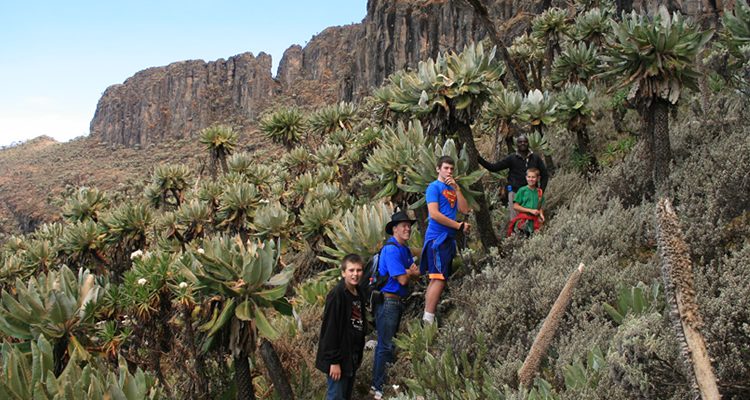 What Elgon offers the traveler who is willing to look beyond the famous names of East African trekking is something genuinely rare: solitude. On a mountain of this scale and spectacle, you may share the trail with no one at all. The trails are quiet. The huts are rarely full. The caldera, when you reach it after days of walking through montane forest and afro-alpine moorland, belongs almost entirely to you. Elephants leave their tracks in the mud of the cave floors. Hot springs steam in the bowl of the ancient crater. And the sky above Wagagai, when the clouds clear at dawn, extends to the curve of the earth.
Whether you are a serious high-altitude trekker drawn by the challenge of Wagagai Peak, a nature lover captivated by the ecological gradient from rainforest to alpine moorland, or a family seeking the accessible drama of Sipi Falls and the forest elephant caves, Mount Elgon National Park has a programme worthy of your time. This guide, built on Gorilla Safaris’ deep experience of eastern Uganda, covers everything you need to know to plan the journey that is right for you
Mount Elgon National Park: An Overview
Mount Elgon is an extinct shield volcano whose first eruption occurred approximately 24 million years ago, making it one of Africa’s oldest geological formations. At its peak, the mountain would have stood higher than Kilimanjaro. Millions of years of erosion have reduced it to its current height of 4,321 metres, and the slow dissolution of its summit cone has produced the vast, bowl-shaped caldera that is now its defining geographical feature. The Ugandan section of the national park covers 1,110 square kilometres, gazetted as a national park in 1992. Together with the smaller Kenyan section of 169 square kilometres, the park forms a transboundary protected area recognised as a UNESCO Man and Biosphere Reserve.
The mountain is divided into four principal trekking zones, each accessed from a different trailhead and offering a distinct character. The Sasa Trail from Budadiri is the steepest and most direct route to the summit caldera. The Sipi Trail from Kapkwai in the Sipi Falls area offers a longer approach through dense montane forest with exceptional birding and the added reward of waterfall scenery at lower elevations. The Piswa Trail, less frequented and more remote, crosses the northern moorland on a route of striking beauty. The Bushiyi Trail is the least developed and most adventurous option.
The local communities, the Bagisu and the Sabiny, have a relationship with this mountain of extraordinary depth. To the Bagisu, who call themselves BaMasaba, the mountain is their ancestral father, the founding ancestor Masaba said to have appeared from a cave on its slopes in the time before memory. The Imbalu circumcision ceremony, a powerful coming-of-age ritual held every even-numbered year, is directly tied to the mountain and draws visitors from across Uganda to witness one of Africa’s most striking cultural traditions.
How to Get to Mount Elgon National Park
Mount Elgon National Park is located in the Mbale and Sironko districts of eastern Uganda, approximately 240 kilometres by road from Kampala. The journey is well-established and comfortable by private vehicle.
From Kampala to Mbale
The drive from Kampala to Mbale takes between three and four hours along the Kampala-Jinja highway and then the eastern highway through Iganga. The road is paved throughout and in good condition. Mbale is the largest town in eastern Uganda and the administrative hub for Mount Elgon. The park headquarters is located on Masaba Road in Mbale, Plot 19-21, and all trekking permits and park logistics can be organized from there. Your Gorilla Safaris team will have pre-arranged all permits and guide assignments before you arrive.
From Mbale to the Trailheads
From Mbale, the trailheads are distributed around the mountain’s lower slopes. Budadiri, the starting point for the Sasa Trail and the most popular route to Wagagai Peak, is approximately 27 kilometres northeast of Mbale and accessible by a good murram road. Kapkwai, the trailhead for the Sipi Trail and the Forest Exploration Centre, lies near the Sipi Falls area on the mountain’s southeastern slopes. The journey from Mbale to Kapchorwa and Sipi Falls takes approximately one and a half hours. All trailhead transfers are managed in your dedicated 4×4 vehicle with your private driver-guide.
From Entebbe International Airport
Travelers arriving at Entebbe International Airport can be transferred directly east to the Mbale area in a single day, a journey of approximately four to five hours depending on Kampala traffic. For travelers wishing to break the journey, a stop at the Jinja area on the Nile is a natural and rewarding option before continuing east to Elgon. Your Gorilla Safaris consultant will seamlessly arrange the full transfer programe from airport arrival to trailhead.
Best Time to Visit Mount Elgon National Park
Mount Elgon receives rainfall year-round as a consequence of its altitude and position relative to Lake Victoria’s moisture systems. Annual rainfall exceeds 1,270 millimetres, and the mountain creates its own weather patterns that can differ significantly from conditions in the valleys below. That said, two broad dry seasons offer the most reliable conditions for trekking.
Dry Season: June to August and December to March
The dry seasons between June and August and between December and March offer the clearest skies, the most stable trail conditions, and the best visibility from the summit ridges. June to August is widely considered the best overall trekking window: the days are long, temperatures on the mountain are cold but manageable, and the caldera on a clear morning rewards with views into both Uganda and Kenya that justify every hour of the ascent. December to February brings a shorter dry spell that is equally excellent for summit attempts and trail conditions.
Wet Season: March to May and September to November
The wet seasons transform the mountain’s lower slopes into a vivid green landscape of exceptional beauty. The forest is lush, the waterfalls are at their most dramatic, and the birding in the montane forest zone is at its peak. Trekking is entirely possible in the wet season, but trails can become muddy and slippery, particularly on the steeper sections of the Sasa Trail, and summit visibility is less reliable. For visitors focused on Sipi Falls and lower-altitude forest activities rather than the summit, the wet season has a particular lushness and photographic quality that many travellers prefer.
For families with children, June to August is the safest and most comfortable season for all activities. For birders and botanists, the wet months bring the mountain to life in ways the dry season cannot match. Summit-focused trekkers should aim for the dry windows for the highest probability of caldera sunrise views.
What to See in Mount Elgon National Park
Wagagai Peak and the Summit Caldera
At 4,321 metres, Wagagai Peak is the highest point of Mount Elgon and the second highest peak in Uganda after Margherita Peak in the Rwenzoris. The summit sits on the southwestern rim of the caldera, looking out over a vast volcanic bowl that holds within it hot springs, small crater lakes, and the otherworldly forms of the giant groundsels Dendrosenecio elgonensis, a species found only on this mountain. The caldera floor, accessible from the rim via descent trails, is one of the great hidden landscapes of East Africa, an ancient volcanic interior that feels entirely removed from the human world. The hot springs at Suam, where mineral-rich water bubbles up through the caldera floor, can be reached on foot and provide a remarkable natural reward after days of trekking.
Sipi Falls
The Sipi Falls complex on the southeastern slopes of Mount Elgon is one of the most photographed landscapes in Uganda. Three separate waterfalls cascade down the volcanic escarpment in successive steps, the largest dropping over 100 metres into a deep, mist-filled gorge.
The Sipi River, fed by the mountain’s permanent snowmelt and rainfall, maintains the falls in every season, though they are most dramatic during and just after the wet season. The surrounding landscape, terraced coffee plantations, banana groves, and the traditional homesteads of the Sebei people perched on rocky ledges above the gorge, is as compelling as the falls themselves. A guided walk to all three falls, including the descent to the pool at the base of the main drop, takes a full half-day and is one of the most rewarding non-trekking activities available in the region.
The Elephant Caves: Kitum, Chepnyalil, Mackingeny, and Ngwarisha
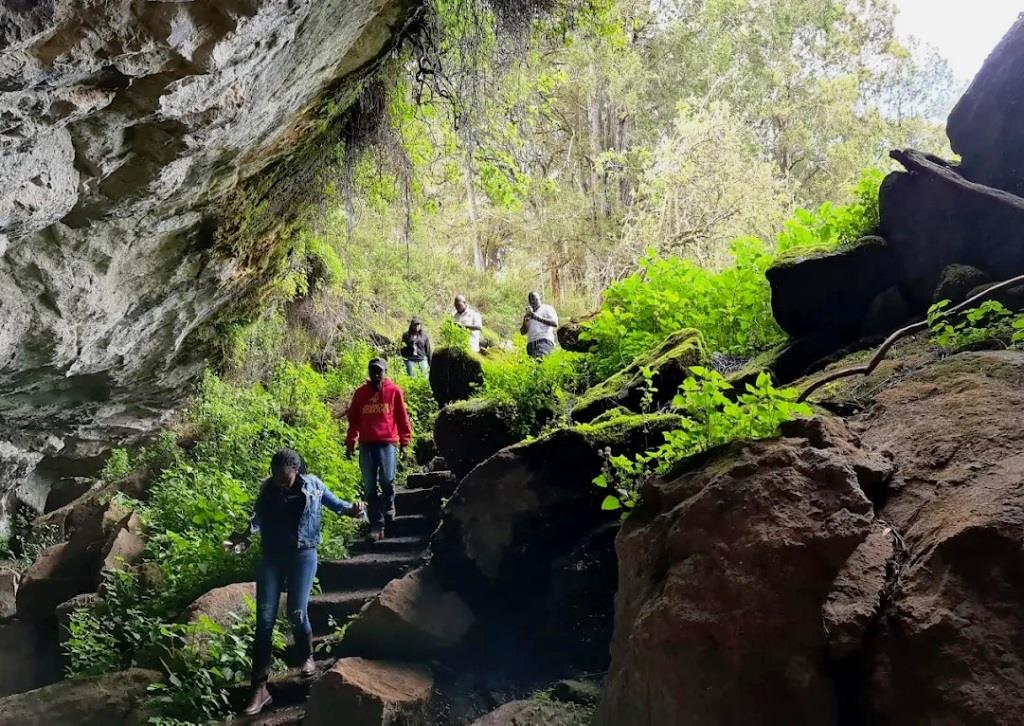 Mount Elgon is home to four accessible caves, Kitum, Chepnyalil, Mackingeny, and Ngwarisha, that are among the most extraordinary wildlife phenomena in Africa. Forest elephants visit these caves at night and in the early morning to extract salt from the mineral-rich volcanic rock, using their tusks to mine the walls and cave floors with a patience and precision that has, over centuries, sculpted vast underground chambers. Kitum Cave is the most visited and extends 60 metres into the mountain’s flank, its ceiling encrusted with crystals and its floor marked by the unmistakable evidence of elephant excavation. Buffalo and other mammals also use the caves for salt, and the caves represent a wildlife spectacle of remarkable intimacy: in the low light of the cave interior, with fresh elephant tracks in the mud and the mineral smell of the mountain surrounding you, the sense of witnessing something ancient and undisturbed is acute.
The Vegetation Zones: A Living Altitudinal Transect
One of Mount Elgon’s greatest scientific and aesthetic distinctions is the completeness of its altitudinal vegetation gradient. Beginning at the park boundary in lower montane forest of Elgon olive and Aningeria, the vegetation transitions through bamboo zones, Hagenia woodland, giant heather moorland, and finally the afro-alpine zone of the summit plateau, where giant lobelias and groundsels create a landscape of strange, botanical grandeur. This complete sequence, from rainforest to alpine desert in a single day’s trekking, is one that few mountains in East Africa preserve in such an undisturbed state. The botanical diversity of the park encompasses over 400 plant species, including orchids, helichrysum, and alchemilla, and half of Uganda’s butterfly species have been recorded within the park’s boundaries.
Wildlife: Forest Elephants, Primates, and the Lammergeier
Mount Elgon’s forest elephant population, although elusive, uses the lower montane forest and the caves with a regularity that makes the evidence of their passage a constant feature of any trail through the park. Their footprints in the mud of the lower slopes, the tusk marks on cave walls, and the occasional sighting of a small group moving through the forest below the bamboo zone are among the defining wildlife experiences of an Elgon visit. Black-and-white colobus monkeys inhabit the montane forest canopy in groups that are regularly encountered on the Sipi Trail. Blue monkeys and red-tailed monkeys move through the mid-level forest. Leopard and hyena exist in the park, though they are very rarely seen.
The bird checklist of over 300 species includes some of East Africa’s most sought-after montane specialists. The lammergeier, or bearded vulture, one of the continent’s most spectacular raptors and classified as vulnerable to extinction, soars on the thermals above the caldera rim and is regularly observed from the summit trails. Jackson’s spurfowl, the Tacazze sunbird, and Hartlaub’s turaco are among the high-altitude species that draw birding travellers to Elgon specifically. The mountain also holds the distinction of producing an entirely new species in 2005: Maathai’s longleg, an endangered dragonfly discovered in the park’s afro-alpine streams and named after Nobel laureate Wangari Maathai.
The Bagisu Cultural Experience
A curated cultural visit to a Bagisu community on the mountain’s lower slopes, arranged as part of your Gorilla Safaris itinerary, is one of the most enriching additions to the Elgon programme. The Bagisu relationship with the mountain is not historical abstraction but living practice: the Imbalu circumcision ceremony, held every even-numbered year in August and September, is one of the most significant communal events in Uganda and draws thousands of participants and observers. Village visits include demonstrations of traditional coffee processing on the terraced slopes, interaction with local healers and craftspeople, and guided walks through the agricultural landscape that frames the mountain’s lower flanks.
Mount Elgon National Park Entrance Fees and Trekking Costs
Park entrance and trekking fees at Mount Elgon are among the most accessible in Uganda, reflecting the park’s commitment to broadening access to one of the country’s great natural assets. The current fee structure is effective from July 2024 through June 2027.
Foreign non-resident adults pay USD 25 per person per day for park entry. Children aged 5 to 15 pay USD 10 per day. Children aged 0 to 5 enter free. Foreign residents and East Africans pay reduced rates: USD 20 per adult per day for foreign residents, and UGX 3,000 per adult per day for East African residents. Foreign students with valid international identity cards receive a 25% discount on entrance fees.
Trekking fees, which cover park entry, camping fees, and ranger guide and escort fees for the full duration of the trek, are charged at USD 50 per person per day for non-residents and foreign residents, and UGX 30,000 per person per day for East African residents. A guided forest exploration walk at the Kapkwai Forest Exploration Centre is available at USD 10 per person for sessions of up to four hours. All fees are confirmed and paid on your behalf as part of your Gorilla Safaris programme. Your Gorilla Safaris consultant will confirm current rates at the time of booking.
Best Activities in Mount Elgon National Park
Summit Trekking: Wagagai Peak
The multi-day summit trek to Wagagai Peak is the centrepiece of the Mount Elgon experience and remains one of the most accessible high-altitude summit treks in East Africa. Unlike the Rwenzoris, where glaciated approach routes demand technical equipment, or Kilimanjaro, where altitude sickness and crowds can define the experience, Elgon offers a relatively gentle gradient to a serious summit altitude. The ascent does not require mountaineering skills or specialist equipment, though physical fitness, proper acclimatisation, and appropriate cold-weather gear are non-negotiable.
The most popular route is the Sasa Trail from Budadiri, which ascends steeply through montane forest before entering the bamboo zone and emerging onto the moorland approaches to the caldera rim. A typical Sasa Trail summit programme runs four to five days. The Sipi-Piswa route, longer and more scenic, traverses the southern and northern moorland in a crossing that allows descent into the caldera and provides a more complete experience of the mountain’s ecological range. For the most immersive programme, a seven-day circuit combining the Sasa ascent with the Piswa descent is the definitive Elgon adventure.
Sipi Falls Hike
The Sipi Falls hike is the most accessible activity at Mount Elgon and appropriate for all fitness levels and ages. The walk visits all three tiers of the falls complex, descending through the coffee and banana plantations of the Sebei community before entering the gorge and following the river to the main falls. The hidden pool behind the curtain of the main waterfall, accessible by a narrow wet-rock ledge, is one of those small, extraordinary moments of discovery that experienced safari travellers remember for years. The hike can be completed in a half day and is typically combined with an overnight stay in the Sipi Falls area.
Cave Exploration
A guided visit to Kitum Cave or one of the other three accessible caves on the mountain’s slopes is among the most distinctive activities available anywhere in Uganda. Your private guide and ranger escort lead the walk to the cave entrance before dawn, timing the arrival to coincide with the period when elephant activity is highest.
The cave interior, with its mineral-encrusted ceiling and the evidence of elephant excavation fresh in the mud of the floor, is a space of primal drama. Night visits, where the cave is used by resident bats and occasionally by elephants, are among the most memorable wildlife experiences available on the mountain.
Bird Watching
Mount Elgon’s 300-plus species checklist, with its complement of altitude-restricted montane specialists, makes the park a destination of genuine significance for birding travellers. A guided birding walk through the Kapkwai Forest Exploration Centre area on the Sipi slopes, where the forest transitions from lower to upper montane zones, provides access to a dense concentration of species including the Hartlaub’s turaco, the African hill mynah, the eastern bronze-naped pigeon, and the Tacazze sunbird. A full-day birding programme with a specialist guide can yield over 80 species, and the caldera moorland adds the lammergeier and Jackson’s spurfowl to the high-altitude checklist.
Cultural Experiences and Coffee Tours
The coffee plantations on Mount Elgon’s lower slopes produce some of Uganda’s finest arabica beans, and a curated coffee tour through a Bagisu or Sebei family farm is an unexpectedly rich addition to the mountain programme. The visit follows the coffee cherry from tree to cup, including pulping, fermentation, drying, and traditional roasting over an open fire, all against the backdrop of the mountain’s green, terraced slopes. The farmers’ relationship with their land, inherited over generations and sustained at altitude by a dedication that the quality of the resulting cup entirely justifies, makes for a deeply human and delicious afternoon.
Where to Stay at Mount Elgon National Park
Accommodation for Mount Elgon visits is typically split between the Sipi Falls area for pre-trek nights and the mountain huts and campsites for the trekking programme itself. The Sipi Falls area has developed a strong accommodation offering that ranges from luxury boutique stays to authentic local guesthouses.
Luxury Accommodation: Sipi River Lodge
Sipi River Lodge is the premium address in the Mount Elgon region and one of the finest small lodges in eastern Uganda. Positioned on the escarpment above the main falls with a view that encompasses both the waterfall and the plains of Karamoja stretching to the northeastern horizon, the lodge offers beautifully appointed cottages with private terraces, king-size beds, and a warm, attentive lodge atmosphere. The main dining terrace, where meals are served with the falls audible in the gorge below, provides a curated dining experience that stands apart from anything else in the region. For travellers combining Elgon with a longer Uganda circuit, Sipi River Lodge provides a quality of rest and recovery that prepares the body for the days of trekking ahead.
Mid-Range: Crow’s Nest Camp and Lacam Lodge
Crow’s Nest Camp, perched on the cliff edge above Sipi Falls with arguably the finest viewpoint position of any accommodation in the area, offers comfortable bandas and a communal atmosphere of genuine warmth. The camp’s position directly above the main falls means that guests fall asleep to the sound of the river and wake to the morning light on the escarpment. Lacam Lodge, similarly positioned on the Sipi escarpment, provides comfortable rooms in a relaxed lodge setting with good food and knowledgeable staff who can arrange trailhead transfers and guide services. Both properties are excellent bases for the Sipi Falls hike and the lower-altitude forest activities.
Budget: Moses Camp and Mbale Accommodation
Moses Camp at Sipi Falls offers simple, clean accommodation in a budget-friendly format that is popular with independent trekkers and adventure travellers. The camp has a communal kitchen and basic but functional facilities, and its position near the falls provides the same dramatic morning views as more expensive properties. In Mbale itself, several guesthouses and mid-range hotels provide comfortable overnight accommodation for travellers arriving from Kampala and breaking the journey before continuing to the trailhead.
On-Mountain Huts and Camping
The Uganda Wildlife Authority maintains a series of bandas and campsites on the principal trekking routes, providing basic overnight shelter at the designated staging points between the trailhead and the caldera. The huts at Sasa, Mude Cave, and the caldera rim offer rudimentary but functional accommodation, and sleeping at the caldera rim at 4,000 metres, with the stars in a sky unmarked by light pollution and the silence of the ancient volcanic landscape surrounding you, is an experience of profound power. All hut accommodation is included in the trekking fee structure.
What to Wear and Pack for Mount Elgon National Park
Packing correctly for Mount Elgon is non-negotiable. The mountain’s altitude range, from 1,200 metres at the park boundary to over 4,000 metres at the summit, means that temperature conditions vary enormously between the lower forest and the caldera, and the mountain’s weather can change rapidly at any elevation.
For summit trekking, the essential clothing system is based on layering. A moisture-wicking base layer is the foundation. A mid-layer of fleece or lightweight down provides insulation. A waterproof and windproof outer shell is critical at all altitudes, as the mountain can produce rain and cold wind at any time of year. On the caldera at night, temperatures drop below freezing, and a sleeping bag rated to minus five degrees Celsius is required for hut sleeping. Trekking poles are strongly recommended for the steep sections of the Sasa Trail and the descent.
Footwear is the most critical equipment decision. Waterproof ankle-support hiking boots are essential for the summit programme. Trail runners are adequate for the Sipi Falls hike and lower-altitude forest walks but are not suitable for the upper mountain. Gaiters are strongly recommended for the boggy moorland sections above the treeline.
Additional essentials include a headtorch with spare batteries, a high-factor sunscreen, UV-protective sunglasses, a wide-brimmed hat for the moorland sections, insect repellent with DEET for the forest zone, water purification tablets or a filter bottle, and a first aid kit that includes blister treatment, rehydration salts, and altitude sickness medication such as acetazolamide (Diamox) in consultation with your physician. High-calorie trail snacks should be packed in adequate quantity. Your Gorilla Safaris team will provide a detailed equipment checklist with your pre-departure documents.
Frequently Asked Questions: Mount Elgon National Park
Where is Mount Elgon National Park?
Mount Elgon National Park straddles the border between Uganda and Kenya approximately 140 kilometres northeast of Lake Victoria. The Ugandan section of the park, which covers 1,110 square kilometres, is located in the Mbale and Sironko districts of eastern Uganda. The nearest major town is Mbale, which serves as the gateway and administrative hub for the Uganda side of the park.
How high is Mount Elgon?
Wagagai Peak, the highest point of Mount Elgon, stands at 4,321 metres above sea level. This makes it the second highest peak in Uganda, after Margherita Peak in the Rwenzori Mountains at 5,109 metres, and the eighth highest peak in Africa. At one point in geological history, before millions of years of erosion reduced its height, Mount Elgon would have been Africa’s tallest mountain.
How difficult is the trek to the top of Mount Elgon?
The trek to Wagagai Peak is classified as a strenuous multi-day hike rather than a technical climb. No mountaineering skills or specialist equipment are required. The gradient, particularly on the Sasa Trail, is steep in sections, and the altitude at the caldera and summit requires physical fitness and proper acclimatisation. A standard Sasa Trail summit programme takes four to five days. Trekkers with good fitness and no pre-existing medical conditions regularly complete the programme successfully.
What is the best time to trek Mount Elgon?
The dry seasons of June to August and December to March offer the most reliable conditions for summit trekking. June to August is generally considered the best overall window for clear skies, stable trails, and good summit visibility. The wet seasons of March to May and September to November bring lush vegetation and excellent birding but muddy trails and reduced summit visibility.
What are the entrance fees for Mount Elgon National Park?
Foreign non-resident adults pay USD 25 per person per day for park entry. Trekking fees, which include park entry, camping, and ranger escort, are charged at USD 50 per person per day. A guided forest walk at the Kapkwai Forest Exploration Centre costs USD 10 per person for sessions of up to four hours. The current fee structure is effective from July 2024 through June 2027. All fees are included in Gorilla Safaris itinerary costs.
What are the main trekking routes on Mount Elgon?
The four principal trekking routes on the Uganda side of Mount Elgon are the Sasa Trail from Budadiri (the steepest and most direct route to the summit), the Sipi Trail from Kapkwai (longer, through dense montane forest with waterfall scenery), the Piswa Trail (the most remote and scenic northern approach), and the Bushiyi Trail (the least developed and most adventurous option). The most popular combination is the Sasa-Piswa circuit, which crosses the mountain from north to south in a seven-day traverse.
What wildlife can I see at Mount Elgon National Park?
Mount Elgon supports forest elephants, black-and-white colobus monkeys, blue monkeys, bushbuck, duiker, leopard, and hyena. The park’s 300-plus bird species include the endangered lammergeier, Hartlaub’s turaco, Jackson’s spurfowl, and the Tacazze sunbird. The mountain is also noted for its elephant caves, where forest elephants mine the mineral-rich volcanic rock at night and in the early morning.
Is Mount Elgon safe for trekking?
Mount Elgon National Park is safe for trekking. All treks are accompanied by armed Uganda Wildlife Authority rangers, and the main trails are well established and regularly used. The park’s security situation is stable, and the local communities on the mountain’s slopes are generally welcoming of visitors. Your Gorilla Safaris team will monitor any changes to the security situation and advise accordingly.
Can I combine Mount Elgon with gorilla trekking in Uganda?
Yes, and the combination is one of the most rewarding multi-destination programes available in Uganda. Mount Elgon is typically combined with gorilla trekking at Bwindi Impenetrable Forest in a programme that crosses the full width of the country from east to west. Many travelers also include Jinja on the Nile as part of the eastern Uganda component before heading to Elgon.
What is the cultural significance of Mount Elgon?
Mount Elgon is of profound cultural significance to the Bagisu people, who call the mountain Masaba after their founding ancestor. The Imbalu circumcision ceremony, a coming-of-age ritual held every even-numbered year, is directly tied to the mountain and is one of the most significant communal events in Uganda. The Sabinyo people of the Kapchorwa highlands on the mountain’s southeastern slopes also have a deep cultural relationship with the mountain and its environment.