Kibale Forest National Park-East Africa's Primate Capital

The Ultimate Guide to Chimpanzee Tracking, Habituation & Forest Safaris in Uganda
“The forest erupts without warning. A scream from the canopy above — primal, triumphant, impossible to prepare for — and every guide who has walked Kibale will tell you the same thing: the first time you hear a wild chimpanzee call at full volume, something changes in you.”


Kibale Forest National Park-East Africa's Primate Capital

You have not yet seen them. They are somewhere in the green dark above the trail — you know this because the ranger’s radio crackled ten minutes ago and he has been moving faster since. The forest here is not the bamboo stillness of a gorilla park; it is kinetic, loud, alive in a different register. Branches crash. Something screams again, closer. And then a flash of black moves across a gap in the canopy, and another, and your guide puts a hand on your shoulder and says, quietly: “There.”
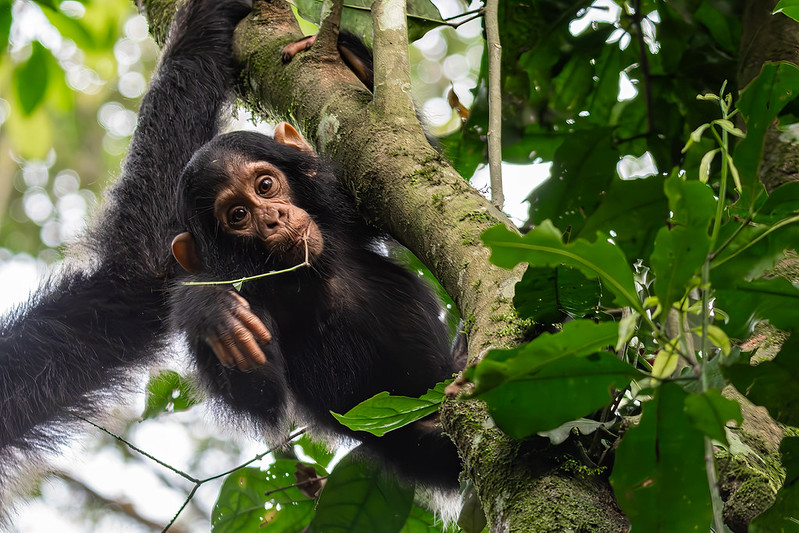
Chimpanzee tracking in kibale forest National Park, 10 days Uganda Gorilla trekking and Masai Mara Safari, chimpanzee tracking in Kibale forest national parkThis is Kibale National Park, the place that ornithologists and primatologists and wildlife filmmakers return to again and again — not just because of what it holds, but because of how it holds it. Over 1,500 chimpanzees. Thirteen primate species. Three hundred and seventy-five bird species. A continuous forest corridor that stretches south into Queen Elizabeth National Park, creating a 180-kilometre wildlife highway that elephants, leopards, and forest buffalo move through in the unhurried way of animals who have always owned this land.

Kibale Forest National Park does not offer the meditative gravity of a gorilla encounter. What it offers instead is something equally extraordinary: proximity to our closest living relative at full volume, full speed, full social complexity. The chimpanzees of Kibale are habituated but never domesticated. They move through their territory with an agenda that has nothing to do with your camera or your expectations, and being admitted into the orbit of that agenda — for one hour, or four hours in the case of the habituation experience — is the kind of thing that people struggle to explain afterward, because it exceeds the vocabulary of conventional wildlife experience.

At Gorilla Safaris, Kibale has been a cornerstone of our Uganda itineraries for years. We know the Kanyanchu sector at dawn. We know which trails are fastest after September rains. We know that the Bigodi Wetland Sanctuary, thirty minutes from the park headquarters, is one of the most underrated wildlife experiences in East Africa — a community-managed swamp walk that many operators forget to mention, and that we consider essential. This guide is written from that accumulated knowledge, and it is written for you.

Kibale National Park: East Africa's Primate Capital

Kibale National Park occupies 766 square kilometres of western Uganda’s rolling plateau, positioned between the Ndali-Kasenda crater lake region to the north and the corridor leading to Queen Elizabeth National Park to the south. Gazetted in 1993 after decades as a managed forest reserve, it protects a mosaic of moist evergreen rainforest, woodlands, grasslands, and swamps at elevations between 1,100 and 1,600 metres — an altitudinal range that creates the habitat diversity responsible for Kibale’s extraordinary biodiversity.
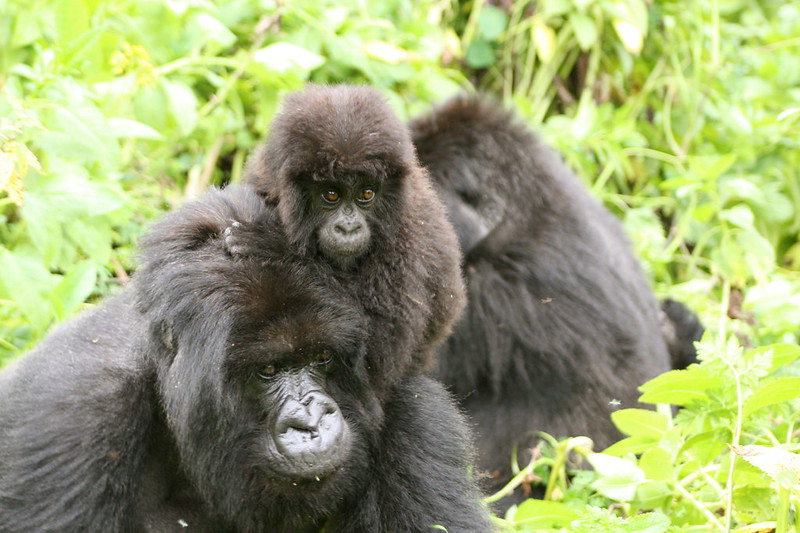
Gorilla trekking & chimpanzee tracking in Bwindi impenetrable national Park and Kibale forest national parkThe forest is one of the last remaining expanses in East Africa to contain both lowland and montane forest types in continuous formation. Its botanical richness is staggering: over 229 tree species, including three endangered timber species and a dense understory of shade-tolerant shrubs, ferns, and climbers that creates the kind of layered complexity that primates have been exploiting for millions of years. More than 1,700 millimetres of annual rainfall sustain this density, and the result is a forest that never quite dries, never quite stills, and never quite exhausts its capacity to surprise.

The primate fauna here is without parallel in Africa. Thirteen species coexist within the park boundaries — chimpanzees, Uganda red colobus, L’Hoest’s monkeys, Uganda mangabeys, black-and-white colobus, blue monkeys, red-tailed monkeys, olive baboons, grey-cheeked mangabeys, vervet monkeys, bush babies, pottos, and the occasional de Brazza’s monkey. Each occupies a distinct ecological niche; watching the layered social behaviour of multiple species in the same forest canopy on a single morning walk is an education in primate ecology that no zoo or documentary adequately replicates.

Beyond primates, Kibale supports leopards, African golden cats, servals, African elephants, African buffalo, bushpigs, giant forest hogs, sitatunga antelopes, and over 200 species of butterfly. The park forms a continuous ecological unit with Queen Elizabeth National Park to the south — a 180-kilometre wildlife corridor through which elephants, buffalo, and large carnivores move freely between the two protected areas. In landscape terms, Kibale and Queen Elizabeth together constitute one of the most significant wildlife habitats in East Africa, and many of our most rewarding Uganda itineraries treat them as a single, interconnected canvas.

Explore our Uganda itineraries combining Kibale and Queen Elizabeth

Chimpanzee Communities of Kibale: More Than One Family

Kibale is home to an estimated 1,500 chimpanzees across multiple communities that range through different areas of the forest. The park has the highest concentration of habituated chimpanzee communities available for visitor encounters in East Africa, and the depth of scientific research conducted here — Kibale has been a site of continuous chimpanzee study since the early 1970s — means that the individuals in these communities are among the most thoroughly understood wild chimpanzees anywhere on earth.

The primary tracking community for standard visitor encounters is based in the Kanyanchu sector near the park headquarters. This community, known as the Kanyawara community, has been habituated to human observers for decades and currently numbers over 150 individuals. A second habituated community — the Ngogo community, studied intensively since the 1990s and notable for its unusually large size of over 200 individuals — is accessible via a separate approach, primarily for researchers but increasingly available for specialist visitor programmes. These two communities together represent one of the most significant concentrations of scientifically documented wild chimpanzees on earth.

What the research has revealed about Kibale’s chimpanzees is remarkable. These are not simply animals who sit in trees and eat fruit.The Kanyawara community engages in territorial patrols that occasionally turn lethal. 

It manufactures and uses tools — selecting specific sticks to extract insects from bark, using leaves as sponges to absorb water from tree cavities. It has consistent cultural practices — specific greeting behaviours, hunting strategies, and vocalisation patterns — that are passed between generations in ways that modern primatology considers a form of culture. Spending time with these animals is not merely a wildlife experience. It is an encounter with another form of intelligent, social, culturally informed life.

How to Get to Kibale National Park

By Road from Kampala

The drive from Kampala to Kibale’s Kanyanchu headquarters takes approximately five to six hours by private vehicle, following the Kampala-Fort Portal highway through the rolling highlands of western Uganda. The road passes through Mubende and Fort Portal — the nearest major town, approximately 35 kilometres from Kanyanchu — and the journey itself rewards attention: the Rwenzori Mountains appear on the western horizon as you approach Fort Portal, and the crater lake landscapes north of the park are a preview of the visual drama that awaits. All Gorilla Safaris transfers are conducted in private, air-conditioned 4WD vehicles driven by experienced drivers who know this road in every season.

By Charter Flight to Kasese or Kihihi

For guests arriving from Entebbe or continuing from Bwindi, a scheduled charter flight to Kasese Airstrip (approximately one hour from Entebbe, 1.5 hours drive from Kibale) or Kihihi Airstrip (used for Bwindi’s Buhoma sector, approximately 2 to 3 hours drive from Kibale) eliminates the road journey entirely. Aerolink Uganda operates scheduled services to both strips. All flight bookings, airstrip connections, and lodge transfers are coordinated by Gorilla Safaris as a single, seamless arrangement. You step off the aircraft to find your guide and vehicle already waiting.

Arrange your Uganda charter flights and transfers:

From Bwindi or Queen Elizabeth

Kibale sits at the natural midpoint of Uganda’s most popular western safari circuit. From Bwindi Impenetrable National Park (Buhoma), the drive to Kibale takes approximately four to five hours through the Ishasha sector of Queen Elizabeth National Park — a route that passes through the tree-climbing lion territory of Ishasha and offers excellent savannah wildlife en route. From Queen Elizabeth’s Mweya Peninsula, Kibale is approximately two to three hours north. Many of our most comprehensive Uganda itineraries treat these three parks as a single, continuous programme, and the logistics of moving between them are something Gorilla Safaris has refined over years of daily coordination.

Explore Uganda itineraries combining all three parks:

Chimpanzee Tracking in Kibale: The Full Experience

The standard chimpanzee tracking experience in Kibale begins at the Uganda Wildlife Authority briefing point at Kanyanchu, at 7:00 AM for the morning session or 2:00 PM for the afternoon session. Both sessions are available year-round, though the morning encounter is more popular and consistently more rewarding — chimpanzees are most active in the early hours, the light in the forest canopy is at its most beautiful, and the temperature before midday is the most comfortable for walking.

The briefing, led by a UWA ranger-guide, covers the behavioural rules governing all chimpanzee encounters: maintain a minimum eight-metre distance from the animals; no flash photography; if a chimpanzee approaches closer than the minimum distance, stand still and allow it to pass; avoid direct prolonged eye contact with adult males; and if a male charges or displays, hold your ground, crouch, and wait for your guide’s direction. The rules are enforced because the chimpanzees’ health depends on them — like mountain gorillas, chimpanzees are highly susceptible to human respiratory diseases, and the close genetic relationship between our species means that our illnesses can devastate theirs.

After the briefing, your group — a maximum of six visitors per tracking group — departs with two UWA guides. A tracker team has been monitoring the community since before dawn, using a combination of direct observation and the distinctive calls that male chimpanzees use to advertise their location to other community members. Communication between the tracker and your guide happens via radio, and the update that crackles through as you enter the forest is one of the most anticipatory sounds in the world: the tracker has found them.

The approach can take thirty minutes or three hours, depending entirely on where the community has ranged since first light. You will not know in advance, and this is the point. Kibale’s chimpanzees live real lives at real speeds, and the tracking experience places you inside the reality of their world rather than a managed version of it. When contact is established, your one hour begins — sixty minutes during which time operates differently than it does anywhere else.

Chimpanzees do not sit still. An adult male in full display — hair erect, swaying, drumming on a buttress root with a sound that carries half a kilometre through the forest — is one of the most viscerally affecting wildlife spectacles on the planet. A juvenile swinging between branches three metres overhead with a self-confidence that defies physics is pure delight. A mother grooming her infant with the focused tenderness of any parent anywhere is something that requires no interpretation. The hour ends with the guide’s gentle signal, and the walk back to Kanyanchu carries the particular quality of all walks taken after significant experience: quiet, slightly altered, grateful.

Chimpanzee Tracking Permit Costs in Kibale

Uganda Wildlife Authority sets chimpanzee tracking permit fees for Kibale at the following rates:

Foreign Non-Residents: USD 250 per person per trek (morning or afternoon session).

Foreign Residents (holders of valid East African residency): USD 200 per person per trek.

East African Citizens: UGX 70,000 per person per trek.

Each permit is date-specific and session-specific (morning or afternoon). A maximum of six visitors per tracking group is permitted for each session. Demand during peak season months (June through August and December through January) regularly exceeds availability, particularly for morning sessions. At Gorilla Safaris, we secure permits as part of the itinerary planning process — never as an afterthought — and hold advance allocations that protect our guests from last-minute disappointment.

Book your Kibale chimpanzee permit

Chimpanzee Habituation Experience in Kibale

For the traveller for whom one hour in the company of chimpanzees is insufficient — and there will always be those — the Chimpanzee Habituation Experience offers something qualitatively different. The CHA takes visitors into the forest for a full day alongside a semi-habituated chimpanzee community that is in the process of becoming accustomed to human presence. It is an immersion in the science of habituation itself, and it is one of the most remarkable wildlife experiences available anywhere in Africa.

The experience is available in Kibale’s Kanyanchu sector and departs at 7:00 AM, following the same briefing protocol as standard tracking but with an extended orientation that covers the habituation process in detail. A maximum of four visitors are permitted per habituation group — half the number allowed for standard tracking — and the group is accompanied by a UWA ranger, a researcher, and your Gorilla Safaris guide. The researcher’s presence transforms the experience: you are not just observing chimpanzees, you are participating in the act of building the long-term relationship between wild chimpanzees and human researchers that makes all future encounters possible.

The full day in the forest — typically seven to eight hours — unfolds across the community’s entire morning and midday range. You witness feeding behaviour that a one-hour encounter rarely reveals; territorial patrolling; the complex politics of coalition formation among males; the nursing and play behaviour of mothers with infants.

By the afternoon, having moved through the forest alongside the community for hours, the distinction between observer and participant begins to blur in a way that is difficult to articulate but impossible to forget.

The Chimpanzee Habituation Experience costs USD 300 per person per day. This is higher than the standard tracking permit, reflecting the extended duration, the restricted group size of four visitors, and the exclusive access to the researcher’s knowledge and the community’s extended range. It is, by any reasonable measure, one of the highest-value wildlife experiences currently available in Uganda. We arrange it for guests with the same meticulous care as every other element of their programme.

Enquire about the Chimpanzee Habituation Experience

Best Time To Visit Kibale Forest national Park

Kibale receives visitors year-round, and the chimpanzees are trackable in every month. That said, the character of the experience shifts meaningfully across the year, and matching your travel dates to your priorities will shape the quality of your morning in the forest.

Dry Season: June to August and December to January

The main dry season from June through August is Kibale’s peak visitor period. The trails through the Kanyanchu sector are firmer and faster, the forest canopy slightly more open where the undergrowth has dried back, and the light on clear mornings is the most rewarding for photography. The chimpanzees tend to range more predictably during dry months, as food sources are more concentrated — though predicting chimpanzee movement is always approximate, and experienced guides will tell you that the most surprising encounters happen in the driest months as readily as in the wettest.

July and August in particular see the highest permit demand, and booking six to twelve months ahead for morning tracking sessions during these months is strongly recommended. The shorter dry window of December and January is slightly less pressured but still popular, particularly with European and North American visitors on year-end travel.

Green Season: March to May and September to November

The two rainy seasons — March through May and September through November — transform Kibale into its most extravagantly alive version. The undergrowth is saturated, the canopy dense with new growth, and the chimpanzees range more widely as fruit ripens across the forest at different elevations and micro-habitats. Tracking in the wet season can involve longer approach times as the community spreads out, but when contact is made the encounters are often longer and more relaxed, with the animals feeding at leisure in the wet vegetation.

The forest in rain is an entirely different sensory experience from the dry season. The sound of water dripping through multiple canopy layers; the smell of wet bark and fresh leaf litter; the quality of light that comes through the canopy after a shower, green-gold and impossibly clean. Guests who track chimpanzees in October or November often describe the encounter as more intimate and less crowded than peak season visits — both conditions that, in our experience, make for the most lasting impressions. Permits are more available, lodges more accommodating on rates, and the forest is at its most itself.

For birding guests, the green seasons are unquestionably the prime time — migrants are present, nesting activity is at its peak, and the dawn chorus in Kibale during April is one of the great aural experiences in African wildlife travel.

Bigodi Wetland Sanctuary: Kibale's Hidden Treasure

Approximately three kilometres south of Kanyanchu, the Bigodi Wetland Sanctuary offers one of the most rewarding and least crowded wildlife experiences in western Uganda — and, in the view of many experienced guides, one of the most underrated experiences in the entire country. Managed by the Kibale Association for Rural and Environmental Development (KAFRED), a community-based organisation that directs visitor revenue directly to local schools, healthcare, and conservation initiatives, Bigodi is a 12-square-kilometre papyrus swamp that serves as habitat for eight primate species, 138 bird species, and a wide array of forest mammals.

The swamp walk is guided by community naturalists with deep local knowledge — men and women who grew up alongside this ecosystem and learned its rhythms before they learned to read. A morning walk of two to three hours moves along elevated boardwalks and forest-edge trails through a landscape that transitions from papyrus stands to forest fringe to open grassland in the space of a few hundred metres. Red colobus monkeys call from the trees above the boardwalk. L’Hoest’s monkeys appear in the understorey with characteristic shyness and then disappear before your camera has focused. The papyrus itself — four metres tall, dense, perpetually shifting — creates the sonic environment of a place that has never been entirely tamed.

For birders, Bigodi is extraordinary. The African pitta — one of the most sought-after bird species in East Africa, notoriously difficult to find — has been recorded here with consistency. The great blue turaco, the African fish eagle, the grey parrot, and the black-and-white-casqued hornbill all appear in Bigodi.

with a frequency that drives dedicated birders to spend an entire morning in the swamp before they have even begun their chimpanzee tracking.  The combination of Bigodi in the morning and chimpanzees in the afternoon — or vice versa — constitutes a single day of wildlife experience that rivals anything East Africa offers.

The entry fee for Bigodi Wetland Sanctuary is approximately USD 30 per person. Every shilling is accounted for within the community. We include Bigodi as a standard component of all Kibale itineraries, because to visit the park without visiting the swamp is to leave the best chapter unread.

Other Activities in Kibale Forest National Park

Primate Walks and Night Walks

Beyond chimpanzee tracking, UWA offers guided primate walks through the Kanyanchu sector that focus on the full spectrum of the park’s thirteen species. These walks move at a slower, more deliberate pace than tracking sessions, allowing for extended observation of red colobus, L’Hoest’s monkeys, olive baboons, blue monkeys, and the rest of the forest’s extraordinary primate assemblage. Evening and night walks, available on request, reveal Kibale’s nocturnal inhabitants: pottos, bush babies, and the African civet, moving through the understorey under torchlight with a quality of strangeness that daytime visits do not prepare you for.

Birding in Kibale

Uganda is ranked among Africa’s top three birdwatching destinations, and Kibale’s 375 recorded bird species make it one of the country’s premier birding sites. The forest interior holds Albertine Rift endemics including the Kibale ground thrush — found nowhere else on earth — alongside the African pitta, green-breasted pitta, African grey parrot, blue-headed sunbird, yellow-spotted nicator, western nicator, and the extraordinary crowned eagle. Dawn birding walks from Kanyanchu, departing before the chimpanzee tracking briefing begins, are among the most productive two hours available to birding visitors. A specialist birding guide can be arranged through Gorilla Safaris for guests who want a focused ornithological programme.

Crater Lake Walks and Ndali-Kasenda Loop
Best Things/activities in Kibale Forest National ParkThe Ndali-Kasenda crater lake area on the northern edge of the park is one of Uganda’s most visually dramatic landscapes: a dozen crater lakes of varying depth and colour set in steep-walled valleys formed by ancient volcanic activity. Guided walks between the lakes pass through tea estates, small farms, and forest patches, and the views from the crater rims — particularly at dawn, when mist sits in the bowls below — are among the most beautiful in western Uganda. Several lodges in the area are positioned above crater lakes, and the combination of wildlife and landscape in this corner of the park is exceptional.

Community and Cultural Visits

The Batooro and Bakiga communities surrounding Kibale have lived alongside this forest for generations, and their relationship with it is a living part of the landscape’s story. Community visits arranged through KAFRED and other local organisations connect visitors with traditional bark cloth making (one of Uganda’s UNESCO-listed cultural practices), local craft production, village life, and the agricultural systems that exist in careful balance with the park boundary. We regard community engagement as an integral part of every Kibale itinerary, not an optional extra.

What to Wear and Pack for Kibale Chimpanzee Tracking

Kibale demands practical preparation, and the right kit makes the difference between a morning of discomfort and a morning of full, unobstructed presence in the forest. The single most important decision you make before the trail begins is your footwear. Waterproof hiking boots with ankle support are non-negotiable. The Kibale forest floor is wet in all seasons — morning dew on the undergrowth alone will soak canvas shoes within ten minutes — and the trails involve uneven terrain, root crossings, and occasional stream fords that require a boot with grip and waterproofing. Break them in before you arrive.

Long-sleeved shirts and long trousers in neutral or earth tones — forest green, dark khaki, brown, or dark blue — are essential for all forest activities. The reasoning is practical: Kibale is home to safari ants whose column patrols across the trail can envelop your feet in seconds if you are wearing shorts, and the undergrowth in less-maintained sections carries nettles and rough-leaved plants that find exposed skin reliably. Avoid white and bright colours, which are visible to wildlife at greater distances and disruptive to the experience for other visitors.

A lightweight rain jacket or compact waterproof poncho lives in your daypack regardless of the season. Rain in Kibale can arrive with the decisiveness of a switched-on tap, and a damp morning in the forest is only miserable if you are unprepared for it. Thin garden gloves protect your hands on steep sections where you reach for vegetation. A hat or lightweight buff for the head offers protection both from morning dew dripping from the canopy and from the occasional inquisitive ant.

Your daypack should contain at minimum: 1.5 litres of water, high-energy snacks, a small first-aid kit with blister treatment, insect repellent, your camera with a charged battery (no flash, silenced phone), and a lightweight spare layer. The temperature in Kibale’s forest can be noticeably cooler than the surrounding countryside, particularly in the early morning. Porters are available at the park headquarters and cost approximately USD 15 to USD 20 for the tracking session — they carry your pack, assist on difficult terrain, and often contribute knowledge about the forest that adds significantly to the experience. We recommend them without hesitation.

Your Gorilla Safaris representative will provide a comprehensive, season-specific kit list as part of your pre-departure documentation.

Frequently Asked Questions about Kibale Forest National Park

Kibale National Park is home to an estimated 1,500 chimpanzees, making it the park with the highest concentration of chimpanzees in East Africa. Several communities range through the park, of which the Kanyawara community near Kanyanchu headquarters is the primary one available for standard visitor tracking. The Ngogo community is the largest documented chimpanzee community in the world at over 200 individuals, primarily accessible for research purposes.

Uganda Wildlife Authority permits a maximum of six visitors per chimpanzee tracking group per session. There are two sessions daily: a morning session departing at 7:00 AM and an afternoon session at 2:00 PM. For the Chimpanzee Habituation Experience, the maximum is four visitors per group, reflecting the more sensitive and extended nature of that programme.

The standard chimpanzee tracking permit costs USD 250 per person for foreign non-residents, USD 200 for foreign residents with valid East African residency, and UGX 70,000 for East African citizens. The Chimpanzee Habituation Experience costs USD 300 per person per day. Permits are date-specific and should be booked in advance through an operator or directly through Uganda Wildlife Authority

Yes. Kibale’s habituated chimpanzee communities have been accustomed to human presence for decades, and all tracking sessions are conducted by experienced UWA rangers who manage the encounter professionally. The primary risks in Kibale are physical — uneven forest terrain — rather than wildlife-related. Following the ranger’s instructions during the tracking session, including rules around minimum distance and behaviour during displays, ensures a safe and rewarding experience.

The two experiences are complementary rather than comparable. Chimpanzees are fast, loud, highly social, and move through multiple layers of the forest simultaneously — the tracking experience is energetic and unpredictable. Mountain gorillas move more slowly, vocalise less, and have a presence that most visitors describe as meditative or even solemn. The maximum group sizes differ (six for chimps, eight for gorillas), as do the permit costs (USD 250 for chimps, USD 800 for gorillas). Many Uganda itineraries include both, and guests who experience them in succession frequently describe the contrast as one of the most instructive aspects of the entire journey.

Chimpanzees can be tracked year-round. The dry seasons — June to August and December to January — offer firmer trails, cleaner light for photography, and more predictable chimpanzee movement. The wet seasons — March to May and September to November — produce a more lush and atmospheric forest experience, with the chimpanzees often at lower elevations and feeding in more concentrated areas. Birding is excellent year-round, with peak diversity during the wet seasons. Permits are most available during the shoulder seasons.

Standard chimpanzee tracking in Kibale is moderate in physical demand. The terrain in the Kanyanchu sector is forest floor rather than steep mountain slopes, and most guests of reasonable fitness manage without difficulty. The approach time varies from thirty minutes to two to three hours depending on where the community has ranged. The Chimpanzee Habituation Experience is more demanding due to its full-day duration. Porters are available and strongly recommended for guests who prefer to walk unencumbered.

Bigodi Wetland Sanctuary is a 12-square-kilometre community-managed papyrus swamp located three kilometres from Kanyanchu headquarters. It is home to eight primate species, 138 bird species — including the African pitta and the great blue turaco — and a range of forest mammals including sitatunga antelope. The guided walk takes two to three hours and is led by community naturalists with deep local knowledge. The entry fee of approximately USD 30 per person goes directly to local schools and healthcare. We consider it one of the most rewarding experiences in western Uganda and include it in all Kibale itineraries.

Most nationalities require a visa to enter Uganda. The Uganda e-Visa is available online at visas.immigration.go.ug and costs USD 50 for a single-entry tourist visa. Citizens of many East African Community member states do not require a visa. Yellow Fever vaccination is mandatory for entry into Uganda, and a valid Yellow Fever Certificate must be presented on arrival. Your Gorilla Safaris pre-departure documentation will include a full checklist of entry requirements for your specific nationality.

Uganda Wildlife Authority sets the minimum age for chimpanzee tracking at 12 years. Children aged 12 and above may join tracking sessions subject to a medical fitness assessment at the briefing. Children under 12 are welcome in the park and can enjoy guided nature walks, crater lake visits, the Bigodi Wetland Sanctuary, and community cultural programmes. Gorilla Safaris designs family itineraries that ensure guests of all ages have a compelling and age-appropriate programme throughout.

“The chimpanzees of Kibale will not wait for you. They have a forest to patrol, a hierarchy to maintain, a morning’s feeding to complete. Your hour in their orbit is borrowed from a world that existed long before you arrived — and the best thing we can do is ensure that when you enter it, absolutely nothing stands between you and the experience.”

Scroll to Top