Volcanoes National Park is the home of Mountain Gorillas in Rwanda. Rwanda is among the few countries that are home to the mountain gorillas. Rwanda’s gorillas gained international recognition due to the conservation efforts of Dian Fossey during the 1960s and 70s, and they have since been highlighted in various films and documentaries. In recent years, notable people, nobles, and high-profile individuals have visited the mountain gorillas.
Rwanda’s top attraction is its mountain gorillas. More than 380 mountain gorillas inhabit Volcanoes National Park, making gorilla trekking a premier wildlife experience that draws numerous travelers to Rwanda.
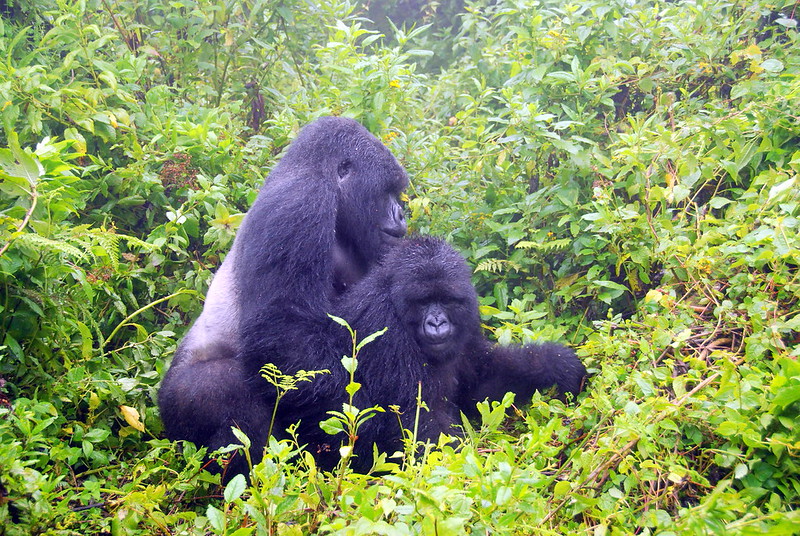
A significant number of mountain gorillas in Rwanda were rescued and gained popularity as a result of the research conducted by American zoologist Dian Fossey on the rare species in the Congo forest. Following her departure from Congo due to security concerns and the establishment of her research center in Rwanda, she was tragically murdered. Nevertheless, her research center continues to operate and has made significant contributions to the conservation of mountain gorillas.
Tourists swarm the Rwanda’s Volcanoes National Park, anxious to monitor the endangered primates, and at least 80 gorilla trekking permits are sold.
About Mountain Gorillas in Volcanoes National Park Rwanda
Mountain Gorillas represent the largest extant primate species. The majority of the Virunga gorillas inhabit the central region of Volcanoes National Park, specifically within the triangular area created by Mt. Visoke, Mt. Karisimbi, and Mt. Mikeno. A select number of habituated groups for tourism are located within the home range of the slopes of Mt. Sabyinyo and Mt. Gahinga.
The most recent Gorilla Census estimated the mountain gorilla population to be approximately 1,050 individuals. Despite concerns in the 1980s regarding a rapid decline in the mountain gorilla population, there is now a positive trend indicating a recovery in their numbers. The population is gradually rising as a result of coordinated initiatives undertaken by the governments of nations that are home to mountain gorillas, local communities, and non-governmental organizations.
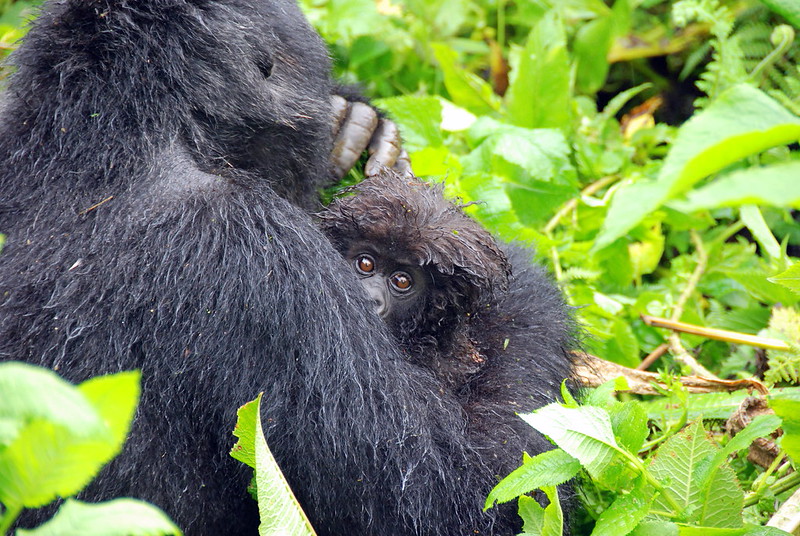
The Rwandan gorillas are classified as part of the Mountain Gorilla Subspecies, scientifically referred to as Gorilla beringei beringei. The mountain gorilla represents one of the two subspecies of the Eastern Gorilla that belong to the African continent.
There are two distinct mountain gorilla populations.
One can be located in the Virunga Mountains of Central Africa, specifically within three National Parks: Mgahinga National Park in southwestern Uganda; Volcanoes National Park in northwestern Rwanda; and Virunga National Park in the eastern Democratic Republic of Congo (DRC).
The remaining population resides in the distinct area of Bwindi Impenetrable Forest, located in southwestern Uganda. As of Spring 2023, the estimated total population of Mountain Gorillas globally is approximately 1,068 individuals.
The Mountain Gorilla exhibits daytime behavior, primarily active from 6:00 a.m. to 6:00 p.m. A significant portion of this time is dedicated to foraging, as substantial amounts of food are required to support its considerable size. The subject engages in foraging activities during the early morning hours, takes a rest in the late morning and around midday, and resumes foraging in the afternoon before settling down for the night. Every gorilla meticulously constructs a nest from the surrounding vegetation for rest, creating a new one each evening. Only infants share a nest with their mothers during sleep. They depart from their resting locations at approximately 6 am when the sun rises, unless the weather is cold and overcast; in such cases, they tend to remain in their nests for a long time.
Mountain Gorilla Groups/Families in Volcanoes National Park Rwanda
Over 12 families exist in Volcanoes National Park, fully habituated and accessible for public visits, while others are habituated solely for scientific research purposes. Each family comprises a minimum of one Silverback, although there may be as many as four, accompanied by several females and a group of young individuals.
Susa — The largest group, comprising 38 gorillas. They present the greatest challenge to navigate due to their tendency to extend high into the mountains. Their unique 5-year-old twins are named Byishimo and Impano.
Sabinyo— 17 members. Sabyinyo is a readily accessible group led by the dominant silverback Guhonda.
Amahoro — 19 gorillas, led by the composed and amiable Ubumwe. Reaching Amahoro typically involves a considerable ascent, but the effort is certainly justified!
Agashya, previously referred to as Group 13, currently comprises 22 members, which is a highly encouraging development for conservation efforts.
Kwitonda—23 members, under the leadership of Akarevuro, were originally habituated in the DRC, which results in their tendency to range quite far, making this a moderately challenging trek.
Umubano, a collective of 13 individuals, separated from Amahoro under the leadership of Charles Hirwa. This group comprises 18 members and was established relatively recently, drawing from former members of Group 13 and the Sabyinyo family. The leadership is provided by Munyinya.
Are Gorillas at Risk of Extinction?
Gorillas and humans share numerous similarities, with studies suggesting that gorillas exhibit a 98.67% genetic resemblance to humans. This is particularly evident in aspects such as maternal care for offspring, social structures centered around family units, susceptibility to similar diseases, and modes of communication, among other factors. Today, gorillas remain one of the most endangered animal species globally, confronting numerous threats and challenges as they strive to survive in their natural habitats. Gorillas are exclusively located in five national parks across Eastern and Central Africa. They are located in ten countries across Africa: Rwanda, Uganda, Congo (Brazaville), Angola, Equatorial Guinea, Cameroon, Nigeria, and the Democratic Republic of Congo. Today’s gorillas are available for research and tourism because of the robust conservation efforts of numerous governments and wildlife conservation organizations worldwide. Among the leading wildlife conservation organizations that battle daily to save endangered animal species, including mountain gorillas, are the International Gorilla Conservation Programme (IGCP), the Gorilla Organization, Mountain Gorilla Conservation Fund (MGCF), Dian Fossey Gorilla Fund International, Wildlife Conservation Society, Gorilla Doctors, Wildlife Alliance, International Fund for Animal Welfare, World Society for the Protection of Animals, Africa Wildlife Foundation, and lots more.
The rise in gorilla tourism in Uganda, Rwanda, and the Democratic Republic of the Congo is a direct result of the efforts of wildlife conservation organizations, local communities around various gorilla parks, and governments that foster a tranquil atmosphere for both Mountain Gorillas and tourists. Gorillas have an ample supply of food within their protected areas, and there have been no recorded instances of gorillas crossing from one protected area to another in the past two years. Additionally, there has been a significant change in the gorilla population as mother gorillas frequently contribute new members to various gorilla families. Recent celebrations have taken place in Bwindi Impenetrable Forest, Uganda, and Volcanoes National Park, Rwanda. It is understandable that Rwanda honors numerous baby gorillas annually during the Kwita Izina gorilla conservation event.
A significant number of international and foreign visitors come to the country to observe the successful outcomes of gorilla conservation efforts. In 2016, the celebration occurred in early September on the 2nd, and the naming of the twin baby gorillas brought smiles to many guests. Gorillas represent the largest members of the primate family and exhibit remarkable characteristics that distinguish them from other wildlife species. Africa has gained significant recognition and pride as a premier destination for numerous gorilla tours each year, establishing itself as a favored choice for permanent residents. The endangered gorillas not only showcase their wildlife habitats to the world but also highlight various attractions across the continent, including wildlife parks, landscapes, active volcanoes, waterfalls, cultural sites, mountains, lakes, cities, and more. A significant number of tourists travel to Africa to observe mountain gorillas and explore various attractions across different countries of interest.