In order to gain a better understanding of Eastern Lowland Gorillas, we must examine the two primary gorilla species and their subspecies. There are two primary species of gorillas: the western gorilla and the eastern gorilla. The western gorilla comprises two distinct subspecies: the Western lowland gorilla and the Cross River gorilla. The Eastern gorilla is categorized into two subspecies: the Mountain gorilla and the Eastern lowland gorilla, commonly referred to as Grauer’s gorilla.
The Grauer’s gorilla (Gorilla beringei graueri), also known as the Eastern Lowland Gorilla, is exclusively located in the eastern region of the Democratic Republic of Congo. Their habitat consists of tropical rainforests located in both mountainous and lowland regions of the Eastern Democratic Republic of Congo. The largest population resides in Kahuzi Biega National Park. A significant population resides in Maiko National Park, with smaller groups also located in nearby forests and reserves, including Itombwe Massif, Usala Forest, and Tayna Gorilla Reserve.
Eastern Lowland Gorillas: Weight, Size and Height
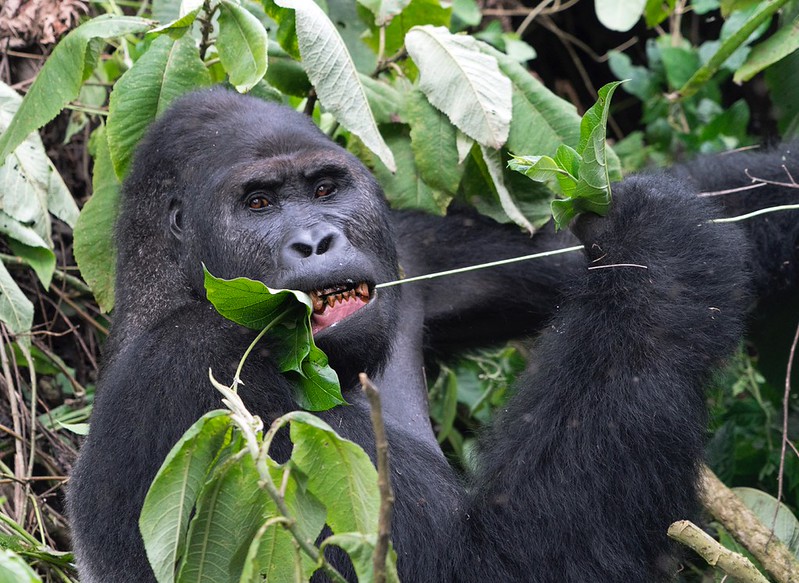
Eastern lowland gorillas represent the largest subspecies of gorillas, making them the largest primates currently inhabiting the planet. They exhibit similarities to mountain gorillas; however, there are distinctions that will be addressed subsequently. An adult male typically weighs approximately 210 kilograms, whereas females average around 100 kilograms. The Eastern lowland gorilla consumes a diet that includes stems, fruits, bark, leaves, and occasionally insects such as termites and ants. The Grauer’s gorilla, like all gorilla sub-species, exhibits sociable and peaceful behavior.
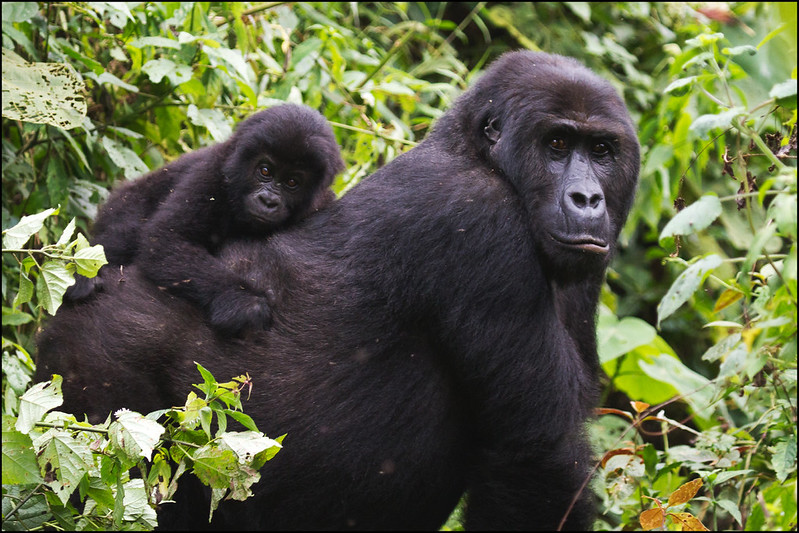
Within each group, there can be up to thirty gorillas. Each group consists of a dominant male, females, and younger individuals. Silverback gorillas safeguard all members of the group from potential threats. The initiation of gorilla breeding and reproduction occurs when the female reaches sexual maturity. Upon reaching maturity, younger males will depart from the group to establish their own families, having successfully attracted females from adjacent groups. Upon reaching maturity, females typically depart from their group to either integrate into other families or associate with a solitary silverback. The initiation of gorilla breeding and reproduction occurs when the female reaches estrous. A female gorilla typically gives birth after approximately nine months of gestation. The infant depends on breast milk for a duration of three years, after which the weaning process occurs. Eastern lowland gorillas reach maturity at 8 years for females and 12 years for males.
Comparison of Eastern Lowland Gorillas (Grauer’s Gorilla) and Mountain Gorillas
The majority of people have trouble telling the difference between a mountain gorilla and a Grauer’s gorilla. While they are all classified within the eastern gorilla species, distinct differences can be observed in their behavior and appearance.
Mountain gorillas typically inhabit higher altitude regions in contrast to Eastern lowland gorillas. Mountain Gorilla habitats include Volcanoes National Park in Rwanda, Bwindi Impenetrable National Park in Uganda, Mgahinga Gorilla Park in Uganda, and Virunga National Park in the Democratic Republic of Congo. As previously stated, Grauer’s gorillas are exclusively located in the Democratic Republic of Congo.
Mountain gorillas are smaller in size when compared to Eastern lowland gorillas. They possess shorter arms and jaws. The Eastern lowland gorilla is generally larger, yet it possesses smaller noses and teeth in comparison to mountain gorillas.
Mountain gorillas possess coats that are both thicker and longer in comparison to Grauer’s gorillas. The typical weight of an adult male mountain gorilla is approximately 195 kilograms, whereas a male eastern lowland gorilla averages around 210 kilograms.
Each gorilla species is typically led by a dominant silverback; however, it is more common for mountain gorilla groups to include additional silverbacks. In groups of Eastern lowland gorillas, it is common for there to be a single silverback that holds exclusive mating rights to all the females within the group.
Observations indicate that mountain gorillas tend to isolate themselves from the group when experiencing anger or irritation. The silverback emits a pronounced odor from his armpit as a signal of stress, indicating a need for solitude, while Observations of Eastern lowland gorillas have not indicated the presence of this behavior. As we will soon discover, the Grauer’s gorilla is the most endangered among the four gorilla sub-species. Because of the relative stability in Rwanda and Uganda, the total number of mountain gorillas is smaller but growing more quickly.
Grauer’s Gorilla – Challenges in their natural environment
Grauer’s gorilla (Gorilla beringei graueri) is classified as critically endangered by the International Union for Conservation of Nature (IUCN). The primates face a significant risk of extinction unless further efforts are undertaken to ensure their protection. The Eastern lowland gorilla, being the largest ape species globally, requires intensified protection efforts. The number of individuals in captivity is extremely small. If they were to become extinct in their natural habitats, their existence would be irrevocably lost.
In the early 1990s, the population of Eastern lowland gorillas was estimated to be approximately 17,000 individuals. It is estimated that approximately 3,500 eastern lowland gorillas remain in the wild. This figure is relatively low when considering the population of over 250,000 western lowland gorillas. The biggest threats to the Grauer’s gorilla include poaching, inbreeding, civil turmoil, and habitat damage from mining, forestry, and agriculture.
Eastern lowland gorillas are targeted by poachers due to the significant demand for their bush meat. Gorilla meat remains regarded as a unique delicacy among various communities, including miners, loggers, and individuals who have been affected by the civil war in the Eastern DR Congo. It is estimated that annually, approximately 250 eastern lowland gorillas are killed to meet the demand for meat among consumers.
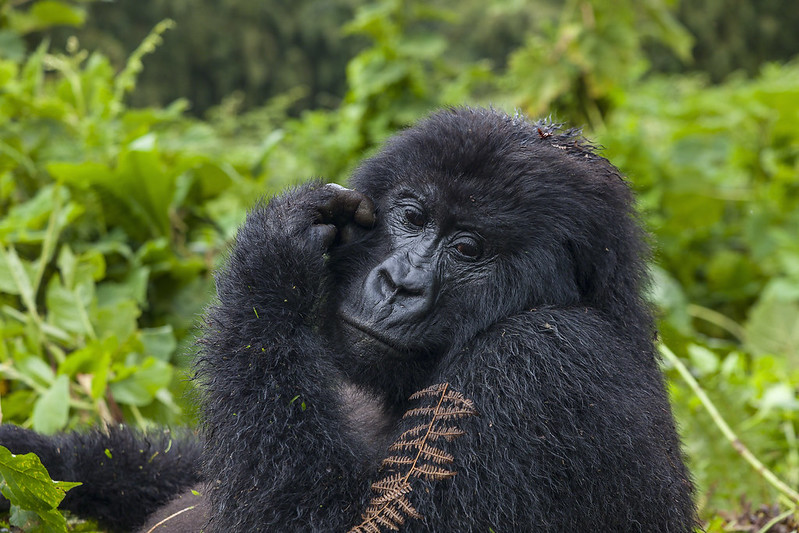
In addition to poaching for bush meat, civil unrest poses another significant threat to the gorillas. The presence of violence in regions adjacent to gorilla habitats complicates research and monitoring efforts. Implementing policies against poaching is particularly challenging in regions where government oversight is minimal or absent. Both rebels and refugees regard forests as places of refuge. To ensure their survival, they are compelled to hunt wild animals, including gorillas. Unauthorized logging activities are conducted by individuals for charcoal production and by companies lacking the necessary permits or rights. These companies frequently collaborate with militia groups for security, making it exceedingly difficult to halt their operations.
Finally, researchers have identified evidence of inbreeding within certain groups of eastern lowland gorillas. The observed lack of variation and diversity is believed to stem from limited individual migration levels. The researchers propose that breeding programs should be established in captivity to facilitate the reintroduction of primates into groups with diverse genetic backgrounds.
Conservation of the Eastern Lowland Gorilla
To address the challenges confronting Eastern lowland gorillas, various wildlife conservation organizations, including the Wildlife Conservation Society (WCS), International Gorilla Conservation Program, WWF, Fauna & Flora International (FFI), Dian Fossey Fund, and the German Development Agency, have taken steps to re-arm guards due to insufficient government funding for national parks and reserves. The guards participate in training and assist in enforcing laws that have been established to protect the primates. FFI has been engaged in Regomuki and Regolu, two community reserves that serve as habitats for Eastern Lowland gorillas. They provide training and resources for community rangers. Through the development of local capacity, the two reserves are able to carry out patrols and document the presence of gorilla families and other endangered species such as the Congo peafowl, chimpanzees, and okapi. Throughout these patrols, rangers systematically eliminate snares that pose a threat to the gorillas.
The Dian Fossey Fund commenced its work with Grauer’s gorillas in 2001. In 2012, they played a pivotal role in the establishment of the Nkuba Conservation area, which is home to approximately 200 gorillas. The organization collaborated effectively with local communities by engaging former hunters and enhancing their livelihoods, thereby reducing the likelihood of hunting primates. Community sensitization plays a crucial role in educating individuals residing near parks and reserves about the significance of safeguarding primates for future generations. The WWF has implemented various initiatives to safeguard the Grauer’s gorilla through its African Great Apes Programme. They are providing financial support and resources for anti-poaching patrols. Additionally, they have contributed to the development of a management structure and plan for the Itombwe Massif, adjacent to Kahuzi Biega National Park.
While the efforts of the aforementioned gorilla conservation agencies are commendable, it is crucial for peace to be restored in the eastern region of the Democratic Republic of Congo. This restoration will enable the government to enhance its involvement in the protection of various Grauer’s gorilla habitats. Immediate intervention by the government of Congo and wildlife agencies is necessary to halt illegal logging, poaching, and the destruction of gorilla habitats before it becomes irreversible.
In what ways can you assist? By refraining from the purchase of forest products that lack FSC certification. This initiative will contribute to the prevention of illegal logging and trade activities. You can further assist the efforts of the aforementioned organizations by visiting their websites individually and contributing through a donation. Visiting or contributing to the Grace Center for orphaned Grauer’s Gorillas is also an option. One additional method of supporting the conservation of Lowland gorillas is to observe them in their natural habitat. The trekking of eastern lowland gorillas in Kahuzi Biega has seen a rise in popularity, contributing to the attraction of additional funding essential for the park’s operations. Finally, after seeing them in the wild, helping to spread the message is essential.
Facts About Grauer’s gorillas
While Grauer’s gorillas continue to be known as eastern lowland gorillas, the updated terminology is now commonly adopted by conservationists and researchers in the field. The term Eastern lowland gorilla was assigned due to the fact that the majority of these primates inhabit lowland forest environments. Nevertheless, numerous groups were identified residing at high altitudes reaching up to 2900 meters. This altitude is characteristic of the habitat in which mountain gorillas are known to reside. As a result, it was determined that the name Eastern lowland gorilla was not sufficiently accurate.
While the Grauer’s gorilla may not be the rarest among gorilla sub-species, such as the Cross River and mountain gorillas, it is considered the most threatened. The population of Cross River gorillas is limited to just 350 individuals, residing in Nigeria and Cameroon. Despite their limited population in comparison to Grauer’s gorillas, both governments have exerted considerable effort to safeguard the remaining Cross River gorillas. Currently, there are 1,000 mountain gorillas remaining globally. These animals are under strict protection and receive significant attention from tourists who have the opportunity to observe them with relative ease. The situation is different for the Eastern lowland gorillas in the Democratic Republic of Congo. The overall population may exceed that of both Cross River and Mountain gorillas; however, they encounter more significant challenges to their survival. Their population is on the decline, whereas that of mountain gorillas is experiencing growth. The Grauer’s gorilla is at risk of extinction if more robust measures are not implemented to address the challenges previously outlined.