The western lowland gorillas represents the most abundant and widely distributed subspecies among gorillas. Populations are present in Cameroon, the Central African Republic, Equatorial Guinea, Gabon, and the Republic of Congo, with potential remnant populations in the Democratic Republic of the Congo. The precise population of western lowland gorillas remains undetermined due to their residence in some of the densest and most secluded rainforests in Africa. Nonetheless, considerable populations continue to thrive, particularly in the isolated swampy forests of the Republic of Congo.
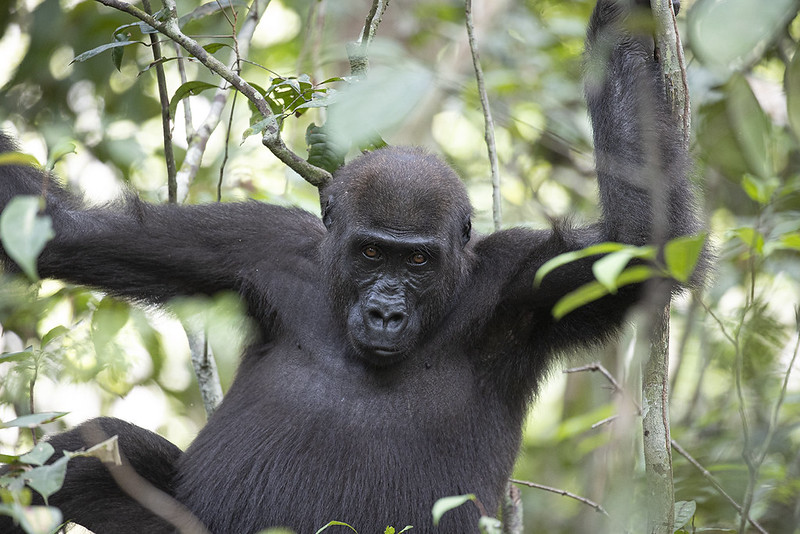
Western lowland gorillas are identifiable from other gorilla subspecies by their relatively smaller size, distinctive brown-grey coats, and auburn chests. Their skulls exhibit a broader structure with more prominent brow ridges and comparatively smaller ears. The substantial population of the western lowland gorilla has not safeguarded it from experiencing a decline. The gorilla population has experienced a decline of over 60% in the past 20 to 25 years due to poaching and disease. Even if all threats to western lowland gorillas were eliminated, scientists estimate that the population would need approximately 75 years to recover.
Challenges facing western lowland gorillas
Disease
Central Africa is inhabited by both gorillas and the lethal Ebola virus. Massive gorilla and chimpanzee deaths have been brought on by Ebola in the isolated forests that are essential to the primates’ ranges. Some scientists estimate that it has resulted in the death of approximately one-third of the wild gorilla population in the early 2000s. The impact has been particularly severe in certain regions, including the Minkébé Forest in northeastern Gabon—previously regarded as home to one of the most significant populations—where the virus is estimated to have resulted in the deaths of over 90% of the local gorillas and chimpanzees.
Loss of habitat – Western lowland Gorillas
Approximately 22% of western lowland gorillas reside within protected areas, indicating that the majority of these gorillas remain unprotected and are significantly at risk from poachers. Significant portions of gorilla forest have been fragmented due to selective commercial logging, road construction, and the expansion of human settlements.
A significant correlation exists between habitat loss and the bushmeat trade. As more and more forests are cleared for logging and other commercial purposes, commercial hunters are able to penetrate gorilla habitats. They then use logging vehicles to transport bushmeat to distant markets and even sell it to logging company employees.
Illegal hunting/Poaching
Despite being prohibited, gorillas are still hunted and killed for bushmeat or when young gorillas are captured for personal use. Due to the opening of previously isolated forest areas by timber and other businesses, poaching and the bushmeat trade are now easier. Poaching poses significant risks to humans, as the butchering and handling of gorilla and other primate meat may facilitate the spread of Ebola.
WWF’s initiatives to safeguard western lowland gorillas
Addressing the ebola outbreak
The Ebola virus poses a significant threat across a substantial portion of the western lowland gorilla’s habitat. The WWF endorses initiatives aimed at enhancing antipoaching measures and promoting awareness regarding the risks associated with consuming bushmeat. Furthermore, WWF operates multiple locations where they conduct monitoring of gorillas and other wildlife to detect the presence of pathogens such as Ebola and anthrax. WWF plays a direct role in advancing research and prevention efforts related to Ebola.
Advancing ecotourism For Western Lowland Gorillas
WWF has played a significant role in fostering tourism opportunities in Campo Ma’an National Park in Cameroon, the Dzanga-Sangha Protected Areas in the Central African Republic, and has explored potential in locations such as Loango and Moukalaba-Doudou National Parks in Gabon. Tourism creates substantial local employment opportunities in often remote regions where alternative options are limited, all while contributing to the conservation of gorilla populations.
Since their establishment in 1990, WWF has co-managed the Dzanga-Sangha Protected Areas and has operated a Primate Habituation Program since 1997, focusing on the habituation of western lowland gorillas for both tourism and research purposes. It serves an essential function in the park’s management strategy by producing considerable revenue and reinforcing the important connection with the community.
These programs enable tourists to observe western lowland gorillas, while simultaneously providing local communities with advantages through initiatives focused on rural development and the sustainable use of natural resources. The annual revenue generated from gorilla tourism plays a crucial role in financing conservation efforts and park management, in addition to supporting local and national economies. Dzanga-Sangha employs more than 260 individuals, primarily from local communities, including a significant number of Indigenous BaAka, positioning it as one of the largest employers in the Central African Republic.
Advancing sustainable development
Inappropriate logging techniques, commercial hunting and fishing, along with oil and gas development, pose significant threats to the western lowland gorilla throughout its habitat. WWF and its partners are actively engaged in establishing a network of protected areas throughout the Congo Basin while advocating for the development of logging and mining industries that are managed in an environmentally and socially responsible manner.
Safeguarding the Congo Basin requires collaboration with local communities and Indigenous Peoples who rely on the forest for their livelihoods and act as its guardians and protectors. They collaborate with farmers to implement new crop varieties and innovative cultivation techniques; support local women in enhancing their livelihoods through sustainable farming and various programs; and promote gorilla-based tourism that safeguards national parks while benefiting local communities.
Halting poaching and the illicit wildlife trade.
WWF encourages countries to enhance the enforcement of wildlife regulations and to increase awareness in local communities regarding the risks associated with consuming bushmeat. Furthermore, WWF has equipped local wildlife authorities with training in contemporary antipoaching techniques and gorilla monitoring, as well as supplied necessary equipment and resources for antipoaching teams across multiple countries.
For instance, the eco-guards in Dzanga-Sangha have successfully removed more than 850,000 traps from the forest since the establishment of the protected area in 1990, in addition to confiscating over 3,000 firearms and 30,000 rounds of ammunition. The remarkable outcomes and the dedication of the antipoaching teams have greatly enhanced the safety of the gorillas.
The antipoaching initiatives in Dzanga-Sangha Protected Areas have resulted in thriving populations of gorillas and other species, such as forest elephants.
Gorillas of Dzanga-Sangha
The Dzanga-Sangha Protected Areas in the Central African Republic represent one of the limited locations where western lowland gorillas can be observed in their natural habitat. The opportunities for gorilla viewing are quite rare, primarily due to the extensive process of careful and patient tracking that can take three or more years to habituate the animals to human presence.
For years, Chloe Cippoletta led the Dzanga-Sangha habituation field staff. “The follow and habituation of gorillas in Dzanga-Sangha would not have been possible without the extensive knowledge of the BaAka trackers, who are the real backbone of the WWF program,”
WWF has consistently collaborated with local BaAka trackers as part of the habituation program, leveraging their expertise in their forest homeland and their skill in locating gorillas, even when evidence of the animals is scarce. The financial contributions from tourism play a crucial role in the conservation of forests and gorillas in this area. 40% of the revenue generated from park entry fees at Dzanga Sangha is allocated to initiatives within the local community that foster rural development and sustainable use of the environment.