The 10 days Uganda gorilla safari itinerary provides exceptional experiences, including gorilla tracking, tree-climbing lions resting in the treetops, chimpanzee trekking, and Big Five(encounters).
This detailed 10 days Uganda gorilla safari Itinerary includes Ziwa Rhino Sanctuary, Murchison Falls National Park, Kibale Forest National Park, Queen Elizabeth National Park, Bwindi Impenetrable National Park, and Lake Bunyonyi
Highlights of the 10-Days Uganda Gorilla Itinerary
Day 1: Entebbe and Kampala
Day 2: Ziwa Rhino Sanctuary
Day 3: Murchison Falls National Park
Day 4: Travel to Kibale (Bigodi Swamp Excursion)
Day 5: Chimpanzee Tracking in Kibale National Park
Day 6: Queen Elizabeth National Park
Day 7: Journey to Bwindi Impenetrable Forest
Day 8: Gorilla trekking in Bwindi Impenetrable Forest
Day 9: Lake Bunyonyi
Day 10: Return to Entebbe with Equator Visit
10 Days Uganda Gorilla Safari to Murchison Falls, Queen Elizabeth, Bwindi , Kibale & Lake Bunyonyi
Day 1: Entebbe and Kampala
Your 10-day Uganda Gorilla Safari, commences upon your arrival at Entebbe International Airport, the principal international airport in the country. It is located roughly 40 kilometers (25 miles) from Kampala, the capital city.
You may want to commence your safari itinerary immediately or, for a more leisurely experience, arrive one or two days prior. This will provide you with more time to adapt to the relaxed atmosphere of Africa, and you will have the opportunity to tour Entebbe and Kampala.
Your safari driver and tour guide will await your arrival at the airport to transport you to your lodge, either in Entebbe or the vibrant city of Kampala.
Based on your arrival time, you may have the opportunity to tour Entebbe and Kampala, or you can choose to unwind at your resort and alleviate fatigue from your lengthy travel.
Kampala Overview
Kampala, with a population nearing two million, is Uganda’s largest city and serves as the nation’s financial and economic center. Kampala is located on a succession of undulating hills overlooking Lake Victoria, and its name originates from the abundant impala that formerly inhabited the area.
Kampala, a historic city with a history dating to the 14th century, is now a vibrant amalgamation of cultures. The city is adorned with historical and cultural landmarks from various periods: the Rubaga Cathedral, constructed in 1929, is located just 5 km from the Ugandan National Mosque, which was built in the 1970s in a postmodern Islamic architectural style.
The vibrant streets are bustling with activity; although navigating might be challenging due to heavy traffic and a significant lack of street names, there is a palpable sense of vitality and dynamism throughout.
About Entebbe
Located on the northwestern shore of Lake Victoria, Africa’s largest lake, Entebbe is a charming old colonial town that previously served as the capital of Uganda. This location, with a population of fewer than 100,000 inhabitants, offers a significantly more tranquil commencement for your safari compared to Kampala.
Entebbe extends along a narrow peninsula into Lake Victoria, and despite numerous new developments, it has preserved its colonial allure. At the center of the local golf course is a cricket oval, a remnant from the era when Uganda was a British colony.
The scenic Lake Victoria enhances the town’s allure. Lake Victoria offers a multitude of tours, excursions, watersports, and other leisurely activities, rendering it an optimal location to commence and conclude your safari experience in Uganda.
Activities in Entebbe
Entebbe serves as an ideal base for tourists to Uganda, and although your stay is often limited to one day, there are some intriguing activities to pursue if time permits.
Entebbe Botanical Gardens
Located at the periphery of Lake Victoria, within a short drive from the airport, the Entebbe Botanical Gardens is a noteworthy destination deserving of many hours’ exploration. It is an excellent location to alleviate your jetlag through a serene picnic or a leisurely walk along the pathways and lakeshore.
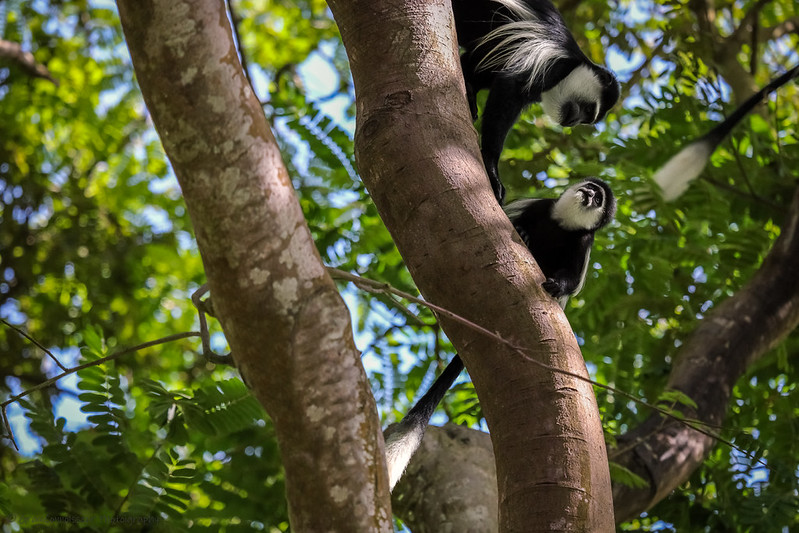
The gardens, spanning less than half a square km, have a diverse array of exotic and native trees, shrubs, tropical plants, and flowers. The gardens also host several bird species and monkeys.
Dine at the Rooftop Restaurant of K Hotel
K Hotel’s Rooftop Restaurant has established itself as the premier eating establishment in the vicinity, and the reasons are apparent. The restaurant offers exceptional traditional Ugandan cuisine and boasts the finest view in the city.
Activities in Kampala
Kampala serves as an excellent starting point for your journey if you seek an experience of vibrant African urban life prior to venturing into the wilderness.
Artisan Markets in Kampala
A visit to Kampala is incomplete without exploring one or more of the city’s craft markets. Exploring the markets is an excellent method to acclimate to the culture, sample local cuisine, and purchase handmade products and souvenirs.
Situated in the city center, the Owino Market accommodates approximately 50,000 vendors, rendering it the largest street market in Africa. This location offers a wide array of products, ranging from consumable grasshoppers to luxury designer apparel, accessories, and footwear featuring prominent brand names.
A little walk will lead you to the Nakasero Market, a vibrant location where a wide array of goods is available for purchase.
Numerous smaller markets are dispersed throughout the city, offering specialized things such as fabrics, jewelry, traditional ornaments, paintings, beading, wood carvings, and different distinctive presents.
Be vigilant for pickpockets and minor thieves who may be active amidst the commotion.
Explore the Uganda Museum in Kampala.
The Uganda Museum is the premier destination for understanding Uganda’s history and culture. This museum, established in 1908, is situated approximately 5 km (3 miles) north of the city center and is the oldest in East Africa.
The several galleries display tens of thousands of artifacts of anthropological, ethnographic, paleontological, and cultural significance. These encompass musical instruments, traditional utensils and attire, weaponry, leathercraft, and ornamental things.
The paleontological department is renowned for its exhibition of a fossilized skull of Proconsul, an early ape that existed approximately 20 million years ago and provides scientists with significant insights into primate evolution.
Adjacent to the museum, there exists a cultural village featuring huts that illustrate the traditional lifestyles of Uganda’s diverse regions. Furthermore, the museum edifice constitutes a historical landmark in its own right.
Guidelines for Exploring Entebbe and Kampala
Traversing Entebbe and Kampala constitutes a notable adventure. The roads are typically congested, and the traffic may be fairly daunting; however, employing our local driver facilitates relaxation and enhances the enjoyment of your journey.
In any bustling metropolis, it is prudent to remain vigilant regarding your possessions, refrain from exhibiting valuables, and exercise heightened caution after dusk.
It is advisable for all travelers to dress modestly. It is courteous to dress modestly, covering from the neck to below the knee, including the shoulders, and women may consider bringing a headscarf for trips to specific locations.
It is advisable to withdraw Ugandan Shillings (UGX) when in Entebbe or Kampala, as ATMs are scarce in the more rural regions you intend to visit.
Day 2: Ziwa Rhino Sanctuary
The driving duration is 3.5 hours to Ziwa Rhino Sanctuary and 3 hours to Murchison Falls National Park.
Today marks the commencement of Day 2 of the 10-day Uganda safari itinerary. You will leave early in the morning to reach Ziwa Rhino Sanctuary, located 176 kilometers (110 miles) north of Kampala. This is the sole habitat of the only rhinos in Uganda, therefore maximize your experience here.
The rhinoceroses at Ziwa are white rhinoceroses. The term “white” derives from the German word “weit,” signifying wide, which pertains to their expansive lips suited for grazing.
Ziwa Rhino Sanctuary
Upon your arrival to Ziwa, you will embark on foot to witness one of the most endangered animals globally. Rhinos are protected species in Uganda due to extensive poaching and are not observable in their natural habitat. You will have a walking safari with these gentle giants, and given that the sanctuary is merely 70 km² (27 mi²), you are assured of encountering numerous rhinos.
Following your time with the rhinos, you will continue your journey for many hours to Murchison Falls. Near the conclusion of the drive, you will exit your vehicle to observe the falls. Experiencing the mist is an excellent method to refresh oneself after a day of activity.
You will spend the night near Murchison Falls after experiencing a wonderful game drive along the way.
About Ziwa Rhino Sanctuary
Ziwa Rhino Sanctuary was founded in 2005 to reintroduce rhinoceroses to Uganda following their disappearance in the wild. The sanctuary has successfully bred rhinos, resulting in a consistent increase in their population throughout the years.
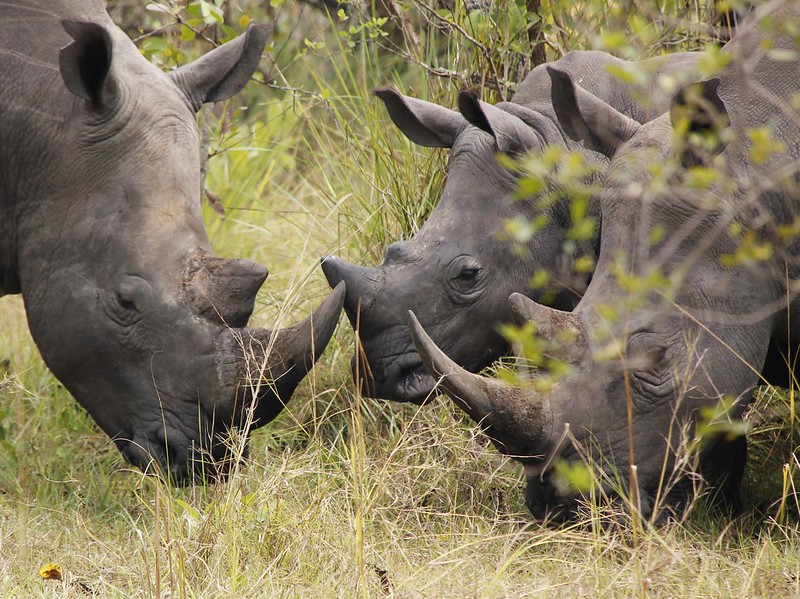
The Ziwa Rhino Sanctuary terrain comprises a combination of wide savannah, dense woods, and wetlands, offering ideal habitats for rhinos as well as about 40 other species of mammals and reptiles residing in the park. This area lacks significant predators, nevertheless you will encounter giraffes, zebras, hippos, crocodiles, hartebeest, numerous antelope species, monkeys, and more than 300 bird species.
The rhinoceroses are continuously protected by a contingent of armed rangers and security personnel, in addition to a 2-meter (6.6-foot) high electric fence.
Initially, they possessed only 6 animals, comprising 4 imported from Kenya and 2 from Disney’s Animal Kingdom in Florida.
The population has already exceeded 50 rhinos, with plans to rewild them in several national parks of Uganda—a process anticipated to commence shortly.
This refuge provides an extensive array of safaris including rhino tracking. Activities encompass canoe excursions to observe shoebill storks and various aquatic avifauna, nature treks, nocturnal walks, and birdwatching safaris.
Guidelines for Visiting Ziwa Rhino Sanctuary
Don lightweight attire in neutral, earthy tones and a comfy pair of hiking footwear.
Sunglasses, sunscreen, and hats are important across Africa, particularly while traversing open areas on foot.
The optimal periods for observing the animals are in the early morning (8–10 am) and late afternoon (4–6 pm), when the rhinos exhibit heightened activity.
Accommodation Options
You will reach your resort or tented camp adjacent to Murchison Falls National Park in time for dinner, followed by a restful night. We advise remaining north of the Nile River, as this region harbors the majority of animals.
Although residing within the park would be most advantageous, there are only a limited number of lodges in the Northern Region of the park.
Due to the elevated temperatures in this region, it is advisable to select lodging equipped with air conditioning. We advise opting for a lodge instead than a tented camp or campsite, as the latter lacks air conditioning.
Day 3: Murchison Falls National Park
Travel Duration (Excluding Game Drives): 0 hours
After observing rhinos, Murchison Falls National Park offers the opportunity to encounter the remaining four members of Africa’s Big Five, along with a variety of other intriguing creatures, reptiles, and birds.
The park is bifurcated by the formidable Victoria Nile River. The river offers premier game viewing locations in Uganda and features striking landscapes as it meanders through the bush toward Lake Albert in the west.
Travel Itinerary
Today, you will have a morning game drive through the park, succeeded by an extraordinary boat excursion on the Nile River.
During your game drive, you will navigate many environments, including expansive grasslands, deep woodlands, and riverine forests. Collectively, these varied ecosystems host an astonishing array of organisms.
The fauna includes lions, leopards, elephants, buffalo, giraffes, warthogs, hyenas, chimpanzees, baboons, black and white colobus monkeys, and red-tailed monkeys. Herds of hartebeest, Uganda kob, and numerous other antelope species will also be encountered.
The day’s pinnacle may occur upon your arrival at the banks of the world’s longest river, the Nile, where you will hear the thunderous roar of the magnificent Murchison Falls before witnessing them.
The afternoon riverboat excursion provides an opportunity to navigate the water while observing waterfalls descending from above. Pods of hippos may be observed wallowing in the shallows, while crocodiles navigate the channels or lie motionless along the banks.
With more than 500 avian species documented along the river, ornithologists will find themselves in their element. Notable species to observe include the goliath heron, fish eagles, crested cranes, blue-headed coucal, kingfishers, Abyssinian ground hornbills, saddle-billed stork, and the exceedingly uncommon, prehistoric shoebill stork. This figure derives its name from its bill, which is purported to resemble a Dutch clog. Dock for the Nile River boat excursion near Murchison Falls, Uganda
Murchison Falls National Park Overview
Murchison Falls National Park, encompassing an area of 3,840 km² (1,483 mi²), is the largest reserve in Uganda. The northern section is traversed by the Nile River, which flows westward and has formed over 80 kilometers (50 miles) of swift rapids, including the formidable Murchison Falls.
The tumultuous waves cascade down a narrow rocky cleft measuring 8 meters (26 feet) in height, before descending 45 meters (148 feet) into a profound pool, generating clouds of mist and spray. The falls produce a thunderous boom audible from several miles away.
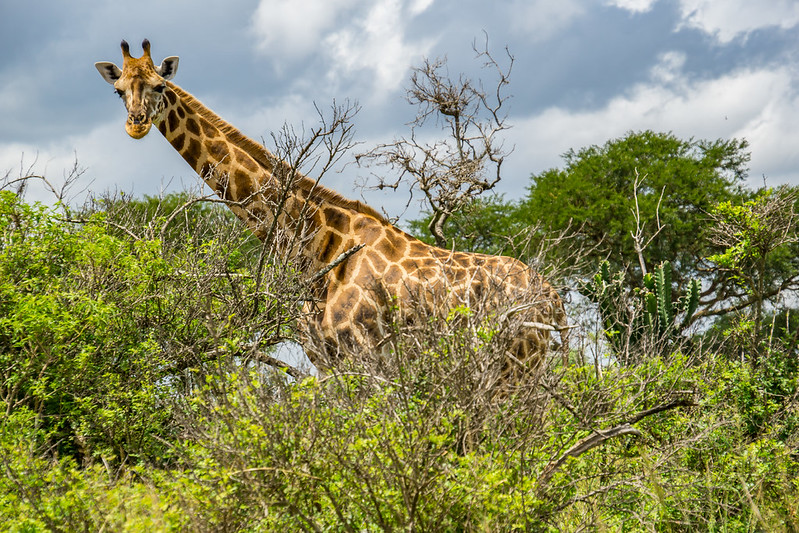
The waters persistently run robustly before expanding into a tranquil lagoon and then discharging into Lake Albert. From this point, it is designated as the White Nile, meandering northward through central and northern Africa, traversing Sudan and Egypt, until ultimately arriving at the Mediterranean Sea. The river, referred to as the Nile from Khartoum, Sudan, onward, is steeped in history and sustains millions of individuals and wildlife throughout its course.
In addition to wildlife drives, Murchison Falls National Park provides a diverse array of activities. Activities encompass white water rafting, trekking to the summit of the falls, ziplining, a canopy walk, fishing for gigantic Nile perch, hot-air balloon excursions, and bird-watching, especially in the Albert Delta.
Guidelines for Exploring Murchison Falls National Park
- The optimal times to visit the reserve are early morning and late afternoon, as these periods coincide with heightened activity among wildlife, particularly the big cats.
- Avoid wearing bright colors on safari to prevent attracting the attention of animals. Adhere to natural, earthy hues to harmonize with the environment.
- The optimal period to visit the northern areas of Uganda is during the dry season (December to February) when the routes are arid and navigable. In contrast to the southern region, the remainder of the year is predominantly rainy, leading to potential flooding of roads and trails, but precipitation does not occur daily.
- The dry season coincides with the hottest period of the year. Murchison Falls is situated at a low height, making it the warmest region in Uganda. Consider this when evaluating your hotel choices, as air conditioning will enhance comfort during oppressive nights.
- Bring a waterproof item like a disposable poncho for your excursion to the falls, as you are sure to become wet.
- Numerous tsetse flies inhabit this area; thus, avoid wearing dark attire and ensure the application of insect repellent.
Accommodation Options
Following your afternoon boat excursion, you will overnight at the same resort or tented camp as the previous night.
Day 4: Expedition to Kibale (Bigodi Swamp Excursion)
Travel Duration (Excluding Game Drives): 5-7 hours
Today, you will travel south to Kibale National Park, renowned for possessing the highest diversity of primate species in Africa. The primary subjects are the intriguing chimpanzees.
Travel Itinerary of Kibale Forest national Park
Following breakfast, you will embark on a lengthy journey lasting roughly 5 hours. You will traverse the scenic African countryside, characterized by rural settlements and agricultural regions, before reaching your resort or tented camp located adjacent to Kibale Forest National Park.
Upon arrival, you will embark on a guided walking tour of the Bigodi Swamp, a picturesque region within the rainforest abundant with wildlife. A diverse array of monkeys and birds can be observed, and, if fortunate, forest elephants may also be encountered. This expedition into the marshes of Bigodi will provide a clear preview of your forthcoming chimp tracking adventure in the morning.
Concerning Bigodi Swamp
Bigodi Swamp is predominantly a wetland rather than an open water swamp. The flora present here comprises thick, dense foliage, trees, and towering papyrus reeds that exceed head height. Meandering paths and rudimentary boardwalks across the marsh, facilitating exploration of an otherwise inundated area. Your 2-3 hour walk will be characterized by elevated temperatures, high humidity, and considerable exertion.
Despite its relatively tiny size of less than 4 km² (1.5 mi²), there is a plethora of primate species to observe. This list include red and black-and-white colobus monkeys, red-tailed monkeys, olive baboons, grey-cheeked mangabeys, L’Hoest monkeys, and vervet monkeys. Chimpanzees periodically frequent the wetland as well. Additional fauna inhabiting this region including otters, bush pigs, mongooses, and, naturally, avian species.
This marsh serves as a sanctuary for avian species, drawing around 200 varieties. Guides possess an extraordinary ability to identify birds and will highlight them as you navigate the thickly wooded, swampy landscape. In addition to prevalent waterfowl such as pied kingfishers, cranes, parrots, hornbills, and woodpeckers, one may also observe uncommon species such the vividly hued papyrus gonolek, blue kingfisher, yellow-billed barbet, and great blue turaco.
Guidelines for Exploring Bigodi Swamp
We advise wearing long trousers since you will be navigating through deep woodland undergrowth.
A rain jacket, quality hiking shoes, or even waterproof boots will be beneficial due to the numerous muddy areas.
Bring a bottle of drinking water, as the hike can be strenuous and the humidity is considerable.
An effective set of binoculars will facilitate the observation of birds within dense forest vegetation.
Despite Bigodi Swamp being perpetually saturated, the optimal periods for visitation are the dry seasons of December to February and June to July, when mud is minimized and the trails are more navigable.
Accommodation Options
Following your remarkable swamp trek, you will return to your lodge or tented camp located just outside Kibale National Park, where you will spend the night.
Day 5: Chimpanzee Observation (Kibale National Park)
Travel Duration (Excluding Game Drives): 30 minutes
This morning, you will commence another guided excursion into Kibale National Park, renowned as one of the premier chimpanzee tracking destinations globally.
Travel Itinerary
Following an early breakfast, you will embark on your inaugural chimpanzee trek on foot. The walk will last roughly 2 to 3 hours, contingent upon the location of the chimps. Your guide will escort you through the forest, aiming to locate a troop promptly (it took me nearly two hours) and allowing you to see them for at least an hour as they navigate the trees and engage with one another.
Your guide will impart their extensive knowledge of the diverse flora of the forest, encompassing around 350 tree species and their respective roles within this complex ecosystem.
You will return to your accommodation to enjoy lunch. Subsequently, you may either spend the afternoon recuperating or visit the little city of Fort Portal, located on the northwestern periphery of the park.
About Chimpanzee Trekking in Kibale National Park
Kibale National Park encompasses an area of 795 km² (307 mi²), with a vital corridor utilized by several wildlife migrating between the southern section of Queen Elizabeth National Park and the northern region of Kibale.
This verdant tropical forest, frequently referred to as the “primate capital of the world,” harbors Uganda’s largest population of chimpanzees, over 1,500 individuals, alongside a remarkable variety of other wildlife.
Kibale is renowned for chimpanzee trekking, and the Uganda Wildlife Authority has implemented a system to control ecotourism in the park, ensuring that the chimpanzees are not bothered or excessively disrupted by human activity. The standard chimpanzee trekking experience, which involves traversing the jungle to observe a troop of chimpanzees, typically lasts 2-3 hours and occurs twice daily, at 8 AM and 2 PM.
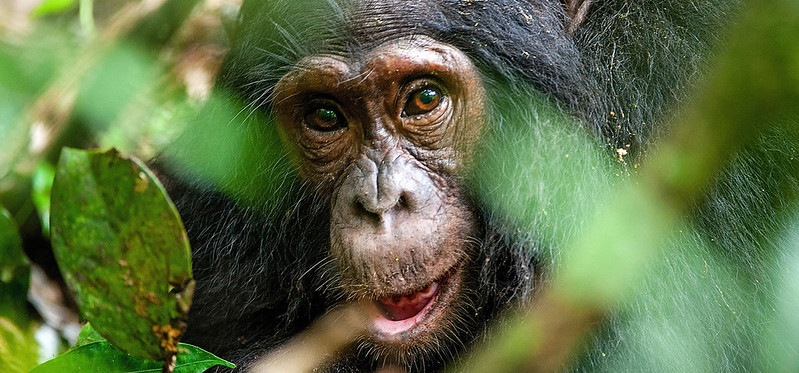
Small groups of 6-8 people are escorted through the park by informed local guides and a duo of armed rangers. The rangers are present solely as a precaution against potentially hazardous interactions with some of the park’s more irritable inhabitants, including buffaloes and elephants.
While traversing the forest, you will attune your ears to chimpanzee vocalizations and search for indicators such as nests or feeding locations, frequently affording you the opportunity to observe these remarkable creatures intimately as they forage, groom, engage in play, and navigate the canopy.
Although chimpanzees are unpredictable in their activities, sightings during these excursions are quite probable, with success rates exceeding 90%.
About Chimpanzee Habituation
An alternative is the chimp habituation experience, which allows participants to spend four hours with unhabituated chimpanzees to facilitate their acclimatization to humans. This commences at 6 AM daily, with groups limited to a maximum of four individuals.
In addition to chimpanzees, one may encounter other intriguing species on your stroll, including red colobus monkeys, L’Hoest’s monkeys, mangabeys, forest elephants, and a diverse array of birds.
Similar to the Bigode Swamp, Kibale is an avian enthusiast’s haven. It hosts more than 370 documented species, including 6 species exclusive to this woodland.
It is claimed that leopards inhabit this area, however sightings are exceedingly uncommon.
Guidelines for Visiting Kibale National Park
Similar to Bigodi, the woodland becomes quite warm and humid. Ensure you own a enough supply of potable water.
A quality, comfortable pair of hiking boots, loose, neutral-colored attire, sunscreen, insect repellent, and binoculars will also prove beneficial.
Heed your guide’s counsel and maintain silence to avoid disturbing the wildlife. Chimpanzees are inherently playful beings; but, they may exhibit aggression when provoked or perceiving a threat.
The landscape may be muddy and irregular, hence possessing a moderate level of fitness is advantageous.
Contemplate employing a porter for your expedition. Although you may consider it superfluous, employing a porter contributes significantly to the income of local communities. This benefits the town, as increased employment from tourists incentivizes the preservation of the forest. A porter charges $20, and it is advisable to provide a gratuity for their efforts, typically around $5, or approximately 19,000 UGX.
Accommodation Options
At the conclusion of the day’s activities, you will return to your lodge adjacent to the park, where you will spend the night once more.
Day 6: Queen Elizabeth National Park
Travel Duration (Excluding Game Drives): 3 hours
Today, you go on a three-hour journey southward to Uganda’s most frequented reserve, the renowned Queen Elizabeth National Park, which serves as the official headquarters for one of Africa’s rarest phenomena, tree-climbing lions.
In addition to hosting four of the Big Five, Queen Elizabeth National Park provides a wealth of species and landscape diversity. A notable feature is the esteemed Kazinga Channel, a 30 km (20 mi) waterway linking Lake Edward and Lake George, inhabited by substantial numbers of hippos, large crocodiles, and a diverse range of avian species.
Travel Itinerary
Following breakfast in Kibale Forest National Park, you will commence a picturesque journey to Queen Elizabeth National Park. You will arrive precisely for lunch, which will be succeeded by an afternoon game drive.
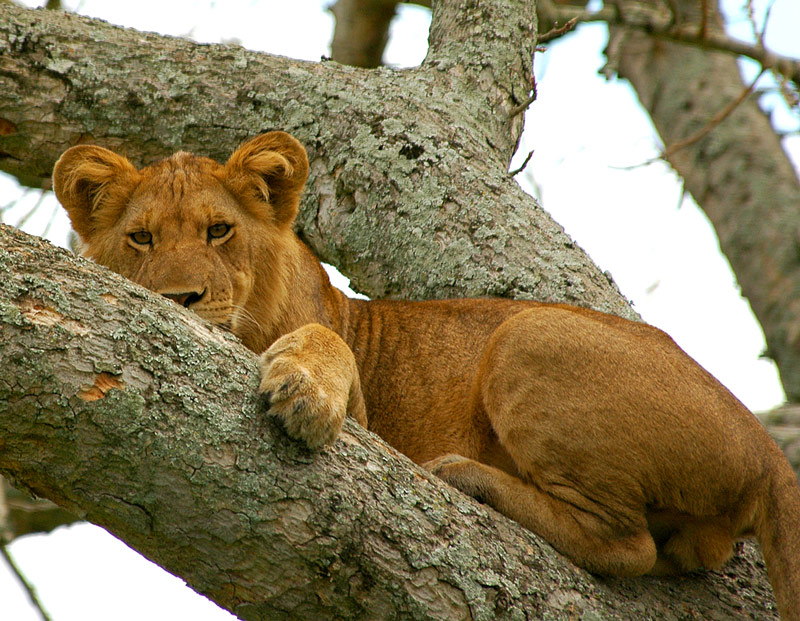
Your game drive is expected to be eventful, as the park hosts a remarkable diversity and high density of animal species. Lions, leopards, elephants, and buffaloes are frequently observed, along with hyenas, warthogs, waterbuck, impalas, the native Uganda kob, and numerous other antelope and primate species.
About Queen Elizabeth National Park
Queen Elizabeth National Park is situated at the base of the frequently snow-capped Rwenzori Mountains and surrounded by Lake Edward to the west, with an area of 1,978 km² (764 mi²). The landscape features expansive savannahs, undulating green hills and valleys, lush woodlands, pristine lakes, and marshy wetlands.
In addition to its abundant fauna and scenic vistas, this park is renowned for its volcanic characteristics, with towering cones, profound craters, and crater lakes that serve as the primary source of salt for the local population. This picturesque park merits a visit solely for its aesthetic appeal.
Surrounding the park’s boundaries are several lodges and tented camps that provide luxury, all-inclusive accommodations as well as self-catering alternatives.
The landscape along the southern boundary of the park features vast savannahs and undulating green hills and valleys. The terrain is adorned with colossal ficus and acacia trees, offering optimal resting locations for the tree-climbing lions. Although lions are sporadically observed climbing trees in other regions of Africa, they engage in this behavior consistently here. It is not uncommon to observe an entire pride reclining on one of these colossal trees.
The prevailing idea regarding the exceptional climbing abilities of lions in this region is that they ascend trees primarily to evade insects, seek respite from heat, and attain an enhanced vantage point of their environment. This conduct is also partially acquired inside particular prides.
Guidelines for Exploring Queen Elizabeth National Park
Queen Elizabeth National Park is accessible year-round; however, the optimal visiting periods are during the dry seasons, specifically from June to September and December to February. Although you may encounter some rain during these months, the roads and trails are significantly more accessible. The short grasses indicate optimal circumstances for game watching. The sole disadvantage is that this coincides with the peak tourist season. Lodges and parks experience peak visitation and elevated prices.
This region experiences the majority of its precipitation throughout the extended wet season from March to May, making it advisable to avoid due to frequent flooding. During this period, roads and routes frequently become inaccessible, and certain lodges and campgrounds may close entirely. Photographers will appreciate the striking skies produced by the storms.
The optimal periods for game drives are early mornings and late afternoons, when wildlife is typically more active and visible. In the midday hours, the majority of animals conceal themselves behind the thick underbrush and vegetation of the forests, rendering them challenging to observe. They reemerge in the evenings when temperatures start to decline.
For a comprehensive visit to Queen Elizabeth, we suggest spending one night in the northern sector and another night in the southern Ishasha area.
Day 7: Journey to Bwindi Impenetrable Forest
Travel Duration (Excluding Game Drives): 3-9 hours, contingent upon the specific region of Bwindi being visited.
This morning, you will embark southward on a picturesque trip to the Ishasha region of Queen Elizabeth National Park. This will be succeeded by another journey, this time to Bwindi Impenetrable Forest National Park, renowned for its substantial population of mountain gorillas.
Travel Itinerary
Following breakfast, you will embark on an extensive yet picturesque drive through the park, observing the wildlife and magnificent landscapes as you traverse the Kigezi Game Reserve and near the Ishasha area. This remarkable journey transports you from A to B; nonetheless, it is undeniably an exceptional gaming drive in its own right.
The Ishasha sector is the premier location within Queen Elizabeth Park to observe its renowned tree-climbing lions. This region is located in the southernmost section of the park, adjacent to Uganda’s border with the Democratic Republic of the Congo.
Certain male lions in the Ishasha area had long black manes akin to their distant relatives in the Kalahari region of Botswana, enhancing their regal and formidable presence.
Additional fauna you may observe in this area includes leopards, elephants, and herds of several antelope species, notably the Uganda kob, which are the preferred prey of the large felines.
After your journey through Ishasha, you will go to Bwindi Impenetrable Forest. The park comprises four distinct sectors: Buhoma (Central), Rushaga (Southwest), Nkuringo (South), and Ruhija (Northeast). The duration of your journey will vary depending on the sector designated for your gorilla trekking excursion. Buhoma is nearest to Ishasha, while Rushaga is the farthest distant.
Adult male silverback gorilla in Bwindi Impenetrable Forest, Uganda
Adult male silverback gorilla in Bwindi Impenetrable Forest, Uganda
About Bwindi Impenetrable Forest
Bwindi Impenetrable Forest National Park is the premier location for gorilla trekking in Uganda and houses about fifty percent of the global population of mountain gorillas.
Bwindi, a relatively small park, is located in the south-western corner of Uganda, adjacent to the Democratic Republic of Congo to the west and Rwanda to the south. This region encompasses 331 km² (128 mi²) of lush, hilly woods, providing an optimal home for mountain gorillas and other primates.
Gorillas, like with other primates, exhibit strong social behaviors and often inhabit in groups or families (troops) that may consist of up to 30 people; however, the majority of mountain gorilla groups in Bwindi Impenetrable National Park generally have between 10 to 12 members. Bwindi presently accommodates approximately 18 habituated gorilla groups.
Mountain gorillas vary from lowland gorillas in their rarity, darker fur, and significantly larger stature, with males being double the size of females. As males reach maturity, the hair on their backs transitions to a silvery grey, resulting in the designation ‘silverbacks’. It is estimated that over 100,000 lowland gorillas inhabit the wild across various African nations, whereas the total population of mountain gorillas is estimated to exceed 1,000.
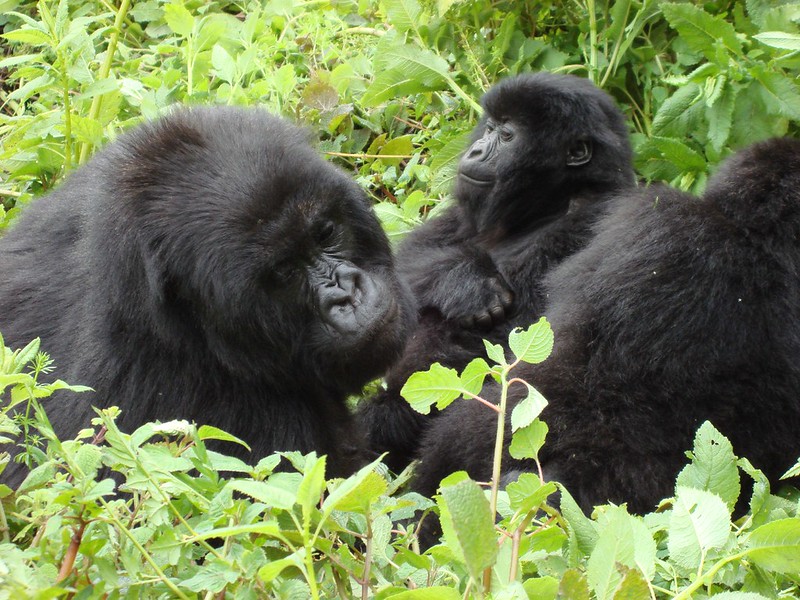
Although Bwindi is renowned for its gorillas, it also hosts a variety of intriguing species, including forest elephants, black and white colobus monkeys, baboons, L’Hoest monkeys, and rare golden monkeys. The densely wooded mountain slopes serve as a sanctuary for birdwatchers, since the park hosts over 320 avian species.
Infant gorilla in Bwindi Impenetrable Forest, Uganda
Infant gorilla in Bwindi Impenetrable Forest, Uganda
Accommodation Options
Upon departing the Ishasha sector of Queen Elizabeth National Park, you will proceed to the area of Bwindi where you will be stationed for your gorilla trekking expedition the next day. You will overnight at a lodge or tented camp adjacent to this extraordinary park.
Day 8: Gorilla trekking in Bwindi Impenetrable Forest
Travel Duration (Excluding Game Drives): 0 hours
Are you prepared for an unforgettable animal encounter? This may be the most unforgettable and exhilarating day of your entire journey to Uganda––it is time to embark on your eagerly awaited gorilla safari. This specialized excursion will involve trekking deep into the African jungle on foot in pursuit of the rare mountain gorillas.
Travel Itinerary
Your day commences at an early hour, as your presence is required at the briefing location by 7:30 AM. Your guide will convey a definitive set of regulations that you must adhere to during the day’s expedition. You will be assigned to a party of up to eight individuals, accompanied by your guide, to locate a particular family of gorillas.
The duration of the hike may range from 2 to 6 hours, contingent upon the location of the gorillas. Upon locating the group, you will be assigned approximately one hour to engage with them. You will receive instructions on appropriate conduct in their presence and the permissible proximity to them. Typically, one should maintain a distance of roughly 7 meters (23 feet) from them.
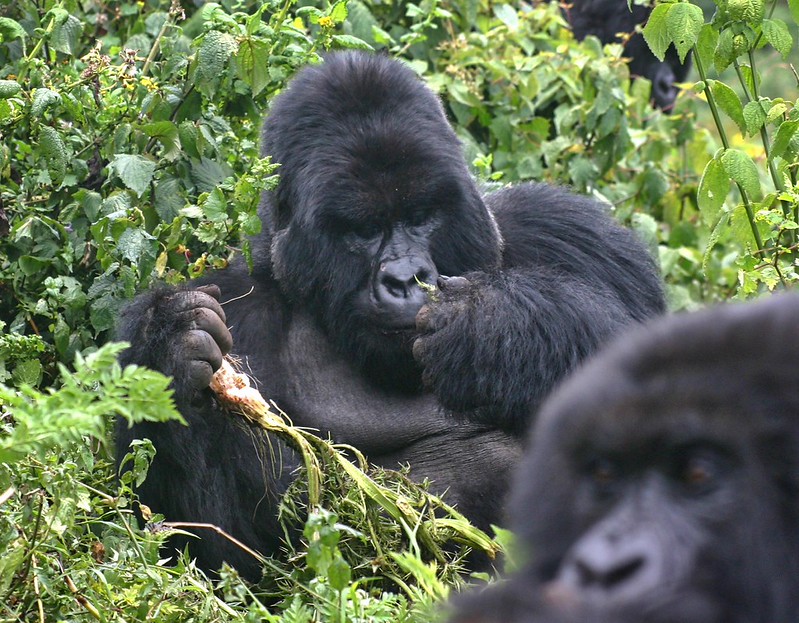
The trek can be somewhat arduous for numerous individuals and necessitates a moderate level of fitness. The terrain may be arduous, characterized by warmth, humidity, potential muck in certain areas, and predominantly uphill paths through dense forest flora.
Following your hour of observing the gorillas, you will return to the briefing point.
Upon completing your gorilla trekking expeditions promptly and possessing sufficient energy, you will embark on an optional afternoon cultural excursion to a Batwa hamlet, where you will have the opportunity to gain insights into the Batwa (sometimes referred to as Twa) Pygmies.
The indigenous forest inhabitants resided in the Bwindi Impenetrable Forest for millennia prior to their expulsion when the region was established as a national park in 1991. The Batwa people continue to encounter numerous obstacles due to their displacement, prompting certain Batwa towns to address this by offering cultural tourism experiences.
If your visit to the gorilla families incites a desire for a more intimate experience, you may partake in a gorilla habituation session, where you will accompany a team of rangers and researchers in a training exercise, allowing for direct interaction with gorillas. Habituation programs occur over a three-year duration, aimed at acclimatizing gorillas to human presence.
This benefits critically endangered gorillas by facilitating closer population monitoring and veterinarian interventions when necessary, while also minimizing stress during interactions with tourists. Participation in a habituation session is optional and exclusively offered during training programs. The cost is $1,500 per individual per day.
About Gorilla Trekking in Bwindi Impenetrable Forest
Bwindi Impenetrable Forest ranges in elevation from 1,190 meters (3,904 feet) to 2,607 meters (8,553 feet), featuring steep and thickly wooded inclines. It is essential to maintain a reasonable level of fitness to keep pace and avoid impeding the visiting party.
There exist four distinct gorilla tracking sectors: Ruhija, Rushaga, Buhoma, and Nkuringo. Buhoma and Ruhija in the north provide the most accessible hiking experiences, with Buhoma being the most straightforward. The Nkuringo Sector possesses the most arduous terrain, rendering it the least favored. Rushaga boasts the largest number of gorilla families, totaling ten, and is the sole sector offering a habituation experience.
Upon locating a family of gorillas, it is imperative to follow your guide’s instructions meticulously to avoid disturbing or alarming the gorillas. We share 98% of our genetic makeup with gorillas, and they are vulnerable to numerous airborne diseases that impact humans. All individuals don face masks to safeguard the gorillas. You may either bring your own or purchase a disposable one at the briefing session.
Presented below are essential guidelines of dos and don’ts.
- Guidelines for Gorilla Tracking in Bwindi Impenetrable Forest
- Adhere to the counsel of your guide, which will encompass the subsequent points:
- When near a gorilla, maintain a subdued voice or, preferably, be silent.
- Avoid all attempts to make contact with them, regardless of their attempts to initiate contact with you.
- Avoid consuming food or beverages in their vicinity.
- Capture images without employing a flash, as it may startle them.
- Avoid direct eye contact. They will perceive that as a menace to their family.
- If they approach or rush at you, do not flee.
- Don a cap, long trousers, and a sturdy pair of hiking boots.
- Bring an insulated and water-resistant jacket. Temperatures drop in elevated regions.
- Avoid wearing any vibrant attire.
- Suggested recommendations:
- Bring snacks and an adequate supply of drinking water to sustain you for several hours. Be mindful that your walk may be arduous.
- Gorilla tracking in Bwindi occurs nearly year-round, with the optimal periods being the dry seasons of June to September and December to February. However, as this coincides with the peak tourist season, there will be an increased number of individuals on the mountains, necessitating advance booking of your permit. Daily access to the woodland is restricted to approximately 120 individuals.
- The remainder of the year may experience reduced crowds; nevertheless, it will predominantly be wet, rendering the steep mountain trails muddy, slippery, and overall undesirable.
- We strongly recommend that you secure your permission with us. Individuals frequently reserve visits to a gorilla family situated at a considerable distance from their selected lodging, resulting in superfluous logistical challenges.
- Employing a local porter to assist with your luggage is prudent, as the trek is sufficiently arduous without the added burden of carrying your supplies. This service offers essential local employment to residents in the predominantly disadvantaged regions adjacent to the park.
Accommodation Options
At the conclusion of this exhilarating day, you will spend the night at the same lodge as the previous evening.
Day 9: Lake Bunyonyi
Travel Duration (Excluding Game Drives): 3 hours
After eight days of rising at early hours for safaris and arduous ascents of steep slopes, it is now time to recuperate, unwind, and enjoy leisure as your ten-day Uganda itinerary concludes.
Lake Bunyonyi is an ideal location for this purpose and is situated a short distance from Bwindi.
Travel Itinerary
Following breakfast, you bid farewell to the fog-laden mountains of Bwindi Impenetrable Forest and their magnificent residents, embarking on a three-hour drive to the picturesque Lake Bunyonyi to the south.
Upon arrival, you may determine how to allocate your day in and around the lake. The possibilities here are limitless. The lake is devoid of waterborne diseases, hippopotamuses, or crocodiles, making it entirely safe for leisurely enjoyment.
Activities include swimming, kayaking, embarking on a boat cruise on the lake, exploring an island, zip-lining across a canyon, enjoying a scenic walk, participating in a boat birding safari, mountain biking, or indulging in the culinary offerings at various lodges and restaurants located around the islands and the lake’s shore. The most renowned specialty dish in the vicinity of the lake is delectable freshwater crayfish. These crustaceans were transplanted several years ago from Louisiana, and the local population is now referred to as Lake Bunyonyi crayfish.
About Lake Bunyonyi
Lake Bunyoni was created approximately 18,000 years ago following a volcanic eruption and is a component of the Nile Basin. It is the largest of three lakes in the region and ranks among the deepest lakes in Africa. Scientists estimate its maximum depth to be 40 meters (130 feet), although local guides assert it is even deeper.
The lake measures approximately 25 kilometers (14 miles) in length and 6 kilometers (4 miles) in width at its broadest point, encompasses 29 tranquil islands, and is encircled by the Kabale Mountains, which rise 600 meters (1968 feet) above the water level. It is a lovely setting.
As its name suggests, meaning ‘place of many small birds’, Lake Bunyoni is a haven for birdwatchers, boasting over 200 recorded species.
The majority of the islands possess captivating names and compelling histories. Sharp’s Island, previously known as Bwama Island, is named after an English missionary who founded a leprosy treatment center there.
Punishment Island is the most intriguing isle, where the Bakiga Tribe historically abandoned unmarried pregnant girls. As their harsh punishment, they were abandoned to either perish from famine or drown if they attempted to swim back to the lake’s shore. This served as a cautionary message to other girls in the surrounding community. However, there existed a singular method for evading the island. If a man desired to marry but lacked the requisite cows for his bride price, he might travel to the island and select a woman at no cost. It was either that or endure a protracted and wretched demise on the island. This practice ceased in the early 20th century.
Guidelines for Visiting Lake Bunyonyi
Numerous eco-lodges are situated around the lake and on several islands, providing a diverse range of activities as previously noted. Some lodges provide certain activities complimentary as part of a package, but others incur additional fees.
Accommodation Options
Stay overnight at one of these exquisite hotels surrounding the lake. You will have a comfortable night, indulge in fine dining, and contemplate a once-in-a-lifetime experience.
Day 10: Return to Entebbe with Equator Visit
Travel Duration (Excluding Game Drives): 9 hours
Today, you will commence an extensive journey back to Entebbe, marking the conclusion of your 10-day trip in Uganda.
Travel Itinerary
Following breakfast at your accommodation at Lake Bunyonyi, you embark on a journey to Entebbe, a drive that will occupy the majority of the day. Upon arriving in Masaka, proceed northward and halt in the town of Kayabwe to visit the Uganda Equator Crossing Monument.
Upon entering the Northern Hemisphere, an additional two-hour drive will lead you to Entebbe or Kampala.
You will spend the night at your accommodation in Entebbe or Kampala before departing for home the following day.
Uganda is an entirely distinctive safari destination. The natural scenery, ranging from deep African jungles to pure, reflective lakes, is truly awe-inspiring. The unique essence of this country is unveiled upon encountering our close relatives, the great primates.
Nothing can adequately prepare one for the peculiar sensation of familiarity, intertwined with astonishment, when observing a mountain gorilla mother affectionately cradling her offspring. Young chimpanzees engage in play with one another, exhibiting a remarkably human-like blend of warmth and spontaneity.
In Uganda, you will have some of your most exceptional safari experiences. Observing the Big Five in savanna herds to encountering one of the world’s last mountain gorillas, Uganda has captivated me. I am confident you will also develop an affection for it.