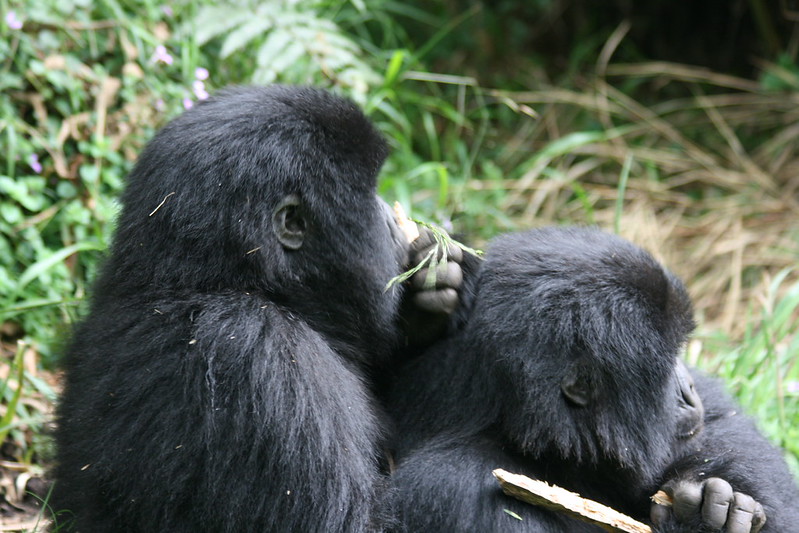
Gorilla trekking stands out as the crowning glory of any journey to Bwindi Impenetrable Forest National Park. The opportunity to observe one of the world’s most endangered species in its natural environment renders Gorilla trekking experience both unique and rewarding. Within Bwindi Forest National Park, there are more than 40 gorilla families; however, only 25 of these families have undergone habituation for the purpose of gorilla tourism. The remaining gorilla families remain in the wild, although some are currently in the process of habituation. Exploring one or more habituated gorilla groups in Bwindi Impenetrable National Park is valuable, as each group offers unique narratives. In conclusion, you will gain an unparalleled experience that will remain etched in your memory for years to come. The habituated gorillas have become accustomed to human presence, yet they retain their wild nature. Therefore, unforeseen circumstances may arise. It is essential to adhere to the guide’s regulations to ensure your safety. Typically, it is not necessary to consume food or beverages while in the presence of mountain gorillas.
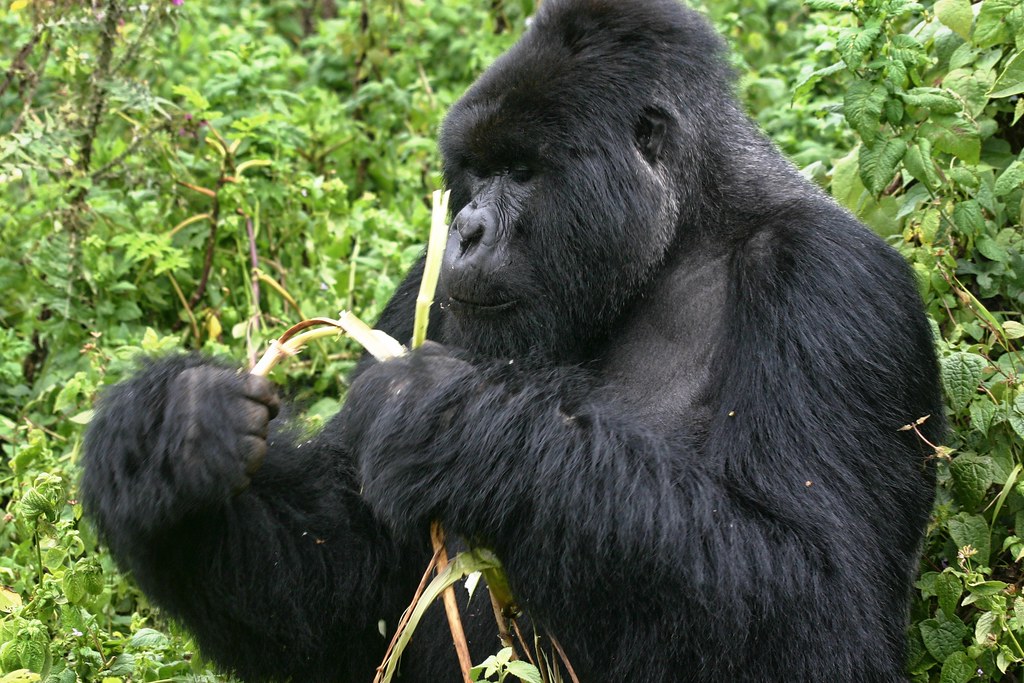
Gorilla trekking in Bwindi Impenetrable National Park commences at dawn. It is essential to have breakfast by 7 AM at the latest and arrange for a transfer to the briefing point. Briefings are conducted at tourism centers across the four sectors designated for gorilla trekking. Officials at Bwindi Impenetrable National Park will provide you with guidelines and instructions regarding the appropriate conduct during your mountain gorilla tracking experience. The rangers deliver crucial insights regarding safety, gorilla behavior, and what participants can anticipate throughout the trek. Visitors are organized into small groups, with each group designated to observe one of Bwindi’s habituated gorilla families.
Subsequently, collaborate with the park rangers to initiate the expedition in pursuit of the mountain gorillas. Gorilla trekking in Bwindi Impenetrable Forest National Park presents a physically challenging experience, yet it offers significant rewards.
The trek can last anywhere from 2 to 8 hours, depending on the gorillas’ location, the duration of which can vary considerably. The landscape in Bwindi is characterized by its ruggedness, featuring steep inclines, dense foliage, and irregular forest floors, which presents a challenging hiking experience, particularly following rainfall. The journey through the forest constitutes an integral part of the adventure, presenting opportunities to observe various wildlife, birds, and picturesque views.
Getting up close and personal with the gorillas in Bwindi Impenetrable National Park and spending time with them, dedicating a full hour to observe, photograph, and gain insights into these magnificent apes is an extraordinary experience. Rangers will assist in managing your interactions, ensuring that you maintain a respectful distance of approximately 7 meters from the gorillas. The experience lasts approximately one hour, during which you can observe these remarkable animals engaging in their daily activities—feeding, grooming, and playing. The close proximity to these magnificent creatures, the profound bonds they maintain within their family groups, and the opportunity to observe their behavior firsthand provide transformative experiences for numerous visitors.
Gorilla Trekking Sectors in Bwindi Impenetrable
Bwindi is divided into four trekking sectors of Buhoma, Rushaga, Ruhija, Nkuringo, and the selection you make is more significant than many people understand.
Buhoma Sector, established in 1993, is the oldest area and serves as the location for the park headquarters. There are six gorilla families residing in this area: Mubare, Habinyanja, Muyambi, Binyindo, Katwe, and Rushegura. Local lodges are well-established, and the trails are highly developed. Seeking enhanced comfort and a more manageable trekking experience? Buhoma is a reasonable choice.
The Ruhija Sector is positioned at a higher elevation on the eastern side. Scenic vistas accompanied by lower temperatures and more challenging hiking conditions. There are four gorilla families present; the trekking experience is remarkable yet demanding. Additionally, it is reportedly outstanding for observing birds.
The Rushaga Sector in the southern region has gained significant popularity due to its hosting of eight gorilla families. An increase in gorilla families correlates with improved permit availability. A number of individuals have noted that Rushaga appears to be less frequented by tourists compared to Buhoma, although this may be subject to change.
The Nkuringo Sector is recognized for its remoteness and is, to the best of my knowledge, the most physically demanding area. Challenging landscape. For those seeking an authentic adventure experience and who are prepared for significant physical challenges, Nkuringo is said to provide an exceptional opportunity.
Cost Of Gorilla Trekking Permit and Booking Ahead
The cost of gorilla trekking permits for foreign travelers is $800. The one-hour gorilla encounter fee does not cover accommodation, meals, or transport; however, it does include park entrance fees for the entire day, with no additional services provided.
Citizens of Uganda and the East African Community (EAC) are required to pay 300,000 shillings, equivalent to approximately $80. Residents of EAC Uganda, Kenya, Tanzania, Rwanda, Burundi, and South Sudan are required to pay $700, whereas citizens from other African nations are charged $500.While $800 may seem costly, a significant portion of the money spent supports conservation projects, anti-poaching patrols, veterinary care, and research initiatives. Twenty percent is allocated directly to the communities surrounding the park. These permits are effectively contributing to the prevention of mountain gorilla extinction.

It is advisable to make reservations several months in advance. For peak season (June-September, December-February), it is advisable to make reservations at least six months in advance. The Uganda Wildlife Authority restricts the issuance of permits to eight per family each day to reduce stress on the gorilla population.
Best/Worst Time To Visit Gorillas in Bwindi National Park
The dry seasons, from June to September and December to February, offer more favorable weather conditions and facilitate easier Gorilla trekking experiences in Bwindi Impenetrable National Park. However, there is an increase in tourists along with higher lodge prices. The wet season, occurring from March to May and again from October to November, brings with it mud and rain. However, it also results in fewer crowds and occasionally more affordable accommodation options.
It is important to acknowledge that Bwindi Impenetrable National Park is a rainforest. Showers can occur at any moment. One should not rely on ideal weather conditions, irrespective of the timing.
Ensure you have high-quality rain gear regardless of the forecast.
Packing List & What To Wear For Gorilla Trekking In Bwindi
• Waterproof hiking boots
• Long pants and long-sleeved shirt
• Rain jacket
• Hand gloves
• Small backpack
• Water
• Snacks
• Camera (with no flash)
• Insect repellent
• Sunscreen
• Gaiters for covering boots and lower legs. Would’ve kept mud out.
• Extra socks in plastic bag
• Small microfiber towel
• Blister plasters
Note: Wear neutral colors. Green, brown, khaki, beige. Avoid bright colors, white, flashy anything.
How To Get To Bwindi Impenetrable National Park
The journey from Kampala or Entebbe to Bwindi typically requires 8 to 10 hours, contingent upon the specific sector being visited and the number of stops made along the way. The initial hours present a satisfactory highway experience. The journey through the countryside involves navigating potholes, uneven surfaces, frequent reductions in speed for villages, and encountering speed bumps, resulting in a lengthy drive.
However, the countryside is really breathtaking. Undulating green hills, tea estates, banana fields, and communities where children greet passing vehicles. Lunch can be taken in Mbarara, along with opportunities for photographs at the Equator crossing.
It is advisable to consider a stop at Lake Mburo National Park for an overnight stay if your itinerary allows, as it can help break up the lengthy journey.
Flying is also a possibility. Regularly scheduled and chartered flights to Kihihi or Kisoro airstrips have a duration of approximately 1.5 to 2 hours, with fares ranging from $250 to $350 one way. Due to financial constraints, but we think you’d benefit from taking a few more hours to relax before your hike.
Certain individuals integrate their travels to Rwanda by crossing at the southern border. Functions effectively, though it introduces additional logistics.
Safety Rules for Gorillas
- Rangers really care about the safety of gorillas. Before you go gorilla trekking, they make sure you know the rules:
- Must be at least 15 years old (they check IDs & Passports)
- If you are sick, even with a cold, you can’t go on the walk. They will help you find another time to go.
- Stay at least 7 meters away (though gorillas don’t always follow this rule).
- Don’t shout.
- Don’t use flash Cameras
- Don’t eat, drink, or smoke near gorillas.
- Don’t point at them
- Want to sneeze or cough? Back off and hide your face.
- Please do not touch a gorilla.
- Don’t move quickly.
- If a silverback charges, which doesn’t happen often, bend over and turn your back to it. Most of the times, rangers say, Gorilla charges are just bluff charges. They want to test you. Stay calm, squat or kneel to show that you’re giving up, and don’t look at them. Don’t run away. When you run, your urge to chase arises.
Other Attractions in Bwindi Impenetrable National Park
Bwindi Impenetrable National Park is home to more than 120 species of mammals. Chances are that you might encounter forest elephants(if lucky), which are quite elusive, observe black-and-white colobus monkeys gracefully moving through the trees, as well as some L’Hoest’s monkeys in proximity of your lodge.
The birds, however. More than 350 bird species inhabit this area, with 23 species found exclusively in this region (Albertine Rift endemics). You might not like birding, but, observing a Great Blue Turaco, a large bird adorned with vibrant blue and green plumage, is truly remarkable.
The forest represents a comprehensive ecosystem. Impressive hardwood trees that have stood for centuries. Bamboo groves. Ferns are all around. The forest floor exhibits a spongy texture, characterized by a layer of moss and decomposing leaves. The significance of biodiversity is remarkable.
Discovering the History of the Batwa People
The Batwa community resided in Bwindi Forest for millennia prior to its designation as a national park. In the early 1990s, conservation efforts were initiated, leading to their relocation. The complex situation surrounding the conservation of gorillas was essential, yet it imposed significant costs on the indigenous communities residing in that forest.
Currently, numerous Batwa communities provide cultural experiences that showcase their traditional way of life. Dedicate an afternoon to engaging with a Batwa group in close proximity of Buhoma. You will enjoy demonstrations of their techniques for hunting with bows and arrows, collecting honey from tree hives, utilizing plants for medicinal purposes, and igniting fire through traditional methods.
The experience is not indicative of a performance; rather, it is a genuine exchange of knowledge that is rapidly vanishing. Certain older Batwa individuals were born in the forest and had to adapt to entirely new lifestyles following their relocation.
A day trip into the forest costs roughly $80 per person, whereas an experience in the Batwa community costs roughly $30, with the proceeds going directly to the Batwa community. Your decision will depend on your interests and budget;
How Many Gorilla Families Live in Bwindi
Currently, approximately 25 habituated gorilla families in Bwindi are available for tourism activities. “Gorilla Habituation” refers to the process by which gorillas have been gradually exposed to human presence over an extended period, leading to a tolerance of observers.

Every family possesses its own territory, personality, and dynamics. Some possess multiple silverbacks, resulting in intriguing power dynamics. There are families that consist of 15 or more members. There are additional groups consisting of approximately 6 to 8 individuals.
One does not have the option to select the family that will be monitored. The decision is made during the morning briefing, taking into account the locations identified by the trackers for each family and your fitness level. Occasionally, families relocate significant distances overnight, resulting in a wide range of trek difficulties.
Each family presents unique qualities. Every gorilla family offers a unique and valuable experience.
The trekking activity typically commences at approximately 8 AM following a briefing session. The duration is totally dependent on the location of the gorillas. Certain individuals arrive back by 11 AM. Some individuals continue their trek until 2 or 3 PM. Gorillas exhibit a natural behavior that allows them to roam freely in their environment.
Bwindi National Park Vs Volcanoes National Park Vs Virunga National Park
Tourists inquire about this. Drawing from research and discussions with tourists who have experienced multiple parks:
Rwanda (Volcanoes National Park): The terrain is generally more accessible, featuring open landscapes and shorter trekking routes. However, permits are priced at $1,500, which is nearly twice the cost in Uganda. If budget is not a concern and you prefer a trek that is less physically demanding, Rwanda is a reasonable choice.
Virunga (DRC): The permits are priced at approximately $450. The experience with gorillas is reportedly remarkable. However, safety considerations are influenced by the current political situation in eastern DRC. Please ensure to review the current conditions thoroughly prior to making a reservation.
Bwindi: A balanced approach to pricing. The terrain presents significant challenges, characterized by dense forest, steep slopes, and unpredictable routes. However, it may also provide the most genuine jungle experience. Appears more unspoiled.
The Impact of Your Visit on Conservation Efforts
This is not merely tourism marketing; permits truly support conservation efforts.
In the 1980s, the very first census of mountain gorillas revealed a population of approximately 620 individuals. They were approaching a state of extinction.
There are now more than 1,000 in existence. The population is experiencing growth.
What happened? Protected parks, anti-poaching initiatives, veterinary care provided by organizations such as Gorilla Doctors, community support, and funding for sustainable tourism encompass all aspects of conservation efforts.
The model demonstrates that when local communities experience economic benefits from conservation efforts, they emerge as the most dedicated protectors of wildlife.
Your $800 permit is significant. Costly, yet delivering significant impact.
Steps to Successfully book Your Gorilla Trekking
Stage 1: Determine the date and time of your excursion. Take into account the weather, your itinerary, the extent to which you can plan in advance, and most importantly, the availability of permits and accommodations.
Step 2: Reserve your permit. Make your reservation with your Operator, Gorilla Safaris. Consult with a knowledgeable Safari expert to organize your visit for a smooth experience. It is advisable to make reservations at least 3 to 6 months in advance if you are aiming for the peak season.
Step 3: Choose your sector. In accordance with your preferences (e.g., fewer tourists, simpler trekking, specific lodges).
Step 4: Make plans for getting there. Will you be driving or flying? In the case of driving, how many days needed to get there?
Step 5: Reserve a place to stay. Near each sector, there are numerous possibilities at various price brackets.
Step 6: Think about extras. Experience with Batwa? Additional excursions? Is observing birds something you enjoy? Nature walks or visits to wildlife parks, such as Lake Mburo National Park and Queen Elizabeth National Park? Kibale Forest National Park is an excellent choice for those interested in combining chimpanzee tracking with Gorilla trekking their visit.
Some tourists choose to book all-inclusive excursions that include accommodation, transport, and food. While the expense may be higher, it ultimately reduces complications.
Travelers on a budget can make all of their own plans, but they should be aware that they may have trouble communicating and experience some frustrating moments. They will also need to book their permits through a registered local tour company.
Take note of other people’s errors:
• Avoid wearing bright colors and short attire; long sleeves and pants are essential
• Do not underestimate the physical challenge (be truthful with yourself)
• Please refrain from bringing trekking poles with metal tips, as they are not permitted. Wooden sticks will be provided for your use.
Please do not attempt to sneak in children under the age of fifteen; they check identification.
• If you’re unwell, don’t go (you’ll be turned away and there’s no promise of a refund).
• Avoid physical contact with gorillas (they may appear adorable, but it’s best to refrain)
• Avoid leaving boots outside overnight to prevent them from becoming wet due to dew or rain.
• Do not expect 5G cell service; most of the park does not have it. However, there is good 3G to 4G coverage in a significant area.
• Take your time to fully engage with the experience rather than focusing solely on capturing perfect photos.
Frequently Asked Questions Regarding Gorilla Trekking
What level of fitness is truly necessary? The variability is significant. Certain treks are brief and comparatively straightforward. There are some who are really violent. If you are capable of hiking for 4-5 hours, including breaks, and can navigate steep, muddy terrain, you should be adequately prepared. Feeling worried? Inform the rangers during the briefing, and they will make an effort to assign you a family group that is more closely aligned with the composition of trekkers for that day.
Porters are on hand to carry your pack or provide physical assistance during challenging sections. There is no reason to hesitate in hiring one, as it also contributes positively to the local economy.
What happens if the gorillas are not found? Essentially, it is highly unlikely to occur. Trackers begin their day at dawn, monitoring the movements of gorillas from their nesting sites of the previous night. They maintain radio communication with their guides. Over the course of twelve years,
Is it possible for gorillas to pose a threat to humans? Highly uncommon. These families have become accustomed to the presence of small groups of humans. Rangers possess a deep understanding of these individuals and are adept at interpreting their emotional states. Charges may occur from time to time; however, they are typically bluff charges, indicating that the gorilla is assessing your presence rather than intending to cause harm. Incidents involving attacks on tourists are exceedingly uncommon.
What should I do if it rains during my trek? Subsequently, you become wet. This is a rainforest. The trek will proceed unless there is heavy rainfall. It is advisable to bring appropriate rain gear and acknowledge that you may still become wet despite your preparations.
Is it advisable to trek during pregnancy? This option is not advisable due to the physical demands involved and the potential risk of slipping on muddy trails. However, there is no formal regulation prohibiting it. Consult with your physician.
What is the proximity of gorillas to humans? The regulation is set at seven meters; however, gorillas do not adhere to such guidelines. During my expedition, a juvenile approached within three or four meters. It is advisable to retreat gradually if they come closer. At times, individuals may proceed without acknowledging your presence. The Rangers effectively oversee the situation.
Should You Really Go On This Trek?
This is among the most rewarding experiences in life. While it may be somewhat costly. Somewhat physically challenging. The weather may be unfavorable, yet it is worthwhile; everyone would have taken action.
You will likely find that it was worth every investment and every moment of physical exertion.
Observing a mother gorilla care for her young while seated on the damp earth, witnessing a formidable silverback stretch and yawn, and listening to the ambient sounds of the forest creates a profound impact. This highlights the interconnectedness of our existence and the significant losses we may face if we fail to safeguard these environments.
The mountain gorillas require our support. The forest requires safeguarding. Local communities require a sustainable source of income. It is possible that we require these untamed areas more than we typically acknowledge.
Considering it? Don’t think too much; start making plans. Life is short. There are some things that are worth the money.
No matter how many hours you spend hiking, you will eventually spot your first wild mountain gorilla. All other matters will diminish over time. The expenses, physical discomfort, ambiguity, everything involved. This experience will clarify why it is often regarded as a must-see.
Certain moments have the power to transform you. This is one of those instances.
Every step through that mud is worthwhile.