2-Days Rwenzori Trek/Hike to Lake Mahoma via the Mahoma Loop Trail takes you to the high-altitude crater lake at 2,988 meters above sea level. This 2 day Rwenzori Trekking/hiking to Lake Mahoma takes you on a remarkable 2 days Rwenzori trekking at the base of Rwenzori Mountains National Park, along a path that culminates at one of Africa’s most stunning and hardly explored mountain lakes. Lake Mahoma is a volcanic crater lake situated at an elevation of 2,988 meters, surrounded by moss-covered Afro-montane forest, which harbors unique animals, and enveloped in a tranquility that only a mountain accommodating fewer than 2,500 hikers annually can provide.
Over the course of two exhilarating days, you will traverse dense montane forests, bamboo thickets, and fog-laden ridges accompanied by our knowledgeable Rwenzori guides.
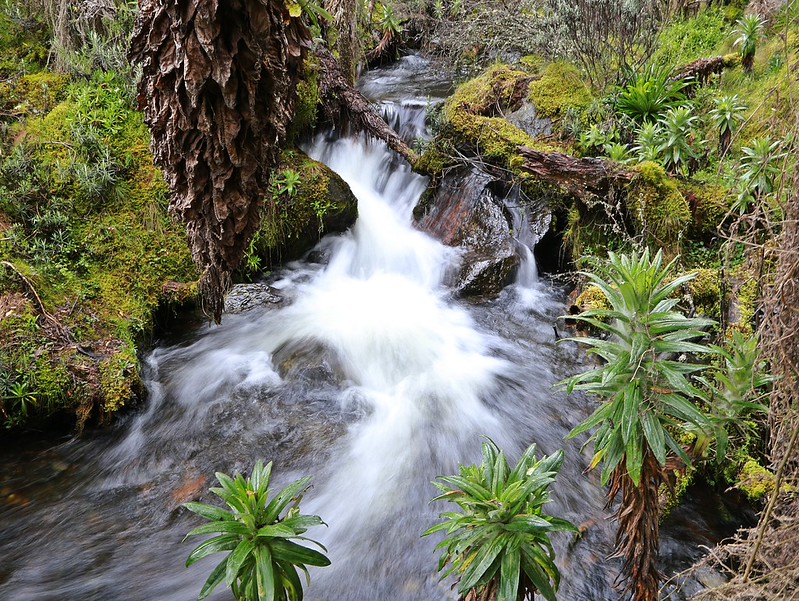 This 2 days Rwenzori trekking/hiking to Lake Mahoma via the Mahoma Loop, a secluded path through dense woodland that culminates at Lake Mahoma, the largest and deepest of the 52 alpine lakes in the Rwenzori range. Throughout the expedition, one can anticipate observing black and white colobus monkeys, three-horned chameleons, and rare Rwenzori birds, alongside stunning panoramas of tree- and moss-covered valleys.
This 2 days Rwenzori Hike(trek) to Mahoma lake is the Rwenzori mountain’s most perfectly designed short expedition — long enough to feel genuinely remote, short enough to fit within a tight itinerary, and rich enough in beauty that guests routinely describe it as the highlight of their entire African journey. You will sleep in the forest. You will stand at the edge of a high-altitude crater lake at 2,988 metres above sea level. You will hear birdsong that exists nowhere else on earth. And you will return to the valley two days later fundamentally changed — not in a grand, dramatic way, but in that quiet, persistent way that only wild places achieve.
Whether you are a family looking for an unforgettable shared adventure, a couple seeking the kind of raw intimacy that only wilderness provides, a solo traveler ready to lose yourself and find yourself simultaneously, or a group of like-minded explorers after something genuinely off the beaten path — this trek was designed for you. At Gorilla Safaris, every step of this journey is privately guided, seamlessly arranged, and shaped around your own pace and expectations. This is not an organised group departure. It is your personal expedition, handled by people who know these mountains intimately.
Before you arrive at the Rwenzori trailhead, many of our guests first experience Uganda’s most legendary wildlife encounter — a face-to-face hour with mountain gorillas in Bwindi Impenetrable National Park. The Rwenzori Mountains make an extraordinary and logical extension to any Uganda gorilla trekking safari, and our team handles every transition between the two experiences with the same quiet precision.
Itinerary at a Glance
A two-day window into one of Africa’s most extraordinary mountain environments.
- Day 1: Arrival in Kasese or transfer from Bwindi / Kampala | Park briefing at Nyakalengija | Trek begins through montane forest | Overnight at Lake Mahoma Camp (2,988 m)
- Day 2: Sunrise at Lake Mahoma | Return descent via alternate Mahoma Loop trail | Exit the park | Onward transfer or overnight in Kasese
Distance:
Day 1: Approximately 9–11 km | Ascent: ~900 m | 5–7 hours hiking
Day 2: Approximately 7–9 km | Descent: ~900 m | 4–6 hours hiking
Day 1 — Into the Cathedral: Forest, Mist, and the Long Climb to Lake Mahoma
Morning: The Briefing and the Beginning
Your private guide meets you at the Nyakalengija Park Headquarters, the official gateway to Rwenzori Mountains National Park on the Central Circuit side. The drive from Kasese town takes around 45 minutes on a red-dust road that narrows as the valley closes around you, the summits above frequently lost in cloud. By the time your dedicated vehicle pulls into the trailhead clearing, the forest already seems to lean toward you, curious and unhurried.
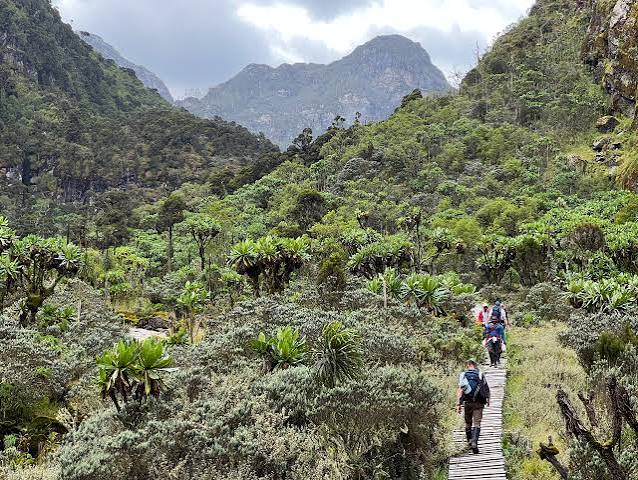
The Uganda Wildlife Authority (UWA) ranger briefing is brisk and purposeful — an introduction to the mountain’s character, its weather patterns, and the wildlife you may encounter during the ascent. Your guide, a trained naturalist with years of on-the-ground experience in these forests, adds the personal layer: the stories of the Bakonzo people who guided early European explorers, the endemic species that make this range unlike any other in Africa, the places on the trail where the light falls in a way that will take your breath away if you remember to look up.
Late Morning: The Forest Closes In
The trail begins gently, crossing the Mubuku River on a wooden bridge and entering the montane forest within the first fifteen minutes. This is where the Rwenzori announces itself. The canopy thickens overhead until the sky becomes a series of green fragments. The air drops five degrees. The smell shifts — from red earth and open valley to something deeper: rotting wood, wet moss, and the faint, clean sweetness of tree ferns.
Your guide moves ahead, pausing frequently, reading the forest as most people read a familiar street. This is where you might first hear — and, if you are patient, see — the Rwenzori Turaco, whose crimson wing-flash against the green is so vivid it looks painted. The forest at these lower altitudes is home to black-and-white Colobus monkeys, the elusive Rwenzori Otter, and more than 70 species of endemic birds. Photography opportunities are extraordinary, and your guide knows which branches the forest giants favour at which hours.
The trail climbs steadily through what botanists describe as the Afro-montane zone — a landscape so ancient it predates the Pleistocene ice ages. Giant Podocarpus trees rise above you. Epiphytic ferns colonise every surface. Where the trail crosses small streams, the rocks are upholstered in liverwort. Everything here is growing on top of something else, and has been for ten thousand years.
Midday: The Transition Zone and the First Views
As altitude increases past 2,000 metres, the forest character shifts. The tall closed canopy begins to open. Bamboo groves appear in the hollows, their canes rattling softly in the upslope breeze. Hagenia trees draped in old man’s beard lichen begin to replace the Podocarpus. The light changes quality — cooler, more diffuse, bouncing off moisture rather than filtering through leaves.
This is also the zone where the Rwenzori’s legendary rainfall begins to make itself felt, even on a fair-weather day. The air carries a permanent dampness. Clouds build quickly above the tree line. Your guide has timed the ascent to make the most of the morning’s relative clarity, and your dedicated waterproof kit — prepared before departure — keeps you dry and comfortable through whatever the mountain decides to offer.
Lunch is taken on the trail, at a rest point with views down the valley you have been climbing since morning. Kasese town, the copper-mine chimneys, the distant glitter of Lake George — all of it laid out below you like a map you have just escaped. The scale of what you have already climbed surprises most trekkers here.
Afternoon: Arrival at Lake Mahoma
The final push to the lake takes you through a stand of ancient Erica trees, their trunks twisted into shapes that seem deliberate — as if the forest here has been art-directed. Then, without any particular announcement, the trees open, the ground levels, and Lake Mahoma appears.
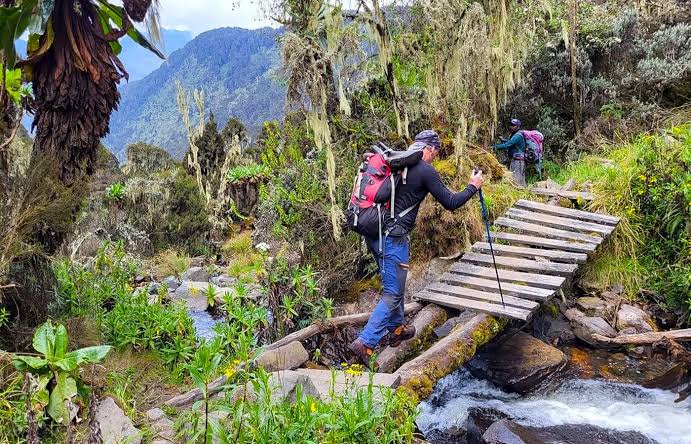
It is a crater lake sitting at 2,988 metres above sea level — perfectly round, impossibly still when the afternoon clouds cooperate, its surface reflecting the heather-fringed ridgeline above it in a mirror that seems to belong in a painting rather than a real landscape. The Bakonzo people regard this lake as sacred, and standing at its edge for the first time, it is easy to understand why.
The camp sits on the northern shore, sheltered from the prevailing wind by a ridge of Erica scrub. Basic but purposeful: twin-share tents or mountain huts depending on conditions, a simple cook hut where your team prepares a proper hot meal, and the kind of silence that city-dwellers spend years trying to find.
Evening: The Lake after Dark
As the light dies, the lake surface takes on a pewter quality, and the forest sounds change register. Nightjars begin their churring call. The temperature drops sharply — layers become essential — and the sky, if cloud permits, offers a density of stars that the Rwenzori’s equatorial position and lack of any nearby light pollution makes genuinely extraordinary. Your guide remains available throughout the evening to answer questions, share knowledge of the mountain’s ecology, or simply sit in companionable silence around the camp lantern. Dinner is hot, substantial, and shared with the kind of ease that only comes from spending a full day moving through wild country together.
Day 2 — The Mahoma Loop: A Different Trail Home
Dawn: The Lake Before Anyone Else
Waking at Lake Mahoma before the mist burns off is one of those experiences that the word ‘beautiful’ fails to adequately contain. The lake surface steams gently in the cold morning air. The forest is dense with birdsong — a layered, overlapping chorus of endemic species announcing the day in languages that have no human translation. Your guide brews tea at first light. There is no rush. The mountain asks you to be present, and this is the moment to honour that.
The morning offers an hour of birdwatching along the lake shore before breakfast — a genuine treat for any wildlife enthusiast. The Rwenzori Mountains National Park is recognised as one of Africa’s most important birding destinations, with species found nowhere else on earth: the Rwenzori Batis, the Strange Weaver, the Archer’s Robin-Chat. For guests with a serious interest in birds, your guide can arrange extended morning observation time before the descent begins.
Mid-Morning: The Return via the Loop Trail
The Mahoma Loop Trail returns by a deliberately different route — the genius of its design is that you never simply retrace your steps. The descent follows the southern ridge of the lake basin, dropping through a different section of Erica woodland before re-entering the montane forest at a lower level than the ascent route.
The views on the descent are oriented outward rather than upward — the great valley below, the Kasese plains, and on clear mornings, the distant shimmer of Lake Edward on the horizon. The forest, seen from the descent angle, has a different quality of light, and the mood of the trail shifts: less effortful, more meditative. Trekkers who were focused entirely on the ascent the previous day often find the descent is where they most fully notice the extraordinary botanical richness of the Rwenzori’s lower slopes.
Stream crossings on the return trail are numerous, and the water — clean, cold, and rushing from snowmelt high above — is one of the constant musical signatures of a Rwenzori morning. Your guide knows every safe crossing point. Your private group sets the pace throughout. If the family needs a longer break at the waterfall overlook, you stop. If the couple wants to spend twenty minutes watching a Colobus family move through the canopy, the day accommodates it.
Late Morning: Forest Exit and the Return to the Valley
The trail re-emerges from the forest into the cultivated foothills of the Rwenzori buffer zone — terraced fields of sweet potato and sorghum worked by Bakonzo farmers who have watched trekkers pass for decades with an equanimity born from deep familiarity. Your guide makes introductions where welcomed, and these brief exchanges — a few words of Lukonzo, the loan of a trekking pole to an elderly farmer’s wife, a shared laugh over something that transcends translation — are among the small, uncurated moments that guests remember longest.
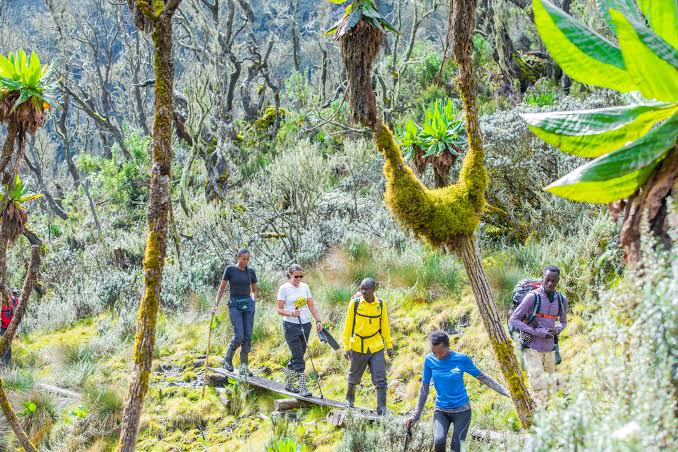
The Nyakalengija headquarters appears again around midday. The park register is signed. Certificates are issued. And then you are back at your dedicated vehicle, clean clothes from your bag, a cold drink from the cooler, and the particular satisfaction of someone who spent two days actually inside the Mountains of the Moon rather than simply photographing them from a distance.
Afternoon: Onward or Overnight
The remainder of Day 2 is flexible and entirely shaped around your wider itinerary. Some guests return to Kasese for an overnight before flying north to Murchison Falls National Park. Others drive east toward Queen Elizabeth National Park. Many combine the Rwenzori trek as a natural companion to a gorilla trekking safaris in Bwindi Impenetrable National Park, with Bwindi reached in approximately three hours from Kasese by road — a drive that passes through some of southwestern Uganda’s most beautiful highland scenery. Your dedicated vehicle and experienced driver handle all transfers, and every logistical detail has been arranged by our team before you arrive.
What’s Included in Your Trek
Your 2-Day Lake Mahoma Trek with Gorilla Safaris can be arranged as a complete, fully supported private expedition. Everything that matters has been thought through in advance, so your attention remains entirely on the experience.
- All Uganda Wildlife Authority (UWA) park entry fees and trail permits for Rwenzori Mountains National Park
- Professional, certified private mountain guide for the full duration of the trek
- Dedicated UWA armed ranger escort throughout the hike
- Porters to carry group equipment, camping gear, and shared loads (personal day packs carried by trekkers)
- All meals on the mountain: hot dinner on Day 1, breakfast and trail lunch on Day 2
- Drinking water, trail snacks, and electrolyte supplements
- Overnight accommodation at Lake Mahoma Camp (twin-share tents with sleeping mats and blankets, or mountain huts subject to availability)
- Basic first-aid kit and emergency evacuation protocol
- Trekking certificate issued by UWA on completion
- Private airport/hotel transfers in Kasese as part of your wider Gorilla Safaris itinerary
- All government taxes and levies
What’s Not Included
For full transparency, the following fall outside the trek package and should be factored into your planning.
- International flights to Uganda (Entebbe International Airport)
- Uganda tourist visa (available online via the e-visa portal prior to travel)
- Personal travel and medical insurance — comprehensive coverage including emergency evacuation is mandatory for all trekking guests
- Personal trekking equipment: waterproof boots, gaiters, trekking poles, waterproof jacket and trousers, warm mid-layers (a detailed kit list is provided at booking)
- Porter tips and guide gratuities (suggested amounts provided in your pre-departure information)
- Beverages beyond drinking water (soft drinks, alcoholic drinks, specialty coffee)
- Any pre- or post-trek hotel accommodation in Kasese or Kampala
- Personal expenditure and souvenirs
Best Time to Trek Lake Mahoma and the Rwenzori Mountains
The Dry Seasons: December–February and June–August
The Rwenzori Mountains carry a permanent reputation for rain — earned honestly over millennia — but that should not discourage you. The mountain’s extraordinary biological richness exists precisely because of the moisture. That said, the two principal dry seasons offer the most reliable trekking conditions, with greater chance of clear skies at the lake, firmer trail surfaces, and the kind of long mountain views that make the effort feel transcendent rather than merely wet.
June through August is the peak season for Rwenzori trekking, coinciding with the northern hemisphere summer. Trails are busy relative to other months (still never crowded by any global mountain standard), and advance booking of permits and porter teams is strongly recommended. December through February offers similarly reliable conditions with significantly fewer fellow trekkers — a compelling choice for those who value solitude.
The Shoulder Seasons: March–May and September–November
The long rains of March to May bring the forest into its most vivid expression — every surface dripping, every green amplified, the waterfalls running at full volume. Trails become muddy and some stream crossings more challenging, but the Mahoma Loop is manageable for fit, well-equipped trekkers throughout this period. Birdlife peaks during these months, making it the preferred season for serious ornithologists.
September and October offer a pleasant middle ground: rainfall easing, vegetation still richly green, and comfortable temperatures throughout the ascent. For families with school-age children, the October half-term window aligns well with these conditions.
Year-Round Trekking with the Right Preparation
Unlike Kilimanjaro or the Virunga Mountains, the Rwenzori Mountains does not have a season that is genuinely off-limits to trekkers. The Lake Mahoma route is manageable in all months with appropriate waterproof kit — which your Gorilla Safaris team will ensure you have before departure. The mountain’s unpredictability is part of its character, and guests who embrace the cloud and the rain often leave with richer memories than those who arrived in perfect sunshine.
If your Rwenzori trekking forms part of a longer Uganda itinerary that includes gorilla trekking or a visit to Queen Elizabeth National Park, the best time to visit gorillas in Uganda overlaps significantly with the Rwenzori dry seasons — June to August and December to February — making these months the natural choice for a combined expedition.
Frequently Asked Questions — 2 Days Rwenzori Trek to Lake Mahoma
How difficult is the 2-Day Rwenzori Trek to Lake Mahoma?
The Lake Mahoma trek is graded moderate. Day 1 involves a sustained ascent of approximately 900 metres over 9–11 kilometres, which most fit adults with some hiking experience manage comfortably in 5–7 hours. Day 2 is predominantly descent over a slightly shorter route. No technical mountaineering skills or specialist climbing equipment are required. Strong waterproof boots and trekking poles are recommended. Children above 10 years with reasonable fitness regularly complete this trek successfully.
Do I need any permits or park fees to trek in Rwenzori Mountains National Park?
Yes. All trekkers in Rwenzori Mountains National Park require Uganda Wildlife Authority (UWA) entry permits and a registered park guide and ranger escort. These are non-negotiable for safety and conservation reasons. When you book through Gorilla Safaris, all permits, park fees, guide fees, and ranger costs are included and arranged on your behalf before arrival.
What altitude does Lake Mahoma sit at, and should I be concerned about altitude sickness?
Lake Mahoma sits at 2,988 metres above sea level — just below 3,000 metres. At this altitude, altitude-related illness is uncommon for most healthy adults, though some guests experience mild symptoms such as slight headache or reduced appetite on the first evening. The relatively gradual ascent profile of the Mahoma trail minimises risk. Your guide monitors all guests throughout the trek and carries basic altitude medications. Anyone with pre-existing cardiac or respiratory conditions should consult a physician before booking.
What should I pack for the 2-Day Lake Mahoma Trek?
A comprehensive packing list is provided at the time of booking. Essentials include: waterproof hiking boots (well worn-in), waterproof jacket and trousers, warm mid-layer (fleece or down jacket for the evening at the lake), light merino base layer, trekking poles (available for hire if not travelling with your own), high-SPF sunscreen, insect repellent, personal medications, and a daypack. Your Gorilla Safaris team provides sleeping equipment and all meals at the camp.
Is the Mahoma Loop Trail suitable for families with children?
Yes, with the right preparation and realistic expectations. The trail is suitable for children aged approximately 10 and above who are reasonably active. The ascent is sustained but not technical, and the reward of arriving at Lake Mahoma is profound for young trekkers. Families regularly rate the Lake Mahoma trek as one of the most memorable shared experiences of their Uganda trip. Your private guide adapts the pace entirely to the family’s needs — longer rest stops, more wildlife observation time, whatever makes the day work best.
Can I combine the Rwenzori trek with gorilla trekking in Bwindi?
Absolutely, and many guests do exactly this. Bwindi Impenetrable National Park — the primary destination for gorilla trekking in Uganda — lies approximately 3 hours by road east of Kasese, making a combined Rwenzori and Bwindi itinerary logistically elegant. Gorilla Safaris designs combined expeditions frequently: typically 2–3 days in Bwindi for gorilla trekking, followed by a transfer to the Rwenzori for the Lake Mahoma trek, or vice versa. Our team coordinates every detail between the two destinations seamlessly.
What wildlife might I see on the Mahoma Loop Trail?
The Rwenzori’s lower montane forest is extraordinarily biodiverse. Birdlife is the headline attraction — with over 70 endemic species including the Rwenzori Turaco, Archer’s Robin-Chat, Strange Weaver, and numerous sunbirds found nowhere else on earth. Mammals include the black-and-white Colobus monkey, blue monkey, Rwenzori Otter, giant forest hog, and — in the higher Erica zone — the occasional Rwenzori red duiker. Reptiles, frogs, and an astonishing variety of endemic plants complete a natural history experience that rivals anything on the continent.
Is Lake Mahoma suitable for swimming?
Lake Mahoma is a cold, high-altitude crater lake. Temperatures at the surface are consistently low, and the lake is ecologically sensitive and protected. Swimming is generally discouraged by the Uganda Wildlife Authority as part of broader conservation management of the lake ecosystem. Most guests find that sitting at the lake shore, watching the light change and listening to the forest, is satisfaction enough.
What is the best time of year to do the Lake Mahoma Trek?
The clearest trail conditions and highest chance of good visibility at the lake occur during Uganda’s two dry seasons: June to August and December to February. That said, the Mahoma Loop is accessible year-round for well-equipped trekkers. The March-to-May long rains produce exceptional birdwatching conditions and dramatic waterfall volumes, and many guests find the misty, atmospheric quality of the Rwenzori in the wet season more evocative than clear skies.
How do I get to Nyakalengija, the Rwenzori trailhead, from Kampala or Entebbe?
Nyakalengija is located approximately 5 kilometres from Kasese town in western Uganda. From Kampala or Entebbe, the drive takes approximately 5–6 hours by road — a scenic route through the Ugandan highlands and along the base of the Rwenzori foothills. Kasese is also served by Uganda Airlines domestic flights from Entebbe, reducing travel time to under an hour. Your Gorilla Safaris dedicated vehicle and driver handle all transfers from your Kampala hotel or Entebbe airport, including the final approach to the trailhead.
Does Gorilla Safaris offer private treks or only group departures?
All Gorilla Safaris treks are private by design. You trek with your own guide, your own porter team, and your own schedule. You are never merged into a group of strangers or required to move at a pace set by the slowest member of an unrelated party. This is the foundation of how we design all our expeditions — whether a 2-day Lake Mahoma hike or a 12-day combined Uganda Gorilla trekking & Rwenzori Hike.