Nyungwe Forest National Park
The Ultimate Guide to Chimpanzee Tracking, Canopy Walks & Wildlife in Rwanda’s UNESCO World Heritage Forest.Â
“The oldest rainforest in Africa does not ease you in. One moment you are on a paved road above rolling tea estates. The next, the canopy has closed overhead, the light has turned green and ancient, and somewhere in the mist above you — very close — something screams with a wild, full-throated urgency that stops every other thought in your mind.”
Nyungwe Forest National Park: Ultimate Guide to Chimpanzee Tracking, Canopy Walks
It is estimated that Nyungwe Forest has existed, largely unbroken, for at least three million years. It was old when the first hominids walked upright. It was old when the Egyptian kingdoms rose and fell. It has survived the ice ages and the upheavals of the Albertine Rift, the fires and the poachers and the wars of the twentieth century, and it endures today across 1,019 square kilometres of southwestern Rwanda as one of the most biologically rich places on the surface of the earth. In September 2023, UNESCO confirmed what anyone who has stood beneath its canopy already knew: Nyungwe is a place of outstanding universal value, and it now carries the designation of a World Heritage Site.
Rwanda is best known internationally for its mountain gorillas. But Nyungwe is the country’s other great primate sanctuary — a forest of chimpanzees and thirteen species of primates, of 345 bird species and 1,100 plant species, of misty ridges and river valleys and the most extraordinary canopy walk in East Africa, suspended fifty metres above the forest floor on a bridge that sways very slightly in the mountain wind. It is the place where the watershed between the Congo River basin and the Nile basin runs through a single valley, and where the source waters of the Nile gather themselves in highland swamps before beginning the longest river journey on earth.
For travellers who know Rwanda only as the country of gorillas, Nyungwe Forest National Park is a revelation. For travellers who know Africa’s rainforests, it is a standard against which others are measured. And for those who arrive with no preconceptions at all — who simply follow their guide into the undergrowth in the early morning and wait for the forest to reveal itself — it is something that resists easy description and refuses to be forgotten.
At Gorilla Safaris, Nyungwe Forest national Park is a park we return to with the particular affection reserved for places that consistently exceed expectation. We know the trails. We know which morning light reaches the canopy walk before the cloud comes in. We know the guides who will hear a chimpanzee call from three ridges away and adjust the approach with the calm confidence of people who have done this a thousand times. This guide is written from that accumulated knowledge, and it is written for you.
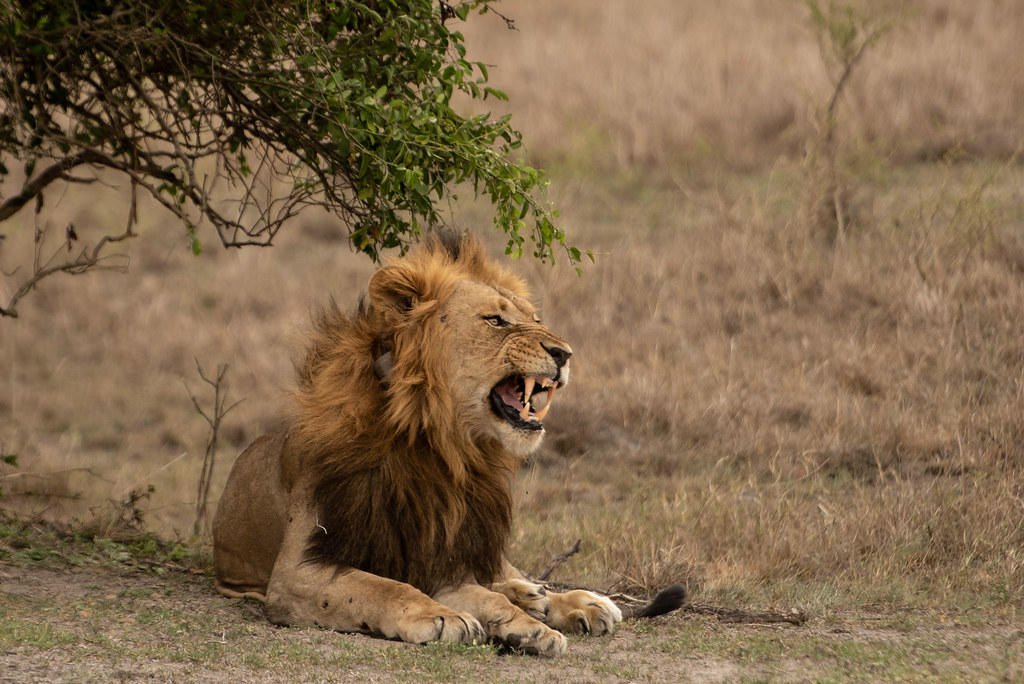
Nyungwe Forest National Park: An Overview
Nyungwe Forest National Park sits in the southwestern corner of Rwanda, in the Rusizi District, along the border with Burundi, and spreads across a landscape of steep ridges and deep valleys that rise to a maximum altitude of 2,921 metres at Mount Bigugu. The forest is contiguous with Kibira National Park in Burundi to the south, creating a combined forest complex of over 2,000 square kilometres that represents the largest continuous block of Afromontane rainforest in central Africa.
The park was first established as a forest reserve by the Belgian colonial administration in 1933, achieved national park status in 2004, and since 2020 has been managed under a twenty-year partnership agreement between the Rwanda Development Board and African Parks — the conservation organisation whose work in Akagera National Park had already transformed Rwanda’s eastern wildlife landscape. Under African Parks’ management, anti-poaching operations have removed 60 percent of all poachers’ snares from the forest, community eco-ranger programmes have transformed former poachers into the park’s most effective guardians, and the tourism infrastructure has been progressively developed to match the quality of the ecological experience the forest offers.
The biodiversity statistics for Nyungwe Forest National Park are extraordinary by any measure. Thirteen primate species — representing 25 percent of Africa’s total primate diversity — share the forest, including chimpanzees, Ruwenzori black-and-white colobus, L’Hoest’s monkeys, silver monkeys, grey-cheeked mangabeys, red-tailed monkeys, olive baboons, and the rare owl-faced monkey (Hamlyn’s monkey). Over 345 bird species have been recorded, including 30 endemics of the Albertine Rift. Eighty-five mammal species, 38 reptiles, 32 amphibians, and 1,068 plant species — including extraordinary tree ferns, giant mahogany, ebony, and over 200 orchid species — complete a biological inventory that has made Nyungwe Forest national Park the most species-diverse forest in the entire Albertine Rift mountain system.
The forest sits at the hydrological heart of central Africa: the eastern slopes feed the headwaters of the Nile, while the western slopes drain into the Congo basin. The wetlands, rivers, and high-altitude bogs that dot the forest interior regulate Rwanda’s freshwater supply and moderate the country’s climate in ways that make Nyungwe’s conservation significance extend far beyond its biodiversity. To stand at the Uwinka ridgeline and look down into both river systems simultaneously is to appreciate, in physical terms, what it means to be at the center of a continent.
Chimpanzee Communities of Nyungwe: Two Groups, Two Experiences
Nyungwe is home to an estimated 500 chimpanzees distributed across multiple groups within the forest. Two communities have been habituated for visitor tracking: the large Uwinka community, based near the park headquarters at Uwinka in the central part of the forest, and the smaller Cyamudongo community in the Cyamudongo Forest, an isolated forest fragment to the north of the main park boundary.
The Uwinka community is the primary tracking group, currently numbering approximately 60 individuals. It is one of the largest habituated chimpanzee communities in East Africa, and the sheer number of animals — the calls that carry across multiple ridgelines simultaneously, the sight of eight or ten individuals in the same tree, the particular social complexity that a community of this size generates — creates a tracking experience of exceptional depth and intensity.
This community ranges widely across the Uwinka sector, which means tracking times vary significantly: some mornings contact is established within thirty minutes; on others the trackers follow the community across two or three ridges before visual contact is made, and the approach becomes an immersive forest walk in its own right.
The Cyamudongo community, numbering approximately 30 individuals in an isolated forest patch, offers a more intimate encounter — fewer individuals, a more compact ranging area, and a quality of closeness to the animals that the larger Uwinka community does not always provide. Access to Cyamudongo requires a separate approach and is logistically distinct from the Uwinka tracking. For guests with two days in the park, experiencing both communities provides an instructive and richly rewarding comparison.
Both habituated communities are monitored daily by ranger teams, and the tracking briefing each morning includes a radio update on the community’s overnight location. The tracking is led by Rwanda Development Board rangers who have spent years working with these specific animals, and whose ability to read the forest’s signals — a freshly broken branch, the particular silence that follows a vocalization, the direction in which a fig wasp is flying — is the accumulated knowledge of careers spent in this canopy.
Chimpanzee Tracking in Nyungwe: The Full Experience
Chimpanzee tracking in Nyungwe begins at the Uwinka Visitor Centre at 5:00 AM for the morning session — earlier than at any other primate tracking site in Rwanda, because the chimpanzees in Nyungwe’s dense forest begin moving with the first light and the tracking teams need to locate the community before it ranges beyond comfortable pursuit distance. The pre-dawn drive from your lodge to the visitor centre, through forest mist with the valley below invisible in cloud, is itself a notable experience.
The briefing, conducted by a Rwanda Development Board ranger, covers the standard behavioural protocols: maintain a minimum eight-metre distance from the animals; no flash photography; turn away and cover your mouth if you need to cough or sneeze; if an individual approaches within the minimum distance, hold your ground and remain calm; do not make direct prolonged eye contact with adult males during displays. These protocols are the architecture of a sustainable encounter, and the rangers enforce them with a quiet authority that comes from genuinely caring about the animals’ wellbeing.
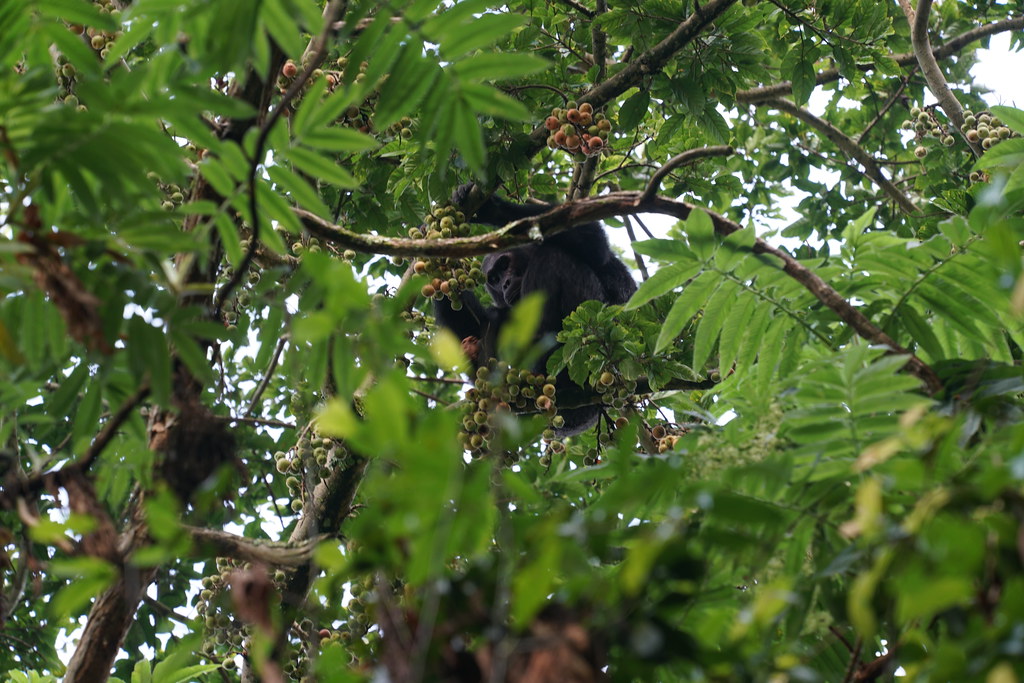
A maximum of eight visitors per tracking session is permitted. This group size is consistently lower than what Nyungwe’s canopy and trail widths could theoretically accommodate, and it is maintained because eight is the number that allows the encounter to remain personal rather than performative. Your group of eight moves with two rangers and the tracking team through forest that changes character every hundred metres: dense low vegetation in the valley bottoms giving way to tall canopy forest on the ridge tops, bamboo groves on the northern slopes, and the occasional clearing where a fallen giant has opened the canopy to the sky and flooded the space below with a year’s worth of accumulated growth.
When contact is established — the trackers’ radio call confirmed by the sound, first distant and then very close, of a male in full vocalization — the experience moves from tracking to encounter with a speed that consistently surprises first-time visitors. Chimpanzees are not still. They are fifty to sixty individuals moving through multiple canopy layers simultaneously, vocalizing, feeding, grooming, displaying, and entirely focused on the business of being chimpanzees. Your hour with the Uwinka community is one of the most energetically demanding and emotionally stimulating wildlife experiences in Africa, and it is the complete opposite of the meditative gorilla encounter: loud, fast, unpredictable, and utterly alive.
An afternoon tracking session departs at 2:00 PM and is recommended for guests who have found the morning community at distance on Day 1 and want a second, potentially closer encounter. The afternoon session moves through the same forest with a different quality of light — warmer, more directional, often clearing after the midday cloud — and the community’s afternoon behaviour (feeding, social grooming, preparing to build night nests) is distinct from the morning’s activity.
Chimpanzee Tracking Permit Costs in Nyungwe
Rwanda Development Board sets the chimpanzee tracking permit fee for Nyungwe at USD 150 per person per session for international visitors. This applies to both the Uwinka community and the Cyamudongo community. East African Community citizens receive a concessional rate; your Gorilla Safaris consultant will confirm current pricing at the time of enquiry.
Permits must be booked in advance — walk-in availability at Uwinka cannot be guaranteed, particularly in peak season months of June through September. At Gorilla Safaris, we secure permits as part of the itinerary planning process and confirm availability before any travel arrangements are finalised.
Book your Nyungwe chimpanzee permit:
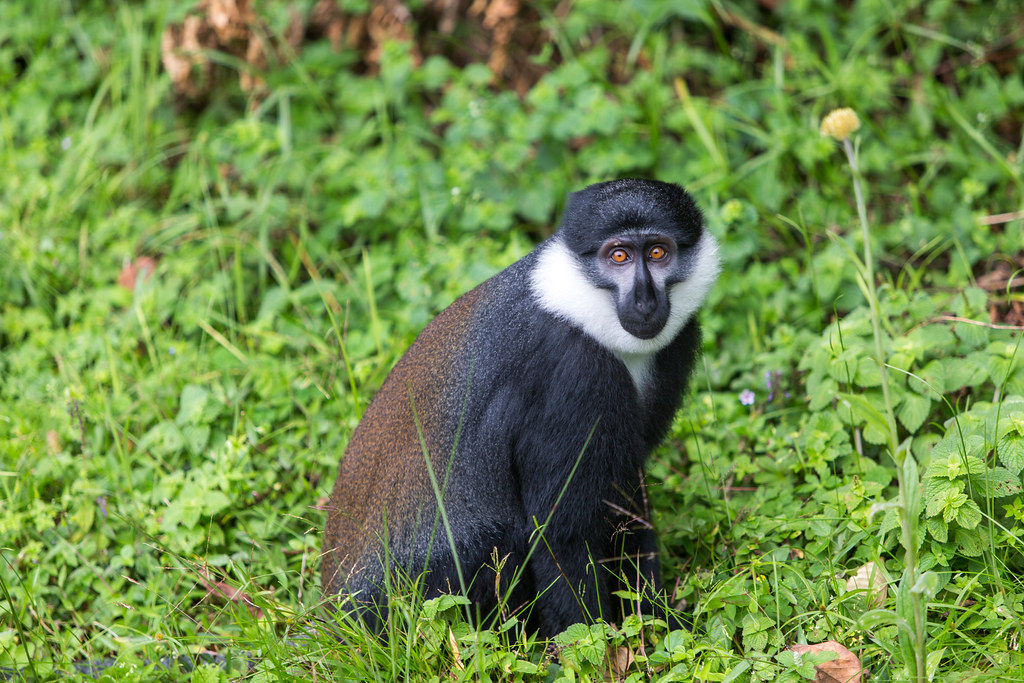
The Angola Colobus Monkeys of Nyungwe Forest National Park
The genocide of 1994 and the displacement of populations that followed destroyed much of this — lions were eliminated by 2000, black rhino by 2007, wild dogs long before. When African Parks assumed management in 2010, the park was a fraction of its former self in every sense. The reversal that followed — systematic elimination of poaching, electrification of the western boundary fence, reintroduction of lions, black rhino, and white rhino, engagement of surrounding communities as economic stakeholders — is a model of how protected areas can be rebuilt. Not a single high-value species has been lost to poaching since 2010.
The park now counts lions (58 individuals), both black and white rhino, leopard, elephant, and buffalo — the complete Big Five, restored to a landscape that had lost them all.Â
How to Get to Nyungwe Forest National Park
From Kigali by Road
The drive from Kigali to Nyungwe’s Uwinka headquarters takes approximately four to five hours on good tarmac roads through the southern highlands. The route passes through Butare (Huye) — Rwanda’s university town and home to the National Museum — and then descends into the increasingly dramatic southwestern landscape before climbing toward the forest boundary. The final approach to Uwinka, through tea estates and then along the forest boundary road, is one of the most scenic drives in Rwanda. All Gorilla Safaris transfers are conducted in private, air-conditioned 4WD vehicles with professional drivers.
For guests combining Nyungwe with Volcanoes National Park — Rwanda’s classic pairing — the journey between the two parks takes approximately six hours via the scenic Lake Kivu road through Kibuye (Karongi) and Gisenyi (Rubavu), offering one of the most visually remarkable drives in central Africa: the lake shore on one side, the Congo hills on the other, and the volcanic northwest gradually replacing the forest southwest as you travel. This road journey is an experience in its own right and should be planned for rather than endured.
Via Lake Kivu
For guests building a full Rwanda circuit, the journey from Nyungwe to Volcanoes National Park via Lake Kivu adds a full day to the itinerary and rewards it with one of Africa’s great scenic landscapes. An overnight at a Lake Kivu lodge — the One&Only Kivu properties or the venerable Serena Hotel Kivu in Gisenyi — breaks the journey and provides a stunning rest point between Nyungwe’s ancient forest and the volcanic northwest. Gorilla Safaris regularly arranges this three-park circuit as the definitive Rwanda itinerary.
Best Time to Visit Nyungwe National Park
Nyungwe receives visitors year-round, and chimpanzee tracking is available in every month. The forest’s climate — genuinely wet in all seasons, more so in the long rains of March through May and the short rains of October and November — means that the concept of a ‘dry season’ in Nyungwe is relative rather than absolute. This is a rainforest; some moisture always accompanies the experience, and learning to regard it as part of the atmosphere rather than an obstacle is essential preparation.
Dry Season: June to September and December to February
The primary dry season runs from June through September, with the shorter dry window of December to February offering similar conditions. During these months the trails are firmer, the mornings more reliably clear, and the canopy walk at its most visually rewarding — the forest laid out below the bridges without the cloud cover that can reduce visibility in the wet season.
Chimpanzee tracking is available and productive year-round, but the dry season months tend to concentrate the community’s ranging in areas with fruiting trees, which can mean shorter tracking times and more sustained encounters.
June through September is the most popular period in both Nyungwe and Volcanoes National Park, and permit availability at both sites requires advance booking. July and August in particular attract significant visitor numbers from Europe and North America on their summer travel windows.
Green Season: March to May and October to November
The wet season months transform Nyungwe Forest national Park into its most primevally alive state: the forest deepest green, the waterfalls at their most spectacular, the birds at peak nesting and singing activity, and the chimpanzees frequently at lower elevations and in denser concentrations as they follow the flush of new fruit. March through May is particularly good for chimpanzee tracking in Nyungwe for this reason — the communities range less widely when food is plentiful at lower elevations, and the encounters are often longer and more intimate than in the dry season.
The trails are muddier in the wet season, and the morning temperature at Uwinka can be significantly colder. But guests who arrive properly equipped — waterproof boots, rain jacket, layers — frequently describe wet-season Nyungwe as the most atmospheric and affecting version of the forest. Permits are more available, lodges more open on rates, and the forest is at its most itself. For birding visitors, March through May is unquestionably the prime season.
Other Activities To Do in Nyungwe Forest National Park
The Canopy Walk
Among all the activities available in Nyungwe, the canopy walk is the one most likely to appear in your long-term memory unprompted — years after the visit, at odd moments. Suspended fifty metres above the forest floor on a series of hanging bridges stretched between emergent trees in the Uwinka sector, the walk is both an act of mild bravery and an act of complete surrender to the scale of the forest around you.
Below: a green world that extends in every direction without break or boundary. Above: the light through the topmost branches, and occasionally — drifting silently overhead — a crowned eagle.
The walk itself takes approximately one hour from the trailhead at Uwinka and covers 200 metres of suspended bridge. The bridges sway gently. The platform at the midpoint is wide enough to stand in a small group and look, in all directions, at the largest continuous Afromontane forest in Africa. It is not recommended for those with a genuine phobia of heights, but for everyone else it is non-negotiable. The best conditions are in the early morning before the cloud comes in, which makes combining the canopy walk with an early morning chimpanzee tracking session — walk first, tracking after — the most rewarding single-day programme available in the park.
Nature Walks and Trail System
Nyungwe Forest National Park has one of the most extensive and well-maintained trail networks in Rwanda, with over 70 kilometres of marked trails radiating from the Uwinka and Gisakura visitor centres.
Trails range from gentle one-hour walks along the forest boundary to full-day ridge traversals that descend into the valley systems and emerge, hours later, with a comprehensive education in the forest’s vertical ecology. The Bigugu Trail, ascending to the park’s highest point at 2,921 metres, rewards fit walkers with views that extend on clear days to Lake Kivu in the west and the Congo highlands beyond. The Kamiranzovu Trail leads to a high-altitude wetland of extraordinary botanical diversity — water sedges, highland bogs, and the particular bird community that inhabits these saturated upland habitats.
Every trail in Nyungwe Forest National Park requires a ranger guide from either the Uwinka or Gisakura visitor centres. This requirement is both a safety measure and an enrichment: Nyungwe’s rangers have accumulated decades of knowledge about the forest’s ecology, its plant medicines, its primate movements, and its bird communities, and walking with them is a different experience from walking alone.
Birdwatching in Nyungwe
Nyungwe Forest National Park is one of the top five birdwatching destinations in Africa. Its 345 recorded species include 30 Albertine Rift endemics — among the highest concentration of restricted-range bird species of any forest in the region. The Grauer’s rush warbler, the Rwenzori batis, the African green broadbill, the Albertine owlet, the Ruwenzori apalis, the handsome francolin, and the Congo bay owl — considered one of Africa’s rarest birds — have all been recorded in Nyungwe. The park’s altitudinal range (from 1,600 metres at the forest edge to 2,921 metres on Bigugu) creates multiple distinct bird communities, and a dedicated birding guide — available through Gorilla Safaris for guests who want a focused ornithological programme — can target specific species with the precision of long field experience.
Dawn walks from Gisakura or along the trails near the tea estate boundary are particularly productive, as the morning chorus in Nyungwe approaches an intensity that experienced birders describe as among the finest in Africa. The combination of forest interior species, waterfall-edge specialists, and open-edge raptors visible from a single ridge in a single morning is routinely extraordinary.
Colobus Monkey Tracking
Dedicated colobus monkey tracking excursions depart from Uwinka Visitor Centre and follow the trails most frequented by the park’s colobus groups. Unlike chimpanzee tracking, colobus encounters cannot be guaranteed on a specific trail — the groups range widely and their movements are influenced by fruiting patterns rather than habituated routine. But the encounter rate on a dedicated two-hour colobus walk is high, and the supporting cast of L’Hoest’s monkeys, silver monkeys, red-tailed monkeys, and grey-cheeked mangabeys that appear along the same trails makes a colobus tracking morning one of the richest multi-species primate experiences available in Rwanda.
The Kamiranzovu Wetland Walk
The Kamiranzovu swamp, accessible via the Kamiranzovu Trail from Uwinka, is a high-altitude wetland of remarkable ecological significance — one of the tributaries of the Nile rises in these highland bogs. The walk to the wetland takes approximately two hours and passes through forest of increasing antiquity, the trees growing larger and more moss-draped as elevation increases. The wetland itself supports a distinct bird community, several rare frog species, and the Rwenzori double-collared sunbird in breeding plumage. For guests with a particular interest in wetland ecology or Nile watershed geography, this walk is essential.
Gisakura Tea Estate and Community Visits
The Gisakura Tea Estate, adjacent to the southern park boundary, is one of Rwanda’s finest — a landscape of emerald-green terraces that provide a striking visual counterpoint to the dark canopy beyond the boundary fence. Guided walks through the estate connect guests with the community members who tend it, and the combination of estate and forest edge makes Gisakura one of the best locations in Nyungwe for open-country and forest-edge bird species. Several lodges in the area are positioned with views of both the tea estate and the forest, creating a visual experience that is distinctly Nyungwe’s own.
Where to Stay in Nyungwe Forest National Park
The accommodation landscape around Nyungwe Forest National Par has developed significantly since the park’s establishment, and the range now available — from properties that compete with the finest lodges in Africa to comfortable and well-positioned mid-range options — means that every budget and every style of travel can find its appropriate base in this landscape.
Luxury
One &Only Nyungwe House, positioned on the edge of the Gisakura Tea Estate with the forest beginning immediately behind the property, is the definitive luxury statement in Nyungwe. Eighteen rooms and suites, each with private terraces looking across the tea estate toward the forest canopy, a spa programme that draws on the forest’s botanical heritage, and a kitchen whose dining experience is the finest in southwestern Rwanda. The lodge manages all park activities — including priority access to chimpanzee tracking permits and canopy walk bookings — through its own guiding team, and the quality of the naturalist guides it employs represents one of the finest field interpretation programmes available anywhere in East Africa. Staying at One&Only Nyungwe House is not merely comfortable accommodation before and after a forest experience. It is the forest experience, extended into every hour of the day.
Â
Nyungwe Top View Hill Hotel, on the ridge above Uwinka with views across the forest canopy in three directions, offers a mid-to-upper position that rewards guests who prioritise location above all else. The rooms are simpler than Nyungwe House, but the morning light over the canopy from the lodge terrace, and the immediate access to the Uwinka trail network, create a different kind of luxury — one of proximity and immersion rather than service and architecture.
Mid-Range
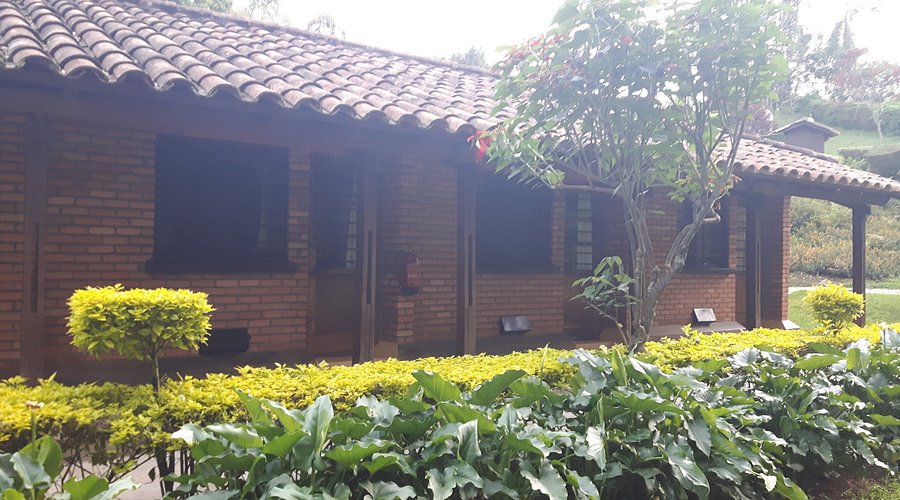
Gisakura Guest House, positioned at the park boundary near the Gisakura Visitor Centre, is the most established mid-range property in the Nyungwe area and has been hosting visiting naturalists, researchers, and general visitors since the park’s early years. The rooms are clean and comfortable, the staff knowledgeable about park logistics, and the location — within walking distance of the tea estate and the forest boundary — makes it an excellent base for early morning forest entries without the added logistics of a longer drive. Uwinka Guest House, operated by Rwanda Development Board at the park headquarters, offers basic but well-positioned accommodation for guests whose primary interest is maximum access to the trail network.
Budget Options
For travellers whose budget prioritises the park permit investment over accommodation, several clean guest houses operate in the nearby towns of Rusizi and Huye (Butare). The drive to the park from either town adds approximately one hour to the morning departure time, which needs to be factored against the 5:00 AM chimpanzee tracking briefing. Gorilla Safaris can advise on the best budget option for your specific itinerary and will always be transparent about the trade-offs involved in each accommodation choice.
What to Wear and Pack for Nyungwe Forest National Park
Nyungwe’s rainforest designation is not metaphorical. The forest receives over 2,000 millimetres of rainfall annually, distributed across all months, and even in the dry season a morning in the forest is a morning in an environment that is fundamentally wet. Preparation begins with this understanding.
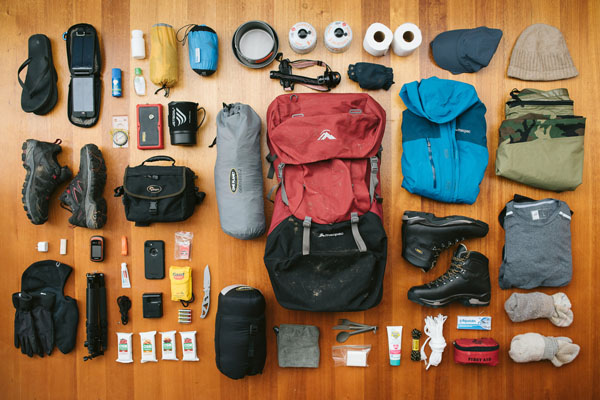
Long-sleeved shirts and long trousers in neutral or dark colours — forest green, dark khaki, charcoal, or dark brown — are essential for all forest activities. The understory vegetation in Nyungwe includes nettles, rough-leaved climbers, and the safari ant columns that move across trails with a commitment that finds any exposed skin with remarkable efficiency. Bright colours are disruptive to wildlife encounters and unnecessary in a forest where your comfort is better served by subdued tones anyway.
Waterproof hiking boots with ankle support are the single most important piece of equipment for any Nyungwe activity. The forest trails — even the well-maintained ones near Uwinka — are steep, root-crossed, and perpetually damp in ways that destroy inappropriate footwear within an hour. Break them in before your visit; a boot that has been worn for twenty hours before your first Nyungwe morning will carry you through terrain that a new boot would make miserable. Waterproof gaiters are strongly recommended for the valley-floor sections where mud can accumulate to boot-top depth after recent rain.
A high-quality rain jacket or packable waterproof poncho is non-negotiable, carried in your pack even on mornings that begin dry. Nyungwe rain can arrive with complete decisiveness in any season, and being caught on a ridgeline trail without waterproof outer layers is an avoidable discomfort. A lightweight fleece addresses the morning cold at Uwinka’s elevation (2,400 metres) — the temperature at the pre-dawn briefing can fall to 10°C, and the first two hours of tracking are often the coldest.
Your day pack should contain: at minimum 1.5 litres of water (the exertion of tracking at altitude requires consistent hydration), high-energy snacks, a small first-aid kit including blister treatment, insect repellent (particularly for the valley-floor trails), your camera with a charged battery and no flash, and a silenced phone. Porters are available at both Uwinka and Gisakura visitor centres for approximately USD 10 to USD 15 per session and are strongly recommended — carrying your pack frees your hands and attention for the encounter.
What to Wear and Pack for Nyungwe Forest National Park
Q: How much does chimpanzee tracking cost in Nyungwe National Park?
The chimpanzee tracking permit for Nyungwe Forest National Park costs USD 100 per person per session for international visitors. This applies to both the Uwinka community (the larger group near park headquarters) and the Cyamudongo community. East African Community citizens receive a concessional rate. Permits should be booked in advance, particularly for peak season months of June through September, as the maximum of eight visitors per session means daily availability is limited.
Q: How many chimpanzee groups can be tracked in Nyungwe?
Two habituated chimpanzee communities are available for visitor tracking in Nyungwe: the Uwinka community, numbering approximately 60 individuals near the park headquarters, and the smaller Cyamudongo community of approximately 30 individuals in an isolated forest fragment north of the main park. Both communities can be visited in a single extended stay, and the contrast between the two encounters — large community versus intimate group — makes experiencing both highly recommended.
Q: When is the best time to track chimpanzees in Nyungwe?
Chimpanzee tracking is available year-round in Nyungwe. The dry seasons — June through September and December through February — offer the most stable trail conditions and are the most popular periods. The wet seasons — March through May and October through November — often produce more concentrated chimpanzee ranging at lower elevations as food is more plentiful, which can result in shorter tracking times and closer encounters. The wet season also offers exceptional birding and the most visually dramatic forest conditions, with more available permits and lower lodge rates.
Q: Is Nyungwe Forest a UNESCO World Heritage Site?
Yes. Nyungwe Forest National Park was inscribed on the UNESCO World Heritage List in September 2023, during the 45th session of the World Heritage Committee. It was recognised under the natural heritage criteria for its outstanding biological diversity, including the highest concentration of endemic species of any forest in the Albertine Rift Mountains, its significance as one of Africa’s best-preserved montane rainforests, and its role as a critical water tower for two of the world’s major river systems — the Congo and the Nile.
Q: How many primate species live in Nyungwe Forest?
Nyungwe is home to 13 primate species — representing approximately 25 percent of Africa’s total primate diversity. The species present include chimpanzees, Ruwenzori black-and-white colobus (in groups of up to 400 individuals, the largest colobus aggregations in Africa), L’Hoest’s monkeys, silver monkeys, golden monkeys, Hamlyn’s (owl-faced) monkeys, red-tailed monkeys, grey-cheeked mangabeys, Dent’s mona monkeys, vervet monkeys, and olive baboons.
Q: How difficult is chimpanzee tracking in Nyungwe?
Chimpanzee tracking in Nyungwe is moderately to significantly demanding, depending on where the community has ranged on the morning of your trek. The forest terrain is steep, the trails often wet and root-crossed, and tracking times can extend to three or more hours on days when the community has moved deep into the forest interior. Good physical fitness is recommended. The right footwear — waterproof hiking boots with ankle support — and a porter to carry your daypack significantly reduce the physical demand. Guests with mobility limitations should discuss the Uwinka terrain with our team before booking.
Q: What is the best accommodation in Nyungwe Forest National Park?
One&Only Nyungwe House, on the edge of the Gisakura Tea Estate, is the finest lodge in the park and one of Rwanda’s best overall properties — with forest-edge positioning, excellent cuisine, and a naturalist guiding team of the highest standard. Nyungwe Top View Hill Hotel offers a mid-range option above Uwinka with direct canopy views and immediate trail access. Gisakura Guest House provides reliable, well-positioned accommodation at a lower price point. Gorilla Safaris selects accommodation based on each guest’s specific itinerary and budget, and will provide honest guidance on the trade-offs involved in each option.
Q: How far is Nyungwe from Kigali and Volcanoes National Park?
Nyungwe is approximately four to five hours’ drive south of Kigali International Airport on good tarmac roads through Rwanda’s southern highlands. Volcanoes National Park in the northwest is approximately six hours from Nyungwe via the Lake Kivu shore road — a scenic route that is considered part of the overall Rwanda experience rather than a logistics inconvenience. Many guests break the journey with an overnight at Lake Kivu, creating a three-park Rwanda circuit that we consider the definitive introduction to the country.
Q: Are there birds unique to Nyungwe that can’t be found elsewhere?
Nyungwe holds the highest concentration of Albertine Rift endemic bird species of any forest in Rwanda, with 30 such species recorded. Several of Africa’s rarest birds have been found in Nyungwe, including the Congo bay owl — considered one of the continent’s most elusive species — the African green broadbill, the Albertine owlet, the Rwenzori apalis, and the Ruwenzori batis. For serious birders, Nyungwe is considered one of Africa’s top ten birding sites, and a dedicated birding guide can be arranged through Gorilla Safaris for guests who want a focused ornithological programme.
Q: Can I combine Nyungwe with a gorilla trek at Volcanoes National Park?
Absolutely — and this is the combination we most frequently design for guests visiting Rwanda for the first time. The two parks represent complementary wildlife experiences: Nyungwe offers chimpanzees, colobus monkeys, canopy walks, and lowland rainforest; Volcanoes offers mountain gorillas, golden monkeys, and volcanic highland scenery. Combined with a night at Lake Kivu between the two parks, this trio constitutes the complete Rwanda safari. Gorilla Safaris’ 9-Day Rwanda Complete Safari itinerary is specifically designed around this combination.
You know the forest now — its age, its depth, its biological improbability, the chimpanzee communities that inhabit it and the colobus groups that move through it in their hundreds. You understand the canopy walk and the Bigugu trail and the Kamiranzovu wetland and the dawn birding chorus that rivals anything in Africa. What remains is the conversation between you and our team about the specific journey that will take you into all of this — your dates, your physical preferences, your accommodation priorities, your vision of what three days or six days or nine days in Rwanda’s oldest forest should feel like.
At Gorilla Safaris, every Nyungwe programme is designed from first principles, for the specific guest in front of us. Every permit is secured in advance. Every transfer is in a private vehicle with a driver who knows the roads and a guide who knows the forest. Every accommodation is selected for its specific role in the overall experience. The 5:00 AM briefing at Uwinka — which will happen on the morning of your first tracking session — will have been prepared for months.
Nothing is left to chance. The forest is wild; your logistics are not. The only decision you need to make is to begin.