Picture a landscape so compositionally rich that a single afternoon drive can carry you from open golden savanna, past a chain of explosion craters carved into rolling green hills, down to the banks of a channel where two thousand hippopotamuses surface in rotation, and on — if the light holds — to a fig tree on the Ishasha sector where a lion stretches across a branch at six feet above the ground, watching you with the unhurried composure of an animal that has always known it is not the most impressive thing in the frame.
 This is Queen Elizabeth National Park, and it is, by almost every measure, Uganda’s most layered and compulsively fascinating safari destination. Gazetted in 1952 as Kazinga National Park and renamed shortly thereafter to honour a visit by the young Queen Elizabeth II, the park straddles the equator in western Uganda with a confidence that matches its extraordinary biological credentials: 95 mammal species, over 600 bird species — ranking it among the six most bird-diverse locations on earth — and an ecosystem mosaic so varied that some of Africa’s finest naturalists describe it as two or three parks compressed into one.
Queen Elizabeth National park’s 1,978 square kilometres encompass open savanna, humid tropical forest, volcanic crater lakes, fertile wetlands, and the Kazinga Channel — a 40-kilometre natural waterway connecting Lake Edward to Lake George whose banks carry the highest concentration of hippopotamuses and Nile crocodiles of almost anywhere on the continent. The Kasenyi Plains in the north deliver classic African game viewing: lion prides on buffalo hunts, elephant herds at waterhole, leopard in the long grass. The Kyambura Gorge — a 100-metre-deep forested canyon cut into the plateau — shelters a population of chimpanzees of rare intimacy, observable in the depths of what guides call the Valley of the Apes. And the Ishasha sector in the south holds the only reliably tree-climbing lions in East Africa — a local adaptation of such improbable specificity that it has made this corner of the park world-famous.
For the solo traveller drawn by the promise of lion sightings on the open plains, the couple who want the Kazinga Channel at golden hour, the family whose children have been promised that Africa is real and not a documentary, the small group chasing the full complement of Uganda’s wildlife experiences before heading south to gorilla trekking at Bwindi Impenetrable National Park — Queen Elizabeth National Park is the place that makes every other park make sense. It is the context into which all of Uganda’s wildlife fits. And this is your complete guide to experiencing it.
Park at a Glance
Feature | Details |
Location | Western Uganda, Kasese and Rubirizi Districts |
Size | 1,978 km² (plus adjacent reserves: Kyambura 154 km², Kigezi 265 km²) |
Established | 1952 (originally Kazinga National Park; renamed 1954) |
UNESCO Status | UNESCO World Biosphere Reserve |
Altitude | 914 m above sea level (Rift Valley floor) |
Wildlife | 95 mammal species, 600+ bird species, 2,000+ hippos in Kazinga Channel |
Signature Features | Tree-climbing lions (Ishasha), Kazinga Channel cruise, Kyambura Gorge chimps, explosion crater lakes |
Distance from Kampala | ~420 km (5–6 hours by road; 1.5 hours by charter flight) |
Best Time to Visit | June–September and December–January (dry seasons) |
Park Entrance Fee | USD 45/day (Non-resident adults) | USD 20 (Non-resident children) | UGX 20,000 (East African residents) |
Queen Elizabeth National Park sits in the western arm of the Albertine Rift, accessible from Kampala or Entebbe by several routes — each with its own character and its own logic depending on what else you are combining in your Uganda itinerary. Gorilla Safaris arranges all transfers in private, fully equipped 4×4 vehicles with experienced driver-guides, so the journey to the park is as much a part of the experience as the park itself.
By Road via Mbarara (Southern Route — Most Common)
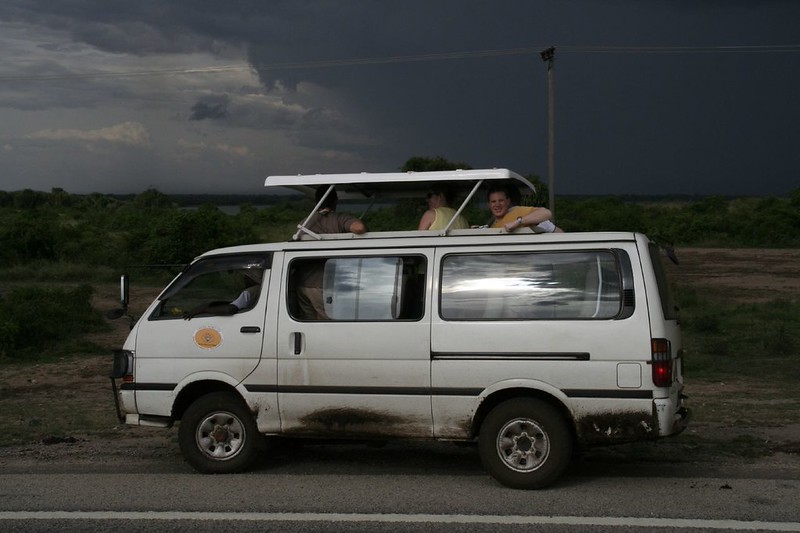 The most travelled approach from Kampala to the main Mweya Peninsula sector of the park runs approximately 420 kilometres south and west via Masaka and Mbarara, entering the park from the Katunguru gate on the eastern boundary. In a private safari vehicle, the journey takes five to six hours, passing through the tea estates and crater lake country of western Uganda before the wide, flat floor of the Albertine Rift opens ahead with the park’s escarpment and the Rwenzori Mountains forming the northern wall. This is a drive worth taking slowly, with stops at the Equator crossing at Kayabwe and, for those who want to begin their wildlife experience before reaching the park, at Lake Mburo National Park en route.
By Road via Fort Portal (Northern Route)
The northern approach from Fort Portal — preferred for travellers combining Queen Elizabeth with Kibale Forest chimpanzee tracking or the Rwenzori Mountains — enters the park from the Kasese side and provides a more dramatic first impression of the landscape, with the Rwenzori range visible to the north as the road descends toward the park’s upper boundary.
By Charter Flight
Charter flights from Entebbe International Airport to Mweya airstrip reduce the road journey to approximately 90 minutes and are the preferred option for travelers on tight schedules or those combining the park with a fly-in safari elsewhere in Uganda. Your dedicated vehicle meets every flight at the airstrip. Gorilla Safaris coordinates all charter bookings and ground transfers as part of a seamlessly arranged itinerary.
From Bwindi (Ishasha Entry)
Travellers completing their mountain gorilla trekking at Bwindi frequently continue north to Queen Elizabeth National Park through the remote Ishasha sector — an approach that delivers you directly to the tree-climbing lion territory before working north toward the Kazinga Channel and Mweya. This route is particularly beloved by those who want to experience the park’s full north-south sweep in a single itinerary.
Queen Elizabeth National Park rewards visitors year-round, but understanding the seasonal rhythms of the park — and matching them to the specific experiences you are prioritising — will elevate the quality of your safari considerably. Unlike some East African parks, Queen Elizabeth’s Kazinga Channel boat cruise is exceptional in all seasons; it is the game driving and chimpanzee tracking conditions that change most significantly between wet and dry.
Dry Season: June to September
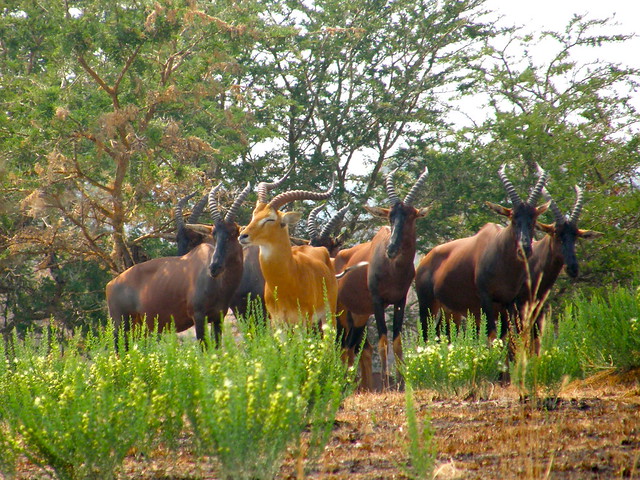 The long dry season is the most popular and arguably the most productive time for wildlife viewing in Queen Elizabeth National Park. The Kasenyi Plains are at their most open, lions are more active in the reduced grass cover, and the concentration of animals around permanent water sources makes sightings more predictable. The Kazinga Channel reaches its annual peak of hippo density as animals from surrounding areas converge on the water. This is peak season — accommodation must be reserved months in advance, particularly for July and August.
Dry Season: December to January
The short dry season offers similar game viewing quality to June–September with notably lighter visitor numbers, making December and January among the most rewarding months for those who dislike sharing the park. The Christmas period fills quickly at premium lodges; early January, in contrast, is one of the most under-appreciated times of year for a Queen Elizabeth safari. The light in the first weeks of the year is extraordinary — clear, golden, and ideal for photography.
Wet Season: March to May and October to November
The wet seasons bring rain that rarely persists for a full day but transforms the park’s appearance dramatically: the savannas green, the crater lakes fill, the bird diversity explodes as migratory species arrive from as far as Europe and the Middle East. Chimpanzee tracking in Kyambura Gorge is rewarding in all seasons — the chimps’ movements are driven by food availability rather than rainfall — and the Kazinga Channel is, if anything, more visually lush after the rains. Accommodation rates are lower, and the park carries a fraction of its peak-season visitor numbers. For photographers and birdwatchers, the wet season has a genuine argument for being the finest time of year.
Best Time for Specific Activities
Tree-climbing lions (Ishasha): Year-round, though the lions are more reliably in the trees during the hotter, drier months when shade is at a premium.
Chimpanzee tracking (Kyambura Gorge): Year-round. The gorge provides shade and chimp food sources in all seasons.
Kazinga Channel boat cruise: Year-round — this is the park’s most consistently spectacular activity regardless of season.
Birdwatching: The wet seasons (March–May, October–November) bring migratory species and peak diversity. Year-round the park is outstanding.
The Kazinga Channel — Africa’s Greatest River Safari
The Kazinga Channel is Queen Elizabeth’s centrepiece and, in the opinion of many East Africa specialists, the finest boat safari experience on the continent. This 40-kilometre natural waterway connects Lake George to Lake Edward and carries, on its banks and in its shallows, an extraordinary concentration of wildlife.
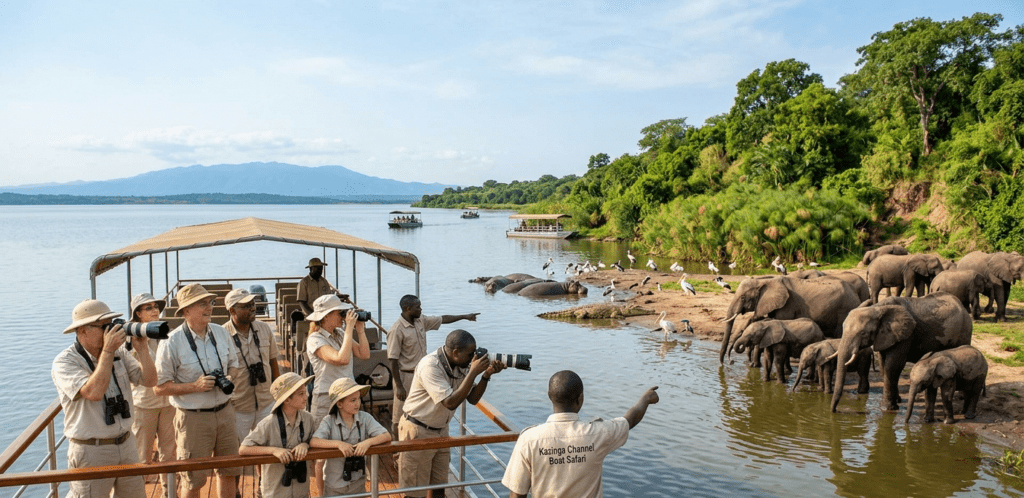
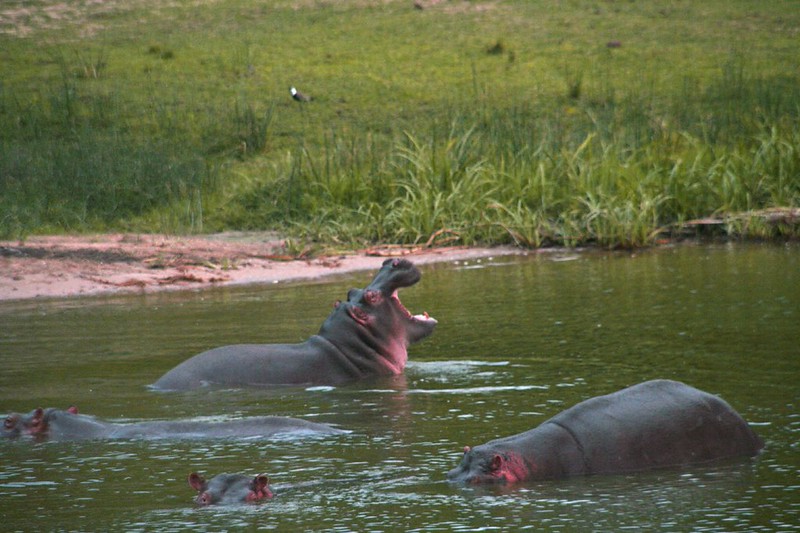
Two thousand or more hippopotamuses inhabit the channel — surfacing, snorting, mock-charging, and submerging with the unhurried confidence of animals who have occupied this water for millennia. Nile crocodiles of considerable size bask on the sandy banks. African fish eagles call from the trees above. Elephants wade in the shallows, their trunks extended, utterly untroubled by the passing launch. Over 100 species of waterbird have been recorded on a single afternoon cruise, including the African skimmer stitching its beak through the water’s surface at speed. An afternoon on the Kazinga Channel, watching the light change from afternoon gold to sunset amber, is one of those experiences that arrives without adequate preparation and departs as a permanent memory.
Tree-Climbing Lions of Ishasha
In the remote southern sector of the park, where the Ishasha River marks the border with the Democratic Republic of Congo and the giant fig trees shade the Ishasha plains, a local population of lions has developed the improbable habit of spending their days in the branches of those trees. This behaviour — found in only one or two other locations globally, most notably Tanzania’s Lake Manyara — is thought to result from a combination of factors: relief from ground-level insects and heat, better sightlines across the plain, and the social habit of a population that has practised this behaviour across generations. Whatever the explanation, the sight of three or four lions draped across the branches of a fig tree, tails hanging, observing the Uganda kob herds below with professional indifference, is one of African wildlife’s most purely remarkable spectacles.
Kyambura Gorge — The Valley of the Apes
Cut into the plateau at the park’s eastern edge, the Kyambura Gorge descends 100 metres through layers of forest, rock, and groundwater into a dense, humid jungle that stands in complete contrast to the savanna above its rim. This forested canyon shelters a habituated community of wild chimpanzees whose daily lives — foraging, socialising, patrolling territorial boundaries, and occasionally erupting into the wild, percussive drumming that carries through the gorge in waves of sound — can be observed from close range with a ranger guide. The chimps of Kyambura are, as the guides accurately describe them, the Lost Chimps: isolated from neighbouring populations by the canyon walls for long enough that their behaviour has developed its own specific character. To descend the rim of the gorge and enter the forest below is to cross into an entirely different world from the one you left at the top.
Kasenyi Plains — The Savanna
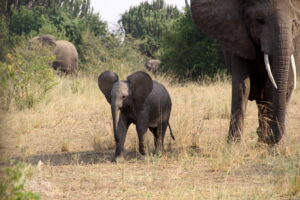 The Kasenyi Plains on the northern side of the Kazinga Channel are the park’s primary game driving terrain and one of the finest savanna game viewing areas in Uganda. Lion prides — some of the best-studied in East Africa through the Uganda Carnivore Programme — hunt the Uganda kob herds that graze here in their thousands.
Elephant family groups move between waterholes with a deliberateness that makes their travel feel like migration rather than daily movement. Buffalo herds fill the grassland in enormous numbers. Leopard are present, if reliably elusive. The Kasenyi game drives — particularly at dawn and dusk — produce the kind of sustained, multi-species wildlife viewing that makes other parks feel sparsely populated in comparison.
Explosion Crater Lakes
The northern section of the park is marked by a chain of volcanic explosion craters — dramatic circular depressions carved into the landscape by ancient geothermal activity — many of which have filled with water to form crater lakes of startling colour: some jade green, some steel blue, one famously blood red from its algae content. The crater circuit drive is one of the park’s most photogenic journeys, with panoramic viewpoints across the rift valley and the chain of lakes laid out below in a pattern that reveals the park’s volcanic origins with unmistakable clarity.
Maramagambo Forest
The Maramagambo Forest on the park’s eastern boundary is a dense tropical rainforest that holds its own ecological secrets: a cave system inhabited by a colony of Egyptian fruit bats and the olive pythons and bat hawks that feed on them; crater lakes accessible by forest trail; and a primate community that includes chimpanzees, black-and-white colobus, red-tailed monkeys, and olive baboons. Guided nature walks through the Maramagambo are a slower, more contemplative alternative to the vehicle-based game drive, rewarding those who walk at the pace the forest sets.
Lake Katwe Salt Works
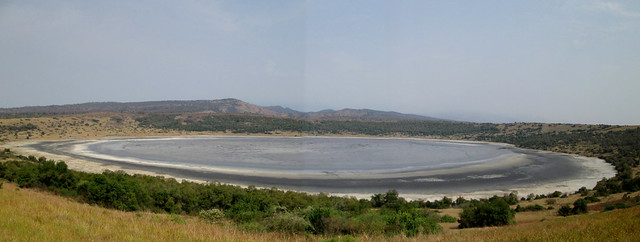 Lake Katwe — a shallow, volcanic alkaline lake at the park’s northern edge — has been harvested for salt by local communities for centuries. The salt works are one of Uganda’s most ancient industries, and a visit to the lake reveals an extraordinary landscape: shallow evaporation pools in shades of pink and white, workers harvesting salt using traditional wooden tools, the sharp smell of mineral-rich water, and the vivid geological reminder that this landscape sits directly above an active volcanic system. The Katwe salt works offer a cultural and geological experience of real depth that most park guides consider an essential addition to any Queen Elizabeth itinerary.
Birds — Sixth Most Bird-Diverse Location on Earth
Queen Elizabeth National Park’s 600-plus bird species place it among the six most bird-diverse locations on earth — a statistic that, once you have spent a morning on the Kazinga Channel with a pair of binoculars, ceases to feel like a statistic and starts to feel simply true. The African skimmer hunts the channel surface. The shoebill stork haunts the papyrus margins of Lake George. The African green broadbill and the black-and-white casqued hornbill inhabit the forest zones. The lesser flamingo turns the alkaline shorelines pink. The park’s position in the Albertine Rift — one of the world’s most important avian flyways — means that the bird list grows further every time a thorough survey is conducted.
Game Drives on the Kasenyi Plains
Dawn game drives on the Kasenyi Plains are the park’s most reliably productive wildlife experience. Departing your lodge before sunrise, your private guide drives the network of tracks across the plains as the light builds, reading the landscape with the practiced eye of someone who has spent years learning to distinguish what each grass movement, each bird behaviour, and each set of tracks in the dust might signal. The morning hours carry the highest probability of predator activity, and the drives across Kasenyi have produced some of the most celebrated lion encounters in Uganda’s safari history.
Kazinga Channel Launch Cruise
The standard afternoon launch cruise on the Kazinga Channel runs for two hours and is arguably the single most productive wildlife-per-hour activity available anywhere in Uganda. Private launch hire — available through Gorilla Safaris for those who prefer to experience the channel without sharing the boat with other guests — allows the pace, direction, and duration of the cruise to be determined entirely by what the wildlife is doing. A private launch at sunset, with the channel to yourself and the hippos performing in the golden light, is one of the definitive Queen Elizabeth experiences.
Chimpanzee Tracking — Kyambura Gorge
 Chimpanzee tracking in Kyambura Gorge begins at the gorge rim, where a ranger guide briefs the group on the chimps’ recent movements and the protocol for the forest encounter. The descent into the gorge is part of the experience — the landscape change is rapid and dramatic, the forest closing in around you as the temperature drops and the sounds of the savanna above are replaced by the sounds of the forest below. The chimps are habituated to human presence, allowing close, extended observation of their daily behaviour. The gorge also offers an alternative chimpanzee experience to the better-known Kibale Forest programme — more intimate, less visited, and set in one of the park’s most geologically dramatic environments.
Lion Tracking with the Uganda Carnivore Programme
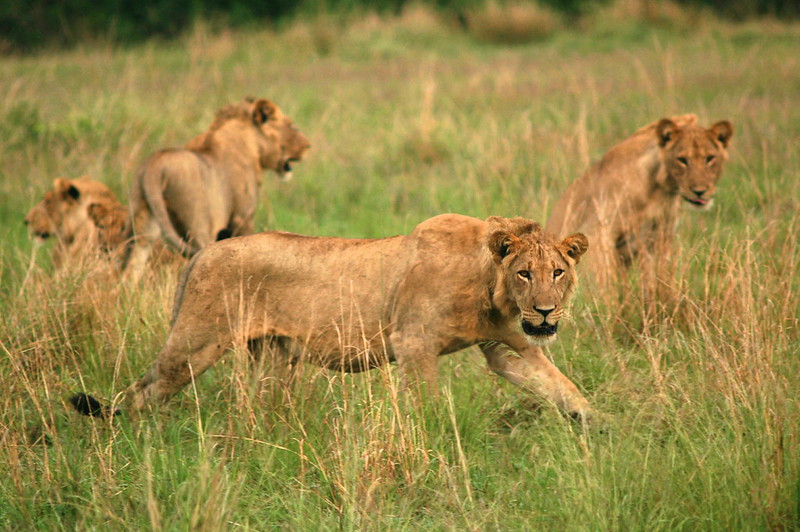
The Uganda Carnivore Programme has been monitoring the lion prides of Queen Elizabeth National Park since 2004, fitting individual animals with GPS radio collars and building one of the most detailed long-term datasets on lion ecology in East Africa. Visitors can join UCP rangers on morning lion tracking sessions, using telemetry equipment to locate collared individuals and approaching on foot for close-range observation. The encounter combines the immediacy of a lion sighting with the depth of a genuine research programme — a combination that leaves most participants more moved than a standard vehicle-based game drive.
Hot Air Balloon Safari
Sunrise balloon flights over the Kasenyi Plains and the Kazinga Channel offer a perspective on the park that no vehicle or boat can match: the landscape unrolling below in the growing light, the channel as a silver thread between the lakes, the volcanic crater chain revealed in its true geological scale. Balloon safaris operate subject to weather conditions and must be booked well in advance. The post-flight champagne breakfast in the bush is the appropriate conclusion to an experience of this quality.
Bird watching
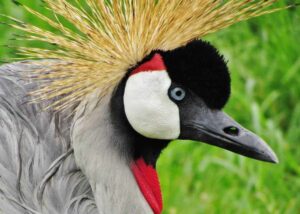 Queen Elizabeth National Park requires no special justification as a birding destination — the sixth-highest bird diversity on earth provides that. A specialist birding guide, arranged through Gorilla Safaris, provides the depth of knowledge that the park’s exceptional species list deserves: the shoebill in the papyrus, the African skimmer on the channel, the forest specialists of the Maramagambo, the raptors circling the crater rims, and the waterbirds that materialise in their dozens on every bend of the Kazinga. Full-day birding programmes can be arranged for serious birders who want to make significant progress through the park’s 600-plus list in a dedicated session.
Cultural Experiences — Katwe Community
The Katwe community surrounding Lake Katwe has maintained its salt-harvesting tradition for longer than recorded history. A guided visit to the salt works — arranged with the community’s consent and benefiting directly from visitor revenue — provides a window into one of Uganda’s most ancient industries and the daily life of the families who maintain it. A visit to a local school, a traditional cooking demonstration, and the opportunity to walk the Katwe crater rim round out a cultural programme that adds genuine human depth to the wildlife focus of most Queen Elizabeth itineraries.
Queen Elizabeth National Park’s accommodation ranges from wilderness luxury perched above the Kazinga Channel to comfortable mid-range lodges in the crater lake zone and budget camps that make the park accessible without compromise on experience. Gorilla Safaris selects accommodation on the basis of direct assessment by our team — position, quality of service, and the specific experience each property delivers — rather than on commission or convenience.
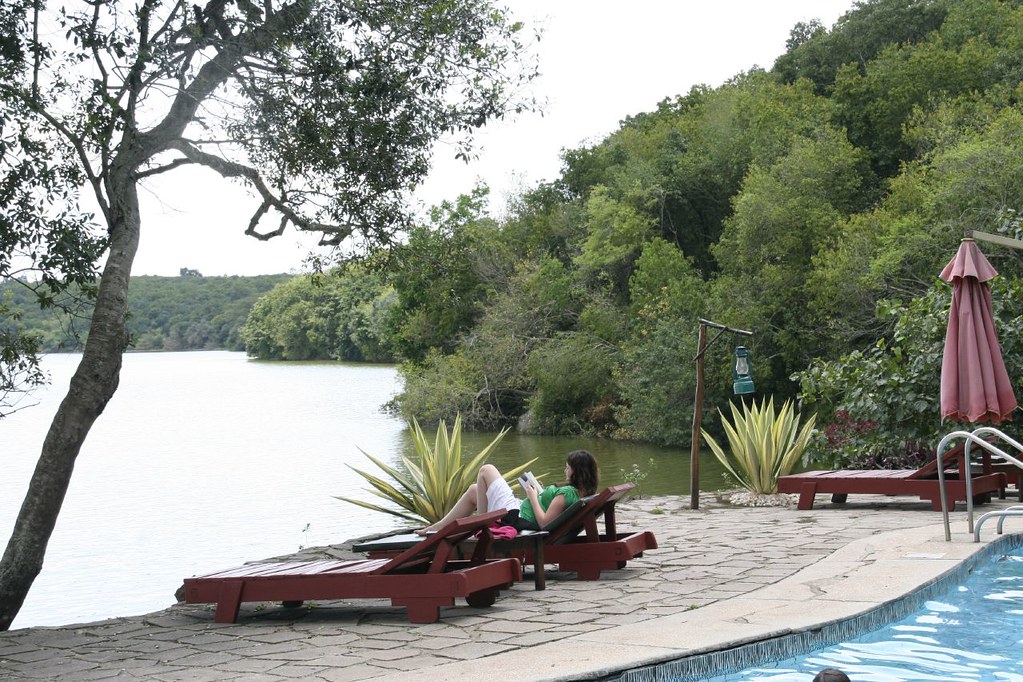
Luxury Lodges
Mweya Safari Lodge — The grand dame of Queen Elizabeth accommodation, Mweya Safari Lodge occupies a commanding position on the Mweya Peninsula at the confluence of the Kazinga Channel, Lake Edward, and Lake George. The lodge’s elevated terraces look directly over the channel, and the wildlife that passes within view of the bar — hippos surfacing, fish eagles calling, elephants wading in the shallows — is part of the lodge experience in the truest sense. The Peninsula suites and cottages combine colonial East African style with the genuine comfort of a well-run premium property.
Ishasha Wilderness Camp — The obvious and perfect base for the Ishasha sector, this intimate tented camp sits directly on the Ishasha River on the DRC border, within the territory of the tree-climbing lion prides. The camp is small and deliberately simple: the focus is the wildlife and the extraordinary remoteness of the Ishasha plain. Evenings around the fire, with the river below and the sounds of the forest framing the darkness, deliver the quality of isolation that only truly remote African camps can offer.
Kyambura Gorge Lodge — Perched on the rim of the Kyambura Gorge with views down into the forest canopy below, this lodge is the most architecturally dramatic in the park. The tented chalets are positioned to face the gorge directly, and the sound of chimpanzees calling from the forest in the early morning is a reliable part of the guest experience. The lodge’s commitment to community engagement and conservation research adds a dimension of purpose to what is already a beautifully positioned property.
Katara Lodge — Set among the explosion craters in the northern section of the park, Katara Lodge occupies one of the most photogenic positions in western Uganda — elevated above a crater lake with the Rwenzori Mountains visible on clear days to the north. The lodge is acclaimed for the quality of its food and the warmth of its service, and guests who arrive planning a single night consistently extend their stay.
Mid-Range Lodges
Elephant Plains Lodge — A well-positioned mid-range property on the Kasenyi Plains offering comfortable en-suite accommodation with direct access to the park’s primary game driving terrain. The lodge’s guides are particularly knowledgeable about the lion prides of the northern sector.
Bush Lodge / Jacana Safari Lodge — Family-friendly properties in the Mweya area offering reliable comfort, good food, and easy access to the Kazinga Channel launch point. Both properties are popular with families for the combination of value, position, and the quality of the standard safari activities they provide.
Pumba Safari Cottages — A crater lake-positioned property in the northern sector offering panoramic views and comfortable self-contained accommodation at a mid-range price point. Particularly recommended for those doing the crater circuit drive.
Budget Accommodation
Mweya UWA Bandas and Hostel — Uganda Wildlife Authority maintains comfortable budget bandas and a hostel on the Mweya Peninsula, providing the most affordable inside-park accommodation with direct access to the Kazinga Channel launch point and the game drives of the Kasenyi Plains. The position is excellent; the facilities are basic and honest.
Bush Camp / Institute of Ecology — Simple self-catering facilities operated by the Mweya Wildlife Research Institute, ideal for independent travellers and researchers willing to sacrifice comfort for proximity to the park’s most active wildlife zone.