Kidepo Valley National Park
There is a particular quality of silence in Kidepo Valley that no other park in Africa quite replicates. It settles over the plains in the hour before sunrise, when the Narus Valley lies in a violet haze and the acacia silhouettes begin to sharpen against a horizon that seems to curve with the very edge of the earth. Lions cough somewhere in the grass. A herd of elephants moves soundlessly toward water. And then the light cracks open, gold and absolute, and the world of Kidepo announces itself with a chorus of 476 bird species lifting from the trees in a detonation of colour and sound.
CNN once ranked Kidepo Valley National Park among Africa’s top wilderness destinations. Travelers who make the journey to this remote corner of northeastern Uganda understand why immediately and viscerally. This is not a park for the timid or the checked-box safari tourist. Kidepo demands something of you. It requires the willingness to travel a little further, wait a little longer, and sit with the rawness of a landscape that has not been softened or packaged for mass tourism. In return, it gives you Africa as it was before the roads came.
Covering 1,442 square kilometres of rugged semi-arid savannah in the Karamoja region, Kidepo sits near the borders of both South Sudan and Ethiopia, a remote triangle of wilderness that geography alone has conspired to protect. The park is bisected by two river systems, the Kidepo and the Narus, each supporting different ecosystems and different concentrations of wildlife. The Narus Valley, with its year-round pools and permanent vegetation, is where the game congregates. The broader Kidepo Valley, drier and more elemental, is where you feel the full weight of the African wilderness bearing down on you.
Whether you are planning a Uganda safari that combines wildlife with gorilla trekking, or you are chasing a purely wilderness experience unlike anything else on the continent, Kidepo Valley National Park belongs at the center of your journey. This guide covers everything you need to know, from how to get here, to the best itineraries, the finest lodges, and every extraordinary thing waiting for you when you arrive.
Kidepo Valley National Park: An Overview
Kidepo Valley National Park was gazetted as a game reserve by the British colonial government in 1958, and converted into a full national park by the newly independent Ugandan government under Milton Obote in 1962. The park encompasses the rugged savannah at the foothills of Mount Morungole and is administered by the Uganda Wildlife Authority. At its furthest, it sits approximately 520 kilometres northeast of Kampala, making it the most remote of Uganda’s national parks and, for many experienced safari travellers, the most rewarding.
The park’s two valley systems define its character completely. The Narus Valley, with an annual rainfall averaging 89 centimetres, is greener, more accessible, and supports the highest concentration of wildlife in the park. Its permanent waterholes draw lions, elephants, buffalo, zebra, and giraffe throughout the year. The Kidepo Valley, receiving around 64 centimetres of rain annually, is wilder, drier, and less visited. The Kanangorok hot springs in the far north of the park, where tepid water bubbles up near the South Sudanese border, represent the most permanent source of water in this more arid landscape.
What makes Kidepo genuinely exceptional in the East African context is the presence of mammal and bird species found nowhere else in Uganda. Cheetahs stalk the open plains, ostriches stride across the grassland in their prehistoric gait, Burchell’s zebra graze alongside Uganda kob and eland, and the rare Rothschild’s giraffe, once hunted to near-extinction in the park, has made a remarkable recovery. Over 77 mammal species and 476 bird species have been recorded here, including species found nowhere else in Uganda.
How to Get to Kidepo Valley National Park
The remoteness of Kidepo is both its greatest challenge and its most compelling attraction. There are two principal ways to reach the park, each offering a very different prelude to the wilderness that awaits.
By Air: The Flying Safari
The most dramatic and efficient way to arrive in Kidepo is by chartered flight from Entebbe International Airport or Kajjansi Airstrip near Kampala. The flight takes approximately two hours and lands at the Lomej airstrip inside the park, where your private guide and dedicated vehicle will be waiting on the apron, the plains already stretching into the distance behind them. Charter flights can be arranged seasonally and are the preferred choice for luxury travelers who wish to minimize road transfer time and arrive at their lodge in time for an afternoon game drive. Your Gorilla Safaris consultant will seamlessly arrange all charter logistics, including connections from Entebbe after international arrival.
By Road: The Overland Journey
The road journey from Kampala to Kidepo covers approximately 520 kilometres and takes between 8 and 10 hours, depending on road conditions and stops en route. The route passes through Gulu or Kitgum in northern Uganda before climbing into the Karamoja highlands. The roads through Karamoja have improved significantly in recent years, but the final approach to the park on laterite tracks through the Timu Forest and across the open Karamoja plains is a journey in itself, one that acclimatises you to the scale and character of this landscape long before you reach the park gates. For travellers combining Kidepo with Murchison Falls National Park, the overland route creates a logical northern Uganda circuit of extraordinary depth.
Practical Note on Getting Here
All road and air transfers are handled privately through Gorilla Safaris. Your dedicated vehicle, with an experienced driver-guide, will be with you for the entirety of your Kidepo Safari. There are no public transport options to or within the park, and the remoteness of the location means that private, well-organised transportation are not a luxury but a necessity.
Best Time to Visit Kidepo Valley National Park
Kidepo Valley National Park is a year-round destination, but the rhythms of its two seasons shape the experience significantly, and understanding them will help you choose the itinerary that best suits what you are seeking.
Dry Season: June to September and December to March
The dry season is the peak wildlife viewing period. As water sources contract and the grass thins across the Narus Valley, wildlife concentrates around the permanent pools and Narus River floodplain with extraordinary density. This is when you find large lion prides lazing on rocky kopjes in the heat of the day, elephant herds gathering at twilight, and the full savannah spectacle that Kidepo is capable of delivering. The dry-season light, particularly in the early morning and late afternoon, is also exceptional for photography. Road conditions are at their best, access is easiest, and the flying temperatures at Lomej airstrip are most reliable. December to January brings a short dry spell that can be equally rewarding, though logistically less predictable.
Wet Season: April to May and October to November
The wet season transforms Kidepo Valley National Park into a landscape of extraordinary lushness and colour. The grass grows tall and green, the hillsides flush with wildflowers, and the birdlife reaches its peak as migratory species arrive from across Africa and beyond. The park is markedly less crowded during these months, and for birding enthusiasts or photographers seeking dramatic skies and green landscapes, the wet season has a particular allure. Game viewing becomes more challenging as vegetation thickens and animals disperse, and some tracks may become impassable after heavy rain. That said, experienced guides know where to find predators even in the rains, and the experience of Kidepo Valley National Park in the wet season, quieter, more atmospheric, is one that many seasoned travellers prize above the dry-season safari.
For families travelling with children, the dry season between June and September is generally recommended. For birding-focused travellers or those seeking to avoid any other guests entirely, October and November offer remarkable value and solitude.
What to See in Kidepo Valley National Park
The Big Game: Predators and Grazers
Lions are Kidepo’s signature predator, and the park holds one of the most significant lion populations in Uganda. The Narus Valley pride, which has been studied and documented over many years, is frequently encountered on dawn game drives near the Apoka area. Kidepo Valley National Park is also one of the very few places in Uganda where you may encounter cheetahs, the fastest land animal on earth, using the open plains of the Kidepo Valley National Park to hunt in the way they evolved to do. Spotted hyena, African wild dog, black-backed jackal, and the increasingly rare caracal have all been recorded in the park.
Among the grazers, the park’s Rothschild’s giraffe population is a particular point of pride. Hunted to near-extinction in the 1990s when only three individuals remained, the population was rescued through a dramatic translocation programme funded by the Frankfurt Zoological Society. The giraffe now move gracefully through the acacias of the Narus Valley in small herds, a conservation story of genuine triumph. Burchell’s zebra, found nowhere else in Uganda, graze alongside Uganda kob, Jackson’s hartebeest, eland, and oribi. Elephants are resident throughout the year and particularly spectacular at dusk around the Narus waterholes.
The ostrich, Uganda’s only breeding population of the common ostrich, stalks the open plains of Kidepo with an absurd, magnificent confidence. Watching a male ostrich court a female on the grassland, wings spread in a dazzling display, is one of those moments that defines a Kidepo safari. Lesser kudu, Guenther‘s dik–dik, and the striped ground squirrel are among the smaller mammals that reward patient observation along the park’s quieter tracks.
Birdlife: 476 Species and Counting
Kidepo Valley National Park is a birder’s destination of continental significance. The park’s unique position at the convergence of East African and northeast African ecosystems produces a checklist that is incomparable within Uganda, with over 100 species recorded here that are found nowhere else in the country. The Egyptian plover, the Abyssinian roller, the Karamoja apalis (a species of particular conservation significance), the black-breasted barbet, and the ostrich itself represent a suite of species that justify a dedicated birding safari. Secretary birds stride purposefully through the grassland. Martial eagles command the sky. At dawn, the valley erupts with larks and warblers and the metallic calls of starlings in numbers that overwhelm the senses.
The Karamojong and Ik People: Cultural Heritage
Kidepo does not exist in isolation from its human landscape. The Karamojong people, semi-nomadic pastoralists of the Nilotic tradition, have herded cattle across the plains of northeastern Uganda for centuries, and their culture, expressed in intricate beadwork, traditional homesteads called manyattas, and the fierce pride of their warriors, is as much a part of the Kidepo experience as the wildlife. A curated cultural visit to a Karamojong village, arranged as part of your Gorilla Safaris itinerary, offers an insight into one of East Africa’s most distinctive and little-documented cultures.
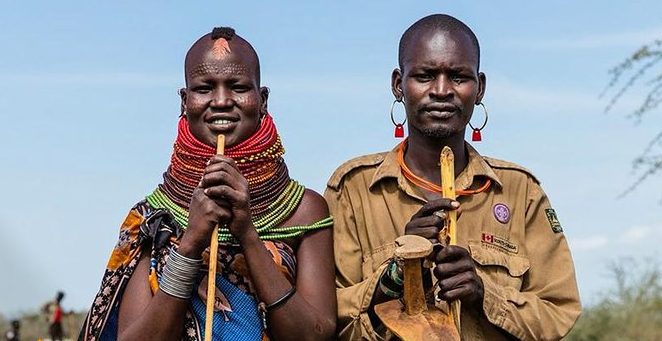
Higher in the hills, the Ik people, one of the smallest ethnic groups in Uganda, live in conditions of extraordinary simplicity near the slopes of Mount Morungole, a climb that rewards with panoramic views across the valley and into South Sudan.
Kanangorok Hot Springs
In the extreme north of the park, near the South Sudanese boundary, the Kanangorok hot springs bubble up through the semi-arid earth in a landscape that feels both elemental and improbable. The springs are tepid, mineral-rich, and surrounded by vegetation that draws birds and small mammals. For adventurous travelers willing to add the drive north into the itinerary, the hot springs offer both a photographic spectacle and a sense of having reached the true, undiscovered edge of Uganda.
Narus Valley and Mount Morungole
The Narus Valley is the heartland of Kidepo’s wildlife experience. Its floodplain, permanent pools, and year-round availability of water make it the focal point of every game drive, and it rarely disappoints. The valley has an openness, a sense of space and sky, that is unique even within Kidepo. Mount Morungole, rising to 2,749 metres at the park’s eastern edge, provides both a dramatic backdrop and a hiking destination for those who wish to experience the park from altitude. The forested slopes of Morungole harbour different bird species from the valley floor and offer views that stretch in all directions across the Karamoja plains.
Kidepo Valley National Park Entrance Fees
Park entry fees at Kidepo Valley National Park are collected by the Uganda Wildlife Authority (UWA). A standard day’s entrance ticket is valid for 24 hours from the time of entry, and any time spent in the park beyond 24 hours is charged as an additional day. All fees are payable in US dollars or Ugandan shillings at the prevailing exchange rate.
Foreign non-resident adults are currently charged USD 45 per person per day. East African residents holding a valid EAC passport pay a reduced rate. Children aged between 5 and 15 years are charged the children’s rate. UWA retains the right to update fees without prior notice, and your Gorilla Safaris consultant will confirm the current applicable rates at the time of booking. All entrance fees for your safari are included in your itinerary cost and settled on your behalf as part of a fully managed booking.
Best Activities in Kidepo Valley National Park
Game Drives
The game drive is the engine of the Kidepo experience, and it operates differently here than in more heavily trafficked parks. In the Narus Valley, dawn drives begin before the sun has fully cleared the Morungole ridge, when the predators are still active and the cooling night air carries the smell of dust and wild sage. Your private guide, with decades of experience reading this landscape, will know where the lions lay the night before and where the elephants are likely to water at first light. Evening drives push into the golden hour and end under a sky of almost improbable star density, the Milky Way so sharp and close that it seems to lean down over the valley. Unlike the heavily booked circuits of other Ugandan parks, in Kidepo you are often the only vehicle on the track.
Bird Watching
Birding in Kidepo is exceptional in every season, but the best experiences are concentrated in the wet months when migrants are present and the valley is alive with activity. Your Gorilla Safaris guide will be able to locate species from the park’s checklist of 476 with a precision born of long familiarity with the park. Dedicated birding walks along the Narus River, with a specialist ornithologist guide on request, are among the most memorable activities available in the park. The Karamoja apalis and the Egyptian plover, both high on most visiting birders’ target lists, are regularly encountered with the right guidance.
Nature Walks and Hiking
Walking in Kidepo, accompanied by an armed ranger and your private guide, connects you to the landscape at a level that no vehicle can replicate. The Lonyiri Nature Walk is a curated route through the Narus Valley that takes in termite mounds, acacia groves, and the floodplain wetlands, with excellent opportunities for tracking elephant on foot and observing the smaller mammals and reptiles that a vehicle-based visitor misses entirely. The ascent of Mount Morungole, a longer and more demanding excursion, is arranged for fit travelers and rewards with extraordinary panoramic views and access to the forest bird species of the upper slopes.
Cultural Visits
A curated half-day visit to a Karamojong manyatta, arranged seamlessly as part of your programme, is among the most culturally affecting experiences available in Uganda. The Karamojong warriors, in their traditional ochre-stained skins and extraordinary bead adornments, greet visitors with a ceremony that is neither performative nor sanitised. You will sit with elders, observe cattle being brought in from the plains, and, if the timing is right, witness the dusk ritual of the cattle kraal, one of the most intimate expressions of pastoral African culture surviving anywhere on the continent.
Sport Fishing
The Kidepo and Narus rivers support populations of Nile tilapia and catfish, and sport fishing is available under permit from the Uganda Wildlife Authority. This is a niche activity, but for travelers with an interest in angling, the combination of riverside fishing with the backdrop of the Karamoja plains and the probability of elephant or buffalo at the water’s edge makes for an unforgettable morning.
Where to Stay in Kidepo Valley National Park
Kidepo’s accommodation spectrum has expanded considerably in recent years, from the austere Uganda Wildlife Authority bandas to genuinely world-class luxury safari lodges. The park remains far less crowded than Bwindi impenetrable National Park or Queen Elizabeth National Park, which means that even at peak season you are unlikely to encounter the density of vehicles or guests that characterises more popular destinations. Your Gorilla Safaris consultant will match your accommodation to your style, budget, and the rhythm of your itinerary.
Luxury Accommodation
Apoka Safari Lodge stands as the definitive luxury address in Kidepo. Positioned on the Katurum kopje within the park, the lodge commands a sweeping panorama across the Narus Valley that is simply one of the finest views from any safari lodge in East Africa. Stone and timber cottages are perched along the rocky ridge, each offering a private veranda from which the valley below unfolds in its entirety. Plunge pools, open-air showers, and a main lodge terrace where sundowners are served to the accompaniment of the valley’s sounds complete an experience of considered luxury in a completely wild setting. Apoka is the accommodation of choice for travelers combining Kidepo with a Uganda gorilla trekking safari.
Kidepo Savannah Lodge, positioned near the Apoka area with views toward the Narus plains, represents a newer addition to the luxury tier and offers immaculately appointed tented suites with direct sight-lines over the valley. The lodge’s evening atmosphere, when guests gather on the fire terrace as darkness enfolds the valley, is particularly memorable.
Mid-Range Accommodation
Nga’Moru Wilderness Camp offers a genuinely intimate wilderness experience in comfortable tented accommodation on the park boundary. The camp is small, deliberately so, and the atmosphere is one of a private expedition rather than a hotel stay. Meals are communal and served under the stars, guides are experienced and personable, and the wildlife access from the camp is excellent. Kidepo Valley Lodge, operated in the mid-range category near Karenga, provides comfortable en-suite chalets with a swimming pool and spacious grounds that attract wildlife at dawn and dusk.
Budget Accommodation
The Uganda Wildlife Authority operates Apoka Rest Camp within the park, offering self-contained bandas and camping facilities for budget travelers and independent adventurers. The camp’s location near the park headquarters provides both security and reasonable proximity to the Narus Valley game areas. Facilities are basic but clean, and the experience of sleeping under canvas or in a simple banda with the sounds of the Kidepo night surrounding you has a purity that more luxurious options cannot replicate. Kidepo Wilderness Camp near Karenga township provides affordable lodge-style accommodation for those driving to the park and seeking a comfortable base before entering.
What to Wear and Pack for Kidepo Valley National Park
Kidepo’s climate is semi-arid, and dressing appropriately will make a significant difference to your comfort and your wildlife viewing. The park’s open landscape means strong sun exposure during game drives, with temperatures frequently reaching 30 degrees Celsius or above in the dry season. Mornings and evenings, however, can be cool, particularly from November through February, and a light layer is worth carrying in the vehicle.
Neutral-coloured clothing in khaki, olive, brown, or stone is strongly recommended. Bright colours and white fabrics are discouraged, both because they can disturb wildlife and because dust and laterite soil will quickly mark them beyond recovery. Long-sleeved shirts provide protection from both sun and insects, and a lightweight waterproof layer is advisable in the wet season. Good-quality walking shoes or boots are essential for nature walks, though sandals are perfectly adequate around the lodge.
A wide-brimmed hat, high-factor sunscreen, and lip balm are non-negotiable in Kidepo’s equatorial light. Binoculars are indispensable, a 10×42 configuration is the standard recommended by professional guides. A good camera with a telephoto lens will capture the scale of the Narus Valley and the behaviour of its wildlife in ways that phone cameras simply cannot match. Insect repellent containing DEET should be applied at dawn and dusk. Prescription antimalarial medication should be discussed with your physician before departure.
The remoteness of Kidepo means that no significant supplies can be sourced locally. Bring all prescription medications, personal toiletries, and any specialist equipment you require before leaving Kampala. Your Gorilla Safaris team will provide a detailed packing guide with your travel documents.
Frequently Asked Questions: Kidepo Valley National Park
Is Kidepo Valley National Park worth visiting?
Kidepo Valley National Park is widely regarded as one of Africa’s most rewarding and least visited wildlife destinations. CNN has listed it among the continent’s finest parks. With over 77 mammal species and 476 bird species, including many found nowhere else in Uganda, and a level of wilderness solitude that is increasingly rare in East African safari travel, Kidepo is considered exceptional by experienced safari travellers.
How long should I spend in Kidepo Valley National Park?
A minimum of two full game drive days is recommended to appreciate Kidepo’s wildlife and character properly. Three nights and two full days is the standard recommendation for a flying safari. Those with more time will find that Kidepo rewards extended stays, particularly given the additional excursion to Kanangorok hot springs and the cultural immersion with the Karamojong people.
What animals can I see in Kidepo Valley National Park?
Kidepo Valley National Park supports lions, elephants, buffalo, Rothschild’s giraffe, Burchell’s zebra, cheetahs, spotted hyena, African wild dog, Uganda kob, Jackson’s hartebeest, eland, oribi, ostriches, lesser kudu, and over 476 bird species. The park is the only place in Uganda where you can reliably encounter cheetahs and the common ostrich.
When is the best time to visit Kidepo Valley National Park?
The best time for wildlife viewing is during the dry season from June to September and December to March, when water sources contract and animals concentrate around the permanent waterholes of the Narus Valley. The wet season from April to May and October to November is excellent for birding, offers a greener and more photogenic landscape, and is significantly less crowded.
How do I get to Kidepo Valley National Park from Kampala?
Kidepo Valley National Park can be reached by chartered light aircraft from Entebbe or Kajjansi Airstrip in approximately two hours. By road, the journey from Kampala takes between 8 and 10 hours via Gulu and Kitgum. All transfers are arranged privately; there is no public transport to or within the park.
What is the park entrance fee for Kidepo Valley National Park?
Foreign non-resident adults currently pay USD 45 per person per day. Fees are payable in US dollars or Ugandan shillings and are valid for 24 hours from the time of entry. Children aged 5 to 15 are charged a reduced rate. All entrance fees are included in Gorilla Safaris‘ itinerary costs and settled on your behalf.
Is Kidepo Valley National Park safe?
Kidepo Valley National Park is safe for tourists. The security situation in Karamoja has improved significantly, and the park is managed by the Uganda Wildlife Authority with trained ranger escort for all walking activities. Your Gorilla Safaris team monitors security conditions continuously and will advise on any changes to the situation.
Can I combine Kidepo with gorilla trekking in Uganda?
Yes, absolutely. Combining Kidepo Valley National Park with gorilla trekking in Bwindi Impenetrable Forest National Park creates one of the most comprehensive and rewarding Uganda safaris available. Most travellers fly from Kidepo back to Entebbe and then drive south to Bwindi. See our Uganda combined safari itineraries for full details.
What is unique about Kidepo compared to other Uganda national parks?
Kidepo is the only Uganda national park where you can see cheetahs, Burchell’s zebra, ostriches, and Rothschild’s giraffe. It is also the most remote and least visited, offering a level of wilderness solitude and unspoiled landscape that more accessible parks cannot match. Its cultural dimension, with the Karamojong and Ik peoples living on its borders, adds a human layer that enriches the safari experience considerably.
What should I pack for a Kidepo Valley safari?
Neutral-coloured lightweight clothing, a wide-brimmed hat, high-factor sunscreen, good walking shoes or boots, 10×42 binoculars, a camera with a telephoto lens, insect repellent with DEET, prescription antimalarial medication, and a light layer for cool evenings are all essential. All personal supplies should be purchased before leaving Kampala, as no resupply is available near the park.