The 5-day Rwenzori Trekking to Edward Peak on Mount Baker follows the Central Circuit trail of Rwenzori Mountains National Park as a round trip from the Nyakalengija trailhead—the principal eastern gateway to the park, situated 22 kilometers from Kasese town in western Uganda. The route ascends nearly 3,200 meters of vertical elevation from the trailhead to the summit, passing through five of the Rwenzori’s celebrated altitudinal vegetation zones before emerging onto the bare alpine terrain of Baker’s upper mountain.
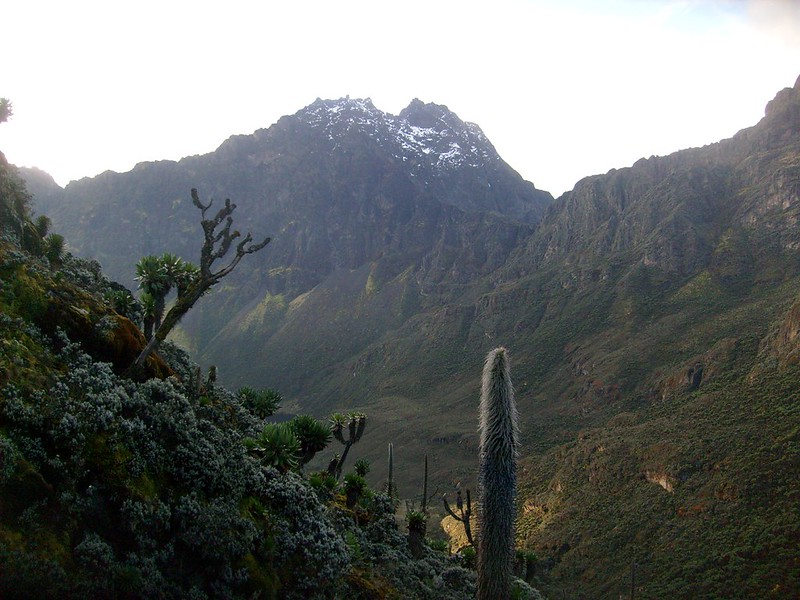
Arrival day brings you to Kasese by private road transfer from Entebbe, with a full expedition briefing that evening. Day 1 opens the circuit: the Nyakalengija gate, the lower montane forest, and the first circuit hut at Nyabitaba (2,651 m). Day 2 continues through the bamboo zone and lower heather moorland to John Matte Hut (3,414m). Day 3 ascends into the heart of the Rwenzori’s extraordinary Afro-alpine botanical world—past giant lobelias and ancient groundsels, across the legendary Bigo Bog—to Bujuku Hut (3,977 m) at the foot of the main massif. Day 4 is the summit day: a pre-dawn start from Bujuku delivers the group to Edward Peak, with the descent continuing all the way to Nyabitaba. Day 5 completes the circuit with the final descent to Nyakalengija and the return to Kasese and Entebbe.
Activities across the 5 days Rwenzori Trek to Edward Peak on Mount Baker includes guided trekking through all major Rwenzori ecological zones, a UWA-licensed summit ascent of Edward Peak (4,843m) on Mount Baker, Albertine Rift endemic birdwatching in the lower montane forest, botanical interpretation by your senior expedition guide across all elevation bands, and an optional Bakonzo cultural introduction in Kasese. The expedition demands consistent fitness—trekkers should be capable of walking six to nine hours per day on varied terrain—but no prior mountaineering experience is required. Edward Peak’s summit approach is a steep, non-glaciated scramble with fixed ropes, making it the most accessible of the major Rwenzori summits.
Duration | 6 days / 4 nights mountain huts + 1 night hotel Kasese (pre-trek) |
Summit | Edward Peak, Mount Baker — 4,843m above sea level |
Route | Central Circuit, round trip from Nyakalengija (eastern approach) |
Total Distance | Approximately 55–60km round trip |
Difficulty | Challenging — strong fitness required; no technical climbing or glacier travel |
Best Season | December–February and June–August (primary dry windows) |
Start / End | Nyakalengija trailhead (1,646m), near Kasese, western Uganda |
Group Size | 1–8 trekkers—private departures on your chosen dates |
Minimum Age | 15 years (full summit); 12+ for circuit without summit on request |
A comprehensive pre-departure briefing pack—including altitude protocol, emergency procedures, detailed gear list, and permit documentation—is sent to every confirmed trekker approximately six weeks before the departure date.
Itinerary at a Glance
Day | Route & Highlights | Altitude | Overnight |
Day 1 | Entebbe/Kampala → Kasese (private 4WD transfer). Lodge check-in, expedition briefing, gear review, and dinner. | 914m — Kasese | Hotel in Kasese |
Day 2 | Kasese → Nyakalengija gate (22km). Park entry, Mubuku River crossing, montane forest & bamboo ascent to Nyabitaba Hut. | 1,646m → 2,651m | Nyabitaba Hut |
Day 3 | From Nyabitaba, we will hike through the bamboo zone, lower heather moorland, and giant tree heathers to reach John Matte Hut. Birdwatching en route. | 2,651m → 3,414m | John Matte Hut |
Day 4 | From John Matte, we enter the full Afro-alpine zone, where we see giant lobelias, cross Bigo Bog, and then move through the upper moorland to reach Bujuku Hut. | 3,414m → 3,977m | Bujuku Hut |
Day 5 | SUMMIT DAY (pre-dawn start): Bujuku → Baker northeast approach → Edward Peak (4,843m) → descent via Freshwater Lake → Nyabitaba Hut. | 3,977m → 4,843m → 2,651m | Nyabitaba Hut |
Day 6 | Nyabitaba → forest descent → Nyakalengija gate → Kasese (by private vehicle). Completion certificates. Celebratory dinner. Return to Entebbe. | 2,651m → 1,646m | Hotel Kasese / Departure |
Summit timing on Day 5 is weather-dependent and subject to your guide’s on-the-day assessment. The descent from Edward Peak to Nyabitaba Hut on the same day is long — approximately 14–15km total — and begins immediately after the summit. Your fitness and pacing across Days 2–4 are the foundation for summit day success.
Day-by-Day Expedition Narrative
Welcome To Uganda: Arrival in Kasese — The Mountain Announces Itself
Your dedicated Gorilla Safaris driver-guide is waiting in the arrivals hall at Entebbe International Airport—cold water in hand, name card raised, and a detailed personal knowledge of every kilometer of the road ahead. The drive to Kasese runs five to six hours along Uganda’s western highway, and it is one of the country’s most rewarding overland journeys even before the expedition properly begins.
The road climbs out of Kampala’s urban density into the rolling highlands of central Uganda, passing through Mubende, the tea plantations of Kibale district, the escarpment forests of Fort Portal—the self-styled Tourism City of Uganda—and the Rift Valley floor before arriving in Kasese in the late afternoon. On clear days, the Rwenzori massif appears on the western horizon during the final approach: a long, dark, cloud-wreathed range of improbable size, rising from the equatorial plains as if the landscape had simply decided, at some point in geological time, to become something entirely other. The first glimpse tends to silence the vehicle.
Kasese is a purposeful, lively town at the foot of the range—the logistical hub of the Rwenzori trekking economy—with good lodges, a market atmosphere that rewards a brief evening walk, and a western horizon entirely dominated by the mountain. Check-in at your private lodge is followed by a thorough expedition briefing with your Rwenzori trekking lead guide: current trail conditions on the circuit, altitude management and the body’s acclimatization timeline, porter team introductions, hut protocol, the summit-day weather window for Edward Peak, and a complete personal gear review conducted tableside. It is detailed, unhurried, and conducted over cold drinks—a first signal that the team running this expedition understands the mountain from the inside.
For guests arriving the previous evening, Gorilla Safaris can arrange a curated morning visit to a Bakonzo community in the Rwenzori foothills—an hour spent with a family whose relationship with the mountain stretches back many generations, whose traditional agricultural terracing has shaped the lower slopes for centuries, and whose oral mountain folklore provides a human context that enriches everything that follows on the trail. This optional cultural addition is bookable at enquiry and adds a dimension to the expedition that logistics alone cannot deliver.
Accommodation: Rwenzori International Hotel or Sandton Hotel, Kasese — private standard
Meals: Dinner included | Lunch en route arranged privately by your driver
Transfer: Entebbe/Kampala → Kasese, private air-conditioned 4WD vehicle, 5–6 hours
Day 1: The Forest Receives You — Nyakalengija to Nyabitaba Hut (2,651m)
Breakfast at the lodge comes early, and the vehicle rolls out of Kasese while the air is still carrying the coolness of the highland night. The 22 kilometers to Nyakalengija pass through sugar cane cultivation and the scattered homesteads of the Rwenzori foothills, with the tarmac giving way to murram and the mountains growing perceptibly more imposing with every kilometer westward.
The Nyakalengija trailhead sits at the park boundary—a Uganda Wildlife Authority registration gate and the particular electric atmosphere of a genuine beginning. Your guide handles the permit formalities with practiced efficiency while the Bakonzo porter team assembles around the equipment bags. These are men and women whose families have worked this mountain across generations, whose posture on the trail communicates experience in a way no certification document could, and whose sustained cheerfulness over five days of significant physical work is one of the expedition’s quiet reassurances.
The trail crosses cultivated land briefly before entering the park at the Mubuku River, where a solid log bridge marks the transition from the inhabited world to the wild one. The lower montane forest announces itself immediately — the quality of light changes first (filtered, diffuse, and deeply green), then the temperature (noticeably cooler in the shade of the canopy), then the sound environment (birdsong replacing road noise), and finally the smell: earth, moisture, and the clean, faintly resinous scent of photosynthesis at a scale the lowlands cannot approach. Your private guide begins the botanical and ornithological narrative here. The Rwenzori turaco—the mountain’s most iconic bird, a creature of crimson and emerald plumage with a call that sounds like a complaint and a joy simultaneously—makes its first appearance in the lower forest canopy. Black-and-white colobus monkeys shift in the branches overhead.
The trail climbs steadily through the lower montane forest on a well-defined path, gaining just over 1,000 meters across approximately nine kilometers to reach Nyabitaba Hut on its ridge above the Mubuku-Bujuku river confluence. The hut commands a fine position: on clear evenings, the upper range is visible to the south and west, Baker’s ridgeline holding the last of the sunset light. Your mountain cook has arrived ahead of the group by a different route—a logistical sleight of hand that is characteristic of Gorilla Safaris mountain operations—and dinner is ready as the valley below fills with cloud.
Accommodation: Nyabitaba Hut (2,651m) — ridge position above the river confluence, montane forest zone
Meals: Breakfast at Kasese lodge | Packed lunch on trail | Dinner at hut — all prepared by your Gorilla Safaris cook
Trekking: ~9km | 5–6 hours | +1,005m elevation gain
Wildlife: Rwenzori turaco, black-and-white colobus, L’Hoest’s monkey, African blue flycatcher, Rwenzori batis
Day 2: The Bamboo Cathedral — Nyabitaba to John Matte Hut (3,414m)
The ridge at Nyabitaba in the morning has a quality that only mountain mornings possess: the valley below is swathed in cloud, the upper range catches the first light above that cloud layer, the cook fire is already going, and the smell of strong Ugandan coffee reaches the sleeping platform before consciousness is fully assembled. Breakfast is unhurried, because your guide has calculated the day’s pacing with care, and hurrying now only wastes energy needed later.
The trail descends from Nyabitaba, first a brief psychological adjustment for those who assumed the mountain’s logic was entirely upward, crossing the Bujuku River on a log bridge below the hut before the real day’s work begins: a sustained climb through the bamboo zone that is one of the Rwenzori’s most distinctive and memorable environments. The bamboo stems, some growing to eight or ten centimeters in diameter and well above head height, creak and knock against each other in the updraft with a sound that is simultaneously musical, rhythmic, and slightly eerie. Light penetrates the canopy in shifting columns. The trail surface is rooted and occasionally muddy; gaiters are already doing their work.
Beyond the bamboo, the tree heather moorland begins its slow possession of the landscape. The heathers here are not the low shrubs of European moorland but trees some growing to five or six meters, their trunks gnarled and bark-textured with decades of mountain weather, their branches draped in Usnea lichen that hangs in long, pale curtains and gives the moorland its characteristic spectral quality in the mist. The first Hypericum revolutum, St. John’s Wort, grown to genuine tree proportions and bearing bright yellow flowers that appear almost absurdly cheerful against the grey, makes its appearance in the lower heather zone and becomes increasingly common with altitude.
John Matte Hut sits in a wide, open valley at 3,414 meters, a stream running past its front wall and the upper heather moorland rising on all sides. The altitude here is sufficient to produce a mild, healthy tiredness in the legs and a sense of the air having thinned, which your body will address during the acclimatization afternoon. Your guide suggests a short exploratory walk above the hut — thirty minutes up the moorland slope to a viewpoint over the Bujuku Valley — before dinner and an early night. Tomorrow, the Rwenzoris show their most dramatic face.
Accommodation: John Matte Hut (3,414m) — open valley position, lower heather moorland zone
Meals: Breakfast, packed lunch, dinner—all included and prepared at hut by Gorilla Safaris’ cook.
Trekking: ~9km | 6–7 hours | +763m elevation gain
Botanical highlight: Giant tree heathers, Usnea lichen, Hypericum trees, first sedge meadows, Lobelia bequaertii
Day 4 The Garden of Giants — John Matte to Bujuku Hut (3,977m)
This is the day that most trekkers cite when asked what the Rwenzoris genuinely are. The trail from John Matte enters the full Afro-alpine moorland — the vegetation zone that has made this range famous in botanical and ecological literature worldwide — and the experience it delivers is one of genuine visual shock, botanical reverence, and an expanding understanding of what evolution is capable of when given sufficient isolation, altitude, and time.
The giant lobelias (Lobelia wollastonii) appear at around 3,100 meters, initially as isolated sentinels among the sedge and then, as the trail climbs, as an increasingly dense and varied population of extraordinary plants. They grow to three meters and beyond, their rosette heads of stiff, silver-grey leaves held above scarred, resin-coated stems on a structure that looks simultaneously prehistoric and improbably elegant. Your guide explains what you are seeing: a case of island evolution at altitude, where the combination of isolation, extreme diurnal temperature swings, and UV intensity has driven plant forms to solutions found nowhere else on Earth. The giant groundsels (Dendrosenecio rwenzoriensis) arrive soon after multi-branched, cabbage-headed trees that can live for several centuries and that create, in aggregate, a forest of the most improbable character imaginable. A mature specimen may have been standing on this moorland when the first European explorer reached the range.
The crossing of the Bigo Bog, the Central Circuit’s most celebrated and most authentically Rwenzori passage, comes midway through the day. Wooden boardwalks have been installed across the worst sections, but the bog remains essentially and gloriously itself: a vast, sodden expanse of cushion mosses, sphagnum, and peat, set in a wide valley between heather ridges and reflecting the equatorial sky with the particular quality of light that only saturated ground at 3,400 metres can produce. Walking across the boardwalks, ninety minutes into the bog crossing, the combination of mild absurdity and genuine botanical reverence is one of the most characteristically Rwenzori moments the circuit offers.
Bujuku Hut arrives by late afternoon, positioned at 3,977 metres at the foot of the main Stanley-Baker massif. The ice face of Mount Stanley is visible from the hut doorway on clear evenings — white, still, and impossibly close against a sky that has been doing extraordinary things with cloud since early afternoon. Baker’s ridgeline defines the southwestern skyline. The mountain cook produces a dinner of considerable sophistication given the altitude and the cook-shelter conditions, and the briefing for tomorrow’s summit day — conducted over the meal in the warm interior of the hut — is specific, calm, and reassuring.
Accommodation: Bujuku Hut (3,977m) — at the foot of the Stanley-Baker massif; the circuit’s highest hut
Meals: Breakfast, packed lunch, dinner — all included
Trekking: ~8km | 6–7 hours | +563m elevation gain
Highlights: Giant lobelias, giant groundsels, Bigo Bog crossing, first view of Baker summit ridge and Stanley ice face
Day 5: Summit Day — Edward Peak (4,843m) and the Long, Earned Descent
The alarm sounds at four in the morning at Bujuku Hut, and the cold arrives immediately—absolute and clarifying in the way that only high-altitude pre-dawn cold is. At 3,977 meters, the temperature before dawn runs between minus two and minus six degrees Celsius, and the air is thin enough that the simple act of rising from the sleeping platform and pulling on layers is a deliberate, focused process. Your guide is already moving around the cook shelter outside, a headlamp tracking back and forth in the dark. Hot tea and a substantial breakfast—porridge, eggs, bread, and fruit—are on the table before 4:30am. There is no rushing. The summit will wait.
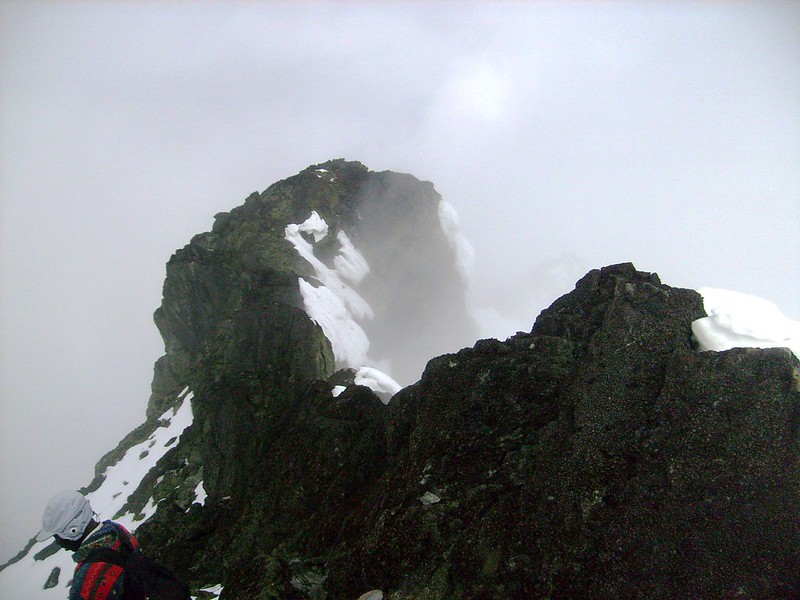
The trail from Bujuku toward Mount Baker contours south and west away from the hut, crossing the upper Bujuku Valley on a route that climbs steadily through the final sparse Afro-alpine vegetation, the groundsels and lobelias thinning rapidly above 4,100 meters as the terrain transitions from plant-dominated moorland to the bare, mineral world of the high alpine zone. Cushion mosses cling in the rock crevices. The trail is defined by cairns and the marks of previous passage. The Baker approach ascends the mountain’s northeastern flank via a ridge that offers progressively expanding views back across the Bujuku basin, the Stanley Glacier catching the first light of dawn on the opposite massif in a display of pale gold and ice-blue that is, without qualification, one of the finest sights the Rwenzori range offers.
Above 4,400 meters, the scrambling begins. Unlike Mount Stanley’s Margherita summit, which demands glacier travel, crampons, and ice axes, Edward Peak’s approach involves steep, rocky terrain requiring hands and feet and full conscious attention but no technical mountaineering equipment. Fixed ropes are in place on the most exposed sections of the upper ridge. Your guide maintains close proximity and clear verbal guidance throughout, reading both the rock and your energy simultaneously, setting a deliberately conservative pace. The summit is not the goal in isolation — arriving at the summit in the physical condition to descend safely is the goal, and experienced Rwenzori guides never confuse the two.
Edward Peak at 4,843 meters. The view from the summit is one of genuine, expansive scope. To the north and east, the Rwenzori foothills drop away toward the Rift Valley floor and the broad Ugandan plains extending to the horizon. To the west, the Congo Basin stretches toward a rim of distance that represents an entire subcontinent of forest and river. To the south, the Kitandara Lakes basin—two glacial lakes set in their alpine amphitheater between Baker and Stanley—catches the morning light with a clarity that makes the colors almost hallucinatory. And directly north and east, the Stanley massif rises above everything, the Margherita glacier glinting on its summit, a reminder that the Rwenzoris still hold equatorial ice one of the world’s last.
The summit moment is personal and unhurried. Your guide allows the mountain its proper silence before the photographs are taken, the GPS altitude confirmed, and the group begins the assessment of what lies ahead: a long, sustained, fully earned descent. The route from the summit returns to Bujuku Hut for a packed lunch by approximately 10 or 11am, then continues the day’s second major physical effort downward through the botanical zones to Nyabitaba Hut, arriving by late afternoon. The descent is long and, by its conclusion, the legs are fully and properly spent. The hut, the cook fire, the dinner, and the sleeping bag receive the group with a welcome that only genuine physical effort can generate.
Accommodation: Nyabitaba Hut (2,651m) — back on the forest ridge, the mountain behind you
Meals: Pre-dawn breakfast at Bujuku, packed lunch at Bujuku post-summit | Dinner at Nyabitaba—all included
Trekking: ~15km | 9–12 hours | +866m ascent / -2,192m total descent
Summit: Edward Peak, Mount Baker — 4,843m. Steep rocky scramble, fixed ropes, no glacier travel.
Equipment: Trekking poles essential; full warm summit layers; guide carries group safety equipment
Day 6 The Return — Nyabitaba to Nyakalengija, Kasese, and Beyond
The final morning at Nyabitaba Hut has its own quality — a deep ease that comes from having done what you came here to do, and a particular attentiveness to everything around you that the mountain has been producing for five days and that is now, perhaps, reaching its fullest expression as it approaches its end. The forest below the hut is extraordinarily alive with birdsong at dawn. The Mubuku River sounds louder than it did on the way up, or perhaps you are simply more attuned to it now. The cookfire produces the same breakfast it has produced for five mornings, and it tastes different, better, for reasons that have nothing to do with the ingredients.
The descent from Nyabitaba to the Nyakalengija trailhead takes three to four hours on the same forest trail that received the group on Day 2 — the same rooted path, the same log bridge over the Bujuku River, the same transition from the dark interior of the montane forest to the cultivated land at the park margin. These transitions, experienced in reverse, carry their own meaning. The forest that seemed impenetrably lush and strange on the way in is now knowable; your guide has given you a vocabulary for it, an understanding of its layers and its logic, and that understanding is something you carry home.
The Uganda Wildlife Authority gate at Nyakalengija marks the official end of the circuit. Your circuit completion certificate acknowledging the ascent of Edward Peak on Mount Baker is issued and stamped here. The Bakonzo porter team gathers for the gratuity ceremony: a brief, warm, substantive acknowledgement of five days of extraordinary work weight carried, meals cooked, pace maintained, and morale sustained across terrain that demands as much knowledge as strength. Your guide facilitates this moment with the respect it deserves, and the handshakes that follow carry the particular warmth of shared effort.
The private vehicle is waiting beyond the gate, air conditioning running, and cold drinks in the rear compartment. The drive to Kasese takes under an hour. The hot shower that follows is one of those small, absolute, irreplaceable pleasures that only genuine physical labor can produce. The celebratory dinner in Kasese that evening, arranged at the best table your Gorilla Safaris coordinator can secure, is eaten with an appetite and a satisfaction that ordinary restaurant meals cannot approximate. For those departing Uganda the same day, the private vehicle continues to Entebbe after dinner; for those spending a final night in Kasese, the morning departure the following day is leisurely and entirely well-earned.
Accommodation: Hotel in Kasese — or direct private transfer to Entebbe for onward international departure
Meals: Breakfast at hut | Packed lunch on trail | Celebratory dinner in Kasese — all included
Trekking: ~9km | 3–4 hours | -1,005m descent to Nyakalengija trailhead
Milestone: UWA Edward Peak / Mount Baker circuit completion certificates issued at Nyakalengija gate
What’s Included and What’s Excluded
A Gorilla Safaris expedition operates on a single foundational principle: your attention belongs to the mountain. Every administrative, logistical, and safety element of this itinerary is managed invisibly by our team, so that from the moment your vehicle departs Kasese on Day 2 to the moment the celebratory dinner is cleared on Day 6, the only decisions worth making are the ones the mountain asks of you: which viewpoint to linger at, which lobelia to photograph, and whether to press for the final ridge in thin cloud or wait for the clearing that your guide says is coming.
✅ What’s Included | ❌ What’s Excluded |
Private 4WD transfer: Entebbe/Kampala → Kasese → Nyakalengija → Kasese → Entebbe | International airfares to/from Uganda (Entebbe International Airport) |
All UWA park entry fees for every day inside Rwenzori Mountains National Park | Uganda visa and entry fees (East Africa Tourist Visa recommended) |
UWA-licensed senior mountain guide (English-speaking, Gorilla Safaris expedition-trained) | Mandatory personal travel and medical evacuation insurance |
All Bakonzo porter fees, standard 1 porter per 2 trekkers; higher ratios available | Personal trekking gear: boots, clothing, sleeping bag (−10°C rated), day pack |
All mountain hut fees: 4 nights (Nyabitaba × 2, John Matte, Bujuku) | Alcoholic beverages and soft drinks beyond water, tea, and coffee on mountain |
Mandatory UWA rescue fee (per expedition group) | Gratuities for guide and porter team (rates and protocol advised in briefing pack) |
All meals on the mountain: 6 breakfasts, 6 packed lunches, 6 dinners | Upgrade to luxury lodge accommodation pre/post trek |
1 night hotel accommodation in Kasese (pre-trek night) | Optional charter flight Entebbe → Kasese Aerodrome |
Celebratory dinner in Kasese on circuit completion | Optional Bakonzo cultural village visit (available as paid add-on at booking) |
Emergency satellite communication device (carried by lead guide throughout) | Any extension activities outside this 6-day program |
UWA Edward Peak / Mount Baker circuit completion certificate for all trekkers | Gorilla tracking permits for Bwindi (bookable as a separate program — see gorilla-safaris.com) |
Comprehensive pre-departure expedition briefing pack and personalised gear list | Personal medical or pharmaceutical items, including altitude medication |
Gorilla Safaris senior expedition leadership throughout all trail days | |
All vehicle fuel, driver costs, and private transfer logistics |
A fully itemised, transparent cost breakdown is provided with your personalised Gorilla Safaris quotation. There are no hidden charges. Every component of your investment is explicit from the first proposal.
Best Time to Trek to Edward Peak on Mount Baker
The Rwenzori Mountains receive rainfall throughout the year — they are among the wettest ranges in Africa, and this is inseparable from the botanical richness that makes them one of the world’s great trekking destinations. Planning your expedition around the two principal dry seasons, however, significantly improves summit conditions, trail surfaces, and the probability of clear, expansive views from Edward Peak’s exposed summit ridge.
Primary Dry Windows: December–February and June–August
The two dry seasons represent the optimal trekking windows for the Edward Peak expedition. December through February — and January in particular — often delivers the finest high-altitude clarity of the year, with morning views from Baker’s upper approach extending across the Congo Basin and south along the full length of the Rwenzori range. The Stanley ice faces catch early light in a way that is simply extraordinary in the dry-season air.
The June-to-August dry season aligns with the northern hemisphere summer holidays and represents the peak demand period for Rwenzori trekking permits and mountain hut space. Gorilla Safaris recommends securing bookings at least four to six months in advance for July and August departures. Trail surfaces are firmer in the dry seasons, the Bigo Bog crossing is less treacherous, and the summit scramble on Baker’s upper ridge is drier and more secure underfoot. These practical advantages combine with improved summit visibility to make the dry windows the clear recommendation for first-time Rwenzori trekkers.
Shoulder and Wet Season Trekking: March–May and September–November
Trekking during the long rains (March–May) or the short rains (September–October) is possible and has genuine advocates. The botanical drama of the wet-season moorland—mosses glowing electric green, giant lobelias dripping with moisture, and heather mist so dense it becomes a physical presence—is one of the Rwenzori’s most atmospheric and distinctive expressions. The trails are significantly muddier in wet conditions, the summit approach on Baker can be slippery on wet rock, and summit visibility is statistically lower. Full waterproof equipment is non-negotiable in these months. Gorilla Safaris operates the expedition year-round and provides season-specific guidance at every pre-departure consultation.
Best Time for Birdwatching
Birdwatching in the lower montane forest is excellent throughout the year, with the highest avian activity observed during and immediately after the rains when insect abundance drives feeding patterns into overdrive. A dedicated early morning birding session with your guide before entering the park on Day 2 or at the forest edge on Day 6’s descent adds meaningful depth to the ornithological dimension of the expedition. The Rwenzori turaco, Rwenzori batis, strange weaver, handsome francolin, and Grauer’s warbler are some of the Albertine Rift endemics that are most reliably recorded in the lower forest zone.
Getting to Rwenzori Mountains National Park
The Nyakalengija trailhead, the starting point for this expedition, is accessed from Kasese town in western Uganda, approximately 415 kilometers from Kampala and 22 kilometers from the trailhead itself by road. Gorilla Safaris manages all transfers as private, chauffeured journeys in dedicated 4WD vehicles with experienced, English-speaking driver guides.
The overland route from Entebbe International Airport runs west through Kampala and northwest via the Fort Portal highway — a five-to-six-hour drive through the tea estates of Kibale, the volcanic crater lake district of Fort Portal, and the Rift Valley escarpment before arriving in Kasese. Your private Gorilla Safaris driver manages the journey through some of Uganda’s most beautiful and varied landscape. Your driver will incorporate rest stops, photography pauses, and lunch breaks at your preference and pace.
Charter flights from Entebbe to Kasese Aerodrome reduce the journey to approximately 45 minutes and are available through Uganda’s domestic aviation operators. Gorilla Safaris coordinates charter arrangements seamlessly for travelers with constrained schedules or those combining the Rwenzoris with a fly-in safari program elsewhere in Uganda. All charter arrangements include a private transfer from the airstrip to your Kasese lodge.
The increasingly popular combination itinerary pairs Edward Peak with gorilla trekking in Bwindi Impenetrable Forest, following the routing of Entebbe → Fort Portal → Kasese → Rwenzoris → Bwindi, with all road transfers coordinated in sequence. Bwindi is approximately three to four hours from Kasese by private road through some of Uganda’s most magnificent highland scenery – an overland connection that is itself a journey worth making slowly.
What to Wear and Carry: Gear Guide for the Edward Peak Trek
The Rwenzori Mountains demand that you take your equipment seriously. The combination of equatorial warmth at the Nyakalengija trailhead (temperatures of 25 to 30 degrees Celsius are typical), sub-zero nights at Bujuku Hut (3,977 m), and near-constant moisture at every elevation creates a packing challenge that rewards careful preparation and punishes improvisation. The following is Gorilla Safaris’ definitive gear guidance for this five-day expedition.
Footwear — The Expedition’s Foundation
Above-ankle waterproof trekking boots, fully broken in over several months of regular use before departure, are the single most critical item you will bring. New boots on Day 1 of a Rwenzori circuit produce blisters of genuinely spectacular proportions. Gaiters are essential from Day 2 onward; they protect the lower leg and boot collar from the mud and standing water that characterize the trails at every elevation regardless of season. A pair of lightweight camp sandals or trail runners for hut use saves the trekking boots and gives the feet critical recovery time between trail days.
Waterproofs — Non-Negotiable
A fully waterproof, breathable jacket — seam-sealed, hood-equipped, and genuinely breathable — and matching waterproof trousers are the expedition’s most essential clothing items. The Rwenzoris will test both the seam integrity and the hood design of your jacket on most days. Do not economize here. The combination of sustained physical exertion and persistent external moisture demands a jacket that manages sweat and rain simultaneously. Waterproofs are worn most mornings and, on wet-season expeditions, may stay on all day.
Insulation for the Upper Mountain
A high-quality down or synthetic insulated jacket is required for evenings at John Matte and Bujuku Huts and for the pre-dawn summit departure on Day 5. Temperatures at Bujuku Hut drop to between minus two and minus six Celsius overnight, and the 4:30am departure for the summit demands every insulating layer available. The insulated jacket goes on the moment forward movement stops at altitude—waiting until you feel cold at 4,000 metres wastes body heat that is difficult to recover on the move.
Base and Mid Layers
Merino wool or high-performance synthetic base layers—two complete sets replace cotton entirely on this expedition. Cotton is categorically unacceptable at altitude: it saturates rapidly, loses all insulating value when wet, and takes many hours to dry in mountain conditions. A fleece mid-layer between the base and insulated jacket completes the three-layer system that handles the full temperature range of this circuit, from trailhead warmth to summit cold.
Summit Day Specific Kit
Edward Peak’s approach does not require crampons or an ice axe; the summit is a non-glaciated rocky scramble with fixed ropes on the steepest exposed sections. Personal summit items required on Day 5: waterproof insulated gloves (not casual knit gloves, but proper alpine gloves that retain warmth when wet), a warm hat or balaclava, rated sunglasses or glacier goggles (UV intensity at 4,800 metres is severe even through thin cloud and reflects from pale rock); high-factor sunscreen and lip protection, a wind shell in addition to the insulated jacket; and personal altitude medication if prescribed by your doctor. Your Gorilla Safaris guide carries the group first-aid kit and emergency oxygen.
Bags and Carrying System
A 70 to 80 liter waterproof duffel bag or kit bag for the porter carrying/holding the sleeping bag, spare clothing layers, and equipment not needed during the trail day keeps the load on your back manageable. A 25 to 30 liter daypack, carried by you on the trail each day, holds summit layers, water, snacks, a camera, and personal items. Trekking adjustable poles, with rubber tips and baskets, are strongly recommended and provide significant protection for the knees during the extended descent from Edward Peak on Day 5.
Sleeping Bag
A sleeping bag rated to minus ten degrees Celsius is the minimum specification for Bujuku Hut, the circuit’s highest and coldest overnight. The huts provide sleeping platforms and blankets, but on cold nights at nearly 4,000 meters, the blankets alone are insufficient for comfortable, restorative rest. The quality of your sleep at Bujuku is one of the most important contributors to summit day performance.
Porters: Your Mountain Partners
The Bakonzo porter team carries expedition equipment and provisions at a maximum load of 20 kilograms per porter. The standard Gorilla Safaris ratio of one porter per two trekkers ensures adequate weight distribution; groups preferring faster hut arrivals or a greater personal luggage allowance can request a higher ratio at booking. Porters are paid the full UWA daily rate plus a Gorilla Safaris community premium. At the circuit end, gratuities are expected and deeply meaningful; your guide provides rate guidance and manages the distribution.
Frequently Asked Questions: 5-Day Rwenzori Trek to Edward Peak, Mount Baker
Is Edward Peak suitable for trekkers with no mountaineering or climbing experience?
Yes. Edward Peak is the most accessible of the major Rwenzori summits precisely because the approach involves steep trail hiking and rocky scrambling rather than glacier travel or technical rope work. The Uganda Wildlife Authority installs fixed ropes on the most exposed sections of the summit ridge. You do not need any prior mountaineering, climbing, or glacier experience. Strong general fitness across six consecutive days of significant hiking is the primary requirement. Comfort with exposure — the sense of height on open ridges — is useful but not essential, as your guide manages all sections where this type of terrain is a factor.
How does Edward Peak compare to Margherita Peak on Mount Stanley in terms of difficulty?
Edward Peak (4,843m) on Mount Baker is meaningfully more accessible than Margherita Peak (5,109m) on Mount Stanley. The primary differences: Edward Peak requires no glacier travel and no crampons or ice axe, whereas Margherita demands both. The summit approach to Edward Peak is a steep rocky scramble with fixed ropes; Margherita involves a pre-dawn glacier crossing of the Stanley Plateau followed by a technical rocky finish. Margherita also requires two additional days on the circuit — the Elena Hut night at 4,541m and the summit return — compared to the Edward Peak program. For trekkers with five days and without prior alpine experience, Edward Peak is the ideal serious Rwenzori summit.
How physically demanding is the summit day (Day 5)?
Day 5 is the expedition’s most demanding day. From Bujuku Hut (3,977 m) to Edward Peak (4,843 m) involves 866 metres of ascent on steep, rocky terrain. The descent from the summit continues all the way to Nyabitaba Hut (2,651 m), a total descent of 2,192 metres on the same day. The combined distance is approximately 15 kilometers over nine to twelve hours. The altitude during the ascent significantly reduces available oxygen. Trekkers must arrive at Bujuku Hut well-rested and well-hydrated, having paced themselves carefully across Days 2 through 4.
What altitude sickness risk should I expect on this trek?
Mild altitude symptoms: headache, reduced appetite, disturbed sleep, and breathlessness on exertion are common above 3,000 metres and should be anticipated from Day 3 onward. The circuit profile provides progressive acclimatization, and the majority of trekkers adapt adequately by Day 4. Your Gorilla Safaris guide is trained in recognizing AMS (Acute Mountain Sickness), HACE (high-altitude cerebral edema), and HAPE (high-altitude pulmonary edema) and carries emergency oxygen and satellite communication equipment. Consulting your physician about prophylactic Diamox before departure is recommended for all trekkers. Anyone with a history of serious altitude sickness should discuss the matter specifically with both their doctor and the Gorilla Safaris team before confirming the booking.
What is the food like on the mountain, and can dietary requirements be accommodated?
Your Gorilla Safaris mountain cook prepares three full meals per day at each hut from fresh provisions carried by the porter team, supplemented by preserved items as the expedition progresses. Breakfasts include porridge, scrambled eggs, bread or chapati, fruit where available, and hot drinks. Dinners include soup, a protein main course (chicken, lentils, beef, or fish depending on availability and altitude), vegetables, and a starchy base. Packed lunches for trail days include sandwiches, fruit, nuts, energy bars, and a thermos of hot tea or coffee. Vegetarian, vegan, and gluten-free requirements are accommodated with advance notice at booking. Please inform the team of all dietary restrictions at enquiry stage.
Can I extend this itinerary to include the Margherita and Speke summits?
Absolutely. The Edward Peak trek forms the foundation of our 8-day Rwenzori 3 Peaks Expedition, which adds the summits of Mount Speke (Vittorio Emanuele Peak, 4,890 m) and Mount Stanley (Margherita Peak, 5,109 m) via Elena Hut (4,541 m) and a glacier crossing on Stanley. Many trekkers who complete the Edward Peak program return within a year or two for the full three-summit circuit. It is a deeply natural and profoundly satisfying progression. You can inquire about and compare the 8-day Rwenzori Trek at Gorilla Safaris.
Is this trek suitable for families or teenagers?
The full Edward Peak summit expedition is recommended for trekkers aged 15 and over with strong physical fitness. Day 5 — the summit and long descent to Nyabitaba — is genuinely an adult-level endurance day. Younger teenagers (12–14) with excellent fitness can complete the circuit to Bujuku Hut and attempt the lower Baker approach without the full summit commitment; Gorilla Safaris designs custom family versions of this itinerary on request. For families with children under 12, our shorter Rwenzori Explorer program (2–3 days in the lower forest and moorland zones) delivers an authentic Rwenzori experience within an age-appropriate scope.
What happens if weather conditions prevent a safe summit attempt on Day 5?
Your guide makes the final safety assessment on the morning of Day 5, based on current conditions, visibility, wind speed at Baker Ridge, and the group’s physical state. If conditions are genuinely unsafe for the summit, the attempt is modified or postponed. The descent to Nyabitaba must begin by approximately 11am, regardless of summit time, to reach the hut in daylight, so the summit window is only the pre-dawn morning hours. Gorilla Safaris discusses all contingency scenarios fully during the pre-departure briefing. UWA park fees are non-refundable once the circuit has commenced; Gorilla Safaris’ service fees are subject to the cancellation and amendment policy detailed in your booking terms.
Can I combine this trek with gorilla trekking in Bwindi Impenetrable Forest?
Yes, and this is our most frequently requested combination. Bwindi Impenetrable Forest, home to approximately half of the world’s remaining mountain gorillas, is three to four hours from Kasese by private road through some of Uganda’s finest highland landscape. A 9-to-12-day combined program pairs the Edward Peak circuit with one or two Bwindi gorilla tracking permits, representing the finest double-headline experience Uganda’s tourism offers. Gorilla Safaris secures both Rwenzori permits and Bwindi gorilla permits simultaneously; the latter requires booking six or more months in advance. Visit gorilla-safaris.com to inquire about the combination program and receive a personalized proposal.
How far in advance should I book this expedition?
For the June-to-August and December-to-February dry seasons, Gorilla Safaris recommends confirming the booking at least three to four months in advance to secure your preferred departure dates, porter allocation, and Kasese accommodation. If the expedition is being combined with a Bwindi gorilla permit, six months’ minimum lead time is required for the gorilla permit component. Private departure dates are available throughout the year; the expedition departs on the dates that work for your group, not on anyone else’s schedule.
Your Edward Peak expedition begins here.
Five days. One extraordinary summit. A mountain range that has been generating wonder since before recorded history and a peak that asks nothing of you except fitness, determination, and a willingness to be changed by what you find at the top.
Edward Peak on Mount Baker is the Rwenzori’s most accessible serious summit. It demands enough to be genuinely earned. Straightforward enough that no prior mountaineering experience stands between you and the moment you step onto that summit ridge with the Congo stretching westward and the Rwenzori glaciers gleaming to the north. It is a summit that belongs to everyone who arrives ready for it.
Gorilla Safaris will manage everything between now and that moment. The permits, the porter team, the hut reservations, the cook provisions, the transfers, the summit briefing, the completion certificates — all of it seamlessly arranged, all of it invisible, so that your complete attention is free to be on the mountain, in the moment, in one of the few places on Earth that still offers genuine, unmediated wildness.
A consultant with personal knowledge of the Rwenzori Central Circuit answers every inquiry sent to Gorilla Safaris within a few hours. Every proposal is crafted specifically around your dates, your group composition, your fitness level, and your particular ambitions. There is no template here. There is no call center. There is a team that knows this mountain and wants your experience on it to be extraordinary.
Visit Gorilla Safaris to send your expedition inquiry, or contact our team directly. The initial consultation is complimentary and entirely unhurried. The mountain is patient. Begin when you are ready.
“Edward Peak does not give its summit easily. That is precisely why it is worth every step to reach it.”