Gorilla trekking In Rwanda - Gorilla Safaris
“You have been walking for hours through bamboo forest when the tracker raises his fist and the group stops. No one breathes. And then the undergrowth moves, and a silverback sits up, and you understand immediately that no photograph, no documentary, no description of any kind prepared you for this. Nothing could. That is precisely the point.”
“The gorillas of the Virunga are not a destination. They are a reason to know Rwanda — its forest, its community guardians, its recovery story, its extraordinary hospitality. We will take you to all of it. The gorillas are waiting.”
Complete Guide to Rwanda Gorilla Trekking Safaris, Permits, Families & Itineraries
Rwanda is a country of superlatives that does not advertise them loudly. The thousand hills of its interior are among the most beautiful in Africa. Its capital, Kigali, is consistently ranked the safest and cleanest city on the continent. Its national airline flies nonstop to London. And in the northwestern corner of the country, in the shadow of five dormant volcanoes that rise from the Albertine Rift like declarations of geological authority, live approximately half the world’s entire population of mountain gorillas.
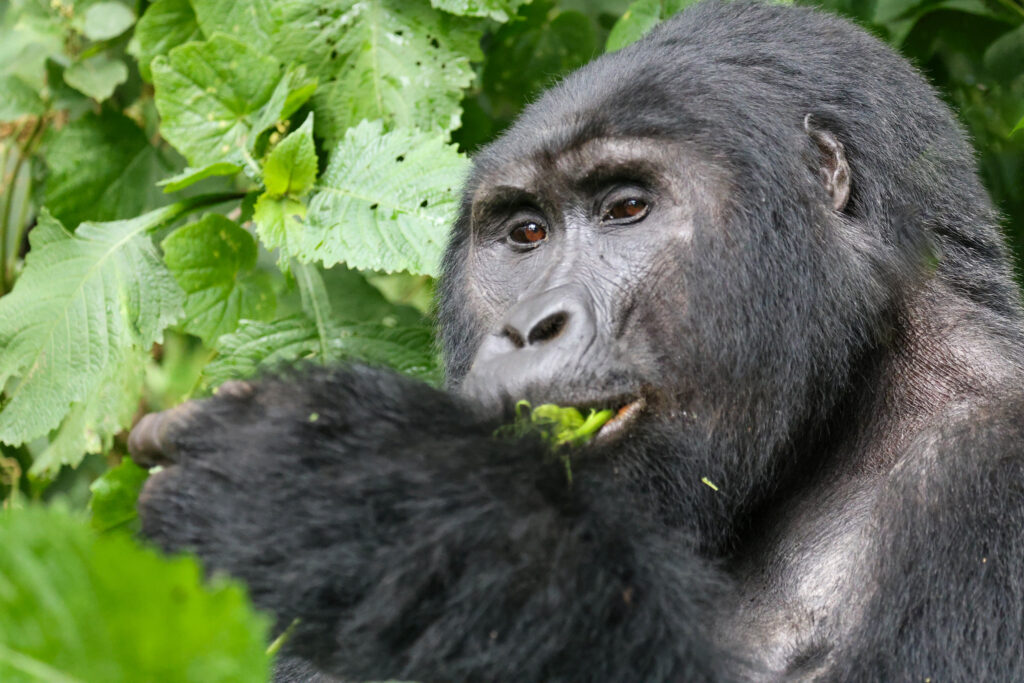
There are fewer than 1,100 mountain gorillas on earth. All of them live in a single trans boundary ecosystem spanning the borders of Rwanda, Uganda, and the Democratic Republic of the Congo. Rwanda’s share of that population — the gorilla families habituated to human presence in Volcanoes National Park — can be visited under a strictly managed permit system that issues a maximum of eight visitor permits per family per day. The combination of genuine scarcity and extraordinary access is what makes Rwanda gorilla trekking the most sought-after wildlife experience in the world.
The gorillas are the headline. But Rwanda gorilla trekking is not merely a transaction between a permit fee and an hour in the forest. It is a journey to one of the most beautiful countries in Africa, through a landscape shaped by volcanic drama and agricultural ingenuity, to stay in lodges that have raised the standard of wilderness accommodation to the level of the experience they surround. The day that ends with a silverback sitting three metres from your position is also the day that begins with a lodge breakfast above the volcano slopes, includes an afternoon at the Gorilla Guardians Village, and concludes with dinner on a terrace where the Virunga chain is lit by the last of the day’s light.
All gorilla trekking in Rwanda takes place in Volcanoes National Park (Parc National des Volcans), located in the Musanze District of the country’s northwestern province. The park covers 160 square kilometres of the Virunga mountain range, which straddles the borders of Rwanda, Uganda, and the DRC. Five volcanoes — Karisimbi (4,507m), Bisoke (3,711m), Muhabura (4,127m), Gahinga (3,474m), and Sabyinyo (3,645m) — form the park’s dramatic skyline and define its ecological zones.
All gorilla trekking groups assemble at the Rwanda Development Board briefing ground at Kinigi, approximately fifteen to twenty minutes‘ drive from the main lodge cluster in and around Musanze. The briefing begins at 7:00 AM daily and is mandatory for all gorilla trekking lovers. Trekking groups are assigned to specific habituated gorilla families(in Volcanoes National Park) based on permit booking, fitness level assessment, and the morning’s wildlife tracking data. The trek departs immediately after the briefing and the forest boundary is reached within thirty minutes to an hour of the Kinigi departure point.
The park is served by a comprehensive lodge ecosystem — from ultra-luxury properties positioned directly above the park boundary to comfortable mid-range hotels in Musanze town that are fifteen minutes’ drive from the briefing ground. Every lodge in the area has established transfer arrangements with the Rwanda Development Board operations at Kinigi.
Rwanda Gorilla Trekking Permit Costs
The Rwanda gorilla trekking permit is issued exclusively by Rwanda Development Board and costs USD 1,500 per person per trek for all international visitors. This fee applies regardless of nationality, residency status, or the duration of the trek. It is non-refundable and non-transferable, and it includes one hour with a single habituated gorilla family on the assigned date.
For comparison, Uganda’s gorilla trekking permit costs USD 800 per person for foreign non-residents. Rwanda’s higher permit price reflects a deliberate national positioning decision made in 2017, when the fee was doubled from USD 750 to USD 1,500. The rationale was explicit: Rwanda chose to limit visitor numbers while maximising conservation revenue from those who do visit, trading volume for value.
The result is a trekking experience that, in terms of group management, infrastructure quality, and conservation impact, justifies the premium.
Visitor Category | Rwanda Permit | Uganda Permit |
Foreign Non-Residents | USD 1,500 per person | USD 800 per person |
Foreign Residents (E. Africa) | Concessional rate — confirm | USD 700 per person |
East African Citizens | Concessional rate — confirm | UGX 300,000 per person |
Gorilla permit fees are subject to annual review by Rwanda Development Board. Gorilla Safaris confirms the current rate at the time of enquiry and at the time of permit purchase, ensuring there are no surprises. Permits must be purchased in advance — we secure them months ahead as part of the itinerary planning process. Walk-in availability at Kinigi is essentially non-existent for peak season dates.
Rwanda Gorilla Trekking Experience
Rwanda Gorilla Trekking experience begins the evening before. Your lodge manager confirms your trek family assignment — communicated by Rwanda Development Board that afternoon — and briefs you on the morning’s logistics: departure time, packed breakfast arrangements, what to carry, and the specific characteristics of the family you have been assigned. There is a particular quality to this evening briefing: the anticipation of what the next morning holds, already being managed by someone who has prepared guests for this moment many times.
By 6:30 AM the vehicle is moving toward Kinigi. The road passes through the town of Musanze while it is still waking — market stalls being set up, motorcycles beginning to move, the morning mist sitting in the valleys between the hills — and then rises toward the park boundary as the briefing ground becomes visible. Other vehicles from other lodges are arriving simultaneously.
By 7:00 AM, two to three dozen people are assembled in small groups, each assigned to a specific family, each about to enter the forest for a completely different morning.
The briefing itself takes thirty minutes, led by a Rwanda Development Board ranger-guide who covers the encounter protocols with the precision of someone whose implementation of these rules protects both the guests and the gorillas. The seven-metre minimum distance. No flash photography. The cough-and-sneeze protocol. What to do if an individual approaches within the minimum distance. What to do if a silverback charges or displays. These are not bureaucratic formalities. They are the reason the encounter remains what it is. The trek departs through farmland at the park boundary — terraced potato and sorghum fields that come directly to the edge of the forest, a reminder of the pressure the park boundary manages daily — and enters the bamboo zone within fifteen to twenty minutes of the trailhead.
The forest is immediate and total. The sounds of the road disappear, replaced by bird calls, the drip of moisture from the canopy, and the faint crackle of your guide’s radio as the tracking team updates the family’s position.
The approach time varies. On mornings when the family has nested close to the trail, contact comes within thirty to forty-five minutes of entering the forest. On mornings when the family has moved deep into the volcanic slope, the approach takes two to three hours and becomes an extended forest walk in its own right — a different kind of reward. Neither scenario is preferable; experienced trekkers often say the longer approaches produce the most memorable encounters because the arrival feels more earned.
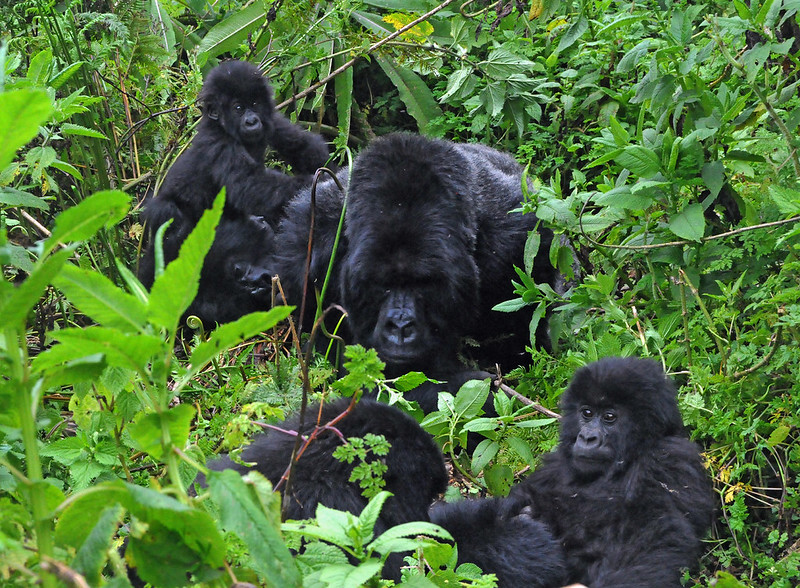
Contact us: The tracker’s radio confirms it. The group slows, the guide holds up a hand, and you move through the final section of undergrowth with the particular care of people who have understood, over the past two hours, that what is on the other side of this vegetation is not to be rushed toward.
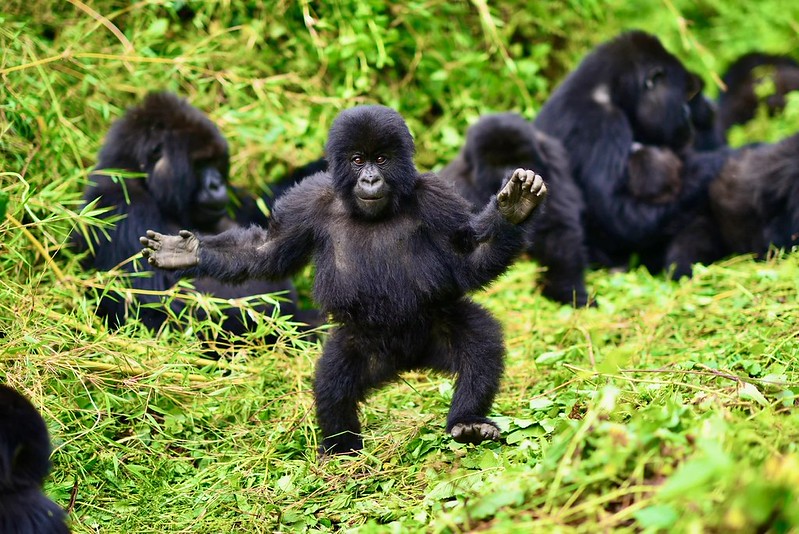
The hour with the gorilla family is described in many places and captured in many photographs, and none of them prepare you for it. The silverback’s size — larger than any representation suggests, with a chest that expands visibly when he breathes. The juveniles’ complete indifference to your presence, playing and tumbling with an energy that makes the adults around them seem infinitely patient. The mothers’ focused, evaluating regard — a quality of intelligence in their attention that is different from any other animal encounter most guests have had. The particular sound of the forest when fifty kilograms of gorilla knuckle-walks past you at a distance of four metres.
When the guide signals the end of the hour, the group begins its return. The walk out carries the particular quality of walks taken after significant experience: quieter than the walk in, more attentive to detail, occupied by the beginning of the process of making sense of what just happened.
How Much Does a Rwanda Gorilla Trekking Safari Cost?
The total cost of a Rwanda gorilla trekking safari depends on four primary objectives: the number of trekking permits purchased, the accommodation standard chosen, the duration of the programme, and the range of additional activities included. The Rwanda gorilla permit itself, at USD 1,500 per person, is the single largest line item in any Rwanda gorilla safari budget and should be treated as a fixed investment from which all other decisions are calibrated.
A two-day Kigali–gorilla trek–Kigali programme for a couple staying at a mid-range lodge, including one permit each, private transfers, accommodation, and park fees, typically falls in the range of USD 4,500 to USD 6,000 for two people. A 4-day programme with a single gorilla trek, golden monkey tracking, a Fossey hike, and a night at a luxury lodge moves into the USD 8,000 to USD 12,000 range for two. A full-week Rwanda safari combining Volcanoes National Park, Lake Kivu, Nyungwe Forest National Park, and Akagera National Park in a custom itinerary with premium accommodation throughout represents a total investment of USD 15,000 to USD 25,000 for two — a reflection of the permit costs, the lodge standards, and the breadth of experience included.
These ranges are indicative. Every Gorilla Safaris programme is costed individually for the specific guest, and our team provides a transparent, itemized cost breakdown at the itinerary planning stage. There are no hidden fees and no surprises.
21 Best Rwanda Gorilla Trekking Safaris, Itineraries & Packages
At Gorilla Safaris, Rwanda is the country we know best and return to most frequently. We have secured Rwanda gorilla permits for guests from every corner of the world — first-timers who arrive wondering if the experience can possibly justify the cost (it always does), couples celebrating milestone anniversaries, families introducing teenagers to wild Africa, and solo travelers for whom a week in Rwanda represents the most deliberate and considered trip of their lives. This guide draws on everything we have learned from those journeys, and it is written with one purpose: to ensure that when you enter the forest, you are prepared to receive everything it offers.
1 Days Rwanda Gorilla Safari
2 Days Rwanda Gorilla Safari
3 Days Rwanda Gorilla Safari
4 Days Rwanda Gorilla & Golden Monkeys
5 Days Rwanda Gorilla & Akagera
5 Days Rwanda Double Gorilla Trek
3 Days Rwanda Gorilla & Golden Monkeys Safari
4 Days Rwanda Double Gorilla Trekking Safari
5 Days Rwanda Gorilla & Wildlife Safari
5 Days Rwanda Primates (Gorillas &Chimpanzees)
7 Days Primates & Wildlife Safaris
10 Days Rwanda Gorillas, Chimpanzees & Wildlife
7 Days Rwanda Gorilla Safari
8 Days Rwanda Gorilla Safari
9 Days Rwanda Primates & Wildlife
10 Days Rwanda Gorillas & Tanzania Wildlife
Rwanda Gorillas, Olpegeta & Masai Mara
Rwanda Gorillas , Laikipia & Masai Mara
13 Days Rwanda Uganda Gorilla Safari
14 Days Rwanda Uganda Primates & Wildlife
10 Days Rwanda Uganda Gorilla Safari
Rwanda's Habituated Gorilla Families
Rwanda currently has twelve habituated gorilla families available for visitor trekking in Volcanoes National Park. Each family has a distinct personality, a known social structure, and an established home range on specific slopes of the Virunga chain. The Rwanda Development Board assigns trekking groups to specific families each morning, taking into account the family’s current location (established by overnight tracking teams), the group’s fitness level, and any specific requests or medical considerations communicated by operators in advance.
The Susa group, named after the Susa River on Karisimbi’s lower slopes, is one of the largest and most famous of Rwanda’s habituated families — studied by Dian Fossey herself and currently numbering over twenty-five individuals. The approach to Susa typically involves a longer trek at higher elevation, and the encounter rewards with a family scale that few other groups can match. The Amahoro group (‘peace’ in Kinyarwanda) is among the most relaxed of the park’s families and is frequently recommended for first-time trekkers or guests whose fitness level makes a gentler trek appropriate.
The Pablo group, divided into two subgroups following a natural fission, offers a different kind of encounter — a family in the process of social renegotiation, its dynamics more fluid and its silverbacks’ relationships with each other a constant subject of the research teams’ documentation. The Hirwa group (‘lucky’) tends to range on the slopes between Sabyinyo and Gahinga, in terrain that allows comparatively shorter approach times. The Kwitonda group (‘humble’) arrived in Rwanda from the DRC in the mid-2000s and has established itself as a permanent Rwandan resident — a transboundary immigration story that your guide can narrate with the detail it deserves.
Among the other habituated families — Ugenda, Umubano, Agashya, Muhoza, Bwenge, Kuryama, and Musilikale — each has its own character and its own relationship with the landscape. At Gorilla Safaris, we discuss family assignment with every guest in advance, communicating your physical capabilities and preferences to Rwanda Development Board to request the most appropriate match. We cannot guarantee a specific family — final assignment is always made by RDB — but our relationships and our advance communication make the match as accurate as it can be.
Gorilla Trekking Rules and Regulations in Rwanda
Rwanda Development Board enforces a strict code of conduct for all gorilla trekking participants: maintain a minimum seven-metre distance from the gorillas at all times; no flash photography; turn away and cover your nose and mouth if you need to cough or sneeze; do not eat or drink in the gorillas’ presence; do not touch the gorillas even if they approach within the minimum distance; keep voices low throughout the encounter; follow the guide’s instructions immediately and without discussion. Guests with active respiratory illnesses — cold, flu, or any contagious condition — will be turned away at the briefing ground and will not receive a permit refund; this rule exists because gorillas share our susceptibility to respiratory viruses and a single transmission event has the potential to cause serious harm to an entire family. The minimum age for gorilla trekking in Rwanda is fifteen years.
Why Trek Gorillas in Rwanda?
The question is sometimes asked — typically by travelers who are aware that gorilla trekking is also available in Uganda and the DRC — and the answer is not that Rwanda is definitively superior. It is that Rwanda offers a specific combination of factors that, for many travelers, makes it the most appropriate and most rewarding choice.
The first factor is infrastructure. Rwanda’s roads are good, the park management system is exceptionally well organised, and the lodge ecosystem around Volcanoes National Park is the finest in any gorilla trekking destination. From Kigali International Airport to the Musanze briefing ground is less than three hours on maintained tarmac. No other gorilla country offers this combination of accessibility and quality.
The second factor is the park itself. Volcanoes National Park, with twelve habituated gorilla families available for visitor trekking, offers a range of family assignments that can be matched to different fitness levels and preferences. The briefing operation at Kinigi is efficient and professional. The ranger-guide teams are experienced and knowledgeable. And the forest — Hagenia woodland draped in moss, bamboo zones on the lower slopes, afroalpine moorland above — is among the most beautiful trekking terrain on earth.
The third factor is Rwanda’s broader tourism offering. A Rwanda gorilla safari can be combined with chimpanzee tracking at Nyungwe Forest National Park, a Big Five safari at Akagera National Park, a rest day on the shores of Lake Kivu, and a cultural morning in Kigali — creating a complete east African journey within the borders of a single, small, safe, and extraordinarily beautiful country. No other gorilla trekking destination offers this.
The fourth factor is conservation impact. Rwanda’s USD 1,500 gorilla permit is the most expensive in the world and the most directly effective. The revenue funds ranger salaries, anti-poaching operations, veterinary care for habituated gorilla families, and community development programmes in the buffer zones around the park. Buying a Rwanda gorilla permit is not merely purchasing access to a wildlife experience. It is investing in the survival of a species.
Where to Stay for Rwanda Gorilla Trekking
The lodge ecosystem around Volcanoes National Park has developed dramatically over the past decade. The range available today — from properties that set international standards for luxury wilderness accommodation to comfortable and practical mid-range hotels that manage the morning logistics with professional efficiency — means that every budget and every style of travel can find the appropriate base for a Rwanda gorilla safari.
Luxury Accommodations/Lodges
Singita Kwitonda Lodge, twelve villas with private pools and volcano views above Musanze, represents the pinnacle of Rwanda gorilla trekking accommodation. The property’s naturalist team, its food programme, and its level of personal service create an experience that extends the gorilla trek into every hour of the day. andBeyond’s Bisate Lodge — six forest villas in a crater bowl, powered entirely by renewable energy, surrounded by a reforestation programme that has planted over 40,000 indigenous trees — combines ecological commitment with architectural beauty and exceptional guiding. One&Only Gorilla’s Nest, at the forest boundary with fireside cottages and private outdoor baths, provides a forest-edge immersion that is complete from the moment you step outside your room.
Mid-Range Accommodations/Lodges
Five Volcanoes Boutique Hotel in Musanze — colonial architecture, volcano views, and a kitchen that takes Rwandan cuisine seriously — is the most consistently recommended mid-range option in the area and manages the morning logistics with the efficiency of long experience. Mountain Gorilla View Lodge, on the slopes above Kinigi with sightlines to the Sabyinyo cone, offers slightly more remote positioning at a similar price point. Amakoro Songa Lodge and Gorillas Mist Resort complete a strong mid-range offering, each with reliable kitchens, trained staff, and the genuine Rwandan hospitality that makes every morning’s early departure feel supported.
Budget Accommodations/Lodges
Several clean and well-managed guest houses in Musanze provide comfortable overnight accommodation for travellers whose budget prioritises the permit investment over the lodge experience. Hotel La Belle Etoile, Le Bambou Gorilla Lodge, and Centre Pastoral Notre Dame de Fatima all offer practical and hospitable bases. For guests at these properties, the trekking experience itself is identical: the same forest, the same briefing, the same gorillas. Gorilla Safaris can design programmes at any budget level and will be transparent about the trade-offs involved in each accommodation choice.
Best Time to Visit Rwanda for Gorilla Trekking
Rwanda’s gorilla families can be tracked every day of the year, and the best time to visit is, ultimately, whenever you can go. That said, the seasons shape the character of the experience in ways that are worth understanding before you commit to specific travel dates.
Dry Season: June to September and December to February
Rwanda’s main dry season runs from June through September, with a shorter dry period from December through February. These months offer the most stable trekking conditions: firmer trails, clearer morning skies, and vegetation that has dried back sufficiently to make visibility into the forest better than during the rains. The gorillas tend to range at higher elevations in the dry season as they follow the food sources that concentrate there when the lower bamboo zone dries. Higher elevation trekking means longer approaches and, for many families, encounters set in the Hagenia-Hypericum woodland — some of the most atmospherically beautiful terrain in the park.
July, August, and September are the peak months, when international visitor demand is highest and permit availability is tightest. Lodges around Musanze — particularly the luxury properties — are fully booked many months in advance during this window. If your preferred dates fall in July or August, we recommend beginning the planning process at least nine to twelve months ahead of travel.
Green Season: March to May and October to November
The two wet seasons — March through May (the long rains) and October through November (the short rains) — transform the Virunga forest into its most saturated and intensely beautiful version of itself. The trails are muddier, the mornings frequently cloudy, and the approach to the gorillas occasionally wet and slippery in ways that require the right footwear and the right attitude. In exchange, the forest is a deeper green, the gorillas often range at lower elevations as fresh vegetation emerges, and permit availability is significantly higher than in peak season.
The wet season is also Rwanda’s birding peak: migrants are present in the park, and the dawn chorus in the Virunga bamboo zone during April is extraordinary. For photographers who understand light, the overcast conditions of the wet season produce a softer, more diffused quality that many prefer for forest photography. And the complete absence of the relative crowds that attend peak season mornings at Kinigi gives the wet season a quality of personal access that the summer months cannot match. Gorilla Safaris regularly recommends the shoulder months — June (at the start of the dry season) and October (at the end of the short rains) — as the sweet spot of conditions and availability.
Things to Do in Volcanoes National Park Beyond Gorilla Trekking
Volcanoes National Park is a richer destination than the gorilla trekking alone suggests, and guests who build additional days into their Musanze programme consistently report that the time is well spent.
Golden Monkey Tracking Rwanda
Dian Fossey Hike and Karisoke Research Centre
Mount Bisoke and Mount Karisimbi Hikes
Gorilla Guardians Village (formerly Iby'Iwachu)
Twin Lakes of Bulera and Ruhondo
Birdwatching in Volcanoes National Park
What to Wear and Pack for Rwanda Gorilla Trekking
The Virunga forest does not require exotic equipment, but it does require appropriate preparation — and the difference between a guest who has prepared correctly and one who has not is immediately visible on the trail.
- Long-sleeved shirts and long trousers in neutral or dark colours — forest green, khaki, dark brown, navy — are essential. The forest contains nettles, rough-leaved climbers, and safari ants whose columns cross trails with disarming efficiency; exposed skin in any of these encounters is a distraction from the gorillas. Camouflage is restricted throughout Rwanda. Avoid bright colours.
- Waterproof hiking boots with ankle support are the most critical equipment decision you will make for this trip. The volcanic slopes of the Virunga are steep and the soil is heavy and adhesive when wet. A boot that has been broken in before arrival — twenty or more hours of use before your trek begins — will carry you through terrain that new boots would make miserable. Waterproof gaiters over the boot tops are strongly recommended for the lower forest sections where the undergrowth at trail level remains perpetually damp.
- A lightweight rain jacket or compact waterproof poncho lives permanently in your daypack regardless of the season. Rain in the Virunga can arrive without theatrical warning. A lightweight fleece or thermal mid-layer addresses the temperature difference between the lower slopes and the Hagenia woodland above, which can be significant in the mornings. Thin garden gloves protect your hands on steep sections where you reach for vegetation.
- Your daypack: minimum 1.5 litres of water, high-energy snacks, camera (charged, no flash, silenced), small first-aid kit with blister treatment, insect repellent, and a silenced phone.
- Porters are available at the briefing ground for approximately USD 10 to USD 20 and are strongly recommended for physical assistance and the community income they generate.
Frequently Asked Questions: Gorilla Trekking in Rwanda
The Rwanda gorilla trekking permit costs USD 1,500 per person per trek, regardless of nationality or residency. This fee is set by Rwanda Development Board and has applied since 2017, when it was doubled from USD 750 as part of Rwanda’s strategic repositioning as a premium wildlife destination. The permit is non-refundable and non-transferable and includes one hour with a single habituated gorilla family. In addition to the permit, a full gorilla trekking safari includes accommodation, private transfers, park entry fees, and guide services — all of which Gorilla Safaris provides as part of a custom-quoted programme.
Rwanda’s Volcanoes National Park currently has twelve habituated gorilla families available for visitor trekking. A maximum of eight visitors per family per day is permitted, meaning a maximum of 96 gorilla permits are issued daily. The specific family assignment is made by Rwanda Development Board rangers on the morning of each trek, based on the family’s current location, the composition of the trekking groups, and (where possible) the fitness level and preferences communicated by operators in advance.
Gorilla trekking in Volcanoes National Park ranges from relatively accessible to genuinely demanding, depending on the family assigned and where that family has ranged on the morning of the trek. Some families regularly occupy lower-elevation terrain with shorter approach times; others range on the slopes of Karisimbi at elevations and distances that require sustained fitness. Gorilla Safaris communicates your fitness level and any physical limitations to Rwanda Development Board in advance to request an appropriate family assignment. Porters are available at the briefing ground and are strongly recommended for all guests.
Gorilla trekking is available year-round. The dry seasons — June to September and December to February — offer the most stable trail conditions and highest permit demand. The wet seasons — March to May and October to November — produce a more vivid forest, often shorter tracking times as gorillas range at lower elevations, and significantly more available permits. Neither season is definitively superior; the choice depends on permit availability, lodge pricing, and personal tolerance for muddy trails. Gorilla Safaris recommends June and October as particularly balanced months.
Technically yes — the drive from Kigali to the Kinigi briefing ground takes approximately two and a half hours, and some operators offer day trip packages. However, we strongly advise against it. The 7:00 AM briefing requires a Kigali departure no later than 4:00 AM, the return to Kigali from Kinigi after the trek takes another three hours, and the total day — including the trek itself — becomes physically exhausting in a way that significantly diminishes the experience. We recommend at minimum one night in Musanze before and one night after the trek, and ideally two nights on each side to allow for altitude acclimatisation and post-trek reflection.
Rwanda is consistently rated as one of Africa’s safest countries for tourists and is one of the continent’s most politically stable nations. Kigali ranks as the safest city in Africa by multiple independent assessments. Volcanoes National Park has an excellent safety record, and all trekking groups are accompanied by armed rangers as standard protocol. Gorilla Safaris monitors Rwanda’s security situation continuously and will advise guests of any relevant changes well in advance of travel.
Rwanda Development Board sets the minimum age for gorilla trekking at fifteen years. This rule is enforced without exception. Families with younger children can design Rwanda itineraries that include golden monkey tracking (no age minimum), volcano hikes, the Gorilla Guardians Village, Lake Kivu, Nyungwe Forest, and Akagera National Park — a complete and compelling programme that ensures all age groups have an extraordinary experience.
For peak season dates — July, August, and September in particular — we recommend beginning the booking process nine to twelve months in advance. Rwanda’s twelve habituated families issue a maximum of 96 permits per day, and peak season demand consistently exceeds this supply. For green season dates (October through May), three to six months is generally sufficient. Gorilla Safaris holds advance permit allocations and can confirm availability as part of the initial itinerary consultation
Yes, and this is one of our most popular itinerary configurations. The Cyanika border crossing between Rwanda’s Musanze area and Uganda’s Kisoro District connects Volcanoes National Park with Uganda’s Mgahinga Gorilla National Park and Bwindi Impenetrable National Park. Many guests choose to combine gorilla trekking in both countries — different families, different landscapes, different park management styles — in a single East Africa journey. Gorilla Safaris manages all cross-border logistics seamlessly.
Begin Planning Your Rwanda Gorilla Safari
You understand now what Rwanda gorilla trekking is and what it requires. You know the permit cost, the forest conditions, the families, the best season for your specific travel dates, and the range of experiences that a well-designed Rwanda itinerary places around the gorilla encounter itself. What remains is the conversation between you and our team — about the specific programme that matches your dates, your interests, your budget, and your vision of what a once-in-a-lifetime journey should feel like.
At Gorilla Safaris, every Rwanda programme is designed from first principles for the specific traveler in front of us. Every gorilla permit is secured months in advance. Every lodge is selected for its specific role in the overall experience. Every transfer, every cultural programme, every additional activity is confirmed before you board your international flight. Nothing is improvised. Nothing is left to the morning.
The silverback in the Virunga forest this morning does not know you are coming. But every arrangement that will take you to him has already been made. Begin here